Why record ocean heat does not stay in the ocean
The nonpolar global ocean recorded 100 consecutive days of unprecedented surface heat through Sept.
Average sea-surface temperatures outside the polar regions exceeded the corresponding date in every previous year since records began in 1982 for 100 consecutive days from June 2 through Sept. 10.[1] The atmosphere held more water vapour in August than in any other recorded month, with scientists i…
Average sea-surface temperatures outside the polar regions exceeded the corresponding date in every previous year since records began in 1982 for 100 consecutive days from June 2 through Sept. 10.[1] The atmosphere held more water vapour in August than in any other recorded month, with scientists identifying global heating and the historic El Niño as contributors.[4]
Why it matters: Hotter seas can disrupt marine food chains, fisheries, tourism, coral and weather, while warmer, wetter air increases the risks of extreme rainfall, humid heat and intensified coastal heatwaves.[1][4]
Key insights: More than 90% of the excess heat associated with fossil-fuel use and greenhouse-gas emissions enters the ocean, according to climate scientist Zachary Labe.[1] | Global average sea-surface temperatures reached 21.10°C on Aug. 22 in Copernicus data, while Climate Reanalyzer measurements reached 21.18°C between Aug. 22 and 27.[1] | El Niño raises global temperatures when weakened Pacific trade winds allow warm water to accumulate near the west coast of South America.[1] | High moisture levels can impair the human body’s ability to cool itself, linking sea temperatures to health risks on land.[1]
Cheatsheet facts: What changed: The nonpolar ocean sustained 100 record-breaking days, and atmospheric water vapour reached its highest monthly level on record in August.[1][4] | Why now: Human-caused warming is driving the long-term ocean trend, while an intensifying El Niño is amplifying heat and moisture levels.[1][4] | Watch next: Scientists expect the current El Niño to peak toward the end of 2026 and continue influencing conditions into 2027.[1]
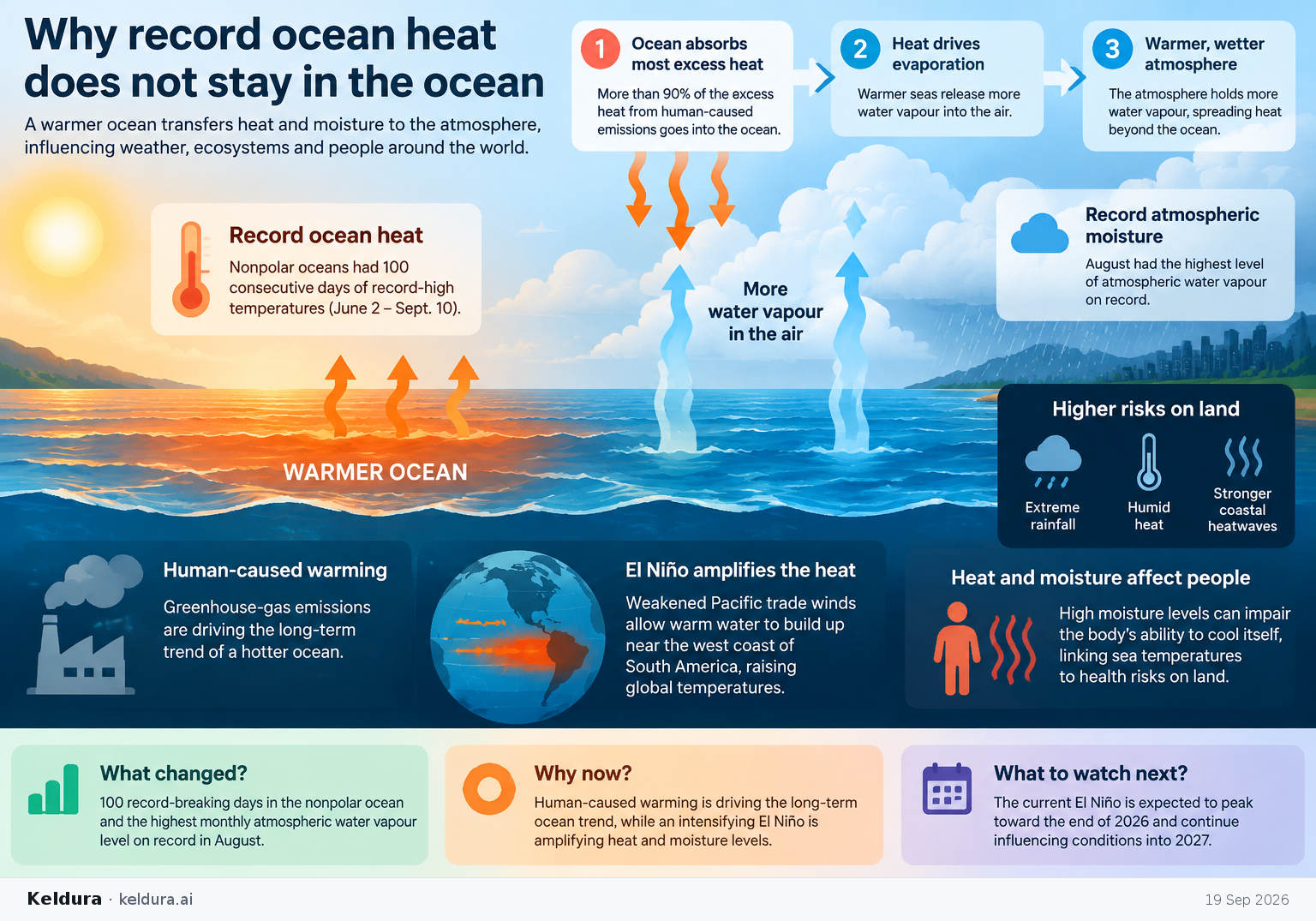
Average sea-surface temperatures outside the polar regions exceeded the corresponding date in every previous year since records began in 1982 for 100 consecutive days from June 2 through Sept. 10.[1] The atmosphere held more water vapour in August than in any other recorded month, with scientists identifying global heating and the historic El Niño as contributors.[4]
Why it matters: Hotter seas can disrupt marine food chains, fisheries, tourism, coral and weather, while warmer, wetter air increases the risks of extreme rainfall, humid heat and intensified coastal heatwaves.[1][4]
Key insights: More than 90% of the excess heat associated with fossil-fuel use and greenhouse-gas emissions enters the ocean, according to climate scientist Zachary Labe.[1] | Global average sea-surface temperatures reached 21.10°C on Aug. 22 in Copernicus data, while Climate Reanalyzer measurements reached 21.18°C between Aug. 22 and 27.[1] | El Niño raises global temperatures when weakened Pacific trade winds allow warm water to accumulate near the west coast of South America.[1] | High moisture levels can impair the human body’s ability to cool itself, linking sea temperatures to health risks on land.[1]
Cheatsheet facts: What changed: The nonpolar ocean sustained 100 record-breaking days, and atmospheric water vapour reached its highest monthly level on record in August.[1][4] | Why now: Human-caused warming is driving the long-term ocean trend, while an intensifying El Niño is amplifying heat and moisture levels.[1][4] | Watch next: Scientists expect the current El Niño to peak toward the end of 2026 and continue influencing conditions into 2027.[1]