European plastic waste accumulates in Turkey's Adana farmland
Turkey imports European plastic as recycling material, but who bears the cost when it ends up in canals and fields?
On November 10, AFP reported plastic dumping in Adana after Turkey imported 510,000 tonnes of EU plastic waste and another 140,000 tonnes from Britain in 2025.
Turkey imported 650,000 tonnes of plastic waste from the EU and Britain in 2025, with nearly 60% sent to Adana, where about 170 recycling companies operate among productive farmland. AFP documented discarded plastic around the province, while marine biologist Sedat Gundogdu linked shredded waste to…
Open original · [12] Turkish province despairs at being Europe's plastic dump | AFP.com — afp.com
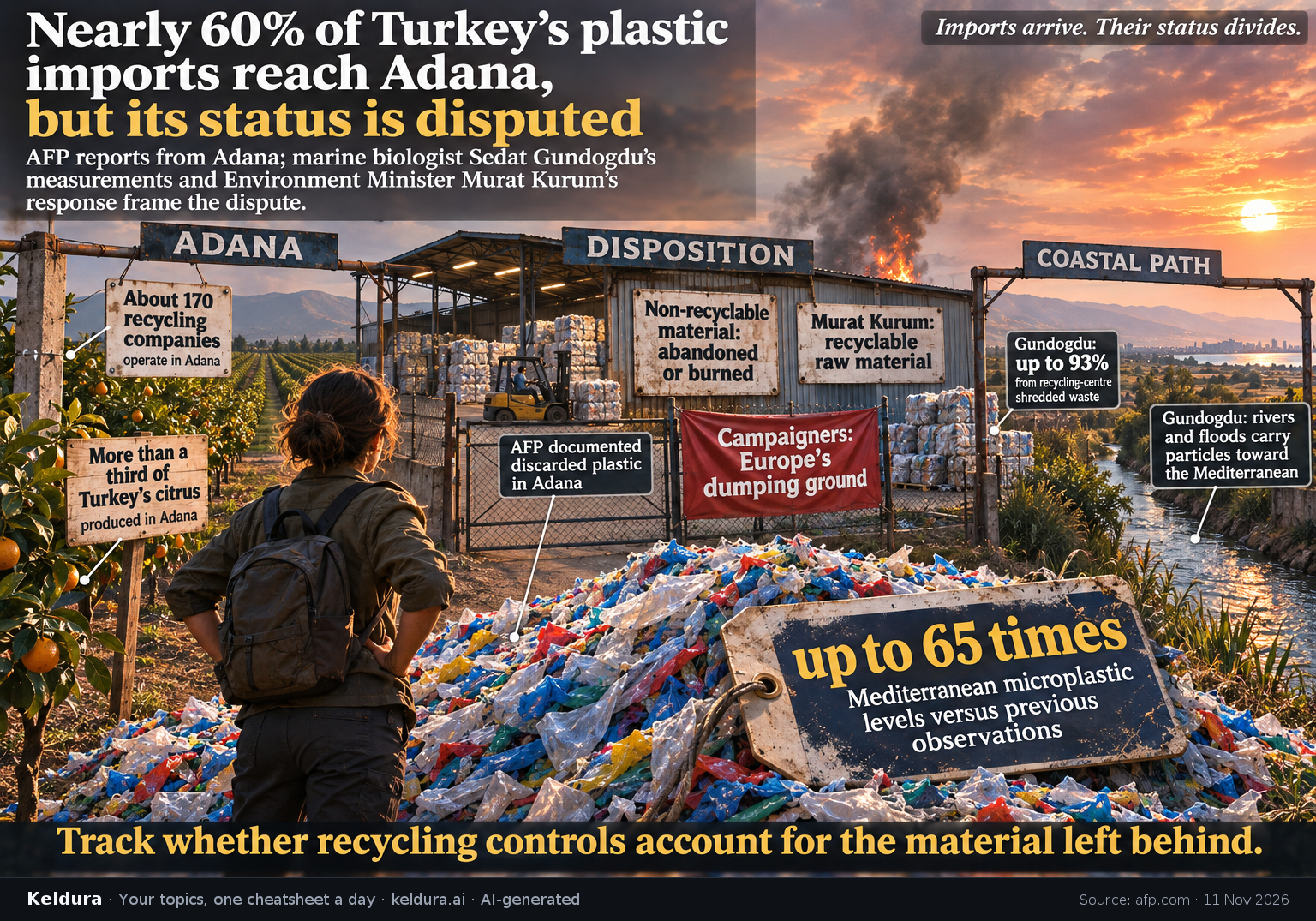
Turkey imported 650,000 tonnes of plastic waste from the EU and Britain in 2025, with nearly 60% sent to Adana, where about 170 recycling companies operate among productive farmland. AFP documented discarded plastic around the province, while marine biologist Sedat Gundogdu linked shredded waste to Mediterranean microplastic pollution. [12] Environment Minister Murat Kurum disputed the description of the imports as rubbish, saying they were recyclable raw material. [12]
Why it matters: Adana produces more than a third of Turkey's citrus fruit, placing waste processing alongside a major food-growing region. Gundogdu told AFP that measured Mediterranean microplastic concentrations reached up to 65 times previously observed levels, with up to 93% coming from waste shredded at recycling centres. [12]
Key insights: The EU supplied 510,000 tonnes and Britain another 140,000 tonnes in 2025; Turkey was the leading destination for EU plastic waste. [12] | Rivers and floods carry particles from Adana toward the Mediterranean, according to Gundogdu, connecting inland waste handling with coastal pollution. [12] | The dispute is over what recycling imports become: campaigners describe dumping, while Kurum calls the incoming material a usable raw material. [12]
Cheatsheet facts: What happened: AFP documented discarded plastic in Adana, which receives nearly 60% of Turkey's plastic-waste imports from the EU and Britain. [12] | Why: Turkey imports plastic for recycling, but AFP reports that non-recyclable material is abandoned or burned, leaving piles of shredded waste. [12] | Who pays: Waste processing overlaps with farmland producing more than a third of Turkey's citrus; rivers also carry plastic particles toward the Mediterranean. [12] | The catch: Environment Minister Murat Kurum says Turkey imports recyclable raw material, while campaigners describe the country as Europe's dumping ground. [12]
X copy pack
Edition complete
You've reached the end of this edition.