COP31 electricity proposal leaves room for fossil-fuel generation
COP31 hosts want electricity to supply more energy, but will the pledge require the power itself to be clean?
By November 14, Türkiye and Australia had proposed raising electricity's share of global final energy use to around 35% by 2035, without requiring renewable generation.
COP31 co-presidents Türkiye and Australia have proposed a “35 by 35” ambition to raise electricity's share of final energy consumption from roughly 21% to around 35% by 2035. The proposal does not require renewable generation, drawing objections from environmental groups and UN Secretary-General An…
Open original (4 sources):
- [8] UN chief says 'immediate and drastic' emissions cuts needed to avert climate change catastrophe | PBS News — pbs.org
- [10] COP31 climate change talks seem starkly unambitious - ABC News — abc.net.au
- [4] COP31: Protesters, UN urge swift climate deal — dw.com
- [9] UN chief says 'immediate and drastic' emissions cuts needed to avert climate change catastrophe — apnews.com
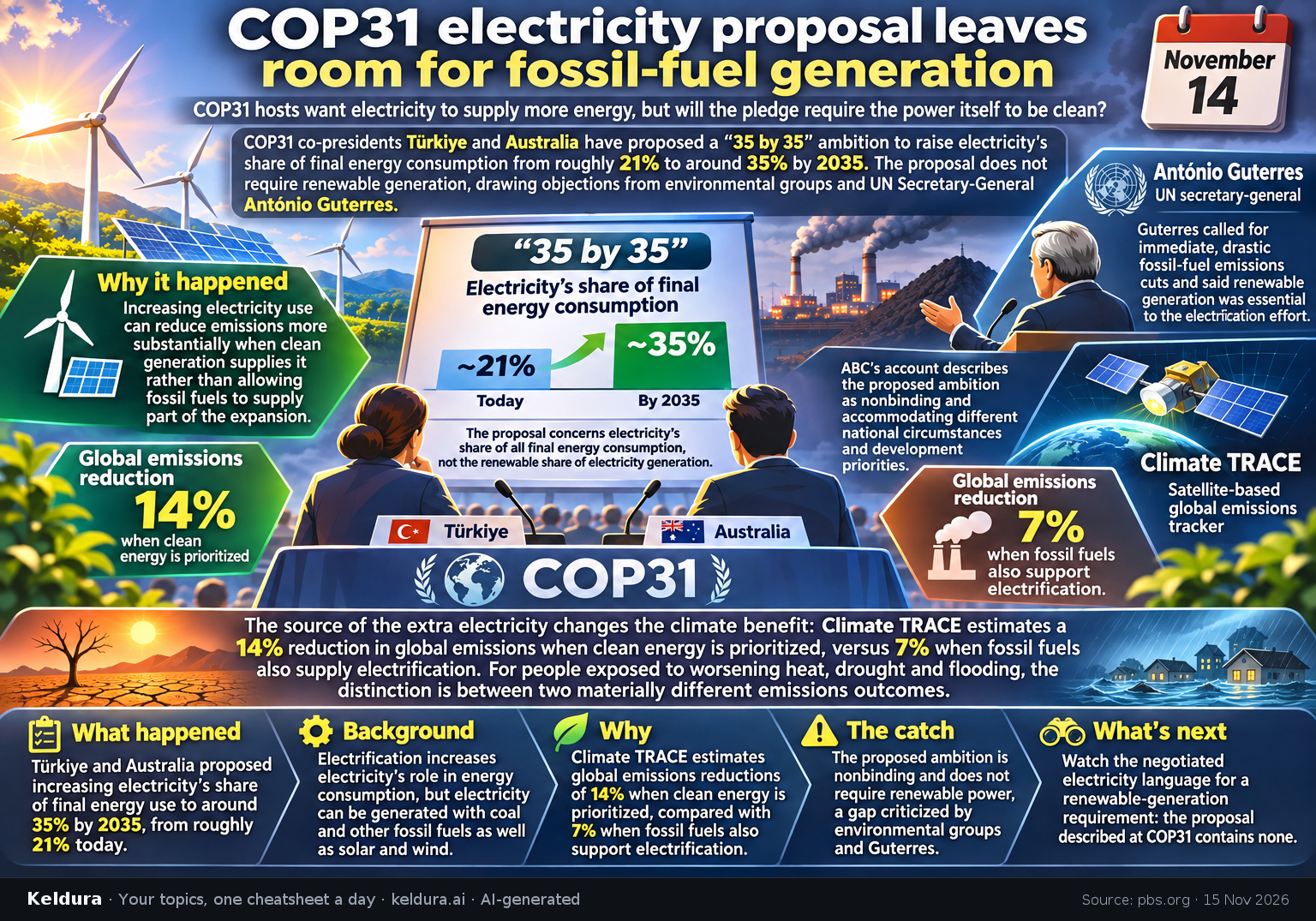
COP31 co-presidents Türkiye and Australia have proposed a “35 by 35” ambition to raise electricity's share of final energy consumption from roughly 21% to around 35% by 2035. The proposal does not require renewable generation, drawing objections from environmental groups and UN Secretary-General António Guterres. [8][10][4]
Why it matters: The source of the extra electricity changes the climate benefit: Climate TRACE estimates a 14% reduction in global emissions when clean energy is prioritized, versus 7% when fossil fuels also supply electrification. For people exposed to worsening heat, drought and flooding, the distinction is between two materially different emissions outcomes. [8]
Key insights: The proposal concerns electricity's share of all final energy consumption, not the renewable share of electricity generation. [8][10] | ABC's account describes the proposed ambition as nonbinding and accommodating different national circumstances and development priorities. [10] | Guterres called for immediate, drastic fossil-fuel emissions cuts and said renewable generation was essential to the electrification effort. [8][9]
Cheatsheet facts: What happened: Türkiye and Australia proposed increasing electricity's share of final energy use to around 35% by 2035, from roughly 21% today. [8][10] | Background: Electrification increases electricity's role in energy consumption, but electricity can be generated with coal and other fossil fuels as well as solar and wind. [8] | Why: Climate TRACE estimates global emissions reductions of 14% when clean energy is prioritized, compared with 7% when fossil fuels also support electrification. [8] | The catch: The proposed ambition is nonbinding and does not require renewable power, a gap criticized by environmental groups and Guterres. [4][8][10] | What's next: Watch the negotiated electricity language for a renewable-generation requirement: the proposal described at COP31 contains none. [8][10]