Chip Stocks Drive a 3% KOSPI Rebound
The KOSPI opened 3.34% higher at 6,910.78 as foreign and institutional investors jointly returned to net buying.[7] Samsung Electronics rose 4% and SK hynix gained 6%, helping large-cap semiconductor shares lead the rebound.[7]
The KOSPI opened 3.34% higher at 6,910.78 as foreign and institutional investors jointly returned to net buying.[7] Samsung Electronics rose 4% and SK hynix gained 6%, helping large-cap semiconductor shares lead the rebound.[7]
Why it matters: The rally tests whether selling pressure in Korean chip stocks has been exhausted or whether the move is only a technical rebound ahead of fresh evidence on AI demand, inflation and interest rates.[7]
Key insights: Foreign investors bought a net 441.6 billion won and institutions purchased 326.8 billion won, for combined buying of 768.4 billion won.[7] | Retail investors sold a net 812.2 billion won as institutional and foreign demand lifted the index.[7] | Oracle’s forthcoming results will be assessed for the conversion of AI-related obligations into revenue, capital spending, funding plans and free cash flow.[7] | The US August Consumer Price Index is another scheduled test for interest-rate expectations and risk appetite.[7]
Cheatsheet facts: What changed: The KOSPI reclaimed 6,900 as foreign and institutional investors bought simultaneously and chip shares surged.[7] | Why now: Last week’s rally in US semiconductor shares encouraged the view that recent selling pressure may have been exhausted.[7] | Watch next: Monitor Oracle’s earnings, its AI-related revenue and cash-flow metrics, and the US August CPI release.[7]
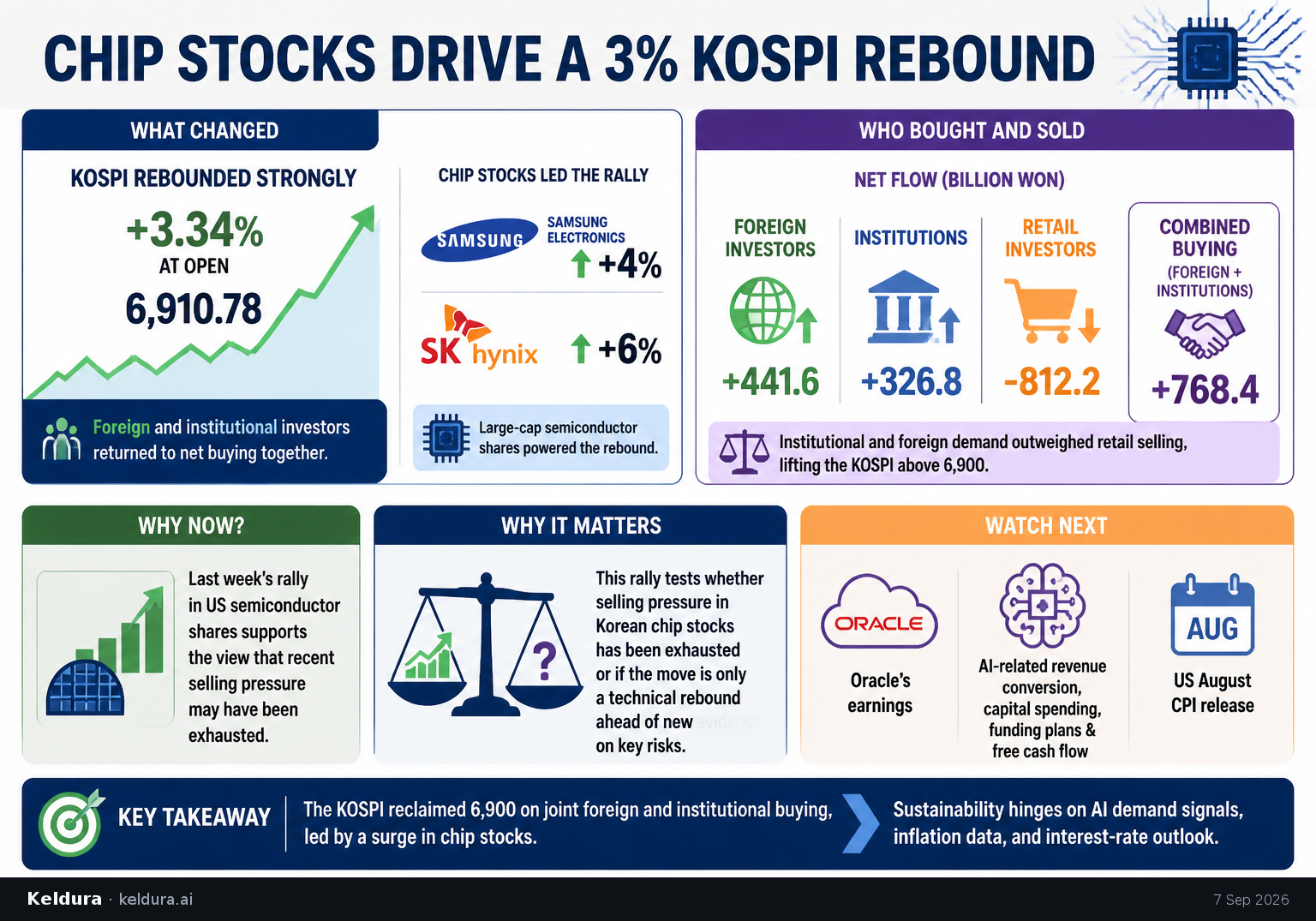
The KOSPI opened 3.34% higher at 6,910.78 as foreign and institutional investors jointly returned to net buying.[7] Samsung Electronics rose 4% and SK hynix gained 6%, helping large-cap semiconductor shares lead the rebound.[7]
Why it matters: The rally tests whether selling pressure in Korean chip stocks has been exhausted or whether the move is only a technical rebound ahead of fresh evidence on AI demand, inflation and interest rates.[7]
Key insights: Foreign investors bought a net 441.6 billion won and institutions purchased 326.8 billion won, for combined buying of 768.4 billion won.[7] | Retail investors sold a net 812.2 billion won as institutional and foreign demand lifted the index.[7] | Oracle’s forthcoming results will be assessed for the conversion of AI-related obligations into revenue, capital spending, funding plans and free cash flow.[7] | The US August Consumer Price Index is another scheduled test for interest-rate expectations and risk appetite.[7]
Cheatsheet facts: What changed: The KOSPI reclaimed 6,900 as foreign and institutional investors bought simultaneously and chip shares surged.[7] | Why now: Last week’s rally in US semiconductor shares encouraged the view that recent selling pressure may have been exhausted.[7] | Watch next: Monitor Oracle’s earnings, its AI-related revenue and cash-flow metrics, and the US August CPI release.[7]