How are alternative export routes keeping oil near—but not above—its latest highs?
Oil fell about 1% on September 18 as alternative routes for Middle Eastern barrels eased fears of immediate supply losses.
Brent fell to $103.77 a barrel and West Texas Intermediate to $100.88, extending oil’s decline to a third session while both benchmarks remained above $100.[1] Reports that Saudi oil was moving through Oman reassured traders that barrels could still reach customers despite regional conflict and dam…
Brent fell to $103.77 a barrel and West Texas Intermediate to $100.88, extending oil’s decline to a third session while both benchmarks remained above $100.[1] Reports that Saudi oil was moving through Oman reassured traders that barrels could still reach customers despite regional conflict and damage to three East-West pipeline pumping stations.[1][2]
Why it matters: Oil remains a direct link between geopolitical disruption and global inflation: energy prices have surged since the Middle East conflict intensified, increasing pressure on consumer prices and monetary policy.[2] Alternative export routes can soften that shock, but prices above $100 show that markets still attach a substantial risk premium to regional supply.[1]
Key insights: The market is distinguishing between damage to individual facilities and a lasting loss of export capacity; viable alternative routes helped outweigh immediate disruption concerns.[1] | Fresh strikes between Saudi Arabia and Yemen's Houthis kept the regional risk unresolved even as crude prices declined.[1] | The oil retreat coincided with lower Treasury yields, higher U.S. stocks and reduced market volatility, illustrating how energy expectations are transmitting across asset classes.[2]
Cheatsheet facts: What changed: Brent and WTI declined about 1% to $103.77 and $100.88 respectively, their third consecutive session of losses.[1] | Why now: Reports of Saudi barrels moving through Oman suggested exports could bypass disrupted infrastructure.[1][2] | Watch next: Track Brent and WTI prices, reports on continued Saudi oil movements through Oman and any additional damage to export infrastructure.[1][2]
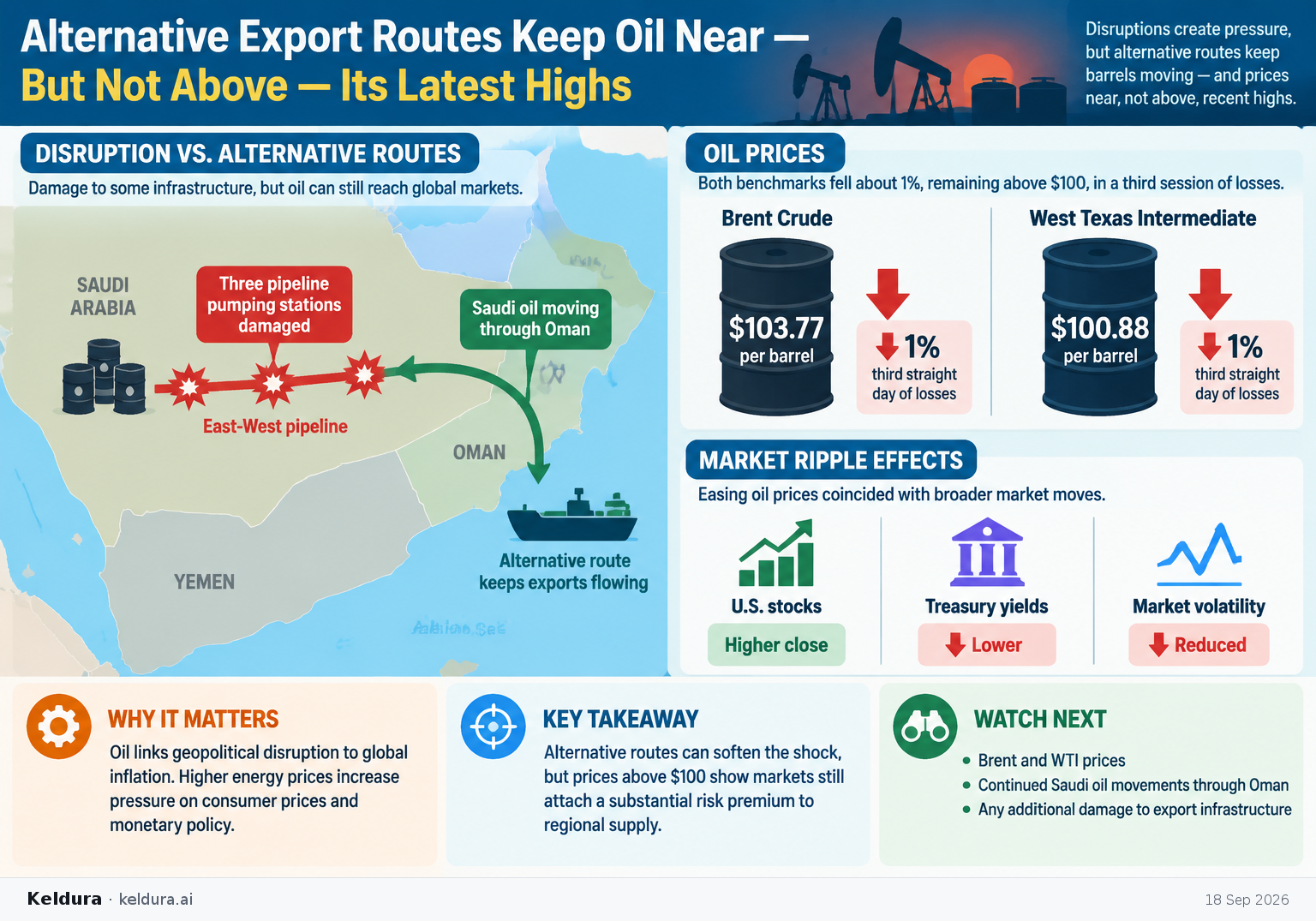
Brent fell to $103.77 a barrel and West Texas Intermediate to $100.88, extending oil’s decline to a third session while both benchmarks remained above $100.[1] Reports that Saudi oil was moving through Oman reassured traders that barrels could still reach customers despite regional conflict and damage to three East-West pipeline pumping stations.[1][2]
Why it matters: Oil remains a direct link between geopolitical disruption and global inflation: energy prices have surged since the Middle East conflict intensified, increasing pressure on consumer prices and monetary policy.[2] Alternative export routes can soften that shock, but prices above $100 show that markets still attach a substantial risk premium to regional supply.[1]
Key insights: The market is distinguishing between damage to individual facilities and a lasting loss of export capacity; viable alternative routes helped outweigh immediate disruption concerns.[1] | Fresh strikes between Saudi Arabia and Yemen's Houthis kept the regional risk unresolved even as crude prices declined.[1] | The oil retreat coincided with lower Treasury yields, higher U.S. stocks and reduced market volatility, illustrating how energy expectations are transmitting across asset classes.[2]
Cheatsheet facts: What changed: Brent and WTI declined about 1% to $103.77 and $100.88 respectively, their third consecutive session of losses.[1] | Why now: Reports of Saudi barrels moving through Oman suggested exports could bypass disrupted infrastructure.[1][2] | Watch next: Track Brent and WTI prices, reports on continued Saudi oil movements through Oman and any additional damage to export infrastructure.[1][2]