NHS England reports major gains from redesigning children’s mental health care in the East Midlands
A new clinical model in the East Midlands has transformed children and young people’s mental health services after long waits and too many out-of-area placements prompted a redesign [2]. Since April 2021, inpatient admissions have fallen by 61%, the average length of stay is 80% shorter, referral-t…
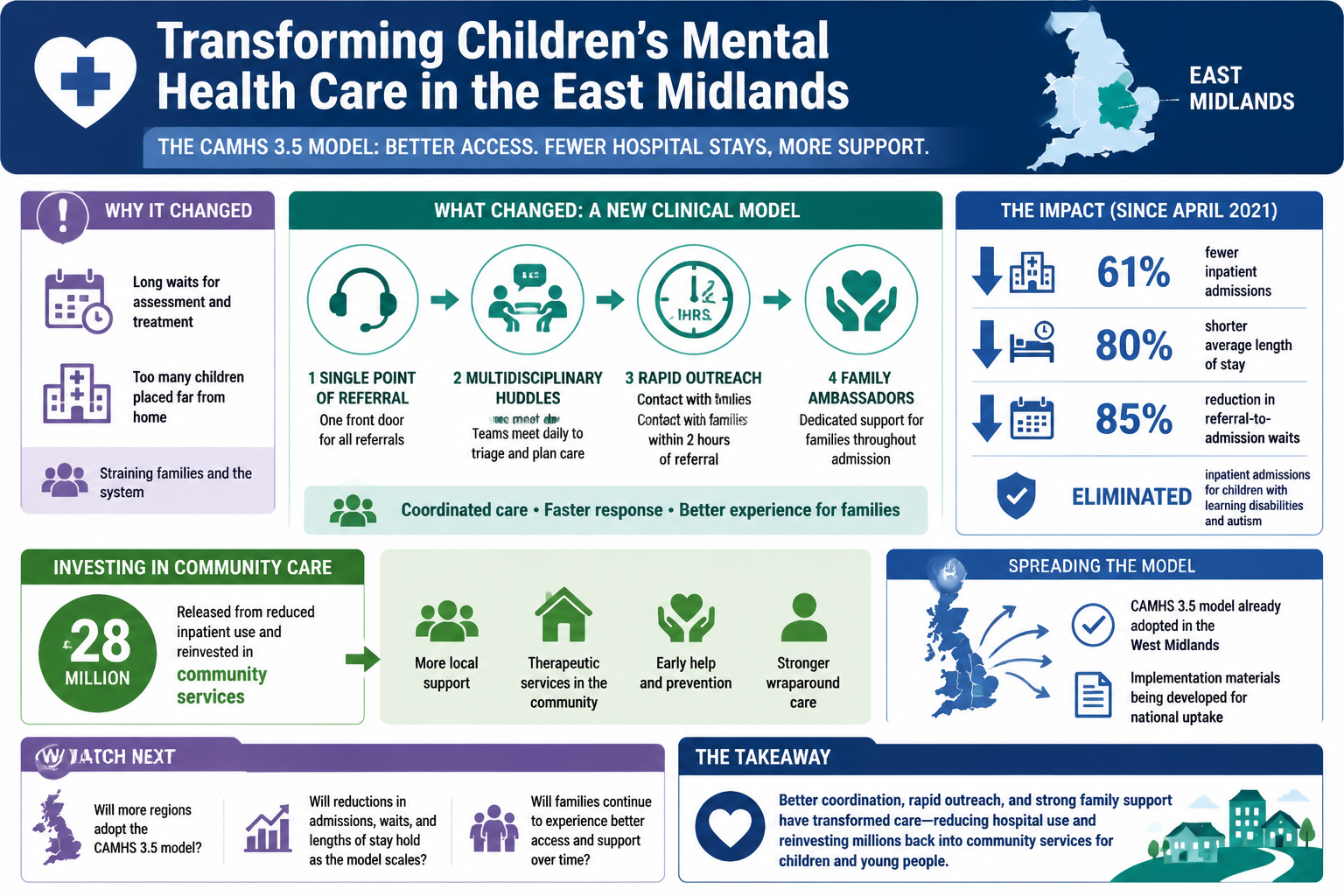
A new clinical model in the East Midlands has transformed children and young people’s mental health services after long waits and too many out-of-area placements prompted a redesign [2]. Since April 2021, inpatient admissions have fallen by 61%, the average length of stay is 80% shorter, referral-to-admission waits are down 85%, and admissions for children with learning disabilities and autism have been eliminated [2].
Why it matters: This is a concrete example of service redesign improving access, reducing hospitalization, and redirecting money back into community care. The scale of the changes suggests that better coordination and rapid outreach can relieve pressure on inpatient units while improving family experience [2].
Key insights: The collaborative introduced a single point of referral, multidisciplinary huddles, and a rapid outreach model that contacts families within 2 hours of referral [2]. | Family Ambassadors were added to support families throughout admission, showing that the redesign targeted both clinical flow and lived experience [2]. | Reduced inpatient use has released £28 million, which has been reinvested in community services [2]. | The CAMHS 3.5 model has already been adopted in the west midlands, and implementation materials are being developed for national uptake [2].
Cheatsheet facts: What changed: The East Midlands CAMHS collaborative replaced fragmented pathways with faster outreach, coordinated triage, and stronger family support [2]. | Why now: The redesign was prompted by long waits and excessive out-of-area placements that were straining the system and families [2]. | Watch next: Whether additional regions adopt CAMHS 3.5 and whether reported reductions in admissions, waits, and lengths of stay hold as the model scales [2].
A new clinical model in the East Midlands has transformed children and young people’s mental health services after long waits and too many out-of-area placements prompted a redesign [2]. Since April 2021, inpatient admissions have fallen by 61%, the average length of stay is 80% shorter, referral-to-admission waits are down 85%, and admissions for children with learning disabilities and autism have been eliminated [2].
Why it matters: This is a concrete example of service redesign improving access, reducing hospitalization, and redirecting money back into community care. The scale of the changes suggests that better coordination and rapid outreach can relieve pressure on inpatient units while improving family experience [2].
Key insights: The collaborative introduced a single point of referral, multidisciplinary huddles, and a rapid outreach model that contacts families within 2 hours of referral [2]. | Family Ambassadors were added to support families throughout admission, showing that the redesign targeted both clinical flow and lived experience [2]. | Reduced inpatient use has released £28 million, which has been reinvested in community services [2]. | The CAMHS 3.5 model has already been adopted in the west midlands, and implementation materials are being developed for national uptake [2].
Cheatsheet facts: What changed: The East Midlands CAMHS collaborative replaced fragmented pathways with faster outreach, coordinated triage, and stronger family support [2]. | Why now: The redesign was prompted by long waits and excessive out-of-area placements that were straining the system and families [2]. | Watch next: Whether additional regions adopt CAMHS 3.5 and whether reported reductions in admissions, waits, and lengths of stay hold as the model scales [2].