Three WHO medical-supply warehouses destroyed in Ukraine
Airstrikes destroyed three warehouses used by WHO in different Ukrainian regions over three months, damaging or ruining medical supplies intended for frontline and hard-to-reach areas.[5] The latest attack hit a main warehouse in the Kyiv region on September 3, while assessments of stock losses rem…
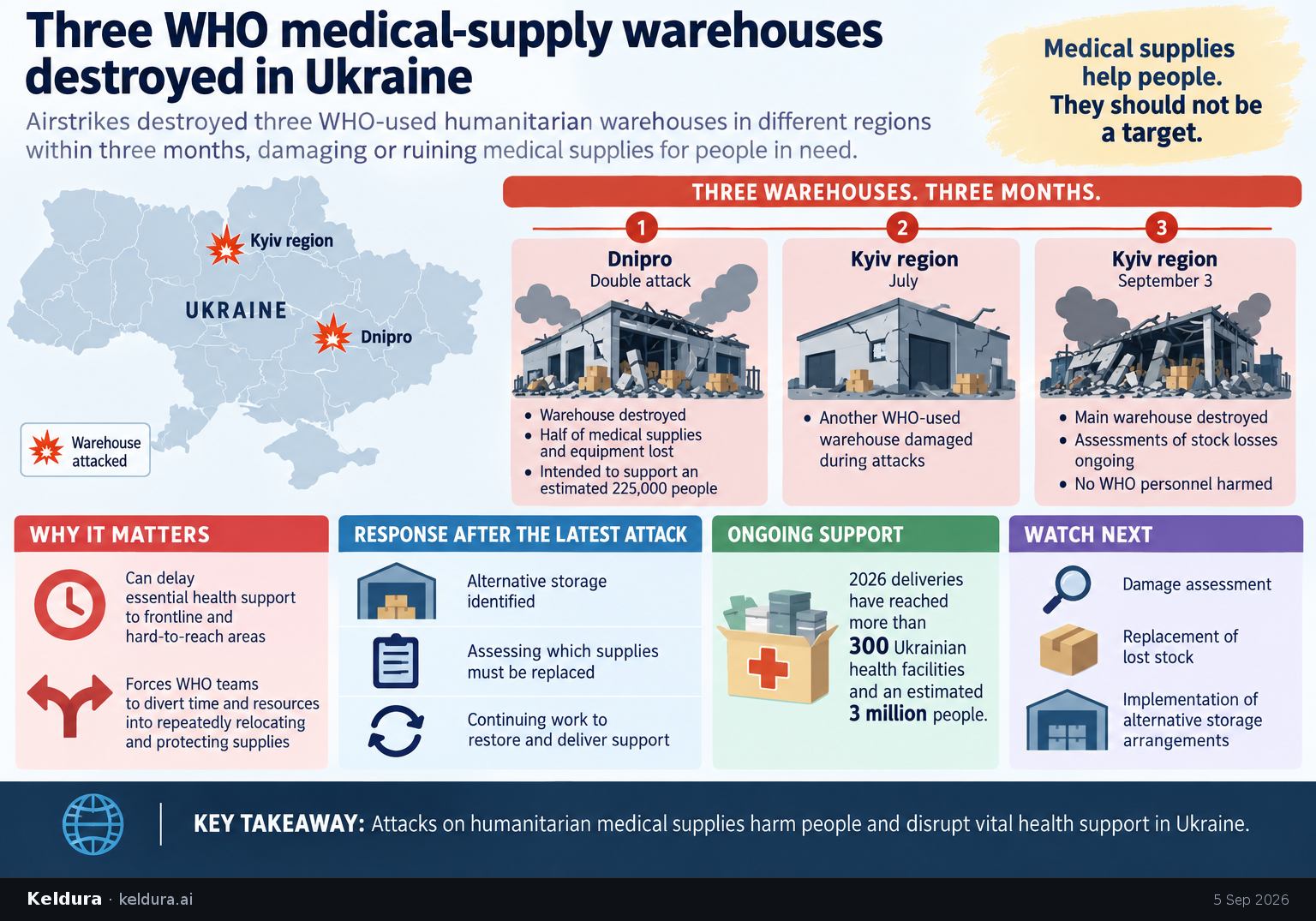
Airstrikes destroyed three warehouses used by WHO in different Ukrainian regions over three months, damaging or ruining medical supplies intended for frontline and hard-to-reach areas.[5] The latest attack hit a main warehouse in the Kyiv region on September 3, while assessments of stock losses remained underway and no WHO personnel were harmed.[5]
Why it matters: The attacks can delay essential health support and force WHO teams to divert time and resources from delivering care into repeatedly relocating and protecting supplies.[5]
Key insights: A double attack in Dnipro destroyed a warehouse and half of the medical supplies and equipment intended to support an estimated 225,000 people.[5] | Another WHO-used warehouse in the Kyiv region was damaged during attacks in July.[5] | WHO identified alternative storage after the latest incident and is working to determine which supplies must be replaced.[5] | WHO says its 2026 deliveries have reached more than 300 Ukrainian health facilities and an estimated 3 million people.[5]
Cheatsheet facts: What changed: Three WHO-used humanitarian warehouses were destroyed by airstrikes within three months.[5] | Why now: The September 3 strike followed warehouse attacks in Dnipro and the Kyiv region during the preceding weeks and months.[5] | Watch next: Watch WHO’s damage assessment, replacement of lost stock and implementation of alternative storage arrangements.[5]