Central Asia tests cross-border response to zoonotic threats
Exercise CARAVAN 2026 is a remote functional simulation designed to test cross-border coordination, communication and information-sharing for emerging zoonotic threats in Central Asia.[2] National International Health Regulations Focal Points will work with animal-health, environmental and emergenc…
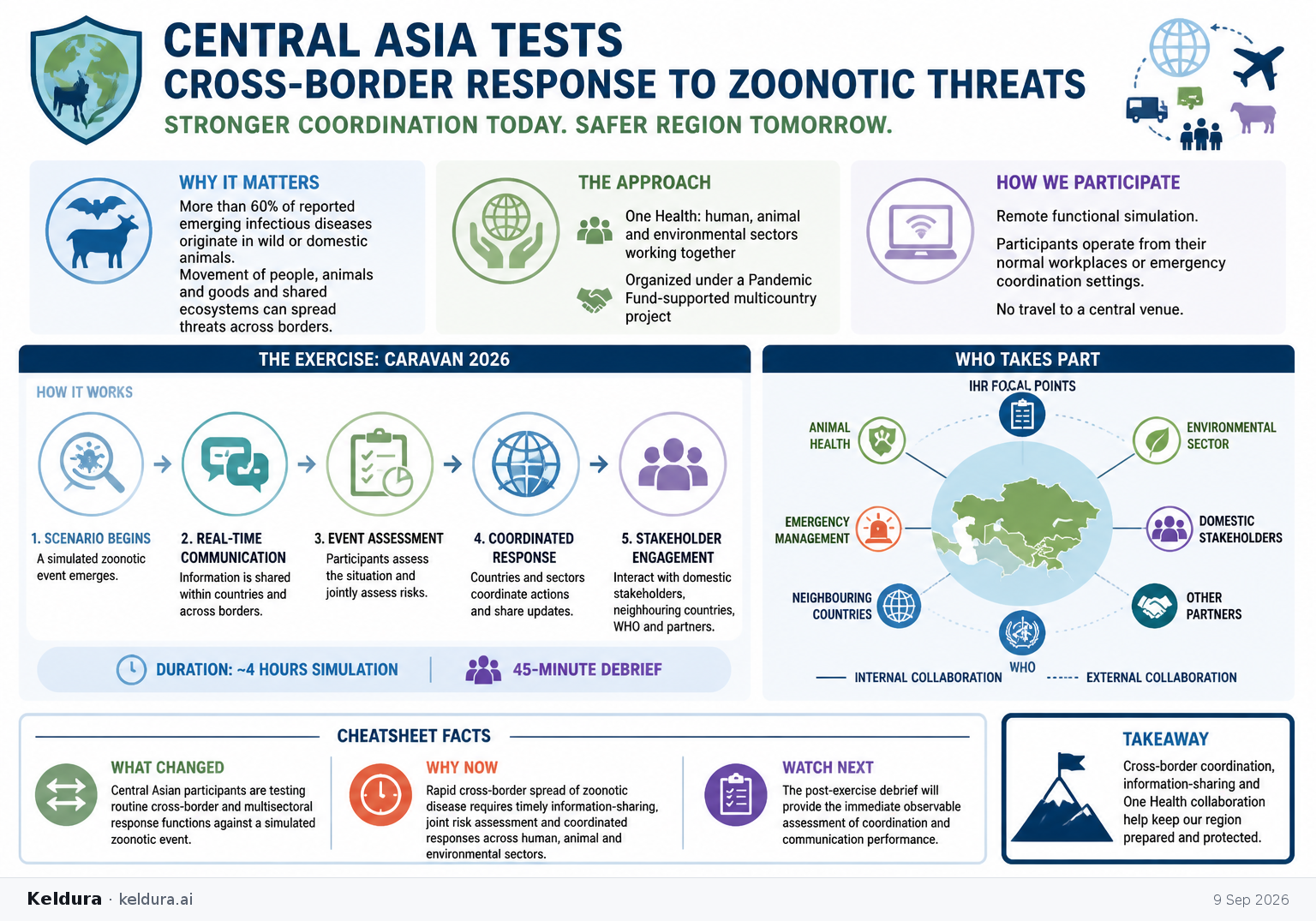
Exercise CARAVAN 2026 is a remote functional simulation designed to test cross-border coordination, communication and information-sharing for emerging zoonotic threats in Central Asia.[2] National International Health Regulations Focal Points will work with animal-health, environmental and emergency-management sectors through a realistic scenario lasting about four hours, followed by a 45-minute debrief.[2]
Why it matters: More than 60% of reported emerging infectious diseases originate in wild or domestic animals, while Central Asia’s movement of people, animals and goods and its shared ecosystems create pathways for threats to affect several countries.[2]
Key insights: The exercise is organized under a Pandemic Fund-supported multicountry project and advances the One Health approach.[2] | Participants will operate remotely from their normal workplaces or emergency coordination settings rather than travel to a central venue.[2] | The simulation includes real-time communication, event assessment and interaction with domestic stakeholders, neighbouring countries, WHO and other partners.[2]
Cheatsheet facts: What changed: Central Asian participants are testing routine cross-border and multisectoral response functions against a simulated zoonotic event.[2] | Why now: Rapid cross-border spread of zoonotic disease requires timely information-sharing, joint risk assessment and coordinated responses across human, animal and environmental sectors.[2] | Watch next: The post-exercise debrief will provide the immediate observable assessment of coordination and communication performance.[2]
Exercise CARAVAN 2026 is a remote functional simulation designed to test cross-border coordination, communication and information-sharing for emerging zoonotic threats in Central Asia.[2] National International Health Regulations Focal Points will work with animal-health, environmental and emergency-management sectors through a realistic scenario lasting about four hours, followed by a 45-minute debrief.[2]
Why it matters: More than 60% of reported emerging infectious diseases originate in wild or domestic animals, while Central Asia’s movement of people, animals and goods and its shared ecosystems create pathways for threats to affect several countries.[2]
Key insights: The exercise is organized under a Pandemic Fund-supported multicountry project and advances the One Health approach.[2] | Participants will operate remotely from their normal workplaces or emergency coordination settings rather than travel to a central venue.[2] | The simulation includes real-time communication, event assessment and interaction with domestic stakeholders, neighbouring countries, WHO and other partners.[2]
Cheatsheet facts: What changed: Central Asian participants are testing routine cross-border and multisectoral response functions against a simulated zoonotic event.[2] | Why now: Rapid cross-border spread of zoonotic disease requires timely information-sharing, joint risk assessment and coordinated responses across human, animal and environmental sectors.[2] | Watch next: The post-exercise debrief will provide the immediate observable assessment of coordination and communication performance.[2]