China tightens oversight of fast-track biomedical trials
Reports that two children died after receiving gene-editing treatments in separate Chinese clinical trials have intensified scrutiny of the country’s investigator-initiated trial pathway.[8] Order 818, effective since 1 May, limits trials involving new biomedical technologies to high-level sanjia h…
Reports that two children died after receiving gene-editing treatments in separate Chinese clinical trials have intensified scrutiny of the country’s investigator-initiated trial pathway.[8] Order 818, effective since 1 May, limits trials involving new biomedical technologies to high-level sanjia hospitals, permits additional national review and introduces suspension powers and penalties.[8]
Why it matters: Investigator-initiated trials have helped accelerate China’s cell and gene-therapy sector—the number registered annually rose elevenfold to 207 between 2015 and 2023—but their speed increases the importance of consistent safety and ethics oversight.[8]
Key insights: Order 818 covers technologies including cell therapies, brain implants and gene-editing treatments.[8] | The National Health Commission may conduct a second assessment and can suspend, alter or cancel trials over technical or ethical concerns.[8] | Unauthorized trials can expose hospitals or companies to multimillion-yuan fines and three-year bans, while physicians can lose their medical licences.[8] | The rules allow companies to initiate investigator-led trials for the first time, making industry collaboration more practical.[8]
Cheatsheet facts: What changed: China added institutional restrictions, possible secondary review, enforcement powers and penalties to oversight of investigator-initiated biomedical trials.[8] | Why now: The rules arrived shortly before reports of two child deaths brought renewed attention to the fast-track pathway.[8] | Watch next: Observe whether the National Health Commission consistently uses its authority to reassess, alter, suspend or cancel trials with technical or ethical concerns.[8]
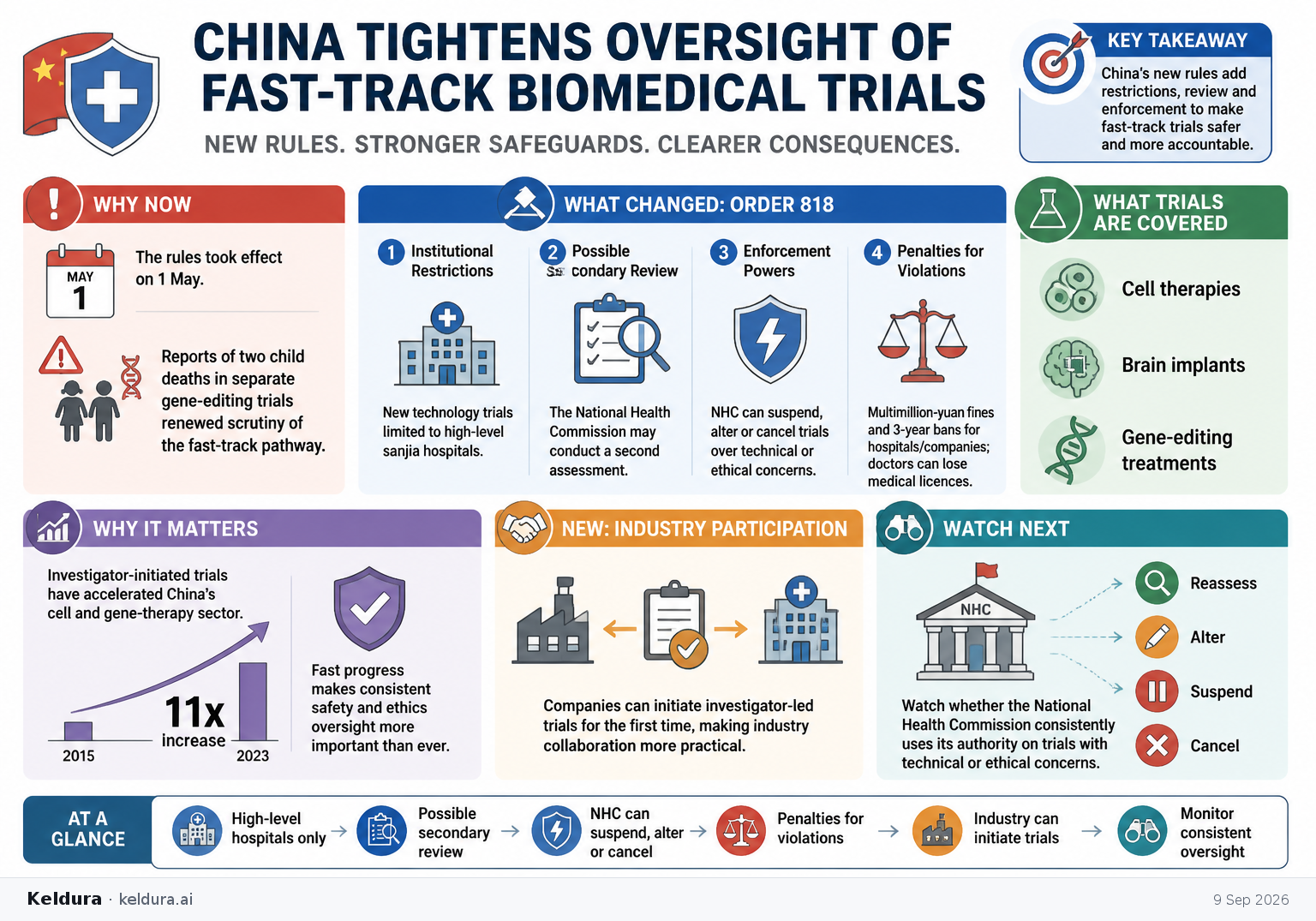
Reports that two children died after receiving gene-editing treatments in separate Chinese clinical trials have intensified scrutiny of the country’s investigator-initiated trial pathway.[8] Order 818, effective since 1 May, limits trials involving new biomedical technologies to high-level sanjia hospitals, permits additional national review and introduces suspension powers and penalties.[8]
Why it matters: Investigator-initiated trials have helped accelerate China’s cell and gene-therapy sector—the number registered annually rose elevenfold to 207 between 2015 and 2023—but their speed increases the importance of consistent safety and ethics oversight.[8]
Key insights: Order 818 covers technologies including cell therapies, brain implants and gene-editing treatments.[8] | The National Health Commission may conduct a second assessment and can suspend, alter or cancel trials over technical or ethical concerns.[8] | Unauthorized trials can expose hospitals or companies to multimillion-yuan fines and three-year bans, while physicians can lose their medical licences.[8] | The rules allow companies to initiate investigator-led trials for the first time, making industry collaboration more practical.[8]
Cheatsheet facts: What changed: China added institutional restrictions, possible secondary review, enforcement powers and penalties to oversight of investigator-initiated biomedical trials.[8] | Why now: The rules arrived shortly before reports of two child deaths brought renewed attention to the fast-track pathway.[8] | Watch next: Observe whether the National Health Commission consistently uses its authority to reassess, alter, suspend or cancel trials with technical or ethical concerns.[8]