SpaceX launches a classified Space Force mission
A Falcon 9 launched for the U.S. Space Force, but how much did the public webcast actually show?
On November 20, 2026, SpaceX launched the classified USSF-317 mission from Vandenberg Space Force Base on the 121st Falcon 9 flight of the year.
A Falcon 9 lifted off at 8:20 p.m. local time, and its first stage landed on a ship in the Pacific about 8.5 minutes later. [1] SpaceX ended the webcast shortly after the landing, without showing the upper stage’s flight to orbit; the payload and exact orbit were not publicly identified. [1]
Open original · [1] SpaceX launches classified mission for US Space Force from California | Space — space.com
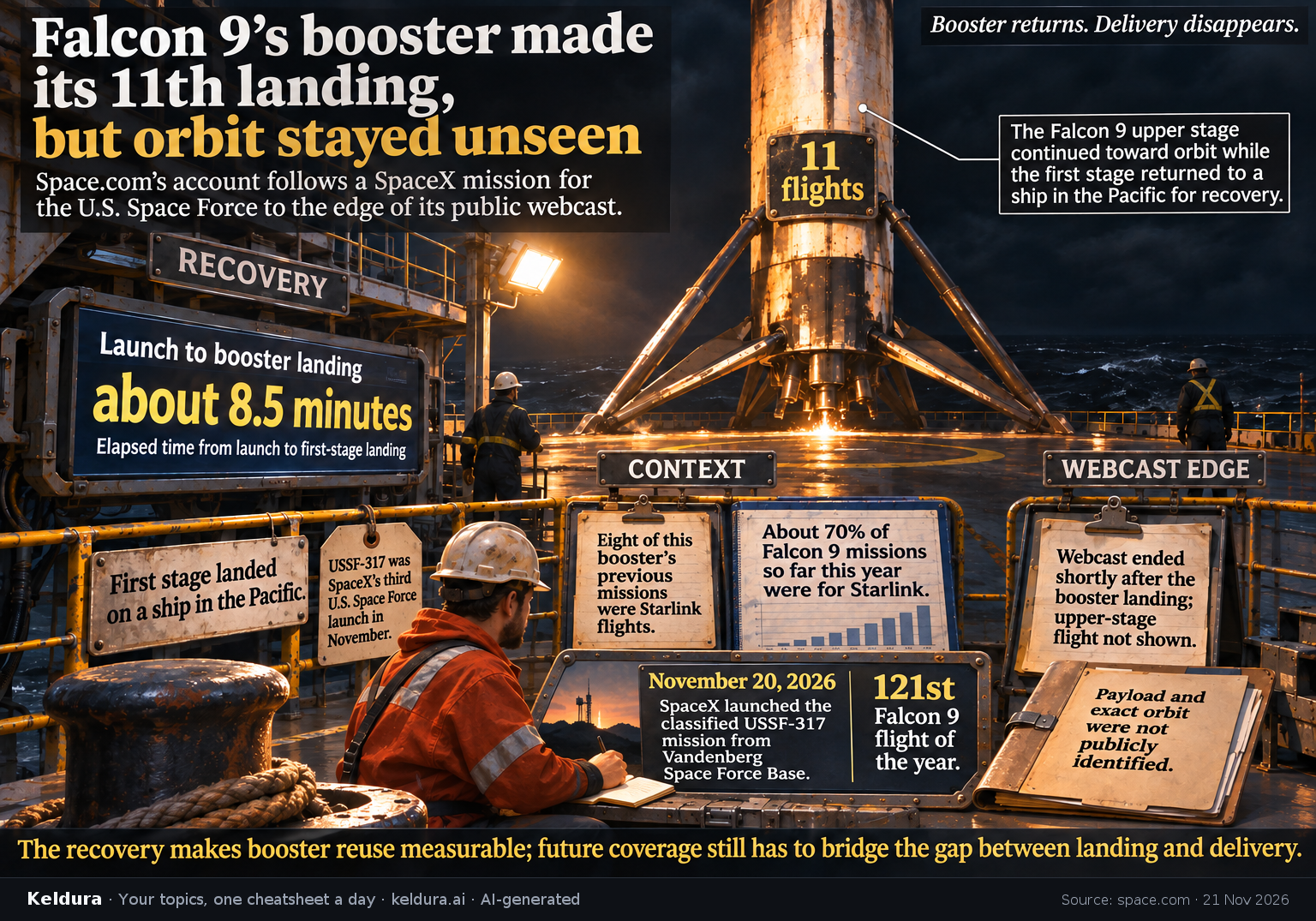
A Falcon 9 lifted off at 8:20 p.m. local time, and its first stage landed on a ship in the Pacific about 8.5 minutes later. [1] SpaceX ended the webcast shortly after the landing, without showing the upper stage’s flight to orbit; the payload and exact orbit were not publicly identified. [1]
Why it matters: The booster’s landing was its 11th, giving readers a concrete measure of how often the same hardware can fly. The classified mission also shows where public launch coverage stops: viewers could see the booster return, but not track the payload’s delivery on the webcast. [1]
Key insights: USSF-317 was SpaceX’s third launch for the U.S. Space Force in November. [1] | Eight of the booster’s previous missions were Starlink flights; about 70% of all Falcon 9 missions so far this year have been for Starlink. [1]
Cheatsheet facts: What happened: Falcon 9 launched USSF-317 from Vandenberg Space Force Base at 8:20 p.m. local time on November 20. [1] | Background: Falcon 9’s first stage is the booster that returns for reuse, while the upper stage carries the payload toward orbit. [1] | The catch: The webcast ended shortly after the booster’s 11th landing and did not show the upper stage’s flight to orbit. [1] | What we don't know: What did the upper stage carry, and what exact orbit was it headed for? [1]