Why Yemen’s escalation is exposing an air-defence bottleneck
Saudi Arabia has asked France, Pakistan, Egypt and the United Kingdom for air-defence support because its missile interceptors are running.
Saudi Arabia has asked France, Pakistan, Egypt and the United Kingdom for air-defence support because its missile interceptors are running low, while US stocks have also dwindled during the war with Iran.[2] The appeal accompanied intensified fighting, including reported Saudi-led strikes in Yemen,…
Saudi Arabia has asked France, Pakistan, Egypt and the United Kingdom for air-defence support because its missile interceptors are running low, while US stocks have also dwindled during the war with Iran.[2] The appeal accompanied intensified fighting, including reported Saudi-led strikes in Yemen, Houthi attacks against Saudi targets and Saudi Arabia’s interception of a Houthi drone south of Mecca.[2][8]
Why it matters: The conflict now combines military escalation, pressure on the Bab al-Mandab maritime route and scarcity in defensive munitions, while the US simultaneously supports Yemen’s internationally recognized government and holds direct talks with Houthi representatives.[2][8]
Key insights: US officials reportedly met Houthi representatives at the US embassy in Muscat with Omani assistance, even as Washington reaffirmed support for Yemen’s government.[2] | The Houthis said they targeted Khamis Mushait airbase and an oil facility at Yanbu after reporting 40 Saudi air strikes over 24 hours.[2] | A four-year informal ceasefire began unraveling in July after the Houthis declared a maritime embargo and resumed missile and drone attacks against Saudi targets.[8] | Saudi Arabia and Yemen’s government used an emergency UN Security Council meeting to seek stronger action over alleged Houthi pressure on the Bab al-Mandab Strait.[8]
Cheatsheet facts: What changed: Fighting intensified while Saudi Arabia sought overseas air-defence deployments and the US held direct talks with Houthi representatives.[2] | Why now: Renewed Houthi missile and drone attacks are colliding with dwindling Saudi and US interceptor inventories.[2][8] | Watch next: Watch whether France, Pakistan, Egypt or the United Kingdom deploys air-defence support, and whether the Muscat channel produces further confirmed talks.[2]
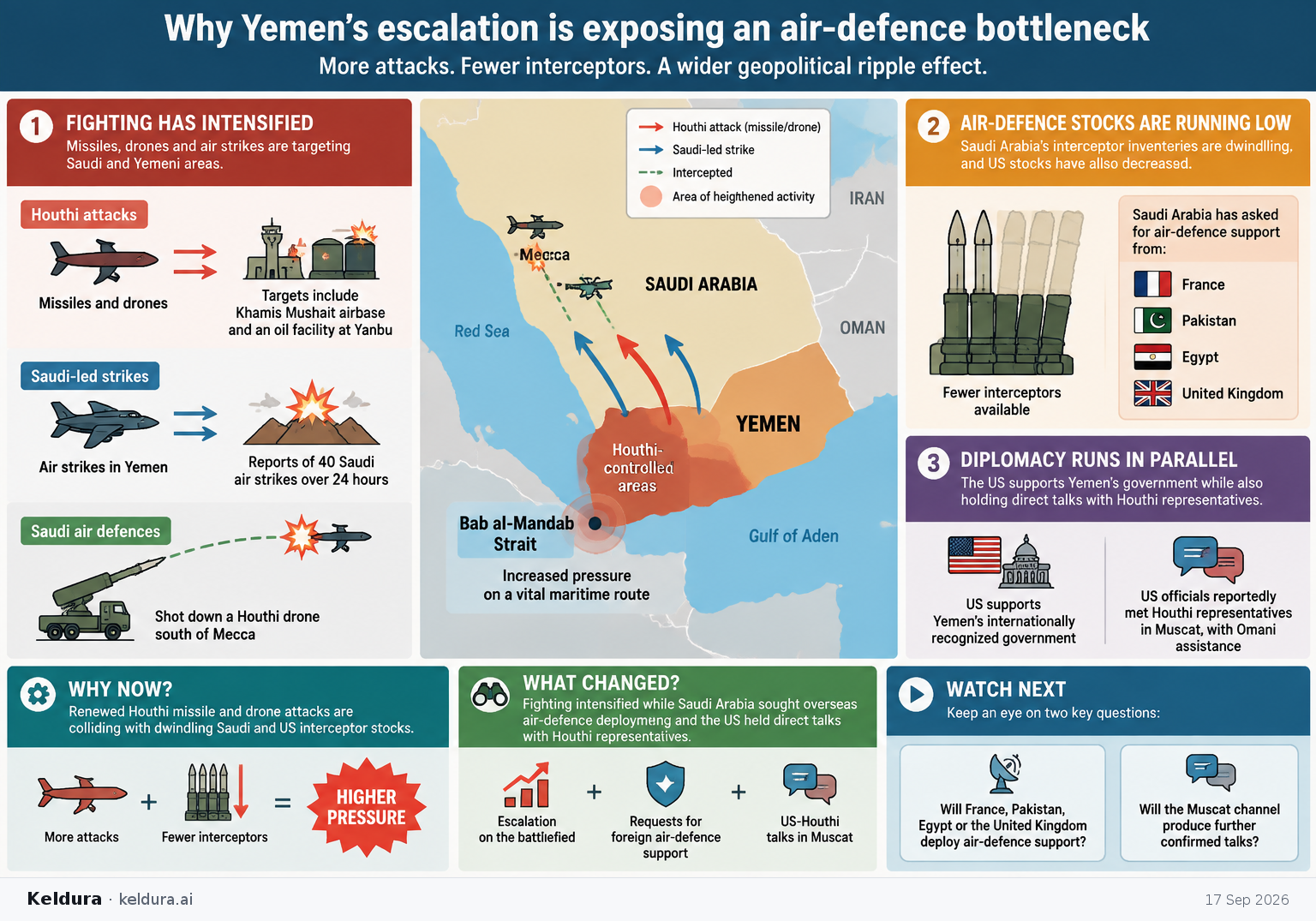
Saudi Arabia has asked France, Pakistan, Egypt and the United Kingdom for air-defence support because its missile interceptors are running low, while US stocks have also dwindled during the war with Iran.[2] The appeal accompanied intensified fighting, including reported Saudi-led strikes in Yemen, Houthi attacks against Saudi targets and Saudi Arabia’s interception of a Houthi drone south of Mecca.[2][8]
Why it matters: The conflict now combines military escalation, pressure on the Bab al-Mandab maritime route and scarcity in defensive munitions, while the US simultaneously supports Yemen’s internationally recognized government and holds direct talks with Houthi representatives.[2][8]
Key insights: US officials reportedly met Houthi representatives at the US embassy in Muscat with Omani assistance, even as Washington reaffirmed support for Yemen’s government.[2] | The Houthis said they targeted Khamis Mushait airbase and an oil facility at Yanbu after reporting 40 Saudi air strikes over 24 hours.[2] | A four-year informal ceasefire began unraveling in July after the Houthis declared a maritime embargo and resumed missile and drone attacks against Saudi targets.[8] | Saudi Arabia and Yemen’s government used an emergency UN Security Council meeting to seek stronger action over alleged Houthi pressure on the Bab al-Mandab Strait.[8]
Cheatsheet facts: What changed: Fighting intensified while Saudi Arabia sought overseas air-defence deployments and the US held direct talks with Houthi representatives.[2] | Why now: Renewed Houthi missile and drone attacks are colliding with dwindling Saudi and US interceptor inventories.[2][8] | Watch next: Watch whether France, Pakistan, Egypt or the United Kingdom deploys air-defence support, and whether the Muscat channel produces further confirmed talks.[2]