Why the Strait of Hormuz remains the key bargaining chip in US-Iran talks
Donald Trump rejected Iran’s seven-day truce proposal, but both sides signaled that indirect negotiations could resume as soon as this week.
Iran proposed a seven-day regional truce followed by reopening the Strait of Hormuz, with demands including sanctions relief, access to frozen assets and an end to the US naval blockade.[3][4] Trump rejected the proposal, while Tehran said mediators had not formally conveyed a definitive US rejecti…
Iran proposed a seven-day regional truce followed by reopening the Strait of Hormuz, with demands including sanctions relief, access to frozen assets and an end to the US naval blockade.[3][4] Trump rejected the proposal, while Tehran said mediators had not formally conveyed a definitive US rejection and continued to argue that only negotiations could break the deadlock.[4] Indirect US-Iran talks could take place as early as Tuesday, according to reporting cited by SBS News.[3]
Why it matters: Hormuz is a major energy chokepoint, and reduced shipping through the strait has disrupted oil flows and harmed the global economy; control over passage therefore gives Iran leverage in negotiations over sanctions, frozen assets, regional fighting and its nuclear programme.[3][4]
Key insights: Iran says reopening Hormuz depends on its conditions being met, while US officials argue Tehran is demanding major concessions before substantive talks begin.[3][4] | A June memorandum aimed at ending the war, reopening the strait and beginning nuclear talks collapsed after Iran fired on commercial vessels it accused of deviating from approved routes.[3] | Iran says ships must obtain authorization to pass, while the United States has responded to attacks with intermittent strikes on Iranian coastal areas.[3] | The IRGC separately claimed it seized a US Mk 18 Mod 2 Kingfish underwater drone in Hormuz, but the cited report said no independent evidence of the seizure was provided.[5]
Cheatsheet facts: What changed: Trump rejected Iran’s seven-day truce-and-reopening plan, although Tehran says mediators have not officially delivered a definitive rejection.[3][4] | Why now: Iran is tying access through Hormuz to sanctions relief, frozen assets and an end to the blockade, while Washington wants credible nuclear negotiations rather than concessions upfront.[3][4] | Watch next: Watch whether Qatari mediators formally convey Washington’s position and whether the reported indirect US-Iran talks take place.[3][4]
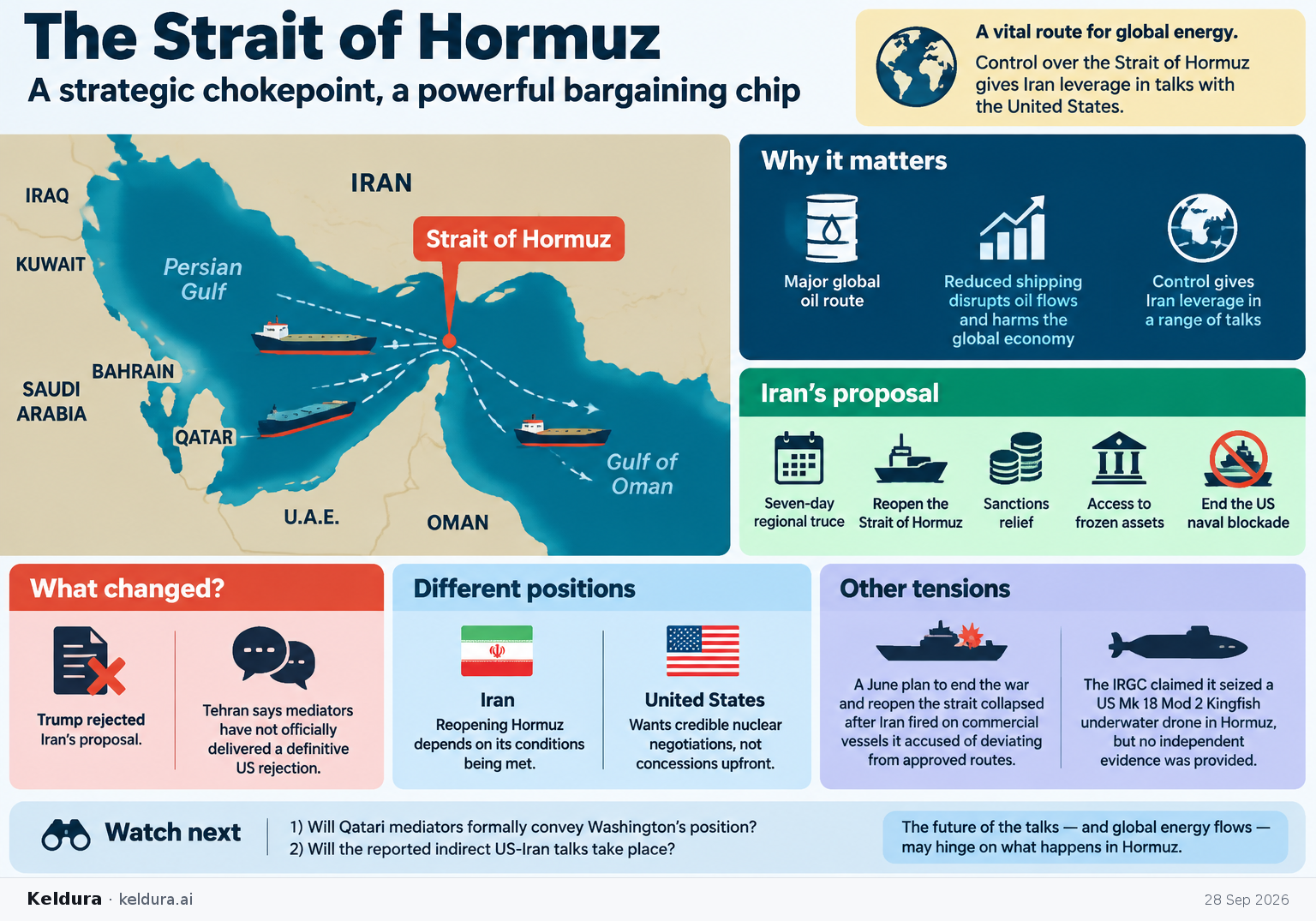
Iran proposed a seven-day regional truce followed by reopening the Strait of Hormuz, with demands including sanctions relief, access to frozen assets and an end to the US naval blockade.[3][4] Trump rejected the proposal, while Tehran said mediators had not formally conveyed a definitive US rejection and continued to argue that only negotiations could break the deadlock.[4] Indirect US-Iran talks could take place as early as Tuesday, according to reporting cited by SBS News.[3]
Why it matters: Hormuz is a major energy chokepoint, and reduced shipping through the strait has disrupted oil flows and harmed the global economy; control over passage therefore gives Iran leverage in negotiations over sanctions, frozen assets, regional fighting and its nuclear programme.[3][4]
Key insights: Iran says reopening Hormuz depends on its conditions being met, while US officials argue Tehran is demanding major concessions before substantive talks begin.[3][4] | A June memorandum aimed at ending the war, reopening the strait and beginning nuclear talks collapsed after Iran fired on commercial vessels it accused of deviating from approved routes.[3] | Iran says ships must obtain authorization to pass, while the United States has responded to attacks with intermittent strikes on Iranian coastal areas.[3] | The IRGC separately claimed it seized a US Mk 18 Mod 2 Kingfish underwater drone in Hormuz, but the cited report said no independent evidence of the seizure was provided.[5]
Cheatsheet facts: What changed: Trump rejected Iran’s seven-day truce-and-reopening plan, although Tehran says mediators have not officially delivered a definitive rejection.[3][4] | Why now: Iran is tying access through Hormuz to sanctions relief, frozen assets and an end to the blockade, while Washington wants credible nuclear negotiations rather than concessions upfront.[3][4] | Watch next: Watch whether Qatari mediators formally convey Washington’s position and whether the reported indirect US-Iran talks take place.[3][4]
X copy pack
[3] Iran brought a truce plan to the UN. Trump rejected it | SBS News — sbs.com.au[4] Iran insists on diplomatic solution after Trump rejects peace plan | FMT — freemalaysiatoday.com[5] Iran claims second US drone seized in Strait of Hormuz, identifies it as Mk 18 Kingfish - The Times of India — timesofindia.indiatimes.comRead in BriefingsPost to X