Why two North Korean POWs triggered a Seoul-Kyiv trust crisis
Seoul says Kyiv disclosed the transfer of two North Korean prisoners and then falsely denied that the governments had agreed.
Seoul says Kyiv disclosed the transfer of two North Korean prisoners and then falsely denied that the governments had agreed to confidentiality.[2][6] South Korea says secrecy was intended to protect the prisoners and their families and address security, diplomatic and humanitarian concerns, while…
Seoul says Kyiv disclosed the transfer of two North Korean prisoners and then falsely denied that the governments had agreed to confidentiality.[2][6] South Korea says secrecy was intended to protect the prisoners and their families and address security, diplomatic and humanitarian concerns, while Ukraine had feared criticism for forgoing a possible prisoner exchange.[6]
Why it matters: The breach could damage bilateral relations and complicate Kyiv’s efforts to secure weapons from South Korea, which has not supplied lethal arms but had been considering requests for defensive weapons after North Korea deployed troops in support of Russia.[2]
Key insights: Ukraine captured the two soldiers in Russia’s Kursk region in January 2025 after North Korea entered the war in support of Russia.[6] | The prisoners had expressed a desire to travel to South Korea, and Seoul had previously declined to confirm their arrival because of safety concerns for them and their families in North Korea.[6] | Seoul says Volodymyr Zelenskyy disclosed the transfer at the United Nations General Assembly without sufficient prior consultation.[6] | South Korea is reviewing whether additional measures are necessary and is seeking an official explanation and apology.[2][6]
Cheatsheet facts: What changed: Ukraine publicly revealed that two captured North Korean soldiers had been transferred to South Korea, which says the move was covered by a confidentiality agreement.[2][6] | Why now: Seoul says the disclosure created security and humanitarian risks, while Kyiv had worried that a secret transfer could prompt criticism over a lost prisoner-exchange opportunity.[6] | Watch next: Watch for Ukraine’s official response to Seoul’s demand and any additional measures announced by South Korea’s presidential office.[2][6]
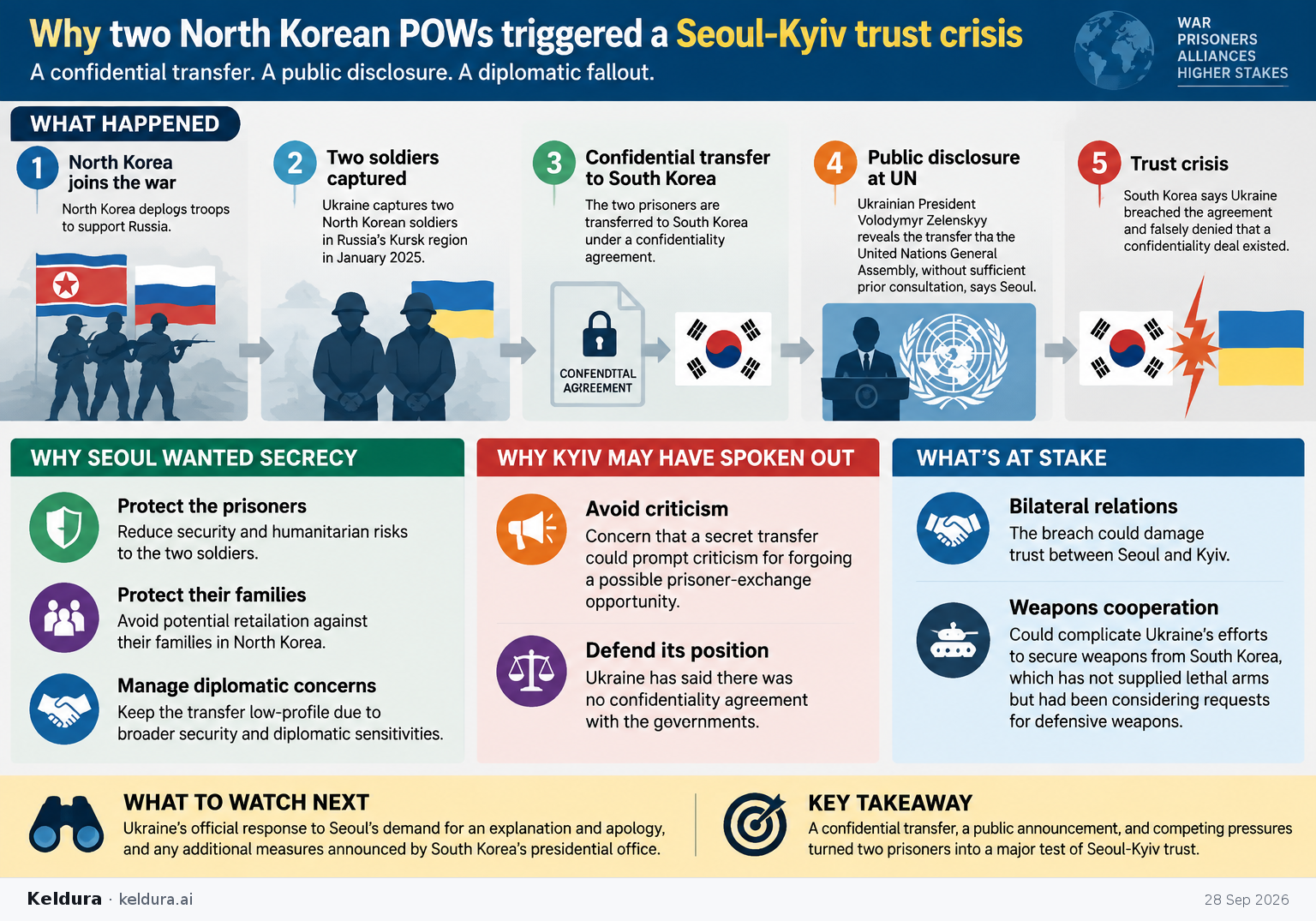
Seoul says Kyiv disclosed the transfer of two North Korean prisoners and then falsely denied that the governments had agreed to confidentiality.[2][6] South Korea says secrecy was intended to protect the prisoners and their families and address security, diplomatic and humanitarian concerns, while Ukraine had feared criticism for forgoing a possible prisoner exchange.[6]
Why it matters: The breach could damage bilateral relations and complicate Kyiv’s efforts to secure weapons from South Korea, which has not supplied lethal arms but had been considering requests for defensive weapons after North Korea deployed troops in support of Russia.[2]
Key insights: Ukraine captured the two soldiers in Russia’s Kursk region in January 2025 after North Korea entered the war in support of Russia.[6] | The prisoners had expressed a desire to travel to South Korea, and Seoul had previously declined to confirm their arrival because of safety concerns for them and their families in North Korea.[6] | Seoul says Volodymyr Zelenskyy disclosed the transfer at the United Nations General Assembly without sufficient prior consultation.[6] | South Korea is reviewing whether additional measures are necessary and is seeking an official explanation and apology.[2][6]
Cheatsheet facts: What changed: Ukraine publicly revealed that two captured North Korean soldiers had been transferred to South Korea, which says the move was covered by a confidentiality agreement.[2][6] | Why now: Seoul says the disclosure created security and humanitarian risks, while Kyiv had worried that a secret transfer could prompt criticism over a lost prisoner-exchange opportunity.[6] | Watch next: Watch for Ukraine’s official response to Seoul’s demand and any additional measures announced by South Korea’s presidential office.[2][6]