COP31 draft leaves out fossil fuels but keeps electricity target
The draft calls for using more electricity, but can countries agree without naming the fuels they’re trying to replace?
On November 22, COP31 co-hosts Turkey and Australia proposed raising electricity’s share of global final energy use to 35 percent by 2035 without naming fossil fuels in the draft.
Turkey and Australia put forward a new COP31 draft in Antalya, Turkey, after a dispute over fossil fuels pushed the UN climate talks into a second day of overtime. [1] [2] [4] [9] An earlier draft called for a faster phaseout, but the latest text refers indirectly to the 2023 agreement to shift awa…
Open original (6 sources):
- [1] Fossil fuels still missing from latest COP31 draft deal | AFP.com — afp.com
- [2] Fossil fuel impasse pushes COP31 climate talks into second day of overtime | Climate News | Al Jazeera — aljazeera.com
- [4] COP31 climate talks close to final deal, summit president says - The Japan Times — japantimes.co.jp
- [9] Climate talks in overtime as nations wrestle with response to worsening global warming — apnews.com
- [3] Turkey's final draft at UN climate talks doesn't mention the fossil fuels that cause global warming — apnews.com
- [5] Fossil fuel dispute threatens to scupper climate deal | AFP.com — afp.com
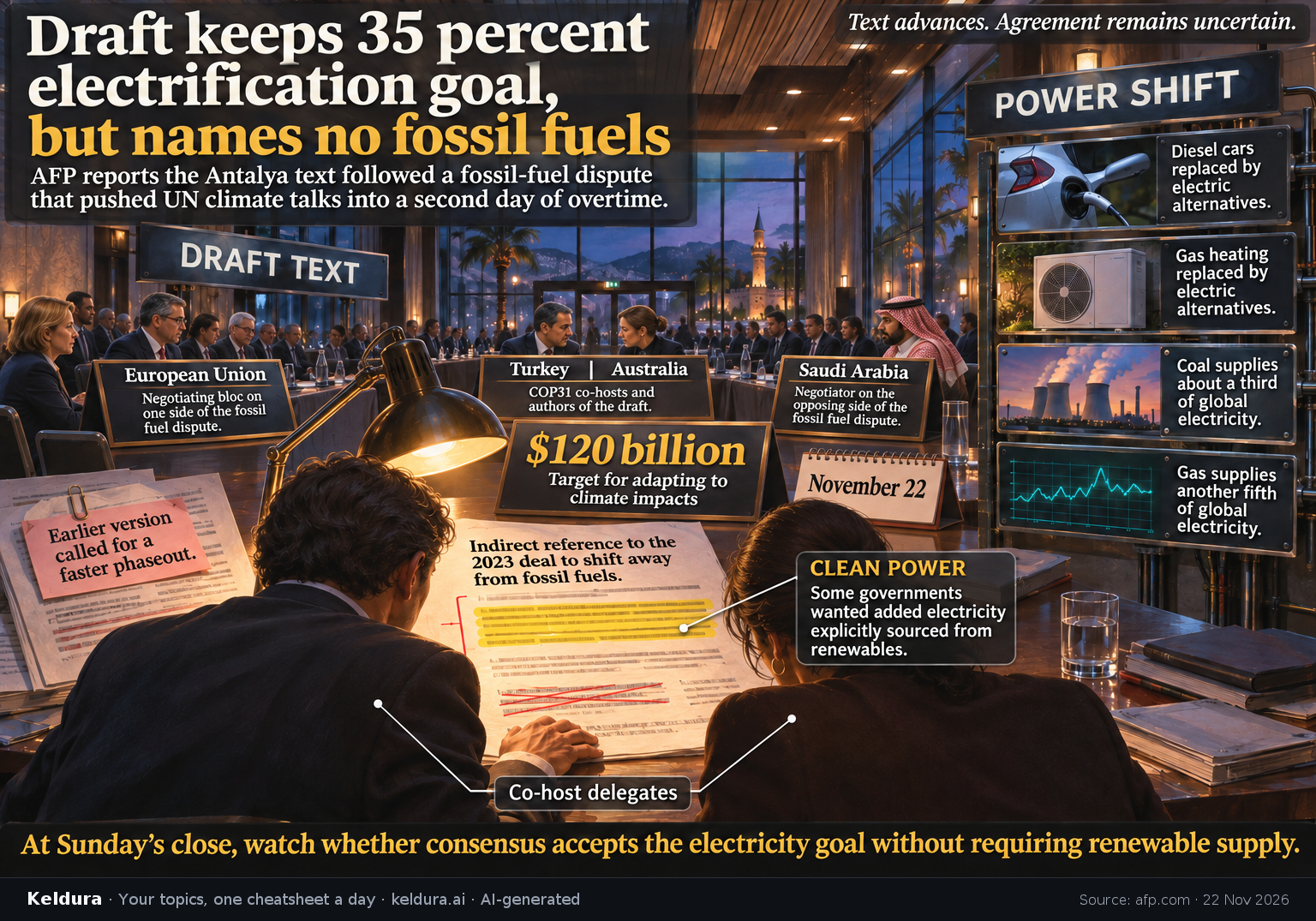
Turkey and Australia put forward a new COP31 draft in Antalya, Turkey, after a dispute over fossil fuels pushed the UN climate talks into a second day of overtime. [1] [2] [4] [9] An earlier draft called for a faster phaseout, but the latest text refers indirectly to the 2023 agreement to shift away from fossil fuels without naming coal, oil or gas. [1] [3] The draft keeps a 35 percent electrification goal for 2035 and still needs consensus from nearly 200 countries. [1]
Why it matters: Switching from diesel cars and gas heating to electric alternatives can cut emissions, but the benefit depends on how the electricity is generated: coal supplies about a third of global electricity and gas another fifth. [1]
Key insights: An earlier draft called for a faster fossil fuel phaseout; Thursday’s version removed all mentions of coal, oil and gas, and Sunday’s version added an indirect reference to the 2023 deal. [1] | After threats of a walkout, the co-hosts brought the European Union and Saudi Arabia together to seek a compromise. [1] | Developing nations objected to the removal of a $120 billion target for adapting to climate impacts, a separate dispute over how much support wealthy countries should provide. [1] [5]
Cheatsheet facts: What happened: The co-hosts issued an overtime draft that keeps the 2035 electricity target but does not explicitly name fossil fuels. [1] [2] [3] [9] | Background: COP31 is the UN climate summit where nearly 200 countries must agree on the text by consensus; their 2023 deal called for shifting away from fossil fuels. [1] [4] | Why: Turkey and Australia promoted electrification as a way to cut emissions and improve energy security by replacing equipment that burns fuel directly. [1] | The catch: Some governments wanted an explicitly clean electrification target so that the added power would come from renewables rather than fossil fuels. [1] | What's next: Watch whether nearly 200 countries approve the draft by consensus at Sunday’s closing session. [1]
X copy pack
Edition complete
You've reached the end of this edition.