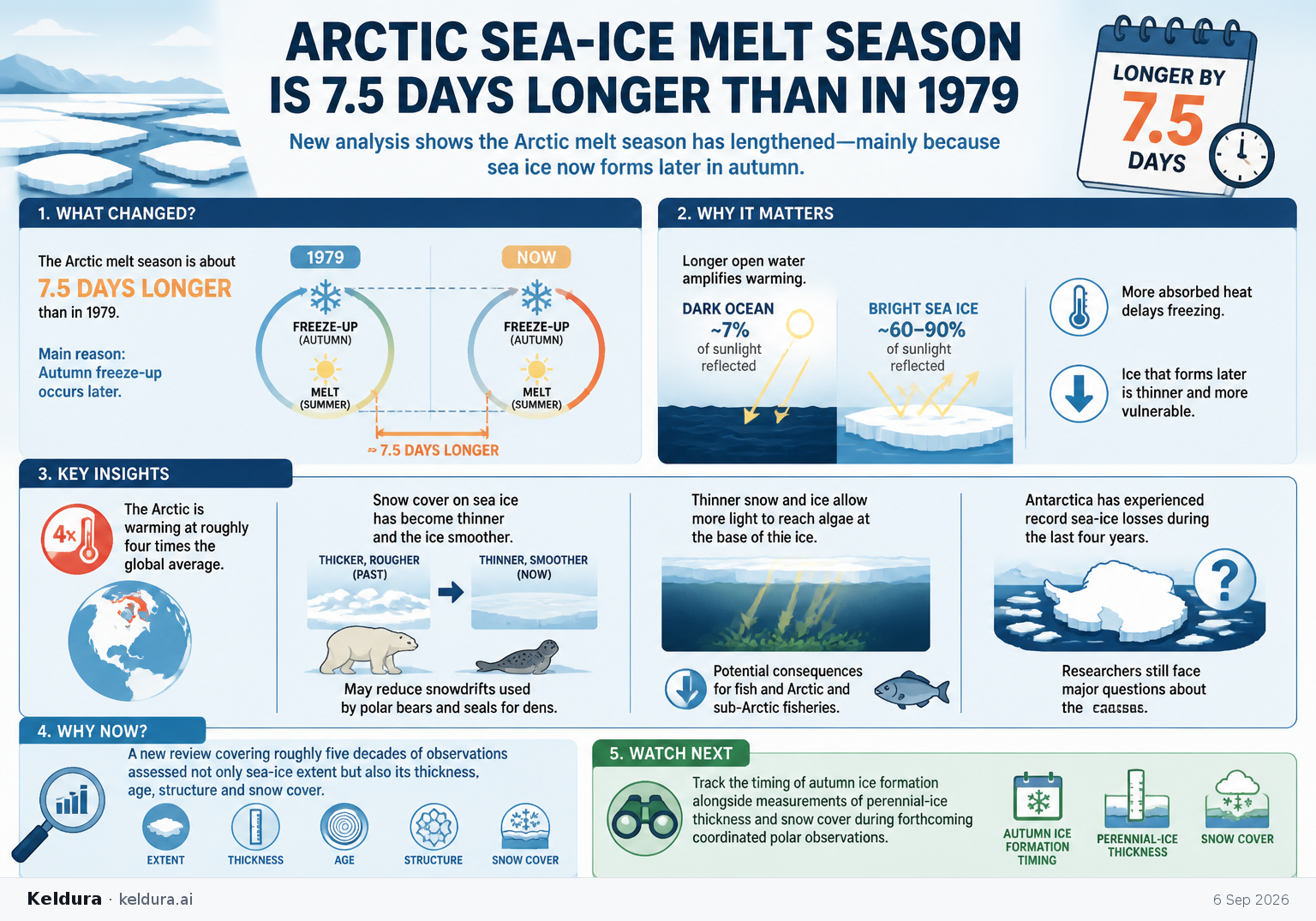
A University of Washington-led analysis found that the Arctic sea-ice melt season has lengthened by about 7.5 days since 1979, mainly because ice now forms later in autumn.
Why it matters: Longer periods of open water amplify warming because dark ocean reflects only about 7% of incoming sunlight, compared with roughly 60% to 90% for bright sea ice; the absorbed heat delays freezing and…
The Arctic melt season is about 7.5 days longer than in 1979, primarily because autumn freeze-up occurs later [2].
Why now
A new review covering roughly five decades of observations assessed not only sea-ice extent but also its thickness, age, structure and snow cover [2].
Watch next
Track the timing of autumn ice formation alongside measurements of perennial-ice thickness and snow cover during forthcoming coordinated polar observations [2].
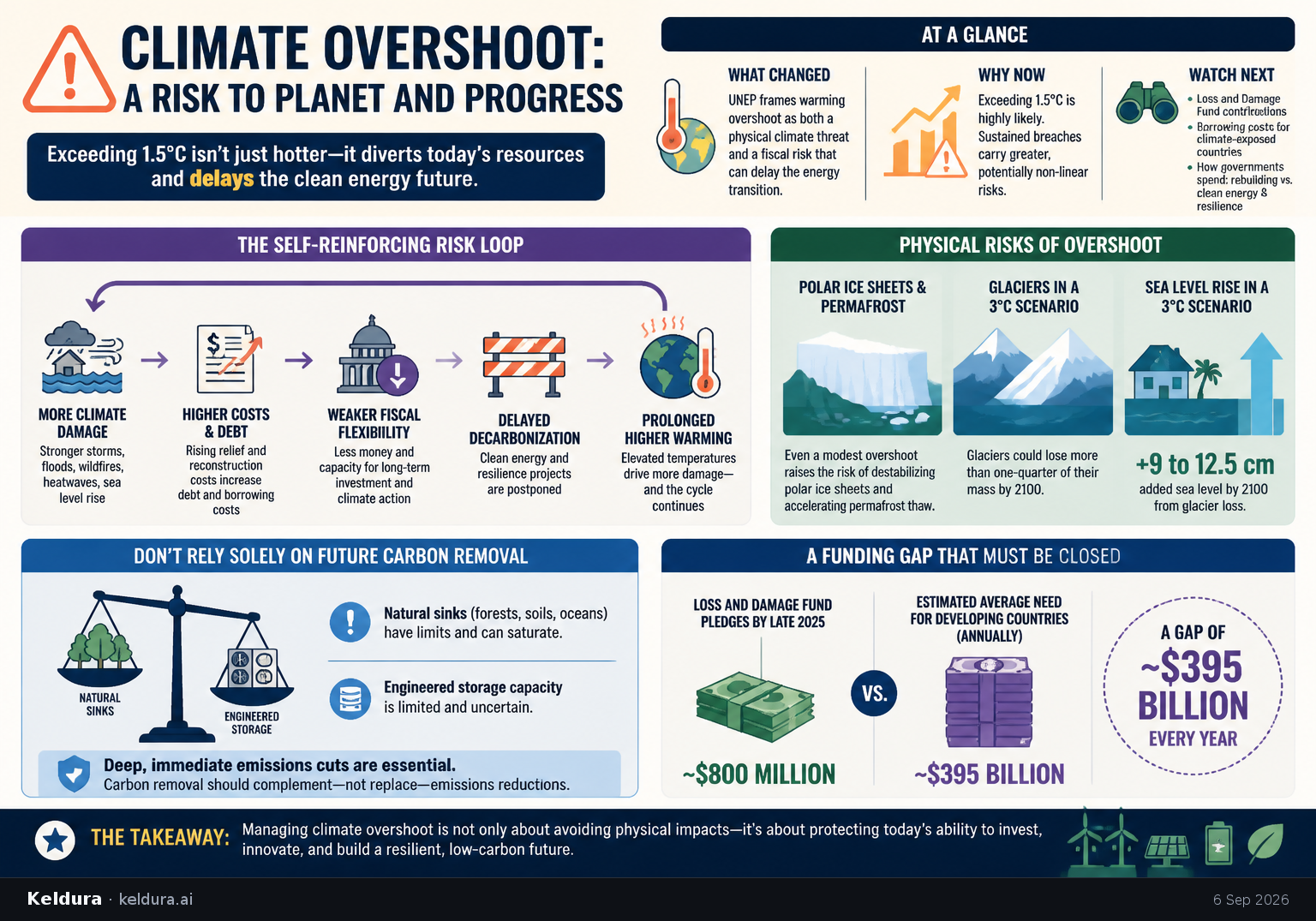
A new U.N. Environment Programme report says humanity is highly likely to exceed the 1.5-degree Celsius warming threshold.
Why it matters: The report identifies a self-reinforcing risk: more climate damage can increase debt and borrowing costs, weaken governments’ fiscal flexibility and delay decarbonization, thereby prolonging elevated…
UNEP has framed warming overshoot as both a physical climate threat and a fiscal risk capable of delaying the energy transition [4].
Why now
The report says exceeding 1.5 degrees Celsius is highly likely and warns that sustained breaches carry greater, potentially non-linear risks [4].
Watch next
Monitor Loss and Damage Fund contributions, climate-exposed countries’ borrowing costs, and government spending shifts between disaster reconstruction and clean-energy or resilience projects [4].
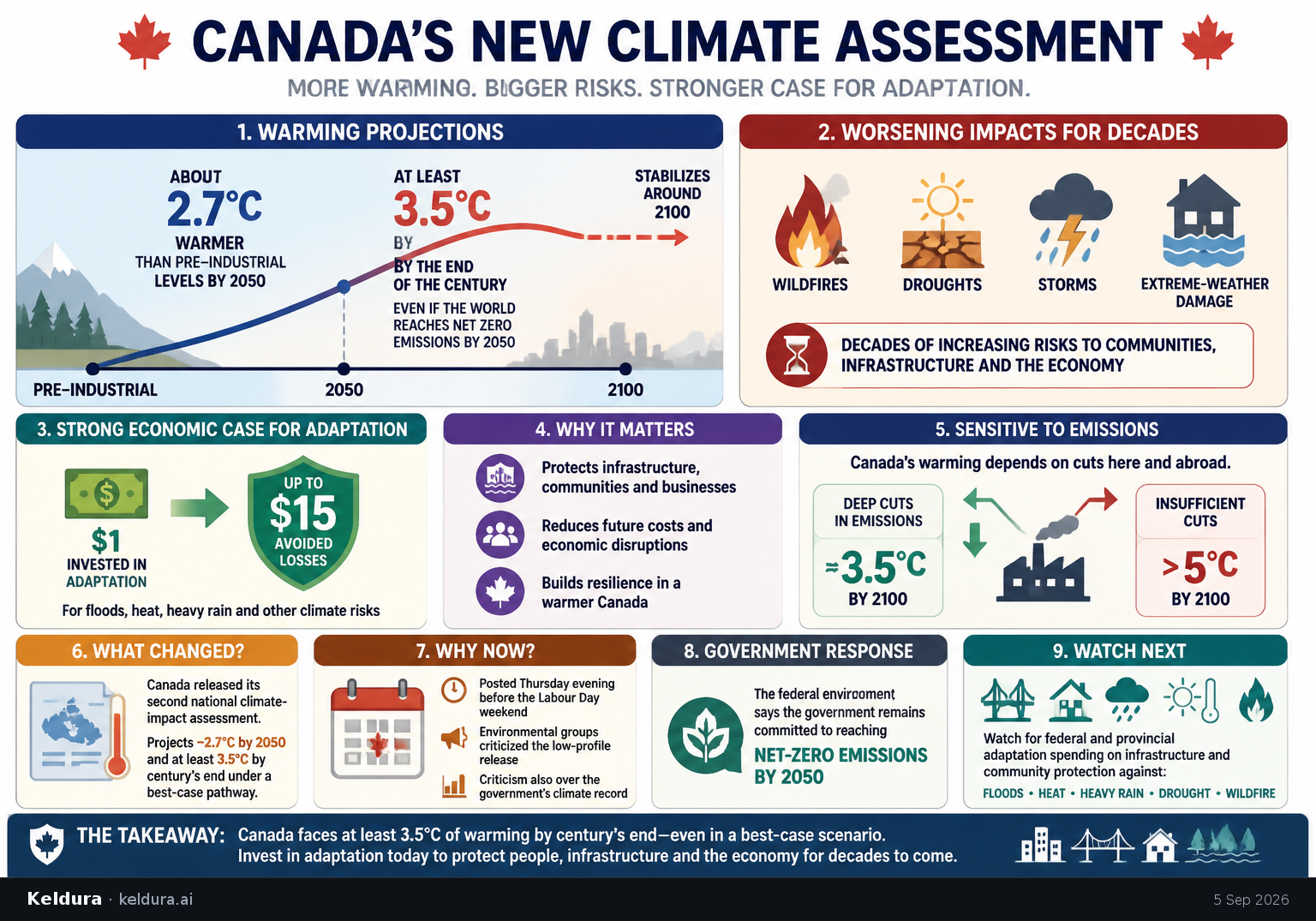
Canada’s latest federal climate assessment says the country will be about 2.7 C warmer than pre-industrial levels by 2050, close to twice the global average over that period.
Why it matters: The assessment strengthens the economic case for adaptation: Canadian Climate Institute analysis cited alongside the report estimates that every dollar invested in preparing infrastructure, communiti…
The federal government released a second national climate-impact assessment projecting about 2.7 C of warming by 2050 and at least 3.5 C by century’s end under a best-case emissions pathway. [1]
Why now
The assessment was posted ahead of the Labour Day weekend as environmental groups criticized both the low-profile release and the government’s climate record. [1]
Watch next
Watch for federal and provincial adaptation spending on infrastructure and community protection against floods, heat, heavy rain, drought and wildfire. [1]
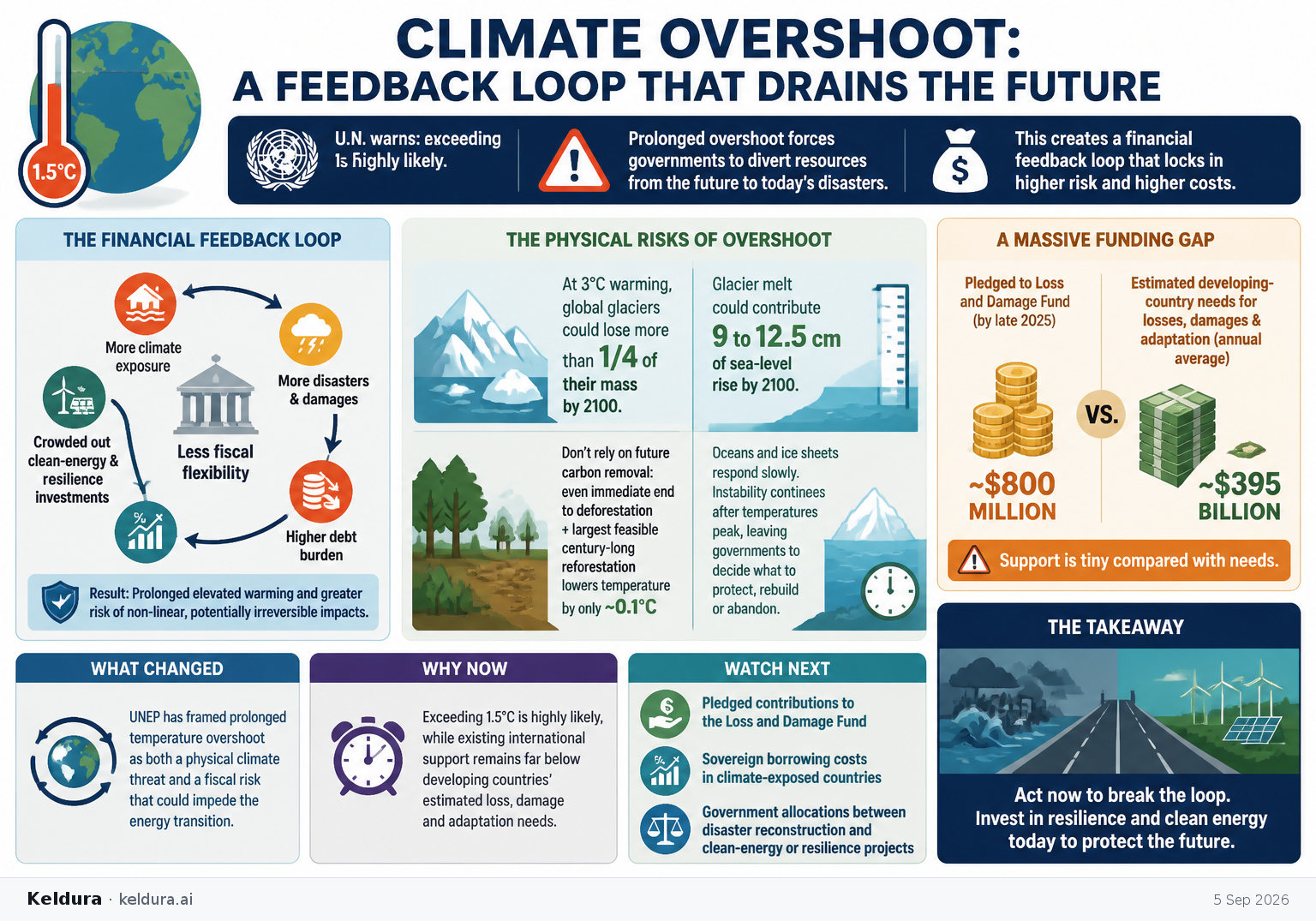
Why it matters: The report identifies a financial feedback loop in which climate exposure raises borrowing costs, disasters increase debt burdens and governments—particularly in lower-income countries—lose the fisca…
UNEP has framed prolonged temperature overshoot as both a physical climate threat and a fiscal risk that could impede the energy transition. [2]
Why now
The report says exceeding 1.5 C is highly likely while existing international support remains far below developing countries’ estimated loss, damage and adaptation needs. [2]
Watch next
Watch pledged contributions to the Loss and Damage Fund, sovereign borrowing costs in climate-exposed countries, and government allocations between disaster reconstruction and clean-energy or resilience projects. [2]
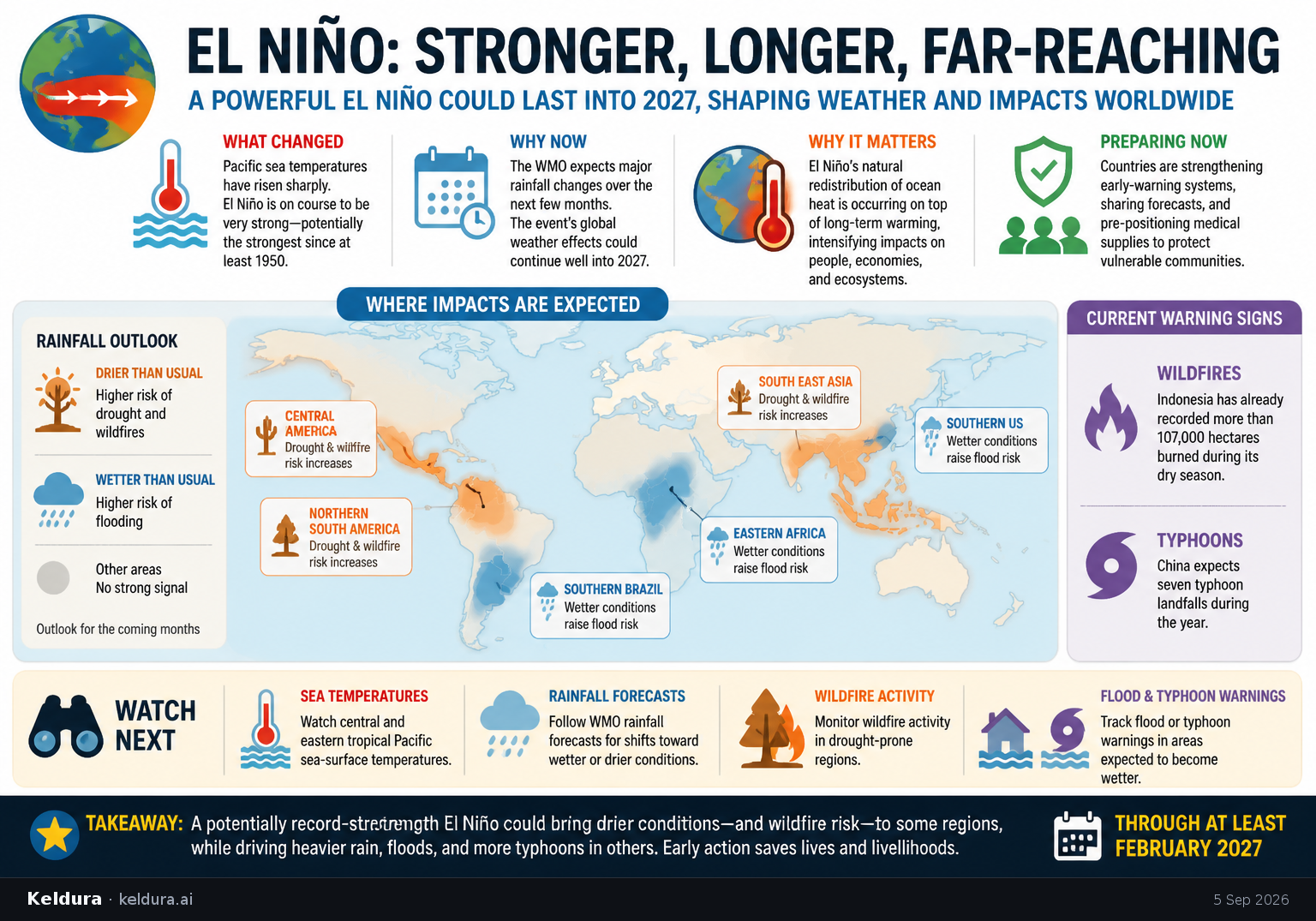
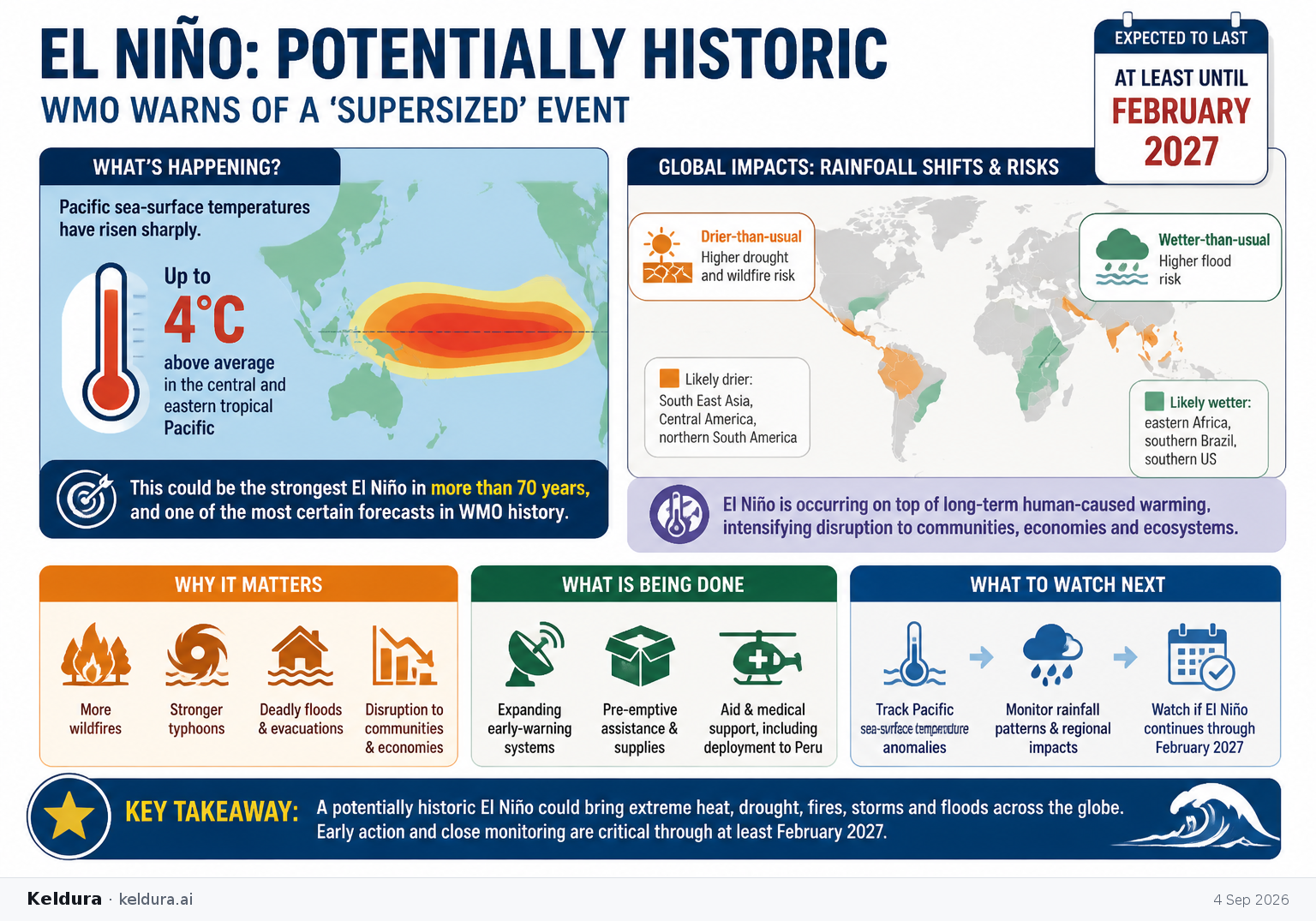
The World Meteorological Organization says the emerging El Niño could be the strongest in more than 70 years and last until at least February 2027.
Why it matters: El Niño’s natural redistribution of ocean heat is occurring on top of long-term human-caused warming, potentially intensifying impacts on vulnerable communities, economies and ecosystems across multi…
Pacific sea temperatures have risen sharply, putting El Niño on course to become a very strong event and potentially the strongest since at least 1950. [3]
Why now
The WMO expects major rainfall changes over the next few months and says the event’s global weather effects could continue well into 2027. [3]
Watch next
Watch central and eastern tropical Pacific sea-surface temperatures, WMO rainfall forecasts, wildfire activity in drought-prone regions, and flood or typhoon warnings in areas expected to become wetter. [3]
The World Meteorological Organization says the strengthening El Niño could be the strongest in more than 70 years and persist until at least February 2027.
Why it matters: El Niño is developing on top of long-term human-caused warming, potentially intensifying disruption to communities, economies and ecosystems; vulnerable regions already face wildfires, deadly typhoon…
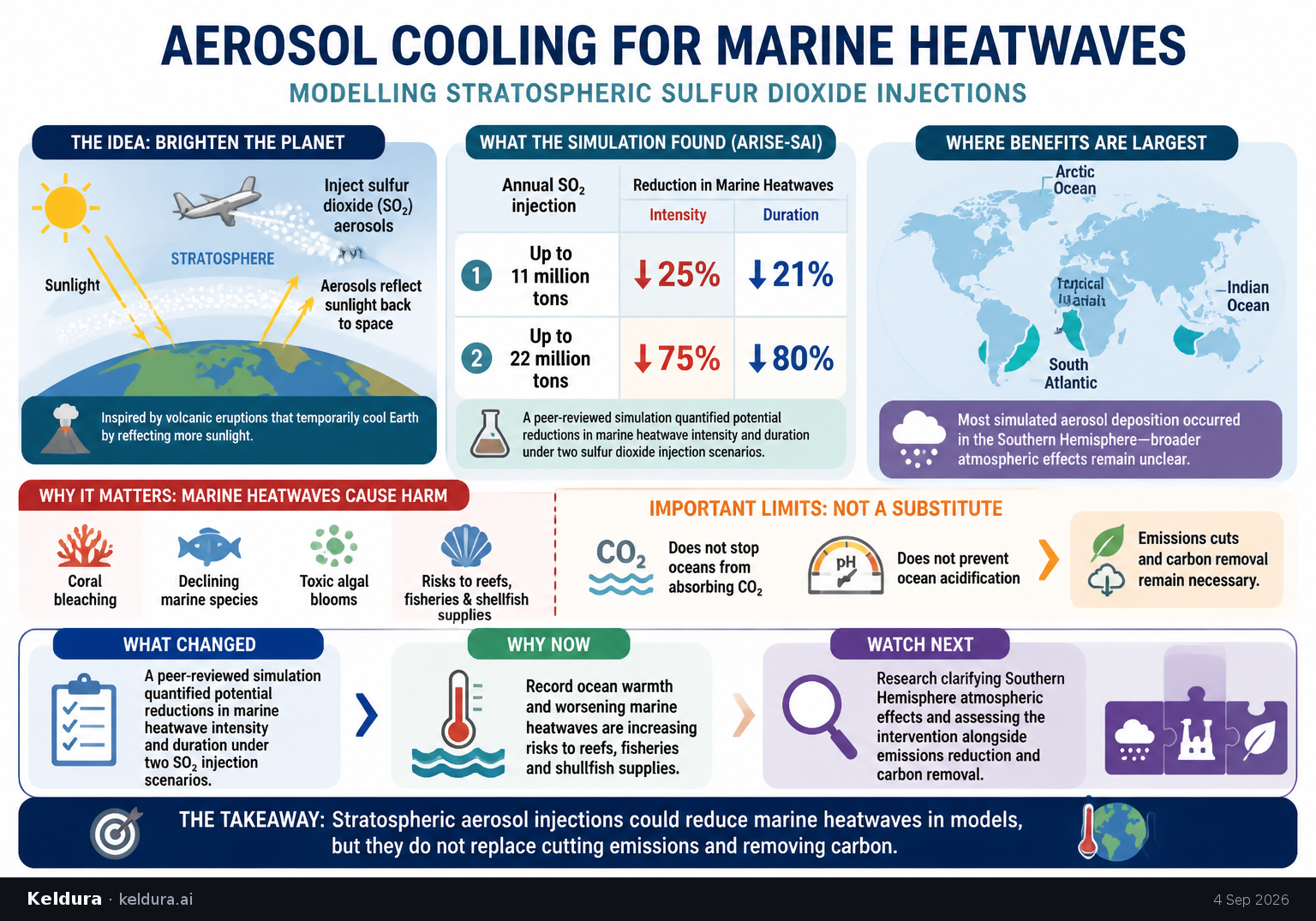
Researchers led by Dr Lala Kounta used the ARISE-SAI simulator to test whether releasing reflective sulfur dioxide aerosols into the stratosphere could limit ocean heatwaves.
Why it matters: Marine heatwaves are associated with coral bleaching, declining marine species and toxic algal blooms, but aerosol cooling would not prevent oceans from absorbing carbon dioxide or stop acidification…
A peer-reviewed simulation quantified potential reductions in marine heatwave intensity and duration under two sulfur dioxide injection scenarios.[1]
Why now
Record ocean warmth and worsening marine heatwaves are increasing risks to reefs, fisheries and shellfish supplies.[1]
Watch next
Watch for research clarifying Southern Hemisphere atmospheric effects and assessing the intervention alongside emissions reduction and carbon removal.[1]
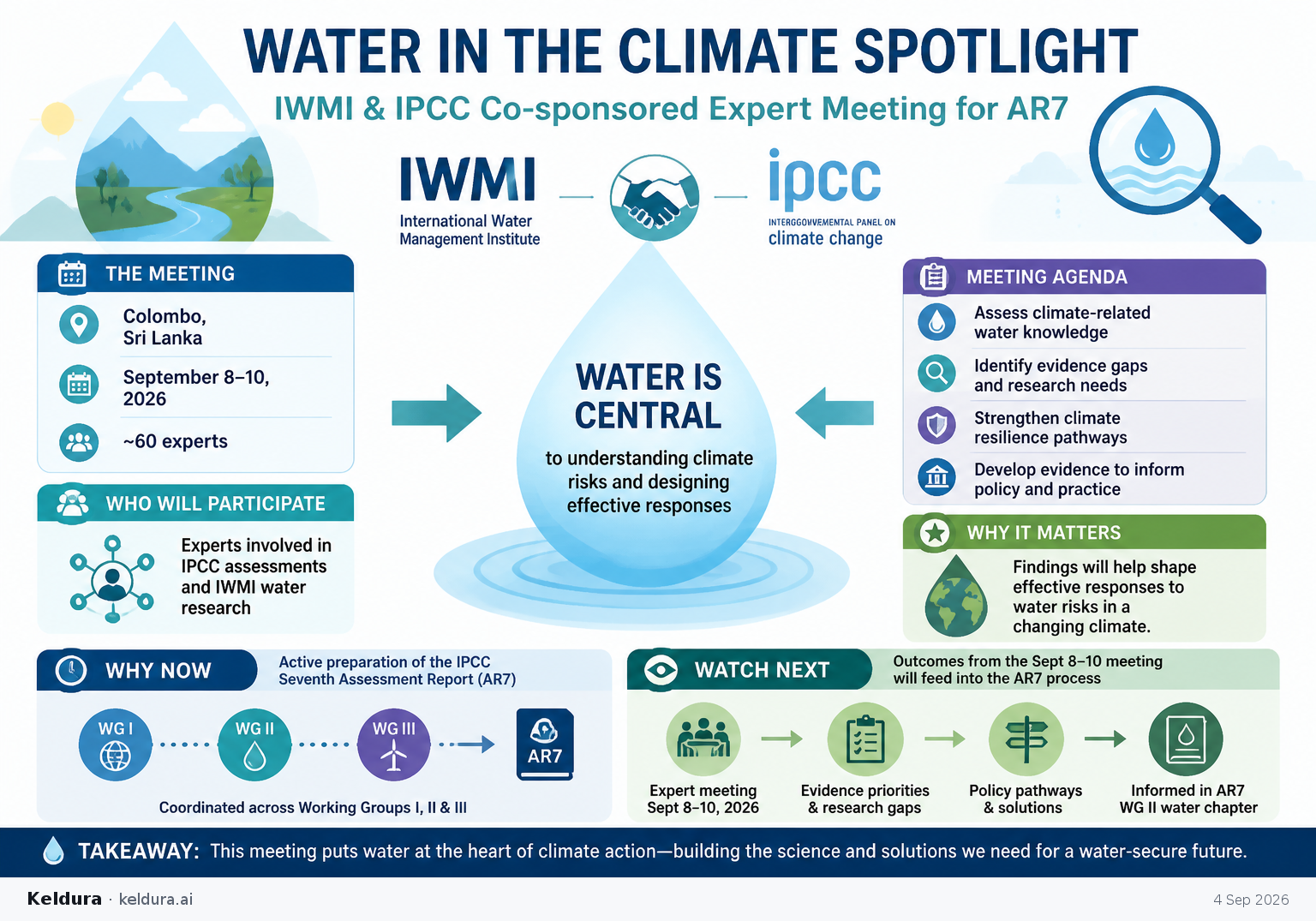
The International Water Management Institute and the Intergovernmental Panel on Climate Change will bring about 60 experts together in Colombo, Sri Lanka, from September 8–10, 2026.
Why it matters: The meeting comes while authors are developing contributions to the IPCC Seventh Assessment Report, whose Working Group II assessment will include a dedicated chapter on water.
IWMI and the IPCC scheduled a co-sponsored expert meeting focused specifically on water and climate resilience.[5]
Why now
The gathering coincides with active preparation of the IPCC Seventh Assessment Report across Working Groups I, II and III.[5]
Watch next
Watch for evidence priorities and policy pathways emerging from the September 8–10 meeting and their treatment in the AR7 Working Group II water chapter.[5]
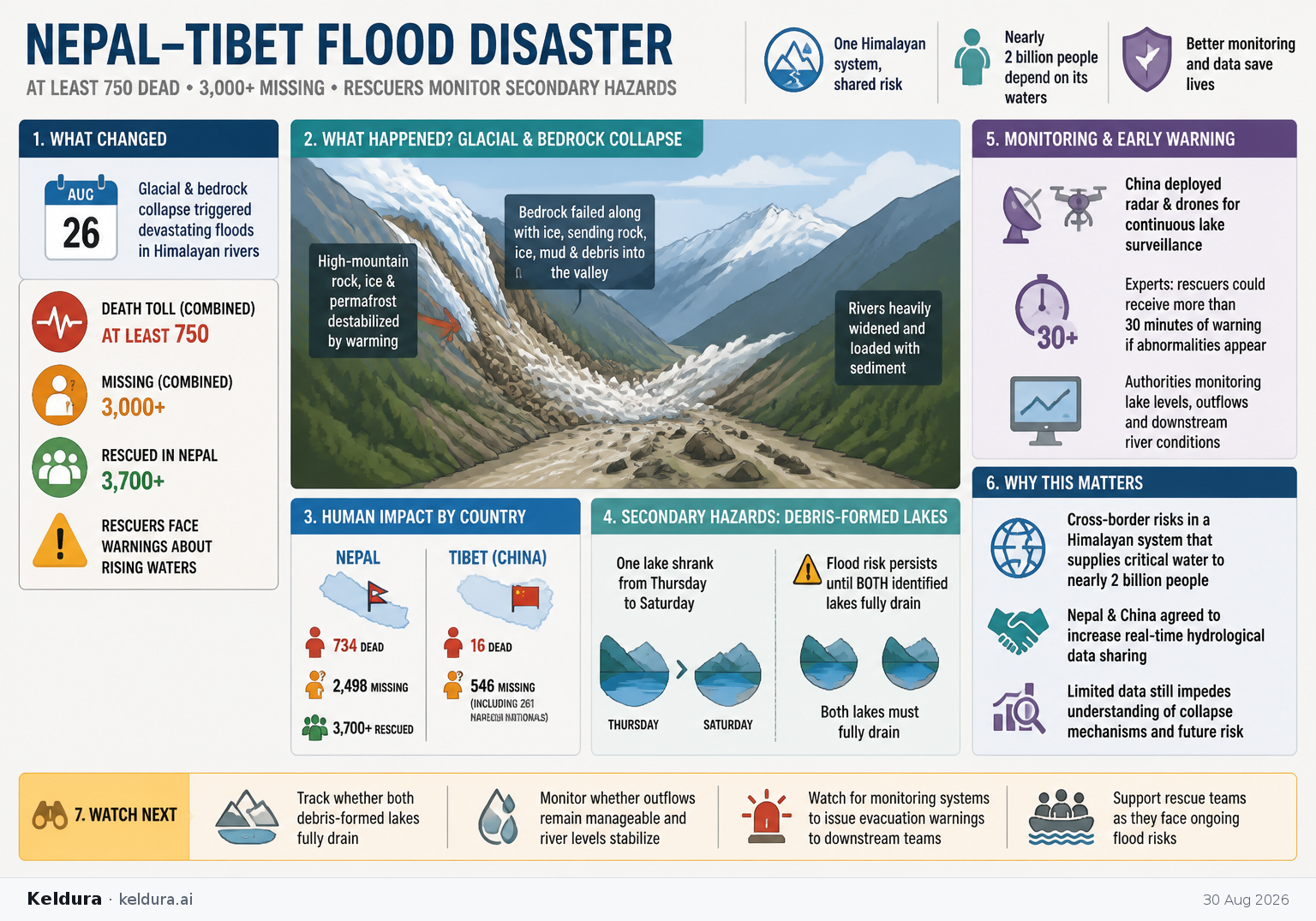
The combined toll from the Nepal-Tibet flash flood has reached at least 750 dead, with more than 3,000 people missing; more than 3,700 people have been rescued in Nepal.
Why it matters: The disaster illustrates the cross-border risks surrounding a Himalayan glacier system that supplies critical water to nearly two billion people. It also highlights the need for better monitoring and…
The confirmed combined death toll rose to at least 750, while more than 3,000 people remained missing and rescue teams faced warnings about rising waters.[1]
Why now
A glacial and bedrock collapse on Aug 26 sent rock, ice, mud and debris through Himalayan river systems; its precise trigger is still under investigation.[2][4][5]
Watch next
Track whether both debris-formed lakes fully drain, whether outflows remain manageable, and whether monitoring systems issue evacuation warnings to downstream rescue teams.[4]
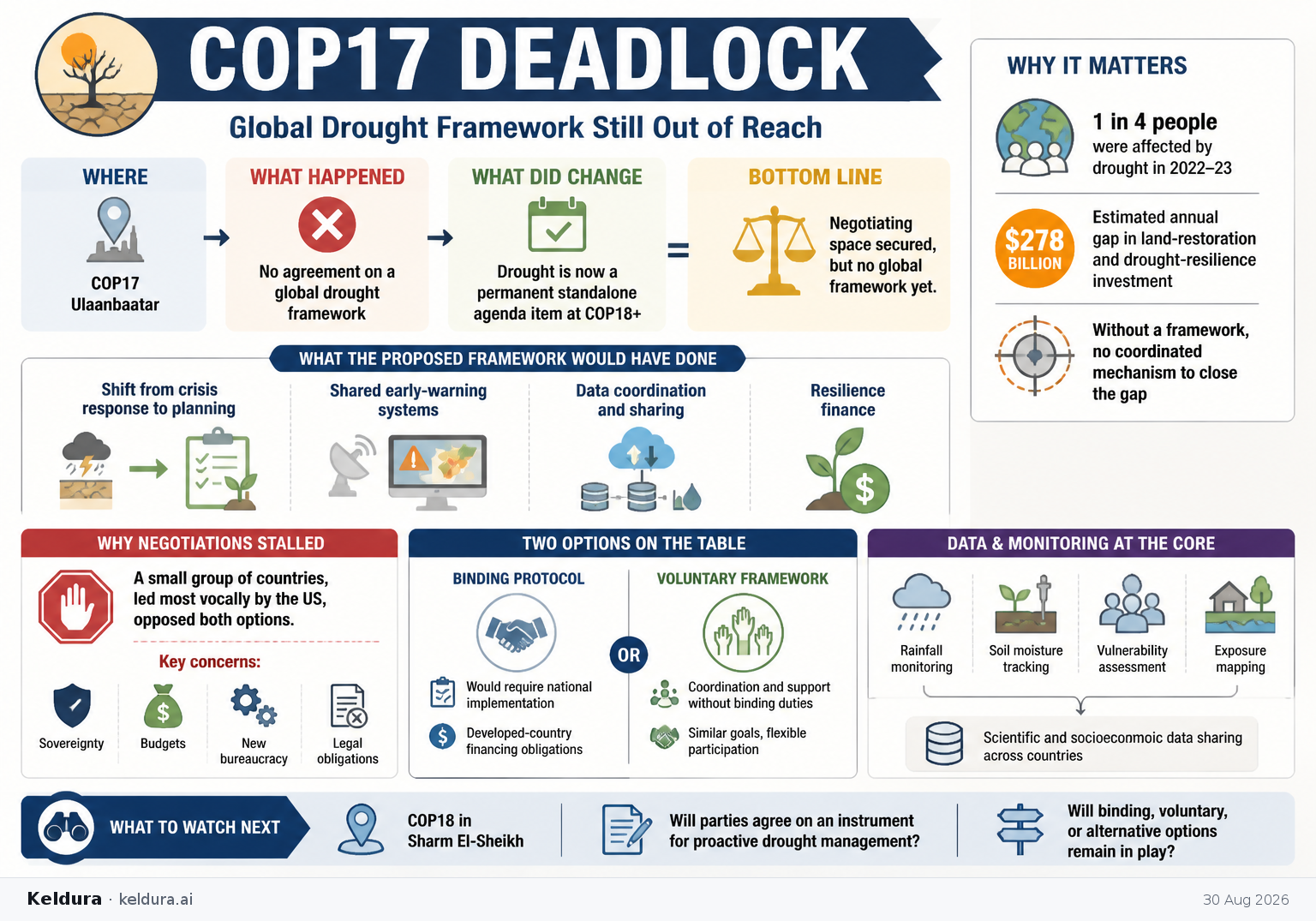
Governments at UNCCD COP17 in Ulaanbaatar again failed to agree on either a binding or voluntary global drought framework after two years of negotiations.
Why it matters: The deadlock leaves no coordinated global mechanism to close an estimated $278 billion annual gap in land-restoration and drought-resilience investment, even though one in four people was affected by…
COP17 closed without agreement on a global drought framework, but drought gained permanent standalone status on the agenda for COP18 and later sessions.[3]
Why now
Negotiators remained divided over legal obligations, sovereignty, financing and whether a new framework would expand UNCCD bureaucracy and budgets.[3]
Watch next
Watch whether COP18 in Sharm El-Sheikh produces an agreed instrument for proactive drought management and whether binding, voluntary or alternative options remain bracketed.[3]
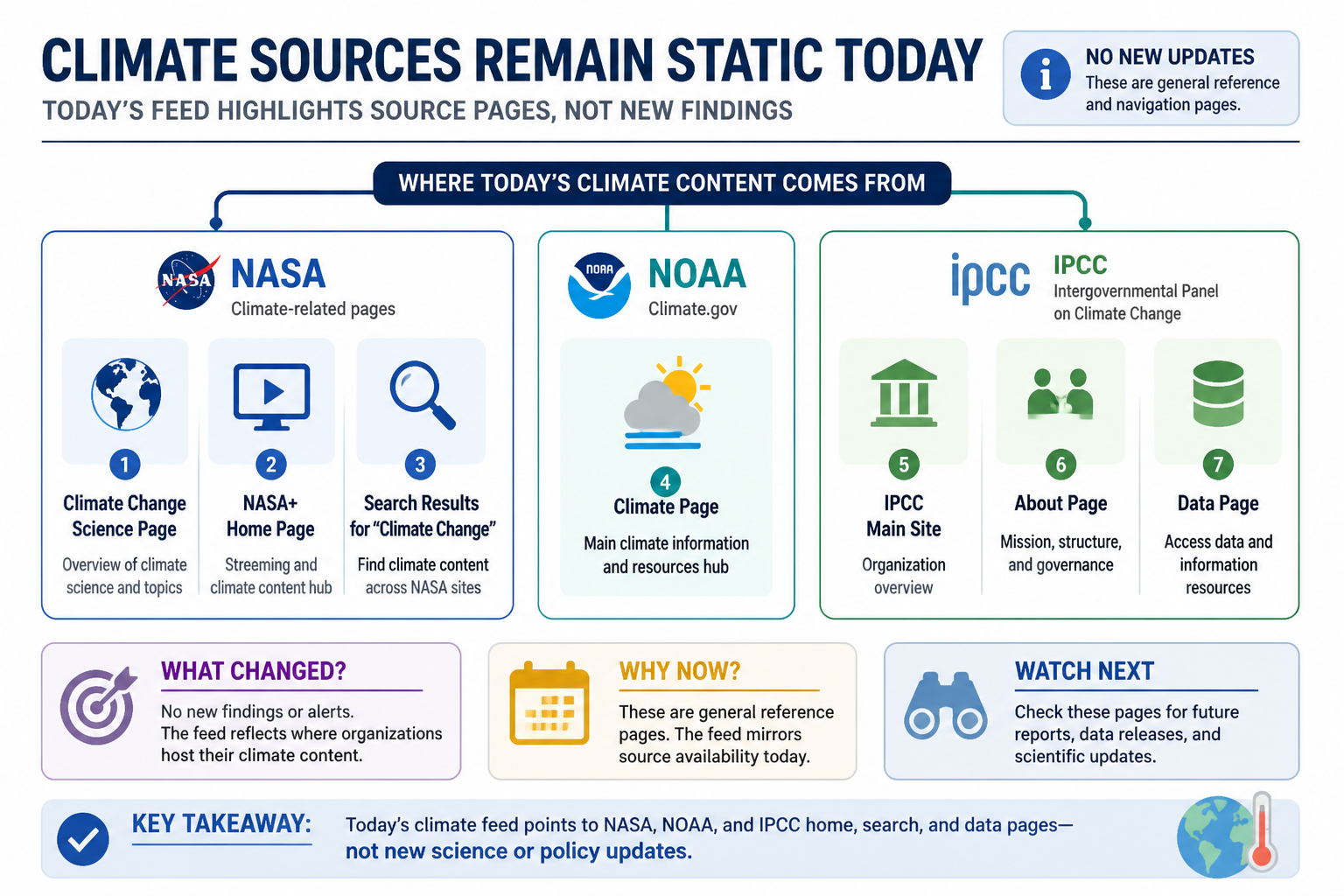
The monitored climate sources mainly surface general reference pages from NASA, NOAA, and the IPCC, with no specific new findings or policy updates included.
Why it matters: NASA’s climate-related material in this feed includes a Climate Change science page, the NASA+ home page, and search results for Climate Change. These items indicate where NASA organizes its climate…
NASA’s climate-related material in this feed includes a Climate Change science page, the NASA+ home page, and search results for Climate Change [1][2][3]. These items indicate where NASA organizes its climate content, but the claims do not provide any new scientific results or announcements [1][2][3].
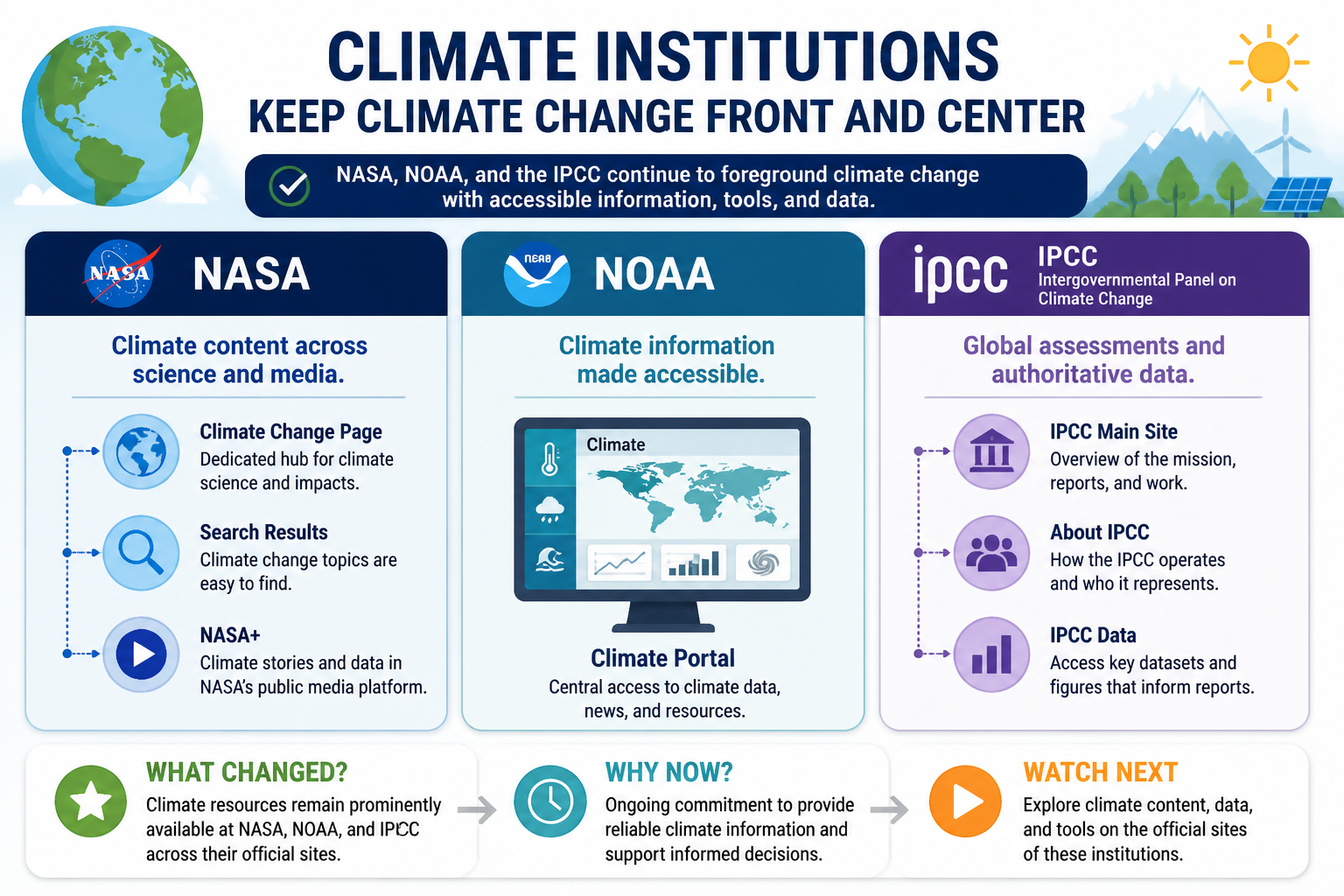
NASA, NOAA, and the IPCC all continue to foreground climate change across their official sites and resources.
Why it matters: NASA’s climate-related pages remain prominently available, including a dedicated Climate Change page and search results tied to that topic. The inclusion of NASA+ alongside these climate references s…
NASA’s climate-related pages remain prominently available, including a dedicated Climate Change page and search results tied to that topic [1][3]. The inclusion of NASA+ alongside these climate references suggests climate content is being presented within the agency’s broader public-facing media ecosystem [2].
Why now
Grounded source item
Watch next
Grounded source item
That's the desk. Every cheatsheet here started as a link. Yours can too.