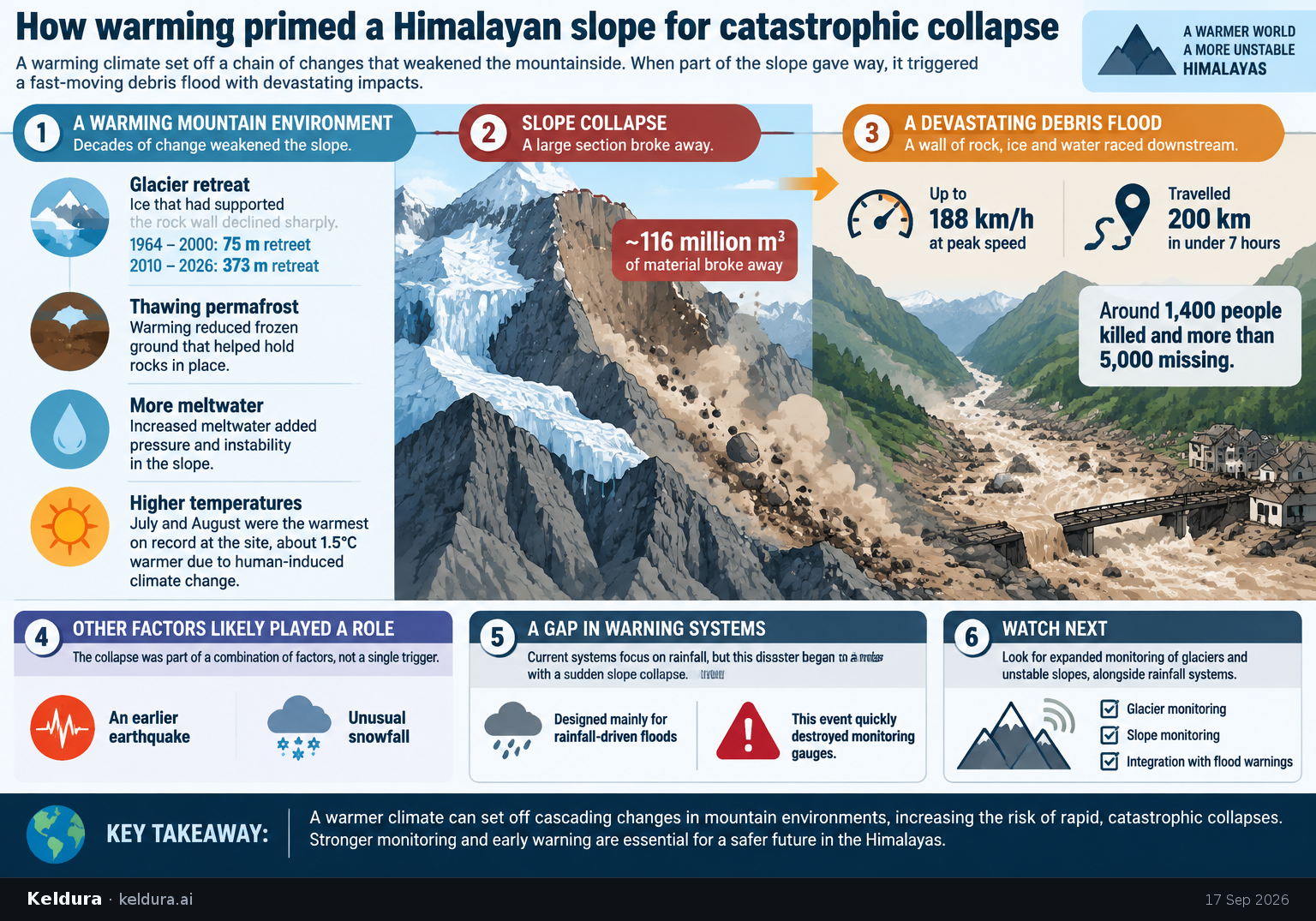
The Langtang Lirung collapse and resulting flood killed around 1,400 people and left more than 5,000 missing.
Why it matters: The disaster exposed a gap in mountain-risk planning: Nepal’s warning systems are designed mainly for forecastable, rainfall-driven floods, while this fast cascade began with an abrupt slope collapse…
Scientists linked the disaster to a cascade in which glacier retreat, permafrost thaw and meltwater progressively weakened the mountainside, rather than identifying one simple trigger.[5][7]
Why now
July and August were the warmest on record at the site, with extreme heat immediately before the collapse adding to long-term destabilization.[5][7]
Watch next
Watch whether Himalayan authorities add glacier and slope monitoring to flood-warning systems that currently focus on rainfall, despite the challenge of covering thousands of glaciers.[5][7]
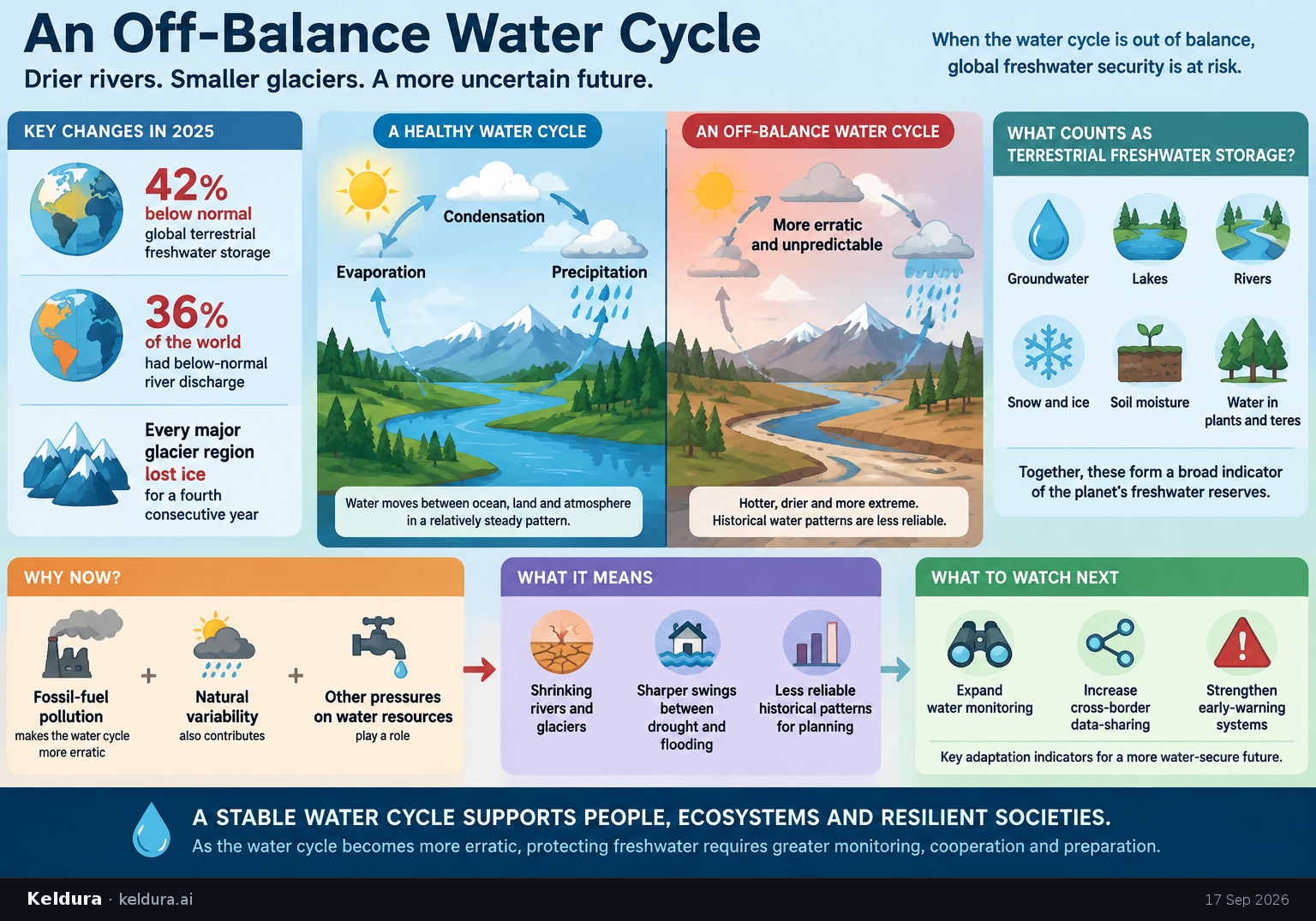
Rivers experienced one of their driest years in more than three decades in 2025, while freshwater stored on and beneath land was 42% below.
Why it matters: As fossil-fuel pollution makes the water cycle more erratic, societies face shrinking rivers and glaciers alongside sharper swings between drought and flooding, making historical water patterns less…
Global terrestrial freshwater storage fell 42% below normal in 2025, while below-normal river discharge covered 36% of the world.[2][4]
Why now
The WMO says the water cycle is becoming more erratic and unpredictable as fossil-fuel pollution combines with natural variability and other pressures on water resources.[3][4]
Watch next
Watch the expansion of water monitoring, cross-border data-sharing and early-warning systems, which the WMO identifies as central adaptation indicators.[4]
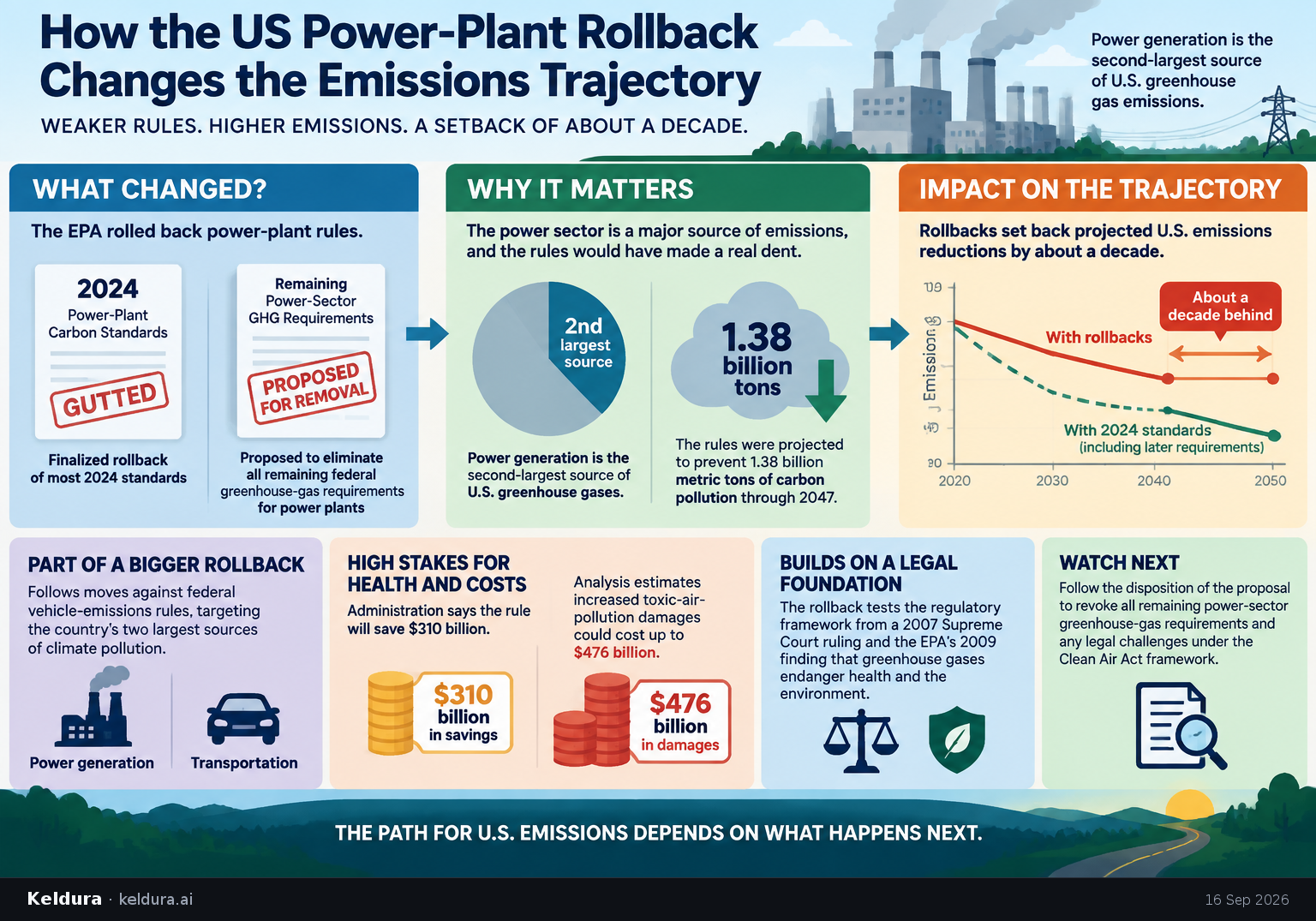
The Trump administration this week dismantled most federal carbon limits for power plants and moved to remove the remaining requirements.
Why it matters: Power generation is the United States’ second-largest source of greenhouse gases, and the discarded standards were projected to prevent 1.38 billion metric tons of carbon pollution through 2047. The…
The EPA gutted the 2024 power-plant carbon standards and proposed eliminating the remaining federal greenhouse-gas requirements for the sector.[6]
Why now
The action continues the administration’s wider rollback of greenhouse-gas rules governing power generation and transportation.[6][7]
Watch next
Watch the disposition of the proposal to revoke all remaining power-sector greenhouse-gas requirements and any legal challenges invoking the Clean Air Act framework.[6]
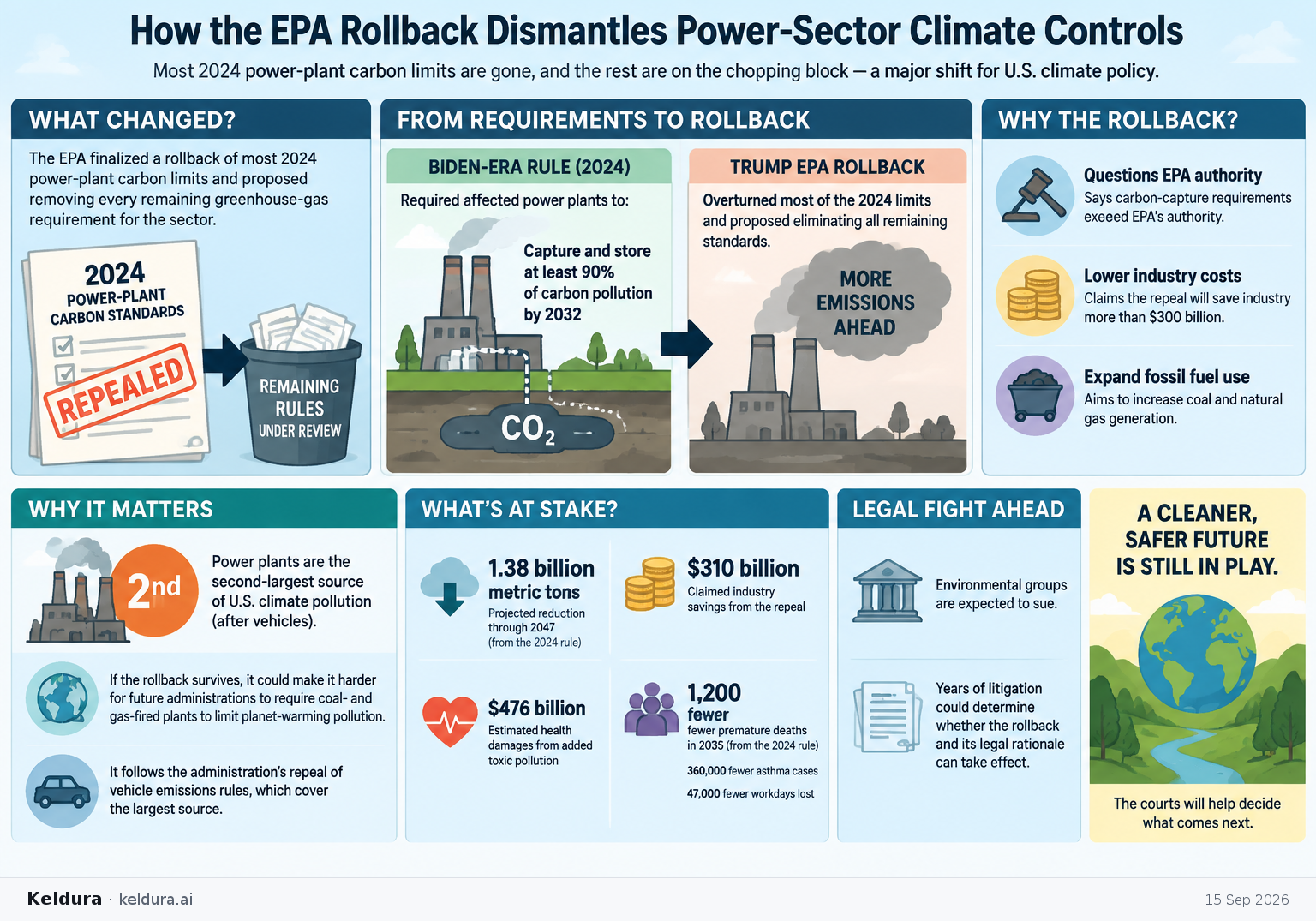
On Monday, the Trump administration moved to eliminate federal greenhouse-gas limits for coal- and gas-fired power plants.
Why it matters: Power plants are the second-largest source of U.S. climate pollution, so the action follows the administration's repeal of rules covering vehicles, the largest source. If the rollback survives expect…
The EPA overturned most 2024 power-plant carbon limits and proposed removing every remaining greenhouse-gas standard for the sector.[1]
Why now
The administration says carbon-capture requirements exceed EPA authority and that repeal will lower industry costs and expand coal and natural-gas use.[1][3]
Watch next
Court filings from environmental groups and rulings on whether the repeal and its legal rationale can take effect will determine the rollback's durability.[3]
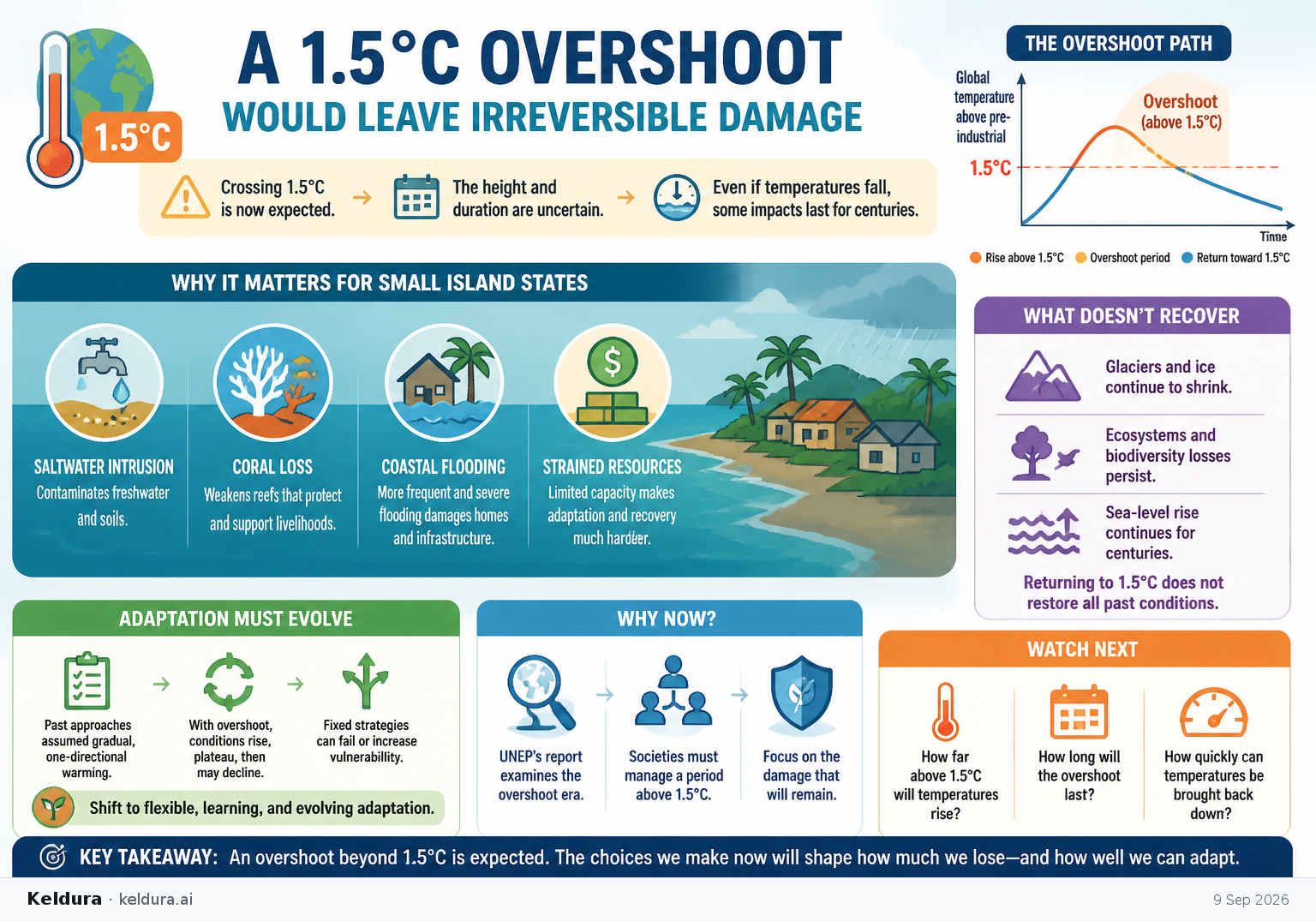
On September 2, the UN warned that global warming will exceed 1.5C before temperatures could potentially be brought back down.
Why it matters: Overshoot is not a harmless delay: every additional fraction of warming and every year above 1.5C increases exposure to extreme weather, sea-level rise, ecosystem loss and potentially irreversible ti…
The UN now describes a breach of 1.5C as unavoidable; its most optimistic pathway peaks near 1.8C [2][3].
Why now
Temperatures are already around 1.4C above pre-industrial levels, while emissions cuts have not occurred fast enough to prevent an overshoot [3].
Watch next
Track whether government policies move the 2100 projection away from its current 2.6C trajectory and whether deployable carbon removal expands beyond tree planting [3].
After the August 26 Tibet-Nepal disaster, rescuers and scientists confronted the escalating flood danger facing Himalayan communities.
Why it matters: An estimated 15 million people live in areas exposed to glacial lake flooding, with half concentrated in Peru, India, Pakistan and China. The Nepal flood also affected 15 major power stations under c…
The August 26 collapse generated a destructive cross-border flood, leaving more than 1,000 dead in Nepal and thousands missing across Nepal and China.[7]
Why now
Human-caused warming is accelerating glacier retreat and expanding meltwater lakes, while more people and infrastructure occupy exposed mountain valleys.[2][3]
Watch next
Watch official casualty and missing-person updates, along with satellite findings on whether a particular glacial lake failed and how the collapse began.[3][7]
Governments ended COP17 in Ulaanbaatar on August 28 without agreeing on a global drought framework after two years of negotiations.
Why it matters: Up to 40 per cent of the world’s land is degraded, and drought is emerging in places not considered highly vulnerable a decade ago. Yet the UNCCD estimates an annual gap of $278 billion between neede…
The framework remained blocked, but drought gained a permanent standalone place on the agenda at COP18 and subsequent ordinary sessions.[4]
Why now
Drought risks are intensifying as climate change and degraded land reduce landscapes’ ability to retain water and sustain food and livelihoods.[5]
Watch next
At COP18 in Sharm El-Sheikh, watch whether governments resolve the bracketed choices between binding, voluntary or alternative coordination mechanisms.[4]
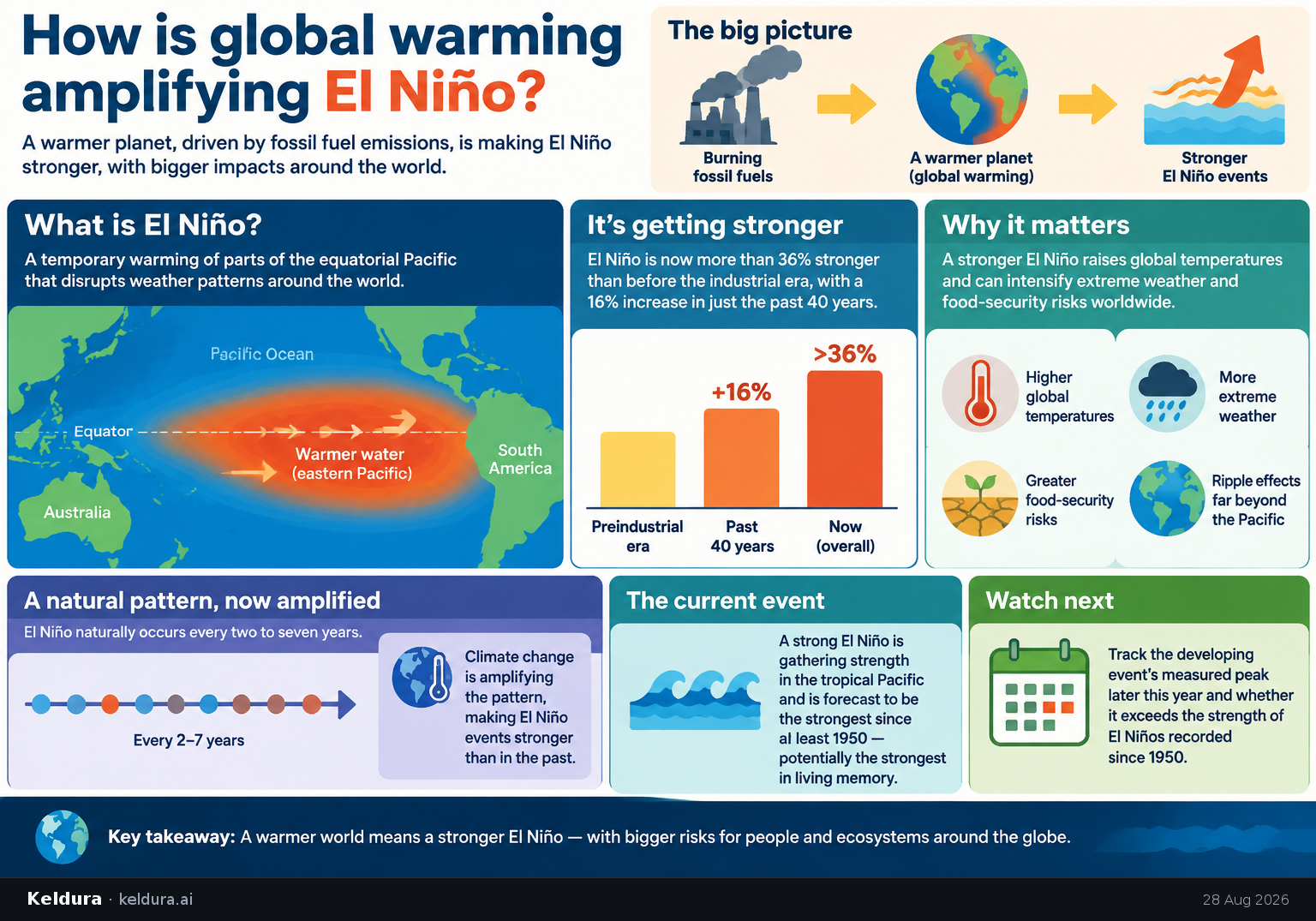
The research found El Niños are more than 36% stronger than before the industrial era, including a 16% increase in the past 40 years.
Why it matters: Because El Niño shifts weather around the world and raises global temperatures, a stronger baseline pattern can intensify extreme-event and food-security risks far beyond the tropical Pacific.
Scientists reported on September 10 that August 2026 tied for the hottest month ever recorded globally.
Why it matters: Human-caused climate change remains the main driver of the elevated temperatures, and the record occurred alongside climate-related disasters around the world. The heat was measured before the develo…
A new study published on September 10 found that natural carbon feedbacks could add substantially to global warming this century.
Why it matters: No single climate model currently includes all the ecosystem feedbacks assessed by the researchers, so their combined effect could make future warming more severe than some projections indicate. The…
A combined assessment put the additional warming from four ecosystem feedbacks at 0.2°C to 0.4°C by 2100.[5]
Why now
Fossil-fuel-driven warming is thawing permafrost, heating wetlands and lakes, drying soils and worsening fires that release more greenhouse gases.[3][5]
Watch next
Watch whether climate models and government adaptation plans begin incorporating all four feedback categories together.[5]
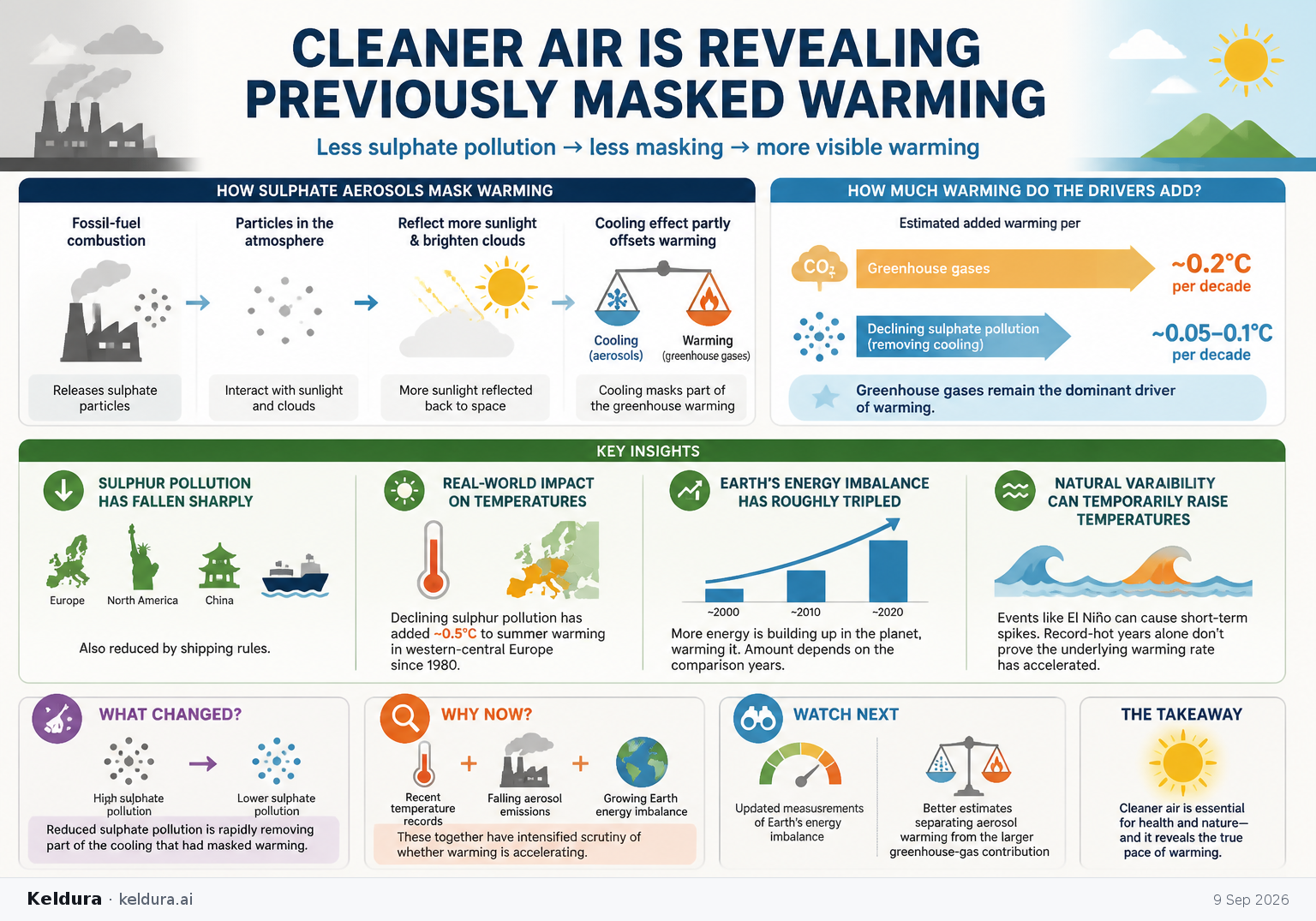
Sulphate aerosols from fossil-fuel combustion reflect sunlight and alter clouds, partly offsetting greenhouse warming, but their short atmospheric lifetime means that cooling disappears quickly when pollution falls.
Why it matters: Cuts to harmful sulphur pollution benefit health and ecosystems but expose warming that aerosols had temporarily masked, complicating assessments of how quickly the planet is heating.
Reduced sulphate pollution is rapidly removing part of the cooling effect that had masked greenhouse warming.[1]
Why now
Recent temperature records, falling aerosol emissions and a growing Earth energy imbalance have intensified scrutiny of whether warming is accelerating.[1]
Watch next
Watch updated measurements of Earth’s energy imbalance and estimates separating aerosol-related warming from the larger greenhouse-gas contribution.[1]
Why it matters: For small island states, overshoot means escalating saltwater intrusion, coral loss, coastal flooding and pressure on limited adaptation and recovery resources well before islands are submerged.