Indonesian stocks fall 11% as MSCI proposes standalone status
Indonesia says it has reformed its market, but what happens if MSCI removes it from emerging-market indexes?
On October 16, 2026, Indonesian stocks fell more than 11% after MSCI proposed reclassifying the country from Emerging Market to Standalone Market.
MSCI said Indonesia's continued emerging-market classification was no longer appropriate and opened a consultation on moving it to Standalone Market status. Jakarta's benchmark fell 11.1% after an opening trading halt, its largest decline since early 1998. [1] The Indonesia Stock Exchange sought cl…
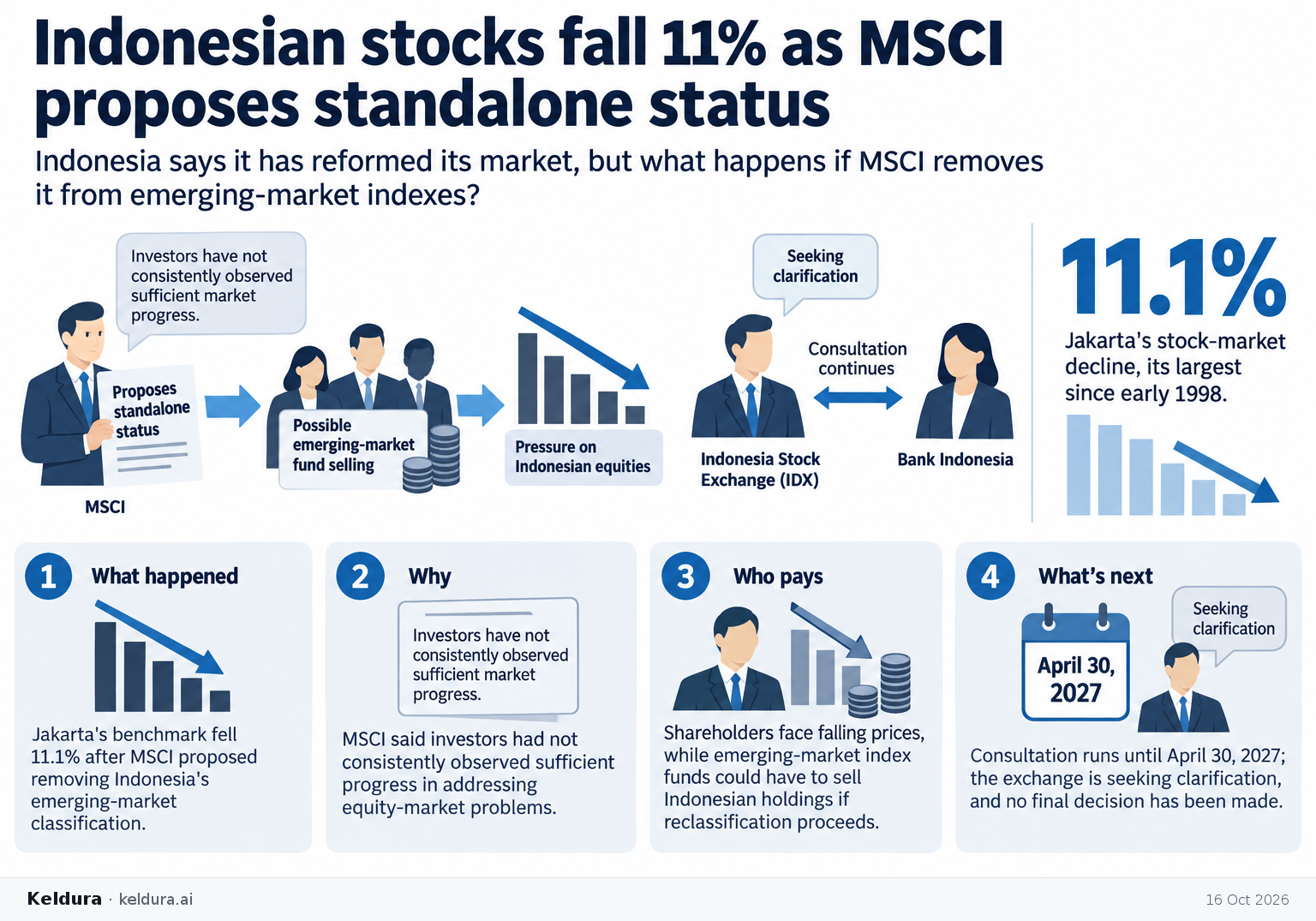
MSCI said Indonesia's continued emerging-market classification was no longer appropriate and opened a consultation on moving it to Standalone Market status. Jakarta's benchmark fell 11.1% after an opening trading halt, its largest decline since early 1998. [1] The Indonesia Stock Exchange sought clarification and emphasized that consultation runs until April 30, 2027, with no final decision yet. [1]
Why it matters: Index membership can determine where investment funds are allowed or required to invest: a standalone classification could force funds tracking MSCI emerging-market indexes to sell Indonesian holdings. That creates an investment risk alongside pressure on the rupiah, which had already fallen around 8% this year. [1]
Key insights: The dispute concerns implementation, not just announced reforms: Indonesian authorities said reforms were complete in April, while MSCI said investors had not observed sufficient progress consistently across the equity market. [1] | MSCI explicitly rejected Frontier Markets as an adequate alternative, saying it would not properly recognize the depth of the market problems. [1] | Bank Indonesia said it would remain active in the currency market to maintain rupiah stability as portfolio outflows were expected to continue. [1]
Cheatsheet facts: What happened: Jakarta's benchmark fell 11.1% after MSCI proposed removing Indonesia's emerging-market classification. [1] | Why: MSCI said investors had not consistently observed sufficient progress in addressing equity-market problems. [1] | Who pays: Indonesian shareholders face falling prices, while emerging-market index funds could have to sell holdings if reclassification proceeds. [1] | What's next: MSCI is accepting consultation input until April 30, 2027; the exchange is requesting clarification of its assessment. [1]