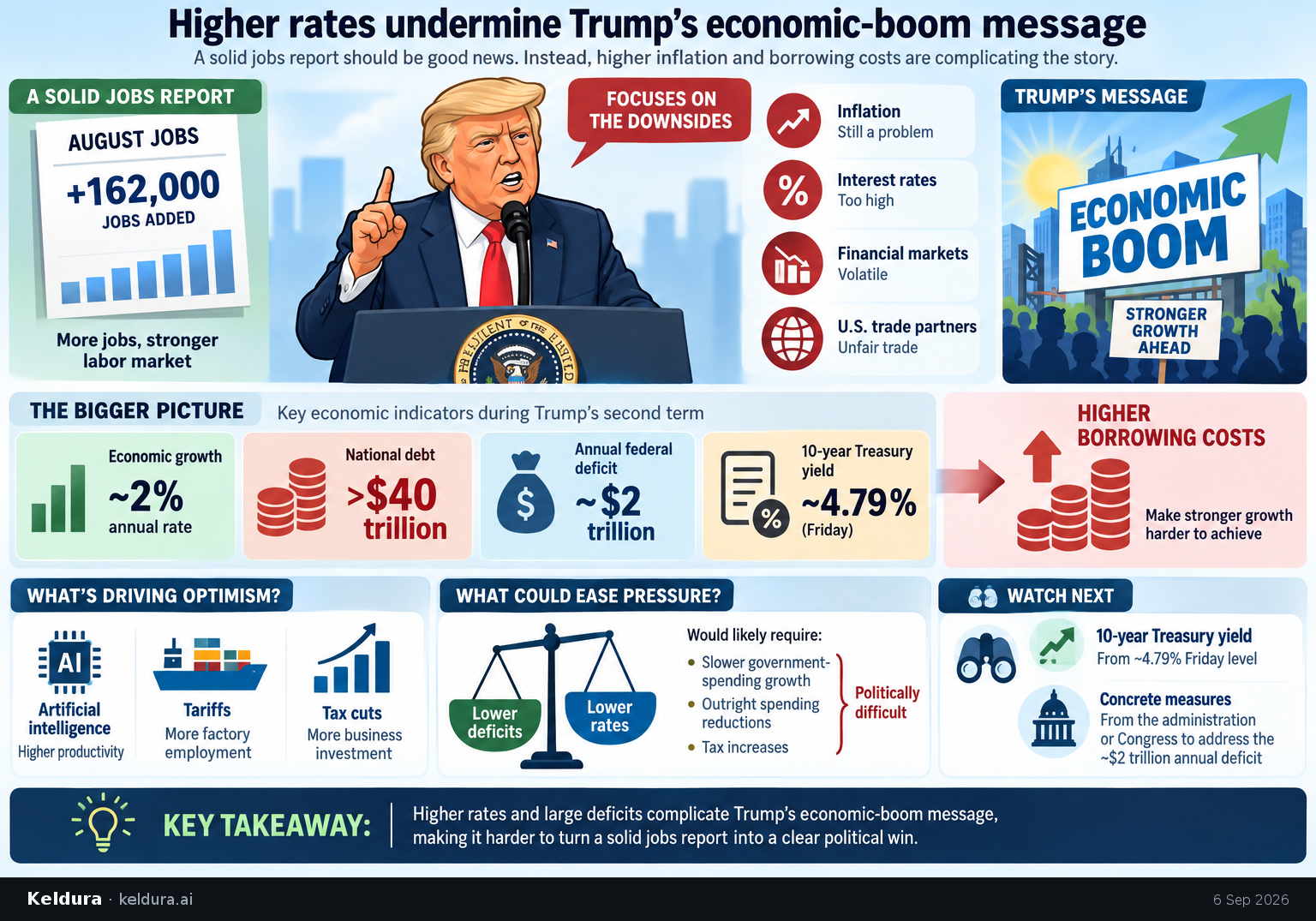
President Donald Trump responded to the positive August jobs report by criticizing inflation, interest rates, financial markets and U.S.
Why it matters: Higher government borrowing costs constrain growth and make Trump’s promises of stronger expansion harder to reconcile with persistent inflation, tariffs and large deficits. Reducing deficits could e…
A favorable employment headline intensified concern about inflation and rates, prompting Trump to focus on borrowing costs and economic grievances. [3][4]
Why now
The administration is defending its economic record two months before Election Day as growth remains near 2%, debt exceeds $40 trillion and long-term Treasury yields remain elevated. [3][4]
Watch next
Watch the 10-year Treasury yield from its roughly 4.79% Friday level and any concrete administration or congressional measures addressing the approximately $2 trillion annual deficit. [3][4]
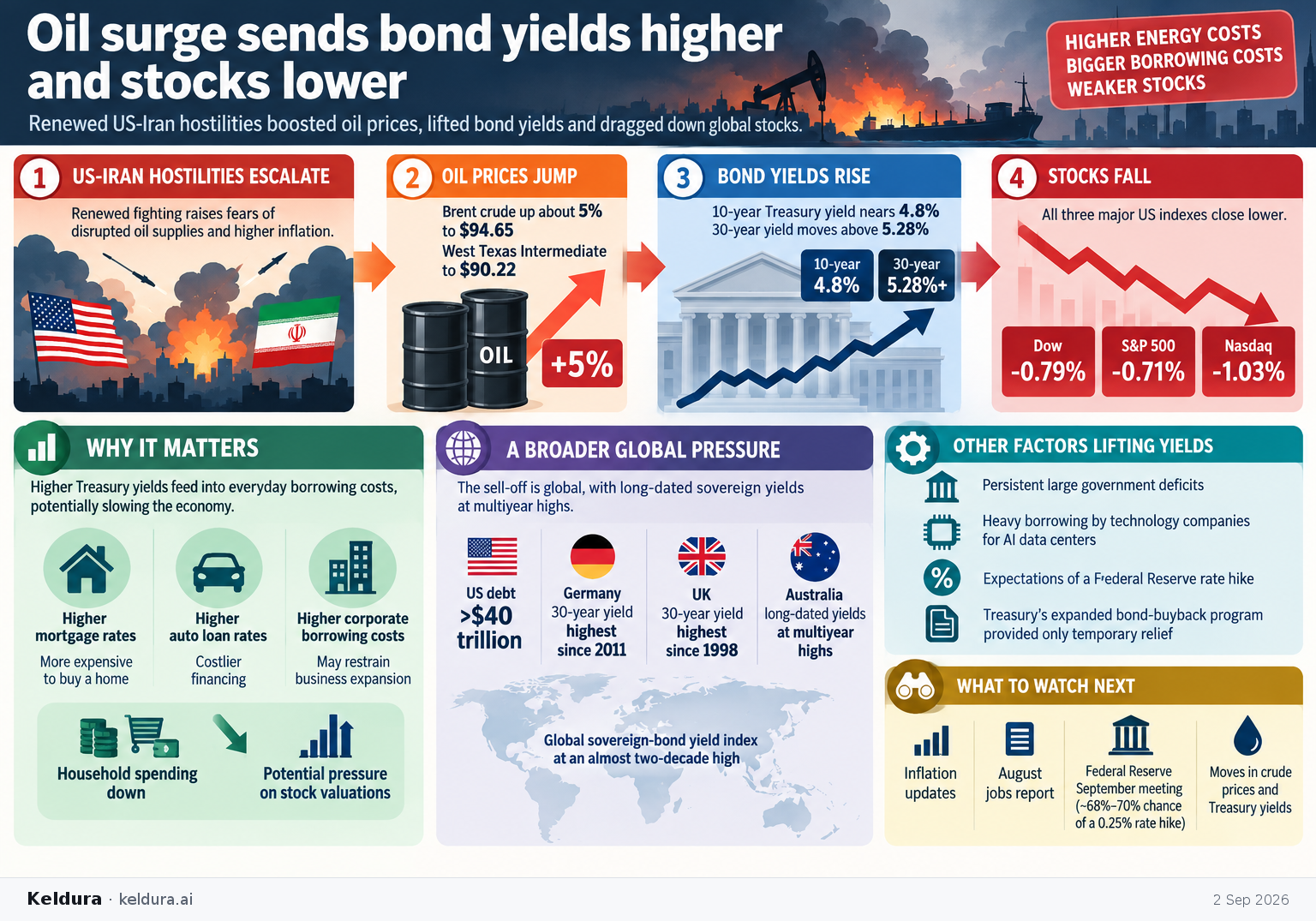
Renewed US-Iran hostilities lifted Brent crude to $94.65 and West Texas Intermediate to $90.22, while the 10-year Treasury yield approached 4.8%, its highest level since early 2025.
Why it matters: Higher Treasury yields feed into mortgages, auto loans and corporate financing, potentially restraining household spending, business expansion and equity valuations. The sell-off is also testing gove…
Oil jumped about 5%, the 10-year Treasury yield neared 4.8%, the 30-year yield exceeded 5.28% and all three major US stock indexes closed lower.[2][4][5]
Why now
Escalating US-Iran fighting raised fears of disrupted oil supplies and renewed inflation, while large government deficits and Federal Reserve rate-hike expectations deepened the bond sell-off.[1][2][4]
Watch next
Watch the inflation updates and August jobs report ahead of the Federal Reserve’s September meeting, alongside observable moves in crude prices and Treasury yields.[2][3]
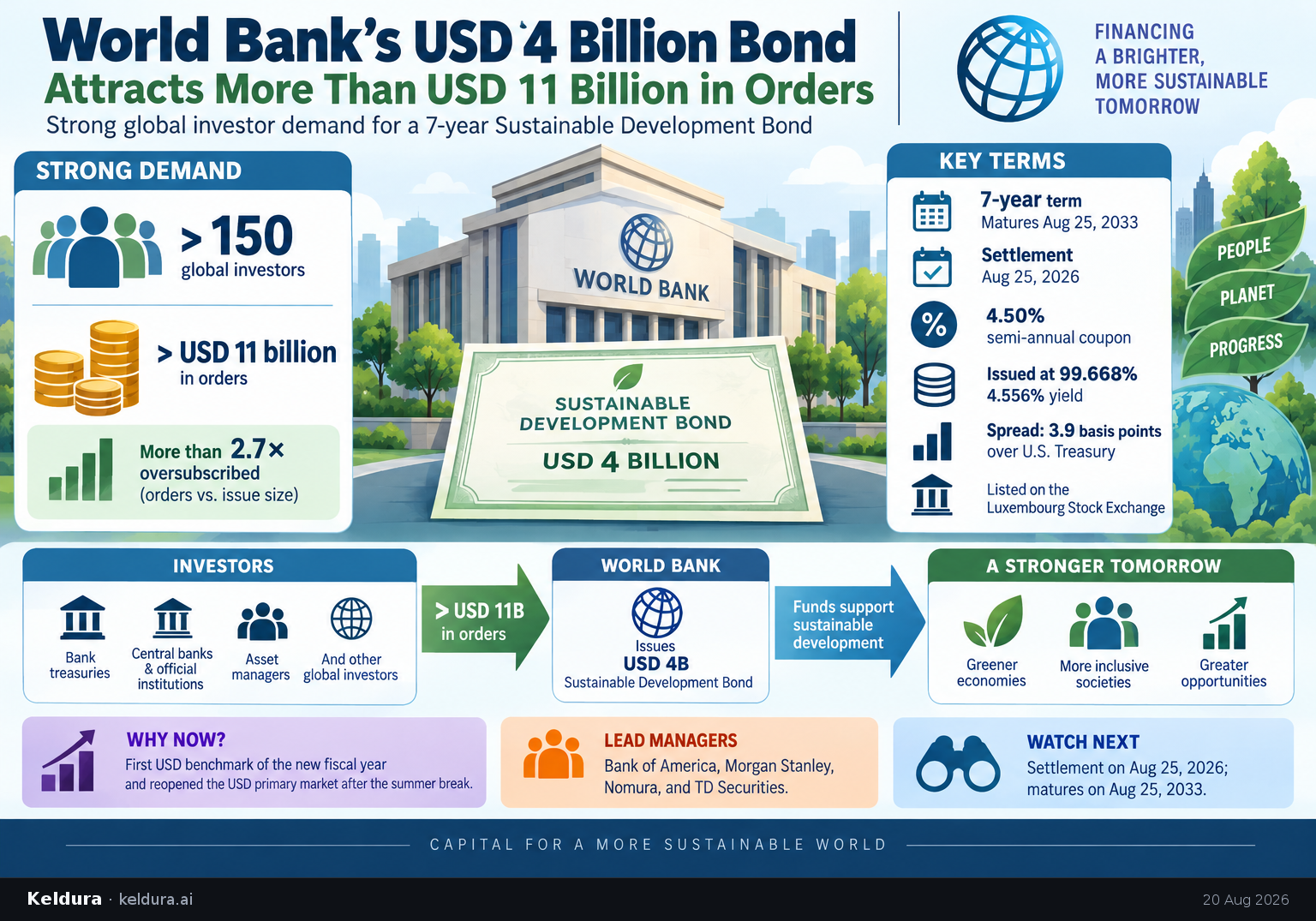
The World Bank priced a USD 4 billion, seven-year Sustainable Development Bond maturing on August 25, 2033, with settlement scheduled for August 25, 2026.
Why it matters: The heavily subscribed order book indicates strong institutional demand for highly rated sustainable-development debt as the World Bank returned to the USD benchmark market for its new fiscal year.
The World Bank priced a USD 4 billion benchmark Sustainable Development Bond after receiving more than USD 11 billion in orders from over 150 investors.[1]
Why now
The transaction marked the World Bank’s first USD benchmark of its new fiscal year and reopened the USD primary market after the summer break.[1]
Watch next
The observable next milestone is settlement on August 25, 2026; the bond is scheduled to mature on August 25, 2033.[1]
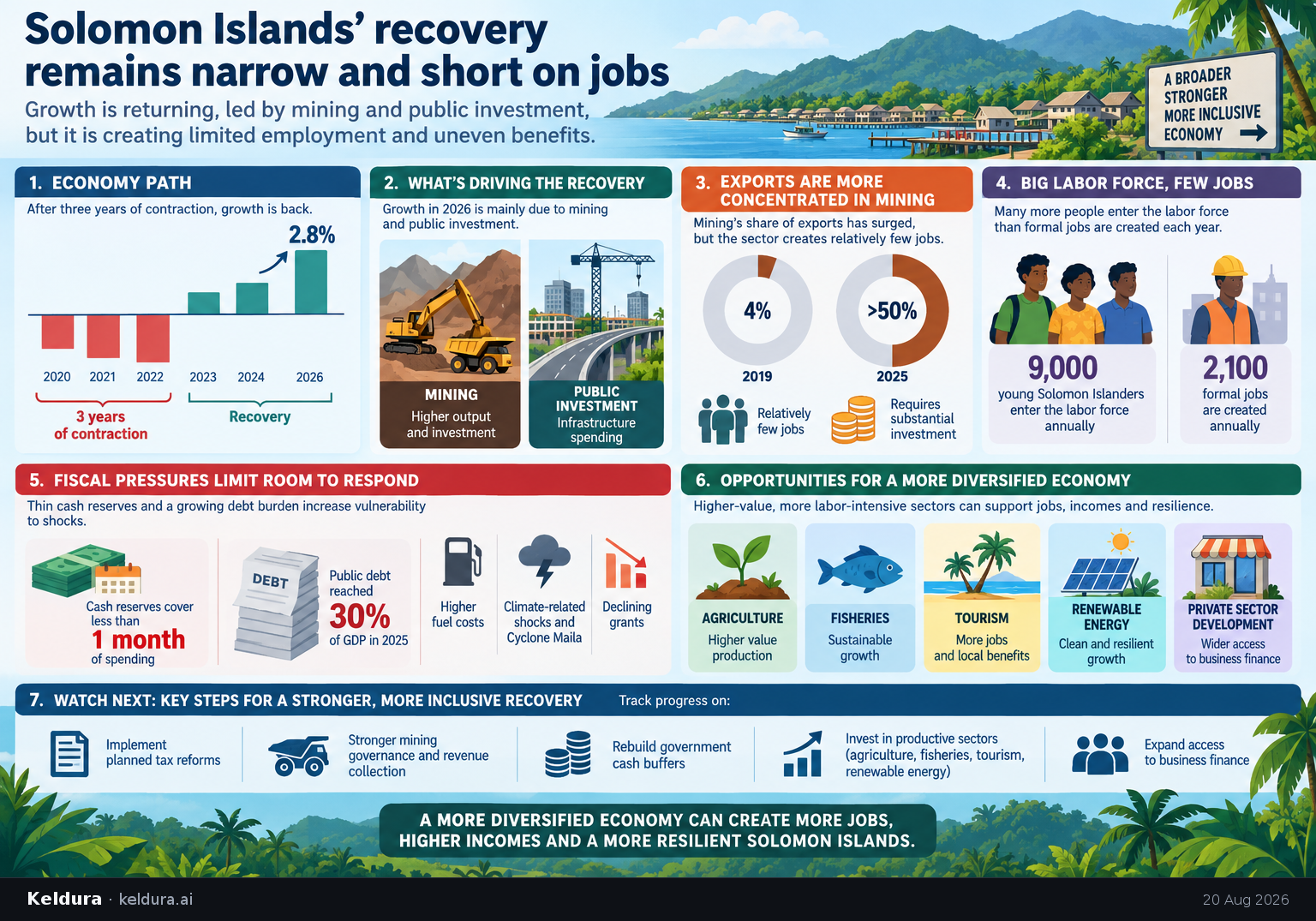
The World Bank projects Solomon Islands’ economy will grow 2.8% in 2026, mainly because of mining and public investment, after three consecutive years of contraction from 2020 through 2022 and a subsequent rebound.
Why it matters: About 9,000 young Solomon Islanders enter the labor force annually, but only around 2,100 formal jobs are created, making broader and more labor-intensive growth central to incomes and social resilie…
A new World Bank Economic Update put 2026 growth at 2.8% but found that the mining- and public-investment-led recovery is producing limited employment and uneven benefits.[2]
Why now
Mining’s export share has surged while labor-force entrants substantially outnumber new formal jobs, and thin cash reserves leave the country exposed to fiscal and climate shocks.[2]
Watch next
Observable indicators include implementation of planned tax reforms, stronger mining revenue collection, rebuilding of government cash buffers, and investment in agriculture, fisheries, tourism, renewable energy, and business finance.[2]
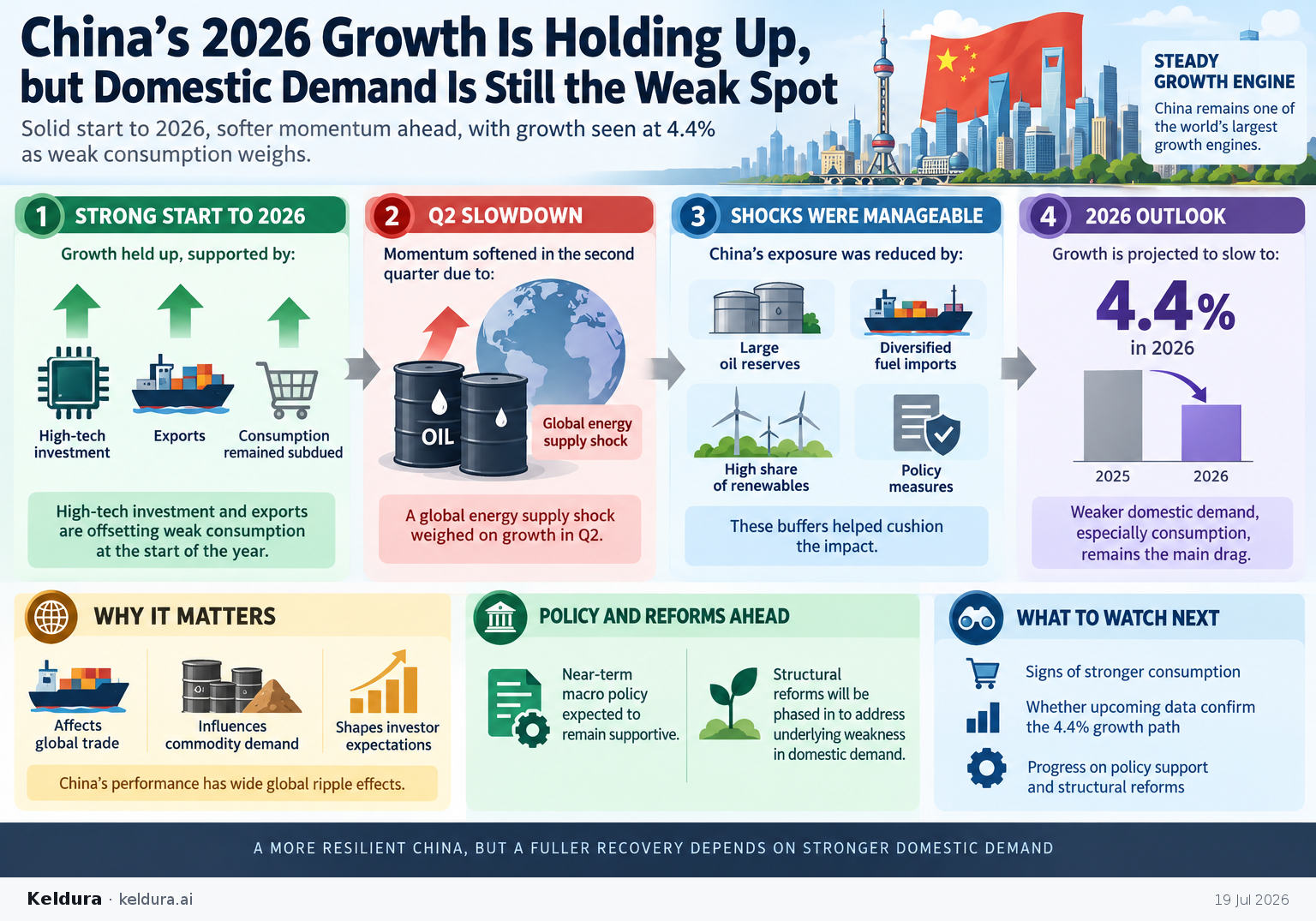
The World Bank’s China Economic Update says China maintained solid growth at the start of 2026, supported by high-tech investment and exports even as consumption stayed subdued.
Why it matters: This matters because China remains one of the world’s largest growth engines, so a moderation toward 4.4 percent in 2026 has implications for global trade, commodity demand, and investor expectations…
China’s growth outlook was revised to a softer 2026 pace, with weaker consumption still the main drag [2].
Why now
The second quarter was hit by a global energy supply shock, while domestic demand remained subdued [2].
Watch next
Look for signs of whether policy support and structural reforms improve consumption and whether the next macro data confirm the 4.4 percent growth path [2].
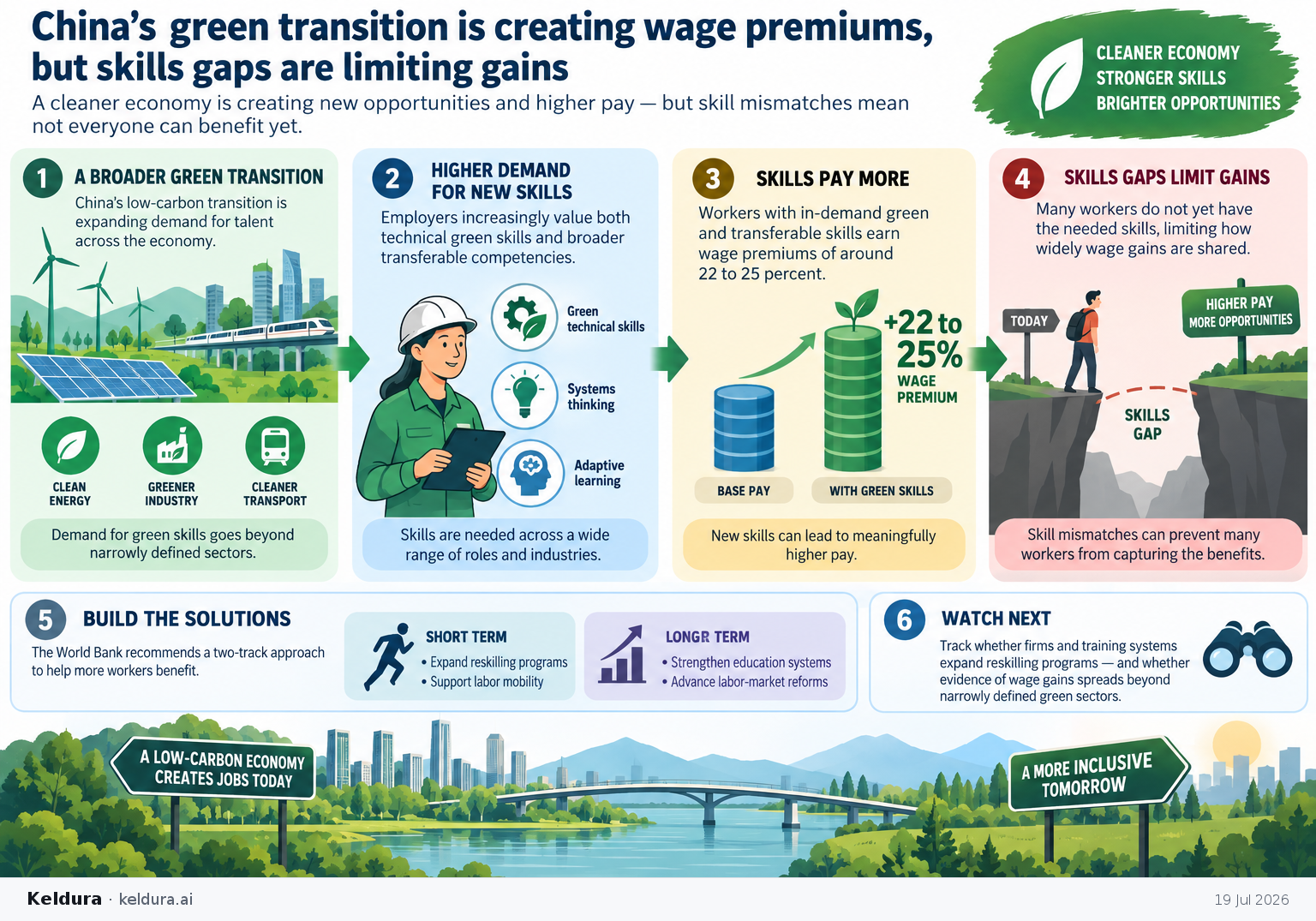
The same World Bank update says China’s low-carbon transition is reshaping its labor market, with demand rising for green technical skills and broader competencies such as systems thinking and adaptive learning.
Why it matters: This matters for markets and policymakers because the energy transition is not only an industrial story but also a labor-market story that affects productivity, wages, and the pace of inclusive growt…
Green-transition jobs are paying more, but skill mismatches are stopping workers from fully capturing the gains [2].
Why now
China’s low-carbon transition is broadening demand for both technical and transferable skills [2].
Watch next
Track whether firms and training systems expand reskilling programs and whether evidence of wage gains spreads beyond narrowly defined green sectors [2].
That's the desk. Every cheatsheet here started as a link. Yours can too.