NHS trust widens review after unnecessary brain cancer chemotherapy
Twenty cases have been reviewed, but how many more patients received unnecessary chemotherapy?
On November 18, University Hospitals Coventry and Warwickshire NHS Trust said it was reviewing patients treated by Prof Ian Brown since 2005 and that hundreds could have been affected.
A Royal College of Physicians review of 20 cases found severe harm in six and moderate harm in five; some patients were misdiagnosed, and others were wrongly told they would die if they stopped chemotherapy. [8] Trust chief executive Prof Andy Hardy apologized and said the review now covers everyon…
Open original · [8] Brain cancer patients at UHCW demand public inquiry into chemotherapy scandal - BBC News — bbc.co.uk
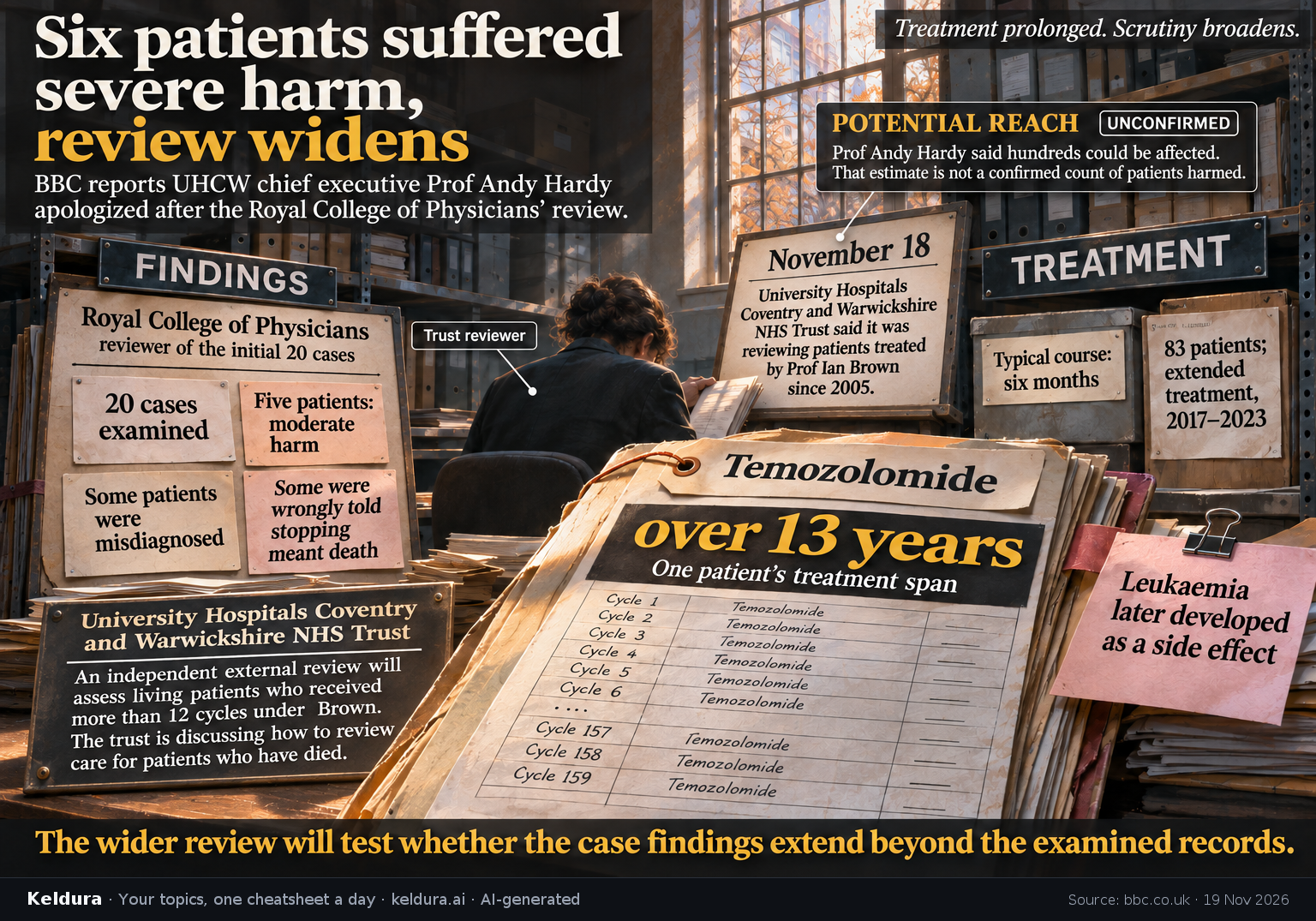
A Royal College of Physicians review of 20 cases found severe harm in six and moderate harm in five; some patients were misdiagnosed, and others were wrongly told they would die if they stopped chemotherapy. [8] Trust chief executive Prof Andy Hardy apologized and said the review now covers everyone treated by retired oncologist Prof Ian Brown since 2005. [8]
Why it matters: Unnecessary treatment can harm patients long after it starts: one patient received more than 100 cycles over 13 years and later developed leukaemia as a side effect, whereas the drug is typically taken for six months. [8]
Key insights: The Royal College of Physicians identified 83 patients who received extended temozolomide treatment between 2017 and 2023, a group larger than the 20 cases it examined. [8] | The trust said it had already rechecked the care of all living patients receiving temozolomide at the trust. [8] | Prof Ian Brown did not take part in the Royal College of Physicians review and declined to comment when approached by the BBC. [8]
Cheatsheet facts: What happened: A review of 20 cases found six patients had suffered severe harm, leading the trust to examine care dating back to 2005. [8] | Background: Temozolomide is a chemotherapy drug typically taken for six months; one patient in the review received it over 13 years. [8] | The catch: Prof Andy Hardy said hundreds could be affected, but that estimate is not a confirmed count of patients harmed. [8] | What's next: An independent external review will assess living patients who received more than 12 cycles under Brown; the trust is discussing how to review care for patients who have died. [8]