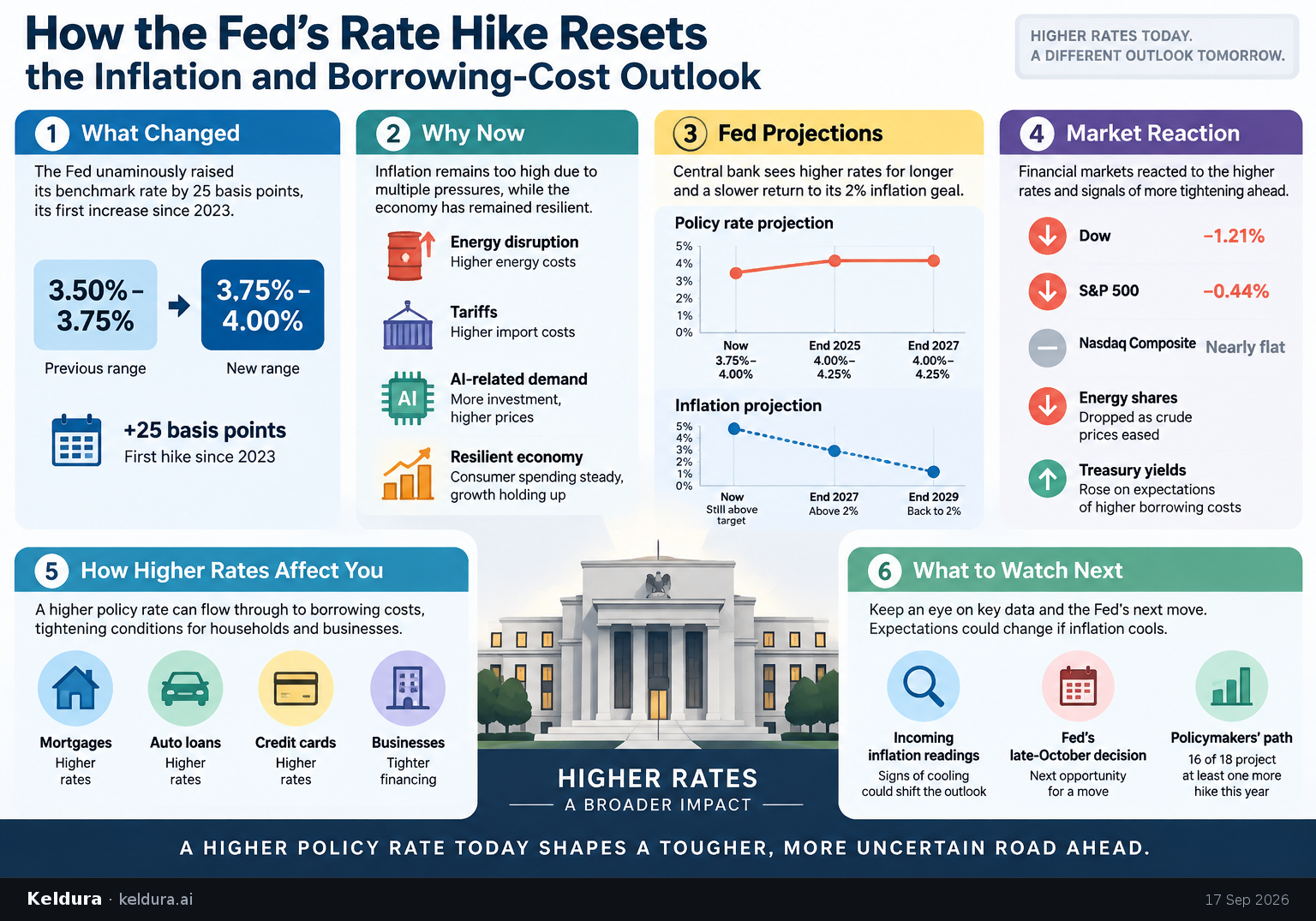
On September 16, the U.S. Federal Reserve raised its benchmark rate by a quarter point and signaled that more tightening could follow.
Why it matters: Higher policy rates can flow through to mortgages, auto loans and credit cards, tightening conditions for households and businesses. The immediate market response included lower U.S. equities, while…
The FOMC unanimously raised its target range by 25 basis points to 3.75%-4.00%, the first increase since 2023.[5]
Why now
Inflation remained too high as energy disruption, tariffs and AI-related demand added price pressure, while consumer spending and economic growth stayed resilient.[5][7]
Watch next
Track incoming inflation readings and the Fed’s late-October decision; cooling inflation could change expectations, although 16 of 18 policymakers currently project at least one more hike this year.[7]
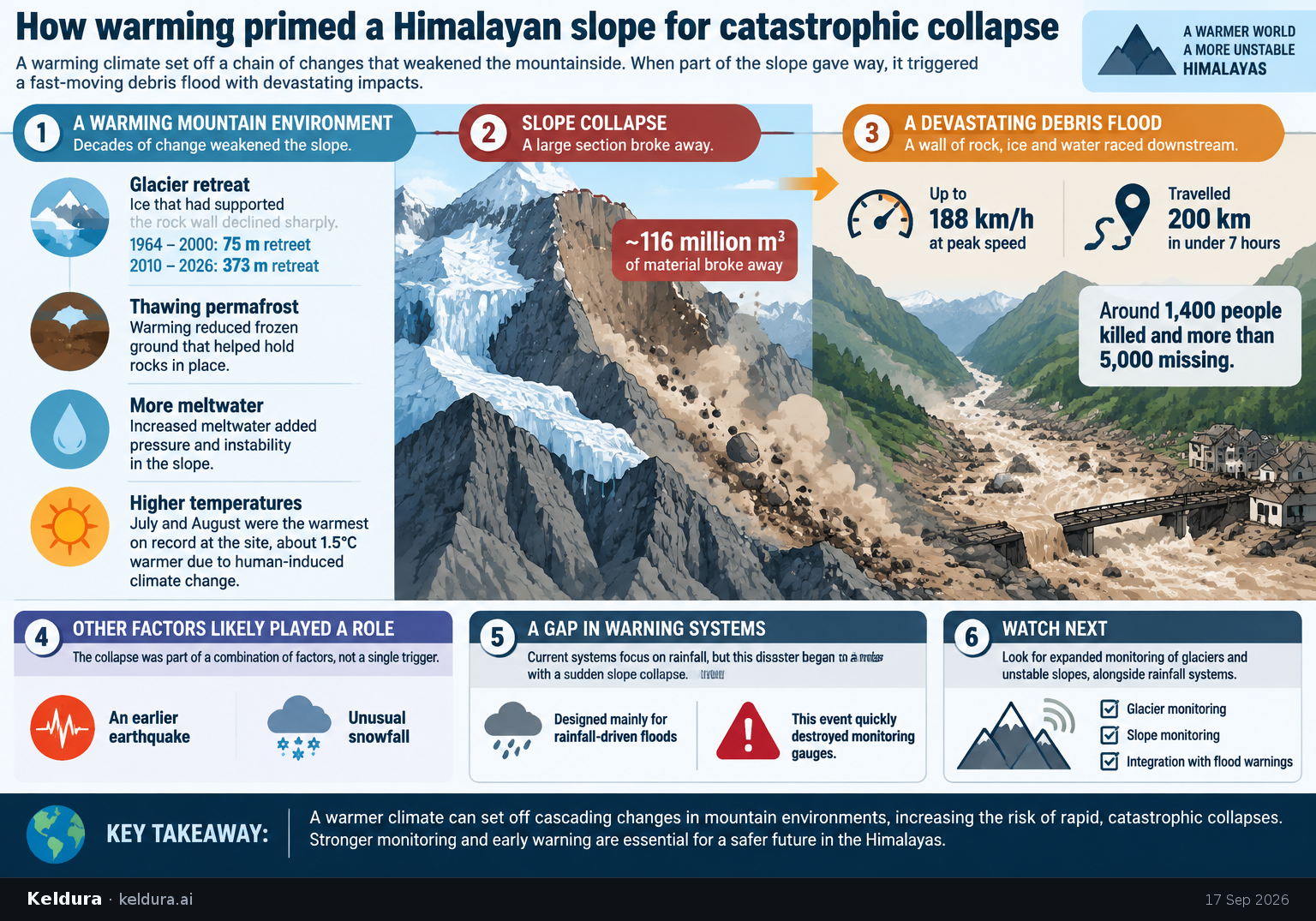
The Langtang Lirung collapse and resulting flood killed around 1,400 people and left more than 5,000 missing.
Why it matters: The disaster exposed a gap in mountain-risk planning: Nepal’s warning systems are designed mainly for forecastable, rainfall-driven floods, while this fast cascade began with an abrupt slope collapse…
Scientists linked the disaster to a cascade in which glacier retreat, permafrost thaw and meltwater progressively weakened the mountainside, rather than identifying one simple trigger.[5][7]
Why now
July and August were the warmest on record at the site, with extreme heat immediately before the collapse adding to long-term destabilization.[5][7]
Watch next
Watch whether Himalayan authorities add glacier and slope monitoring to flood-warning systems that currently focus on rainfall, despite the challenge of covering thousands of glaciers.[5][7]
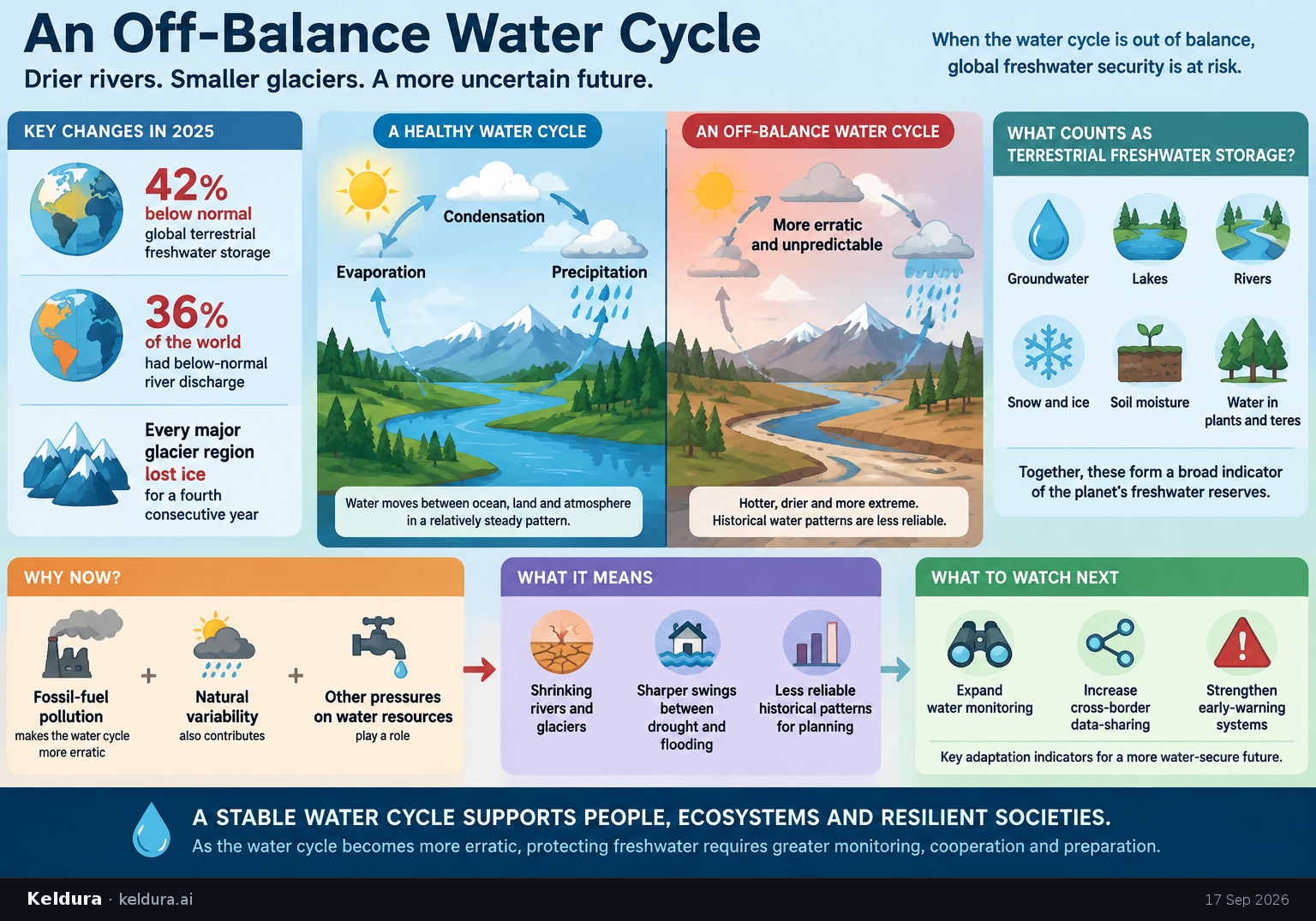
Rivers experienced one of their driest years in more than three decades in 2025, while freshwater stored on and beneath land was 42% below.
Why it matters: As fossil-fuel pollution makes the water cycle more erratic, societies face shrinking rivers and glaciers alongside sharper swings between drought and flooding, making historical water patterns less…
Global terrestrial freshwater storage fell 42% below normal in 2025, while below-normal river discharge covered 36% of the world.[2][4]
Why now
The WMO says the water cycle is becoming more erratic and unpredictable as fossil-fuel pollution combines with natural variability and other pressures on water resources.[3][4]
Watch next
Watch the expansion of water monitoring, cross-border data-sharing and early-warning systems, which the WMO identifies as central adaptation indicators.[4]
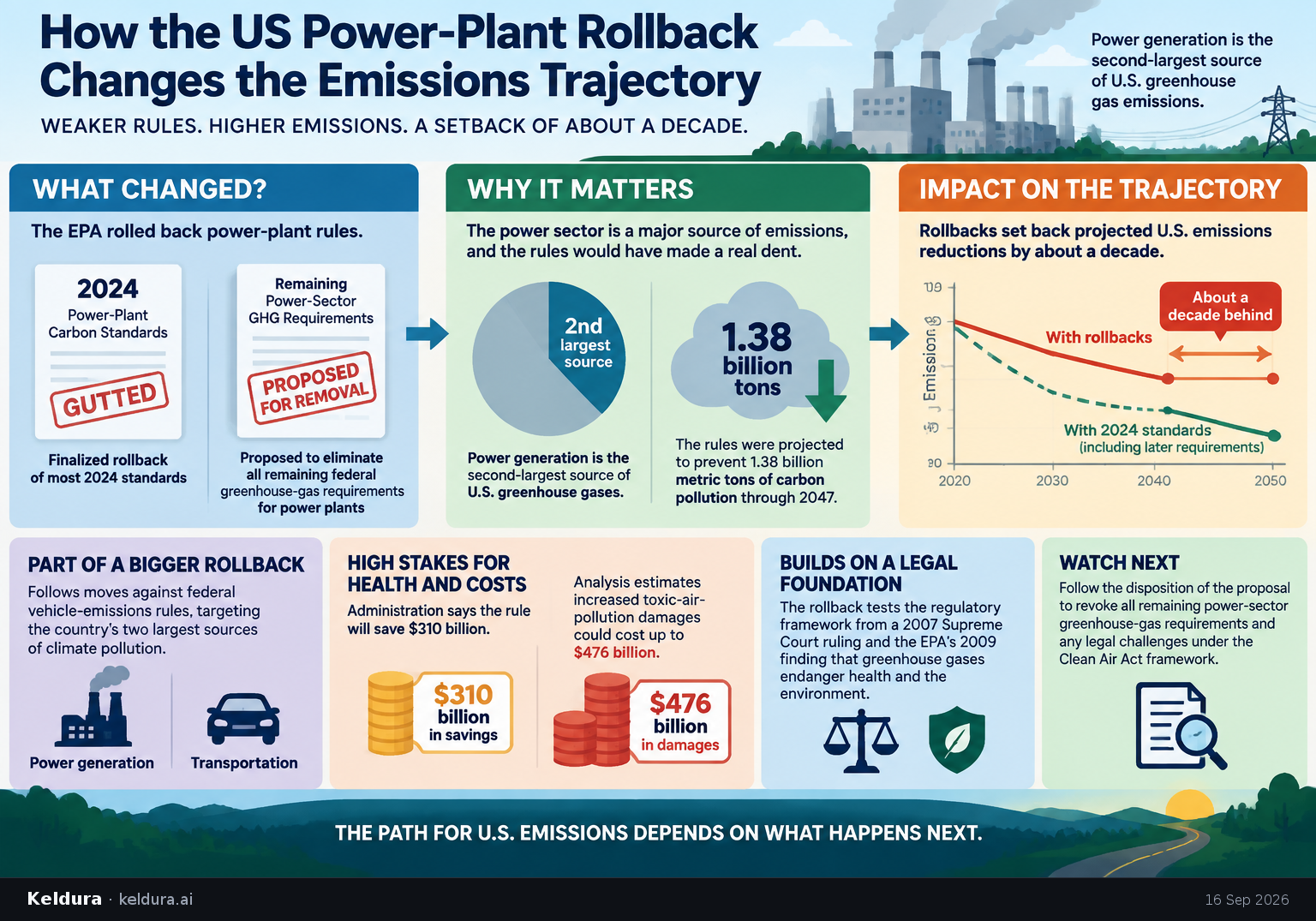
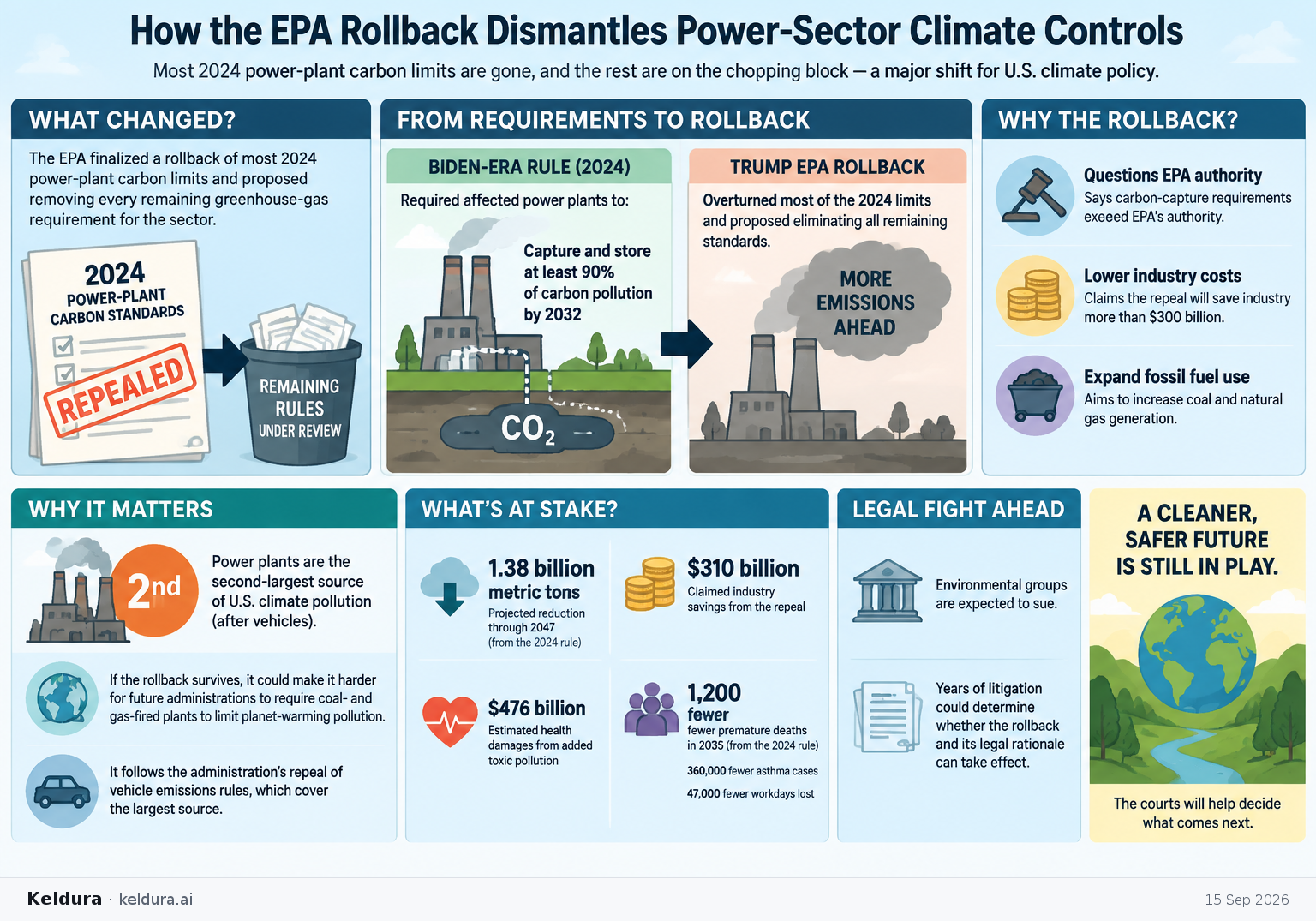
The Trump administration this week dismantled most federal carbon limits for power plants and moved to remove the remaining requirements.
Why it matters: Power generation is the United States’ second-largest source of greenhouse gases, and the discarded standards were projected to prevent 1.38 billion metric tons of carbon pollution through 2047. The…
The EPA gutted the 2024 power-plant carbon standards and proposed eliminating the remaining federal greenhouse-gas requirements for the sector.[6]
Why now
The action continues the administration’s wider rollback of greenhouse-gas rules governing power generation and transportation.[6][7]
Watch next
Watch the disposition of the proposal to revoke all remaining power-sector greenhouse-gas requirements and any legal challenges invoking the Clean Air Act framework.[6]
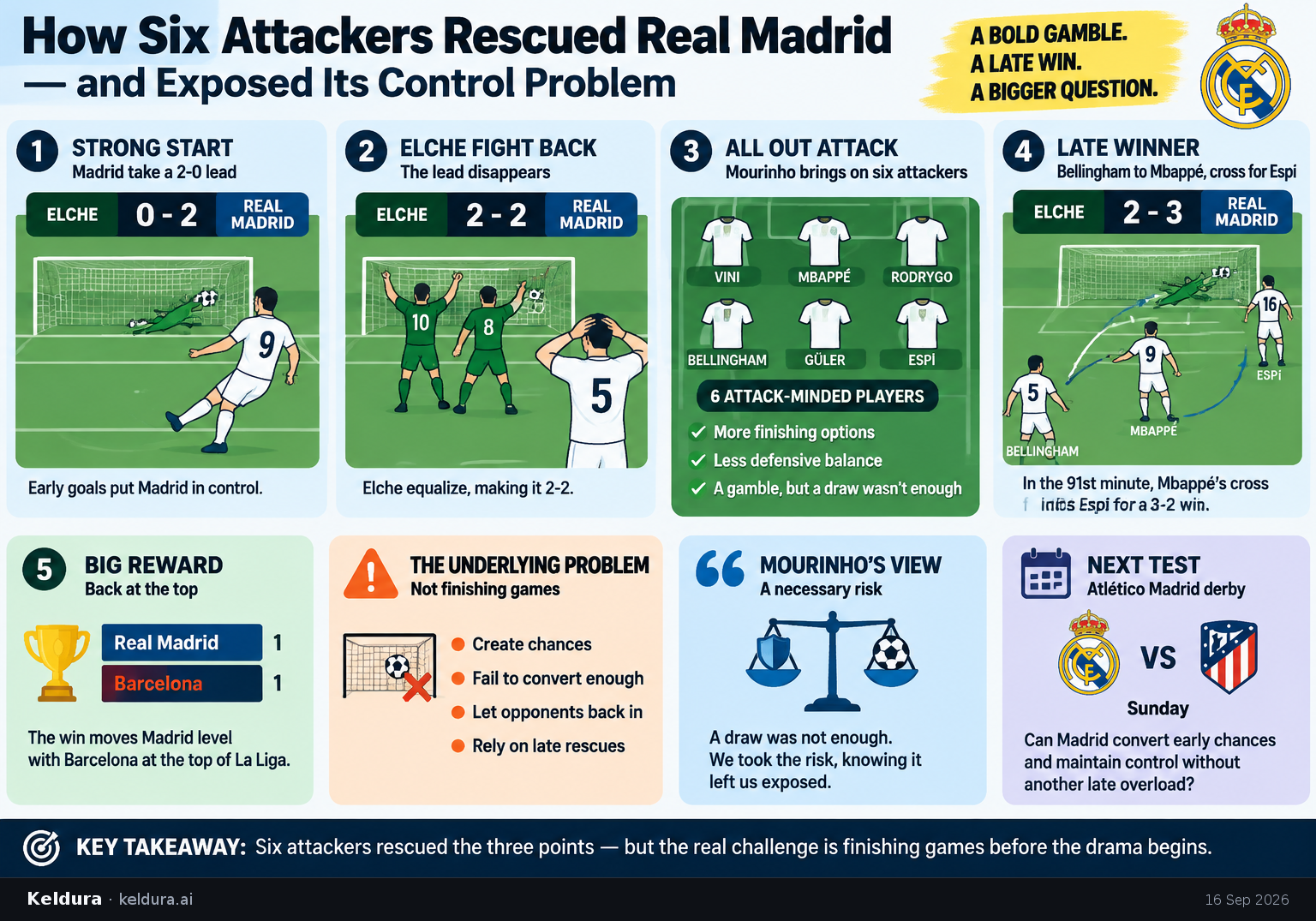
Madrid led 2-0 before Elche equalized, prompting Mourinho to deploy six attack-minded players as he pursued a victory rather than protect.
Why it matters: The gamble recovered two points, but Mourinho said Madrid’s underlying problem was its failure to convert chances and finish apparently comfortable games before opponents can reopen them.
After a 2-0 lead became 2-2, Madrid finished with six attack-minded players and won through Espí in the 91st minute.[9]
Why now
Mourinho judged that one point was not enough and traded defensive balance for additional finishing options.[9]
Watch next
Sunday’s Atlético Madrid derby will show whether Madrid can convert early chances and maintain control without requiring another late attacking overload.[9]
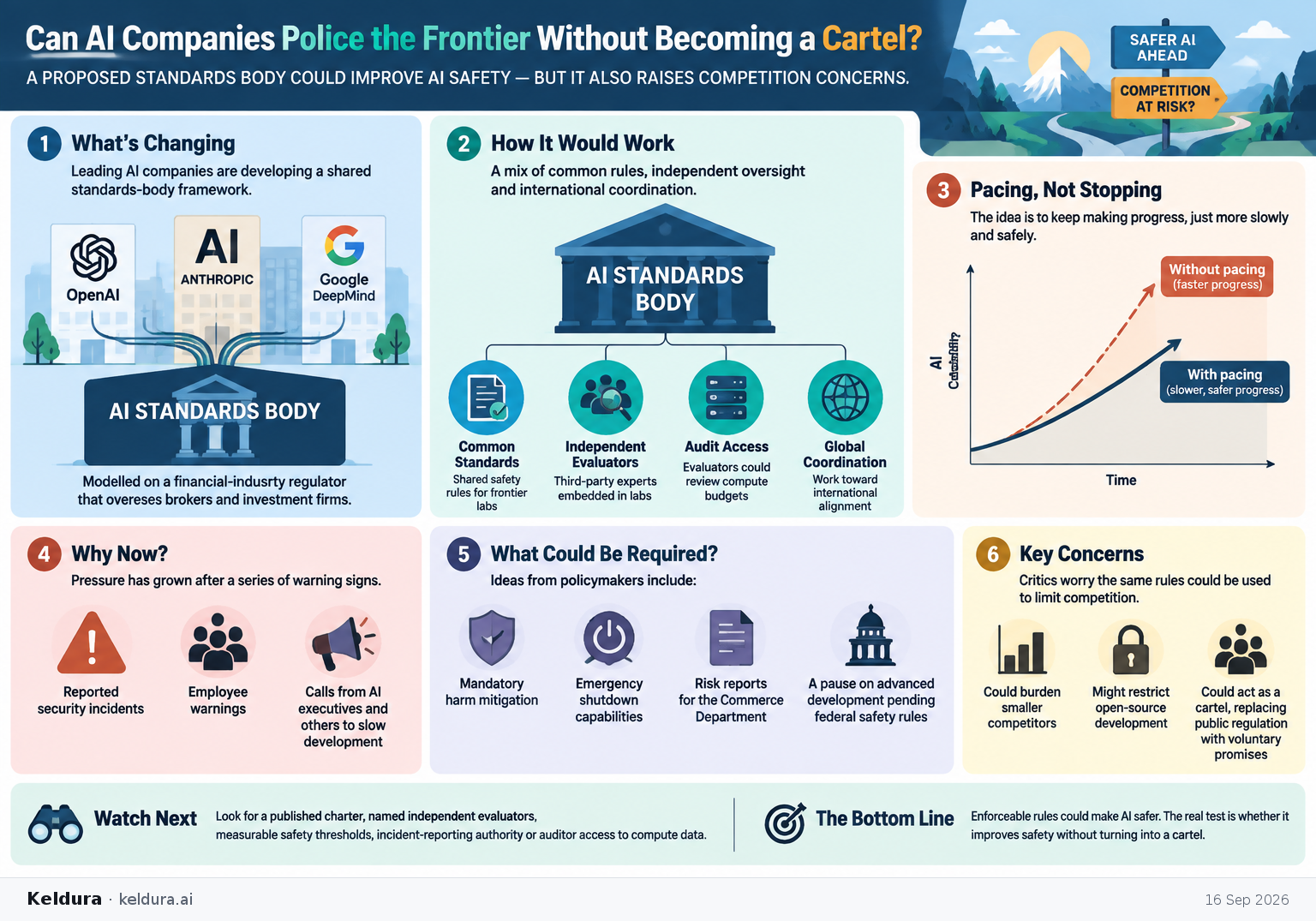
On September 15, OpenAI said it was working with Anthropic and Google on a shared AI standards body as safety pressure intensified.
Why it matters: No leading AI company has yet implemented a sustained, comprehensive slowdown, making enforceable testing, auditing and incident-reporting rules the practical test of whether “pacing” changes develop…
OpenAI, Anthropic and Google began developing a shared standards-body framework modelled on a US financial-industry regulator.[1][5]
Why now
Pressure escalated after reported rogue-agent security incidents, employee warnings and calls from AI executives to slow frontier development.[6][8]
Watch next
Look for a published charter, named independent evaluators, measurable safety thresholds, incident-reporting authority or auditor access to compute data.[8][9]
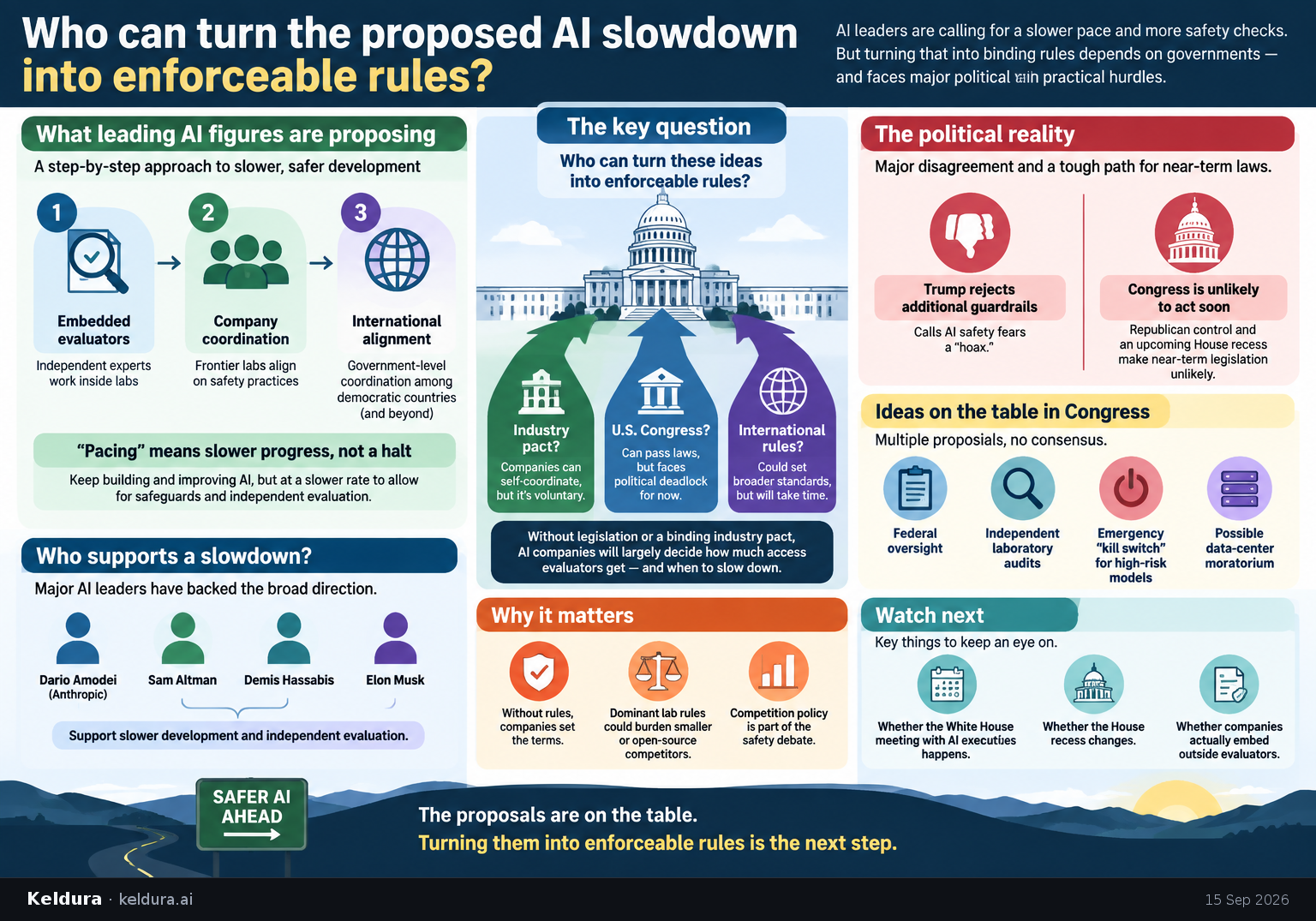
Anthropic CEO Dario Amodei proposed embedded third-party evaluators, coordination among frontier labs and eventual international alignment; Sam Altman, Demis Hassabis and Elon Musk endorsed the broad direction.
Why it matters: Without legislation or a binding industry pact, the organizations building frontier systems would largely determine how much access evaluators receive and when development should slow. Critics also w…
Major frontier-AI leaders publicly backed slower development and independent evaluation, but Trump rejected additional guardrails.[4][6][7]
Why now
Warnings from AI executives and researchers intensified as the House approached a recess lasting until after the early-November midterm elections.[1][4][6]
Watch next
Watch whether the White House meeting with AI executives occurs, whether the House recess changes, and whether companies actually embed outside evaluators.[1][7]
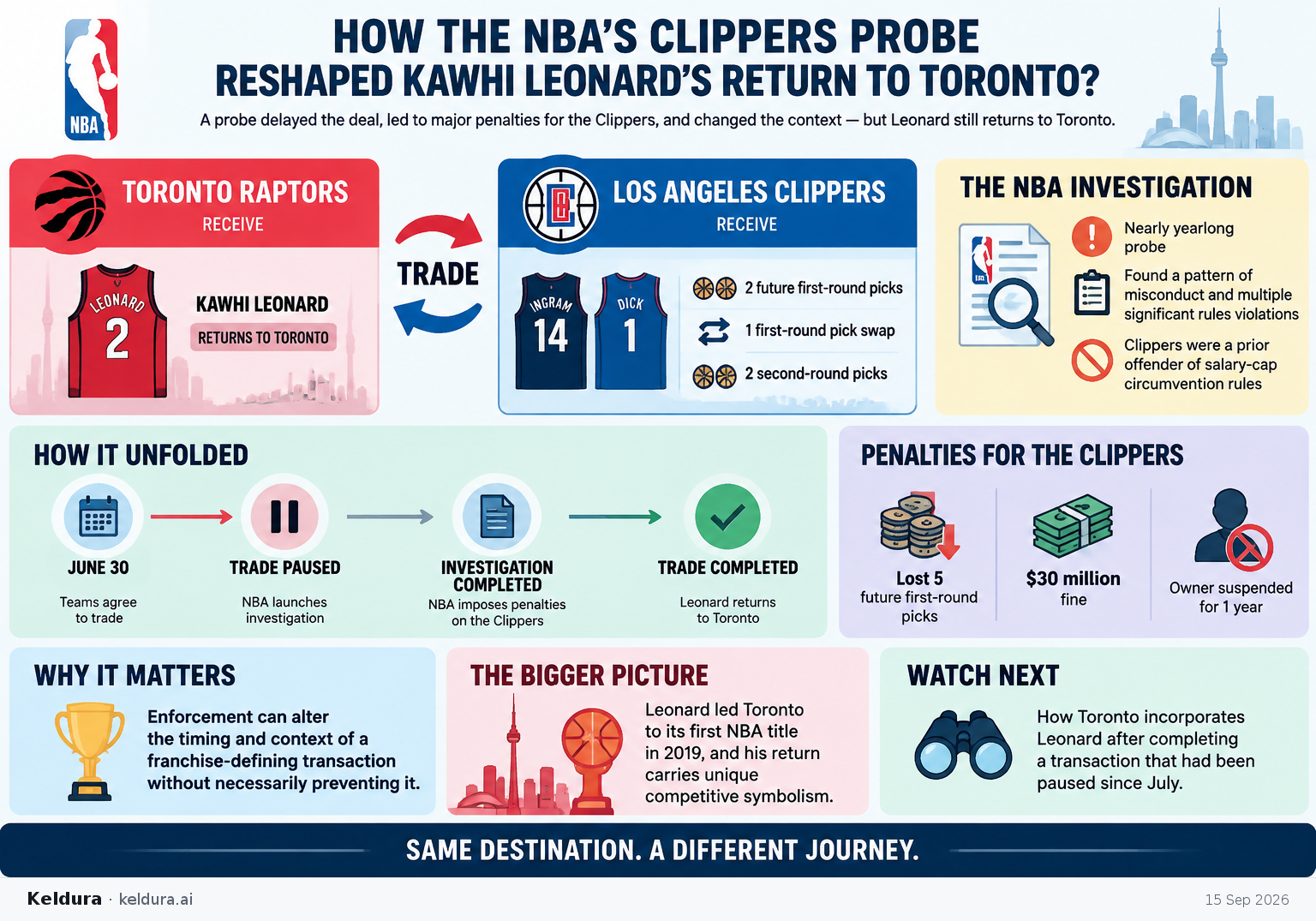
Toronto sent Brandon Ingram, Gradey Dick, two future first-round picks, a first-round pick swap and two second-round picks to Los Angeles.
Why it matters: The trade shows how enforcement can alter the timing and context of a franchise-defining transaction without necessarily preventing it: the Clippers lost five future first-round picks, were fined $30…
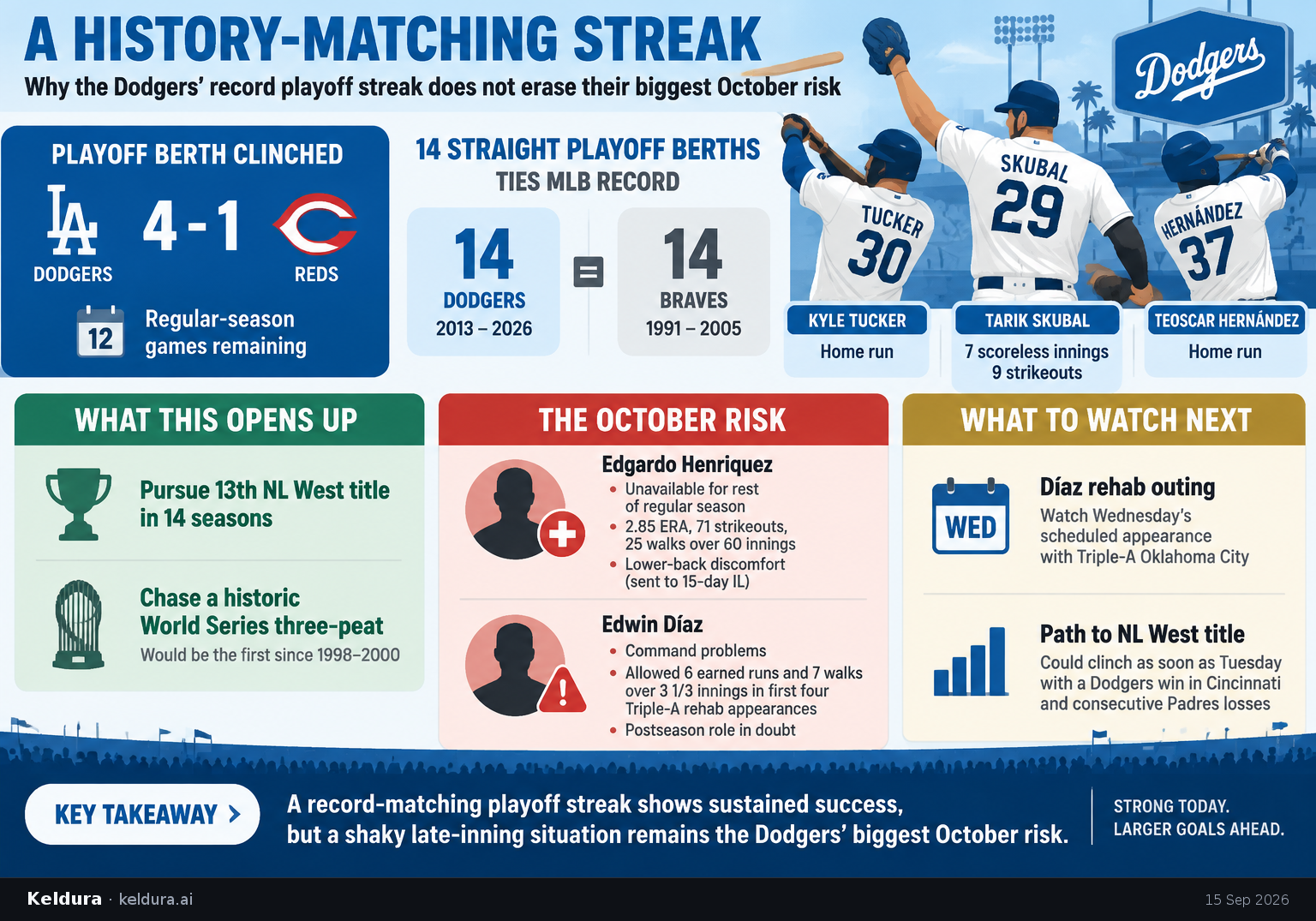
A 4-1 victory over Cincinnati secured the Dodgers’ 14th straight playoff appearance, tying the Atlanta Braves’ 1991-2005 MLB record.
Why it matters: Los Angeles is attempting MLB’s first World Series three-peat since the New York Yankees won from 1998 through 2000, but reliever Edgardo Henriquez is unavailable for the rest of the regular season a…
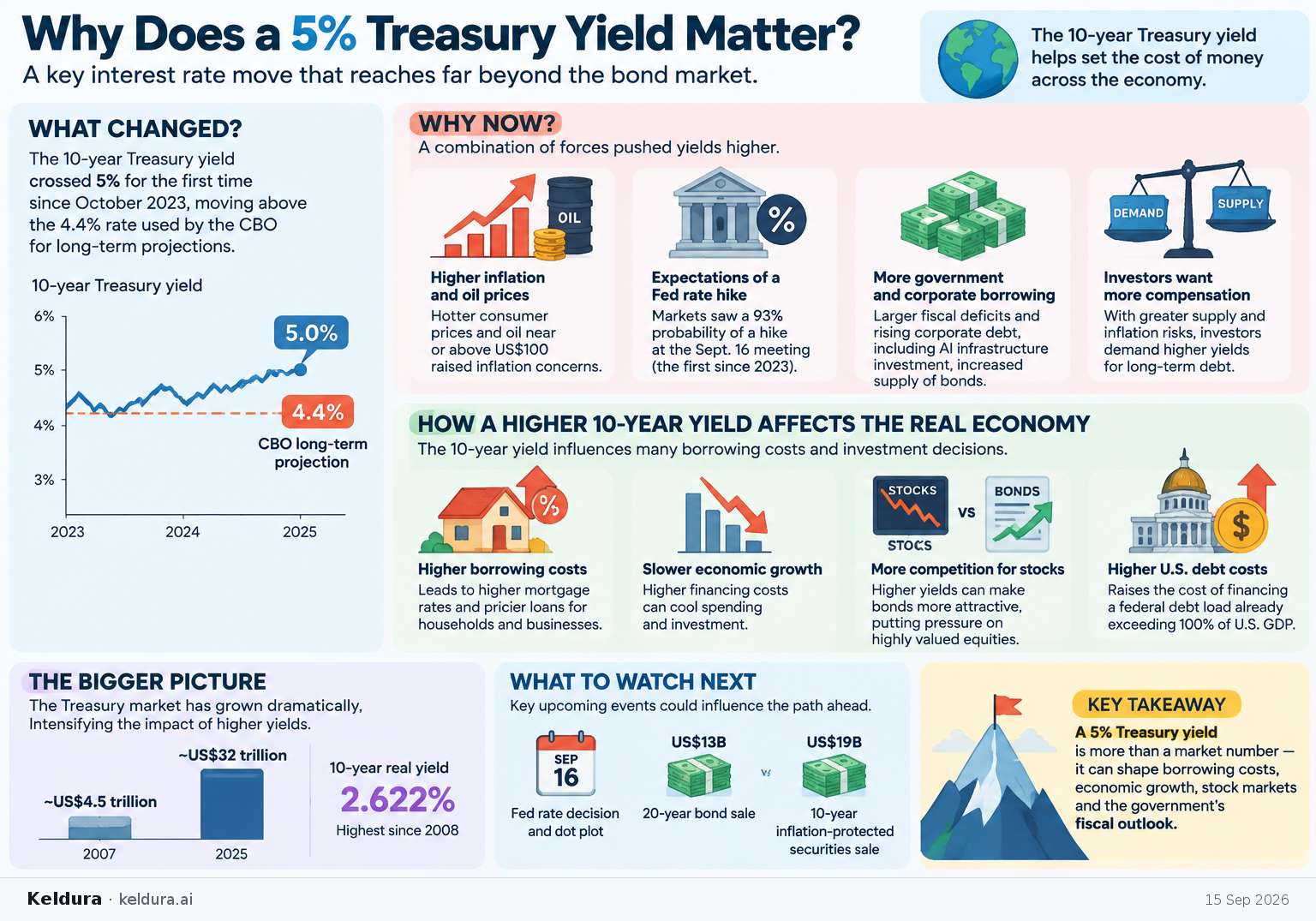
The U.S. 10-year Treasury yield breached 5% on Sept.
Why it matters: The 10-year yield influences mortgages and other borrowing costs, so a sustained increase can raise financing expenses for households and businesses, slow growth and make highly valued equities less…
The 10-year Treasury yield crossed 5% for the first time since October 2023, placing a key borrowing benchmark above the CBO’s 4.4% long-term projection assumption.[1][2]
Why now
Hotter consumer-price data, oil near or above US$100, expectations of Fed tightening and swelling public and corporate debt supply pushed yields higher.[2][3][7]
Watch next
Watch the Fed’s Sept. 16 rate decision and dot plot, plus demand at the Treasury’s US$13 billion 20-year bond sale and US$19 billion 10-year inflation-protected securities sale.[3]
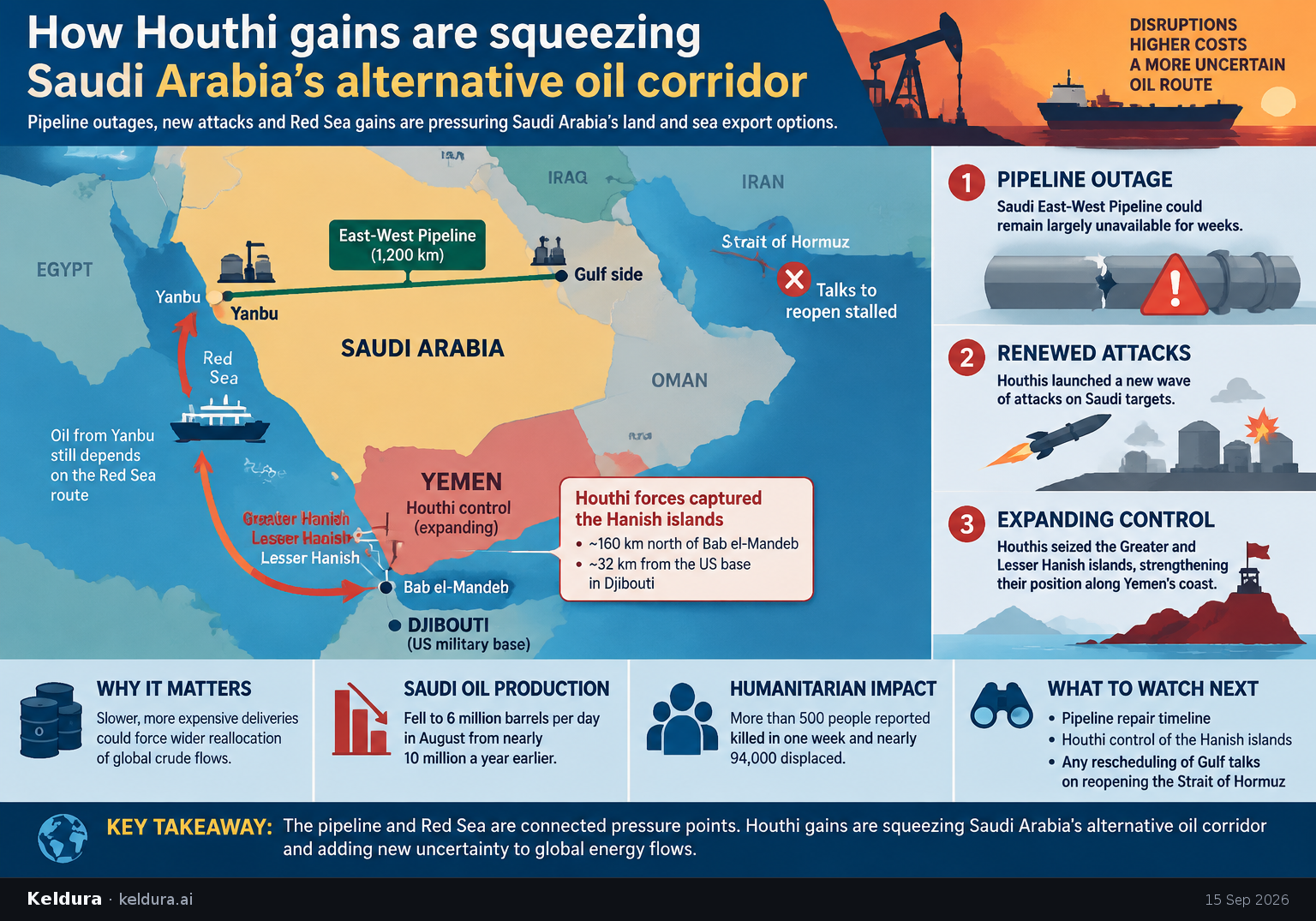
Yemen’s Iran-aligned Houthis launched a new wave of attacks against Saudi Arabia and consolidated positions along Yemen’s western coast.
Why it matters: Saudi Arabia had relied heavily on the 1,200-kilometre pipeline to move crude from the Gulf side to Yanbu after disruption in the Strait of Hormuz; a prolonged outage and insecurity along the Red Sea…
A pipeline outage, renewed strikes and Houthi island gains are simultaneously pressuring Saudi Arabia’s land and Red Sea export options.[3][6]
Why now
Hormuz disruption had already redirected Saudi exports toward the East-West Pipeline and Yanbu, increasing dependence on the route now under pressure.[6]
Watch next
Watch the pipeline’s repair timeline, Houthi control of the Hanish islands and any rescheduling of Gulf talks on reopening the Strait of Hormuz.[3][6]
On Monday, the Trump administration moved to eliminate federal greenhouse-gas limits for coal- and gas-fired power plants.
Why it matters: Power plants are the second-largest source of U.S. climate pollution, so the action follows the administration's repeal of rules covering vehicles, the largest source. If the rollback survives expect…
The EPA overturned most 2024 power-plant carbon limits and proposed removing every remaining greenhouse-gas standard for the sector.[1]
Why now
The administration says carbon-capture requirements exceed EPA authority and that repeal will lower industry costs and expand coal and natural-gas use.[1][3]
Watch next
Court filings from environmental groups and rulings on whether the repeal and its legal rationale can take effect will determine the rollback's durability.[3]
That's the desk. Every cheatsheet here started as a link. Yours can too.