Every Climate & Environment cheatsheet Keldura Daily has published, newest first. Each cheatsheet is compiled by Keldura's AI from the sources it cites.
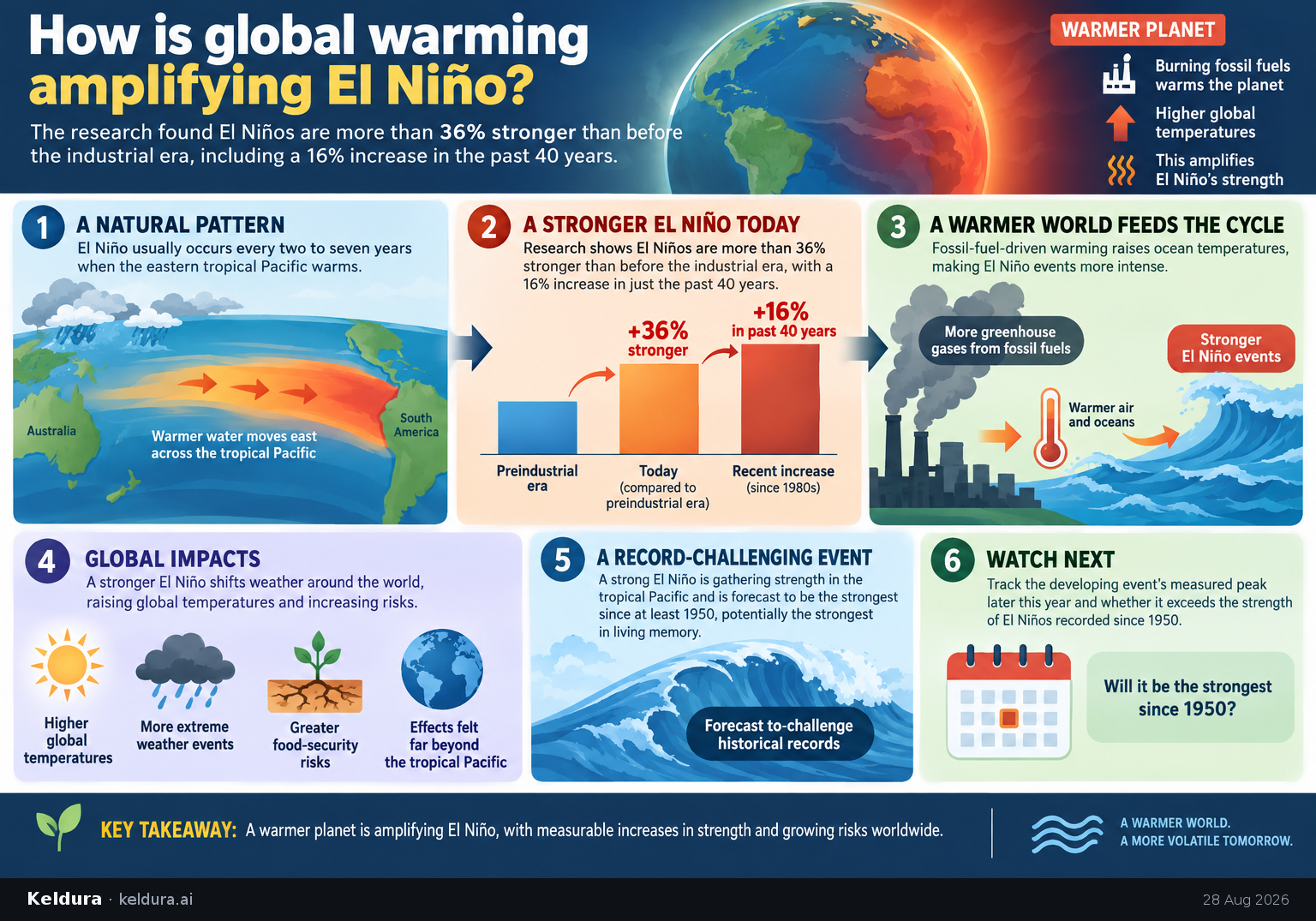
The research found El Niños are more than 36% stronger than before the industrial era, including a 16% increase in the past 40 years.
Why it matters: Because El Niño shifts weather around the world and raises global temperatures, a stronger baseline pattern can intensify extreme-event and food-security risks far beyond the tropical Pacific.
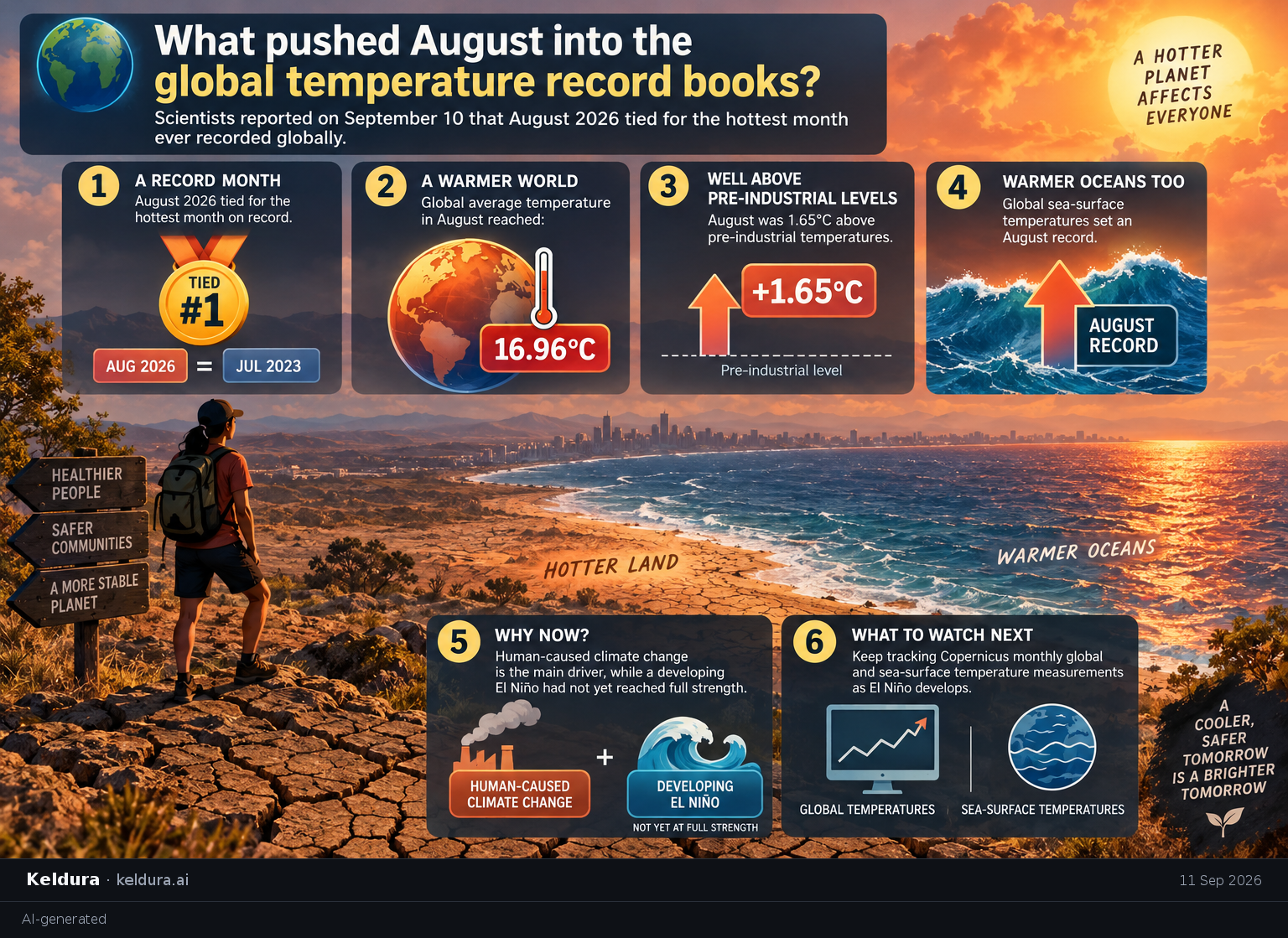
Scientists reported on September 10 that August 2026 tied for the hottest month ever recorded globally.
Why it matters: Human-caused climate change remains the main driver of the elevated temperatures, and the record occurred alongside climate-related disasters around the world. The heat was measured before the develo…
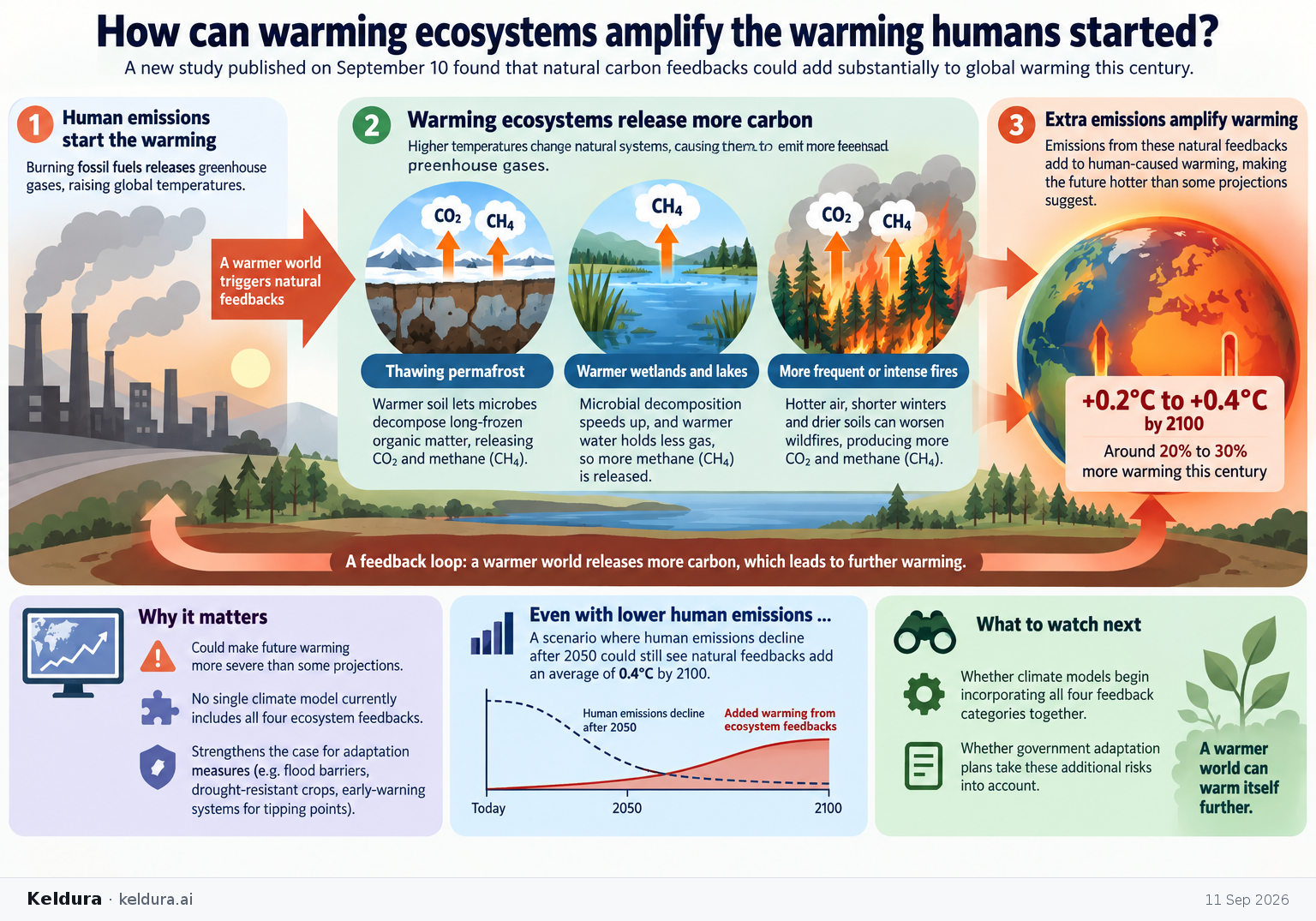
A new study published on September 10 found that natural carbon feedbacks could add substantially to global warming this century.
Why it matters: No single climate model currently includes all the ecosystem feedbacks assessed by the researchers, so their combined effect could make future warming more severe than some projections indicate. The…
A combined assessment put the additional warming from four ecosystem feedbacks at 0.2°C to 0.4°C by 2100.[5]
Why now
Fossil-fuel-driven warming is thawing permafrost, heating wetlands and lakes, drying soils and worsening fires that release more greenhouse gases.[3][5]
Watch next
Watch whether climate models and government adaptation plans begin incorporating all four feedback categories together.[5]
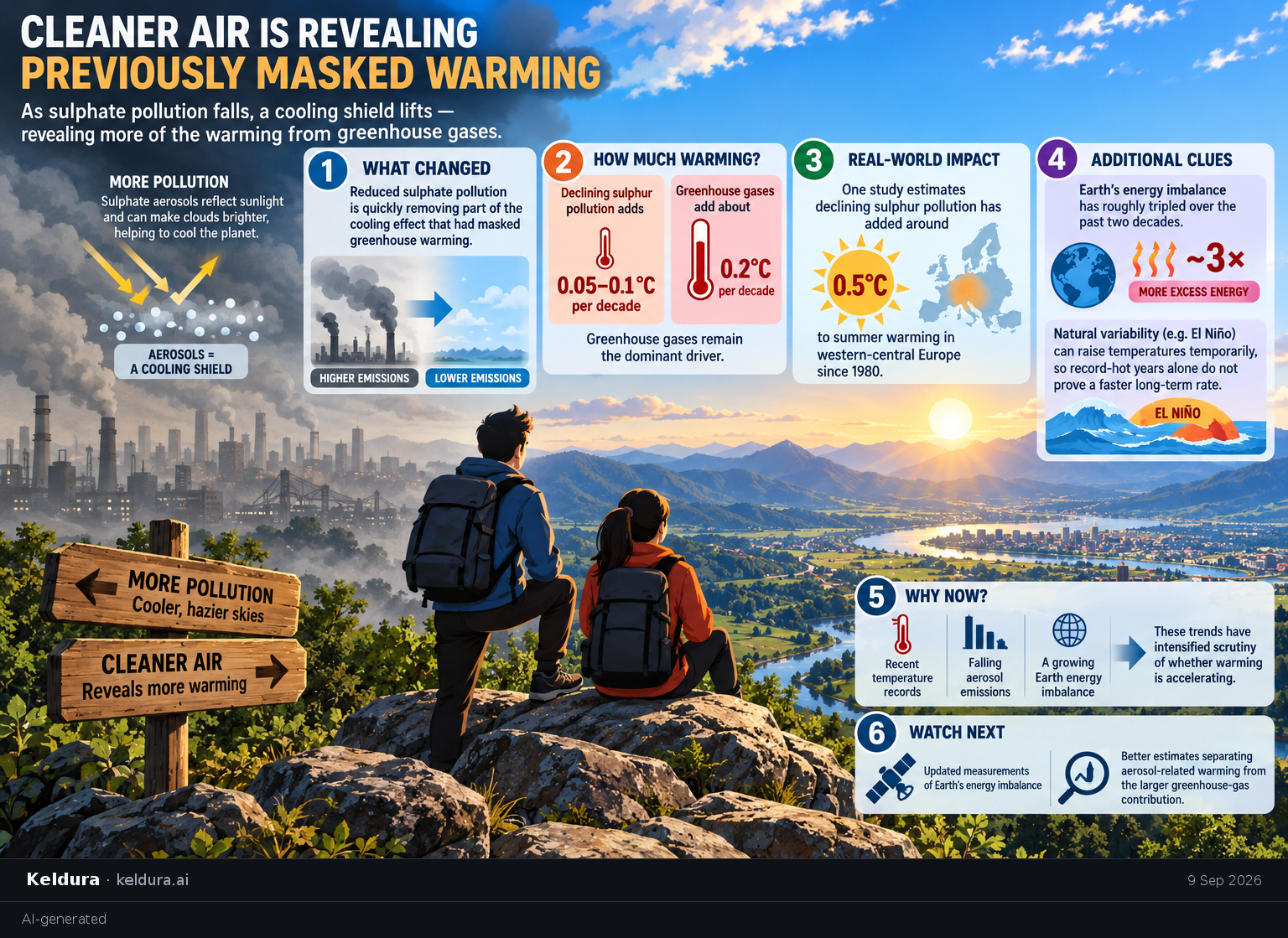
Sulphate aerosols from fossil-fuel combustion reflect sunlight and alter clouds, partly offsetting greenhouse warming, but their short atmospheric lifetime means that cooling disappears quickly when pollution falls.
Why it matters: Cuts to harmful sulphur pollution benefit health and ecosystems but expose warming that aerosols had temporarily masked, complicating assessments of how quickly the planet is heating.
Reduced sulphate pollution is rapidly removing part of the cooling effect that had masked greenhouse warming.[1]
Why now
Recent temperature records, falling aerosol emissions and a growing Earth energy imbalance have intensified scrutiny of whether warming is accelerating.[1]
Watch next
Watch updated measurements of Earth’s energy imbalance and estimates separating aerosol-related warming from the larger greenhouse-gas contribution.[1]
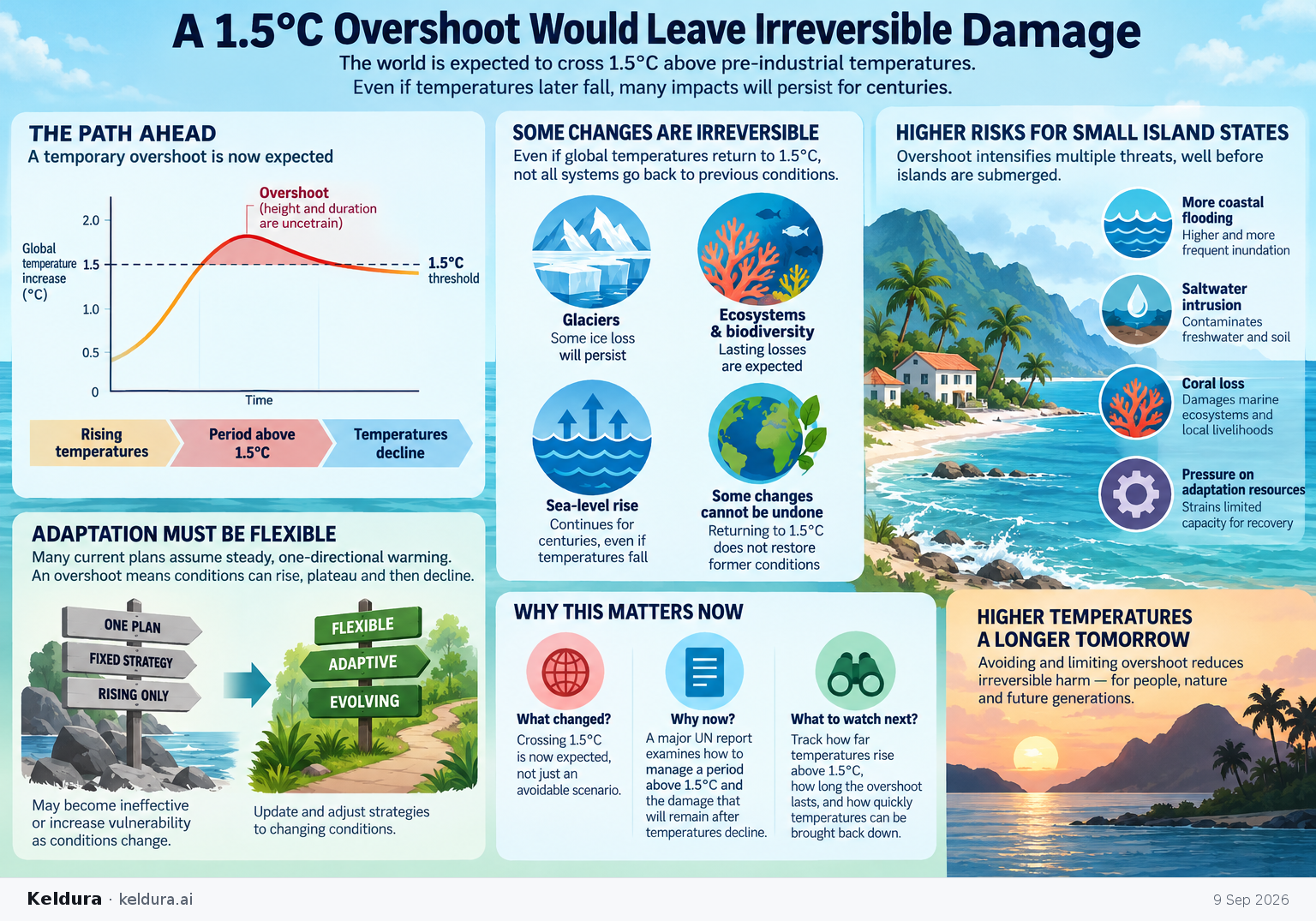
Why it matters: For small island states, overshoot means escalating saltwater intrusion, coral loss, coastal flooding and pressure on limited adaptation and recovery resources well before islands are submerged.
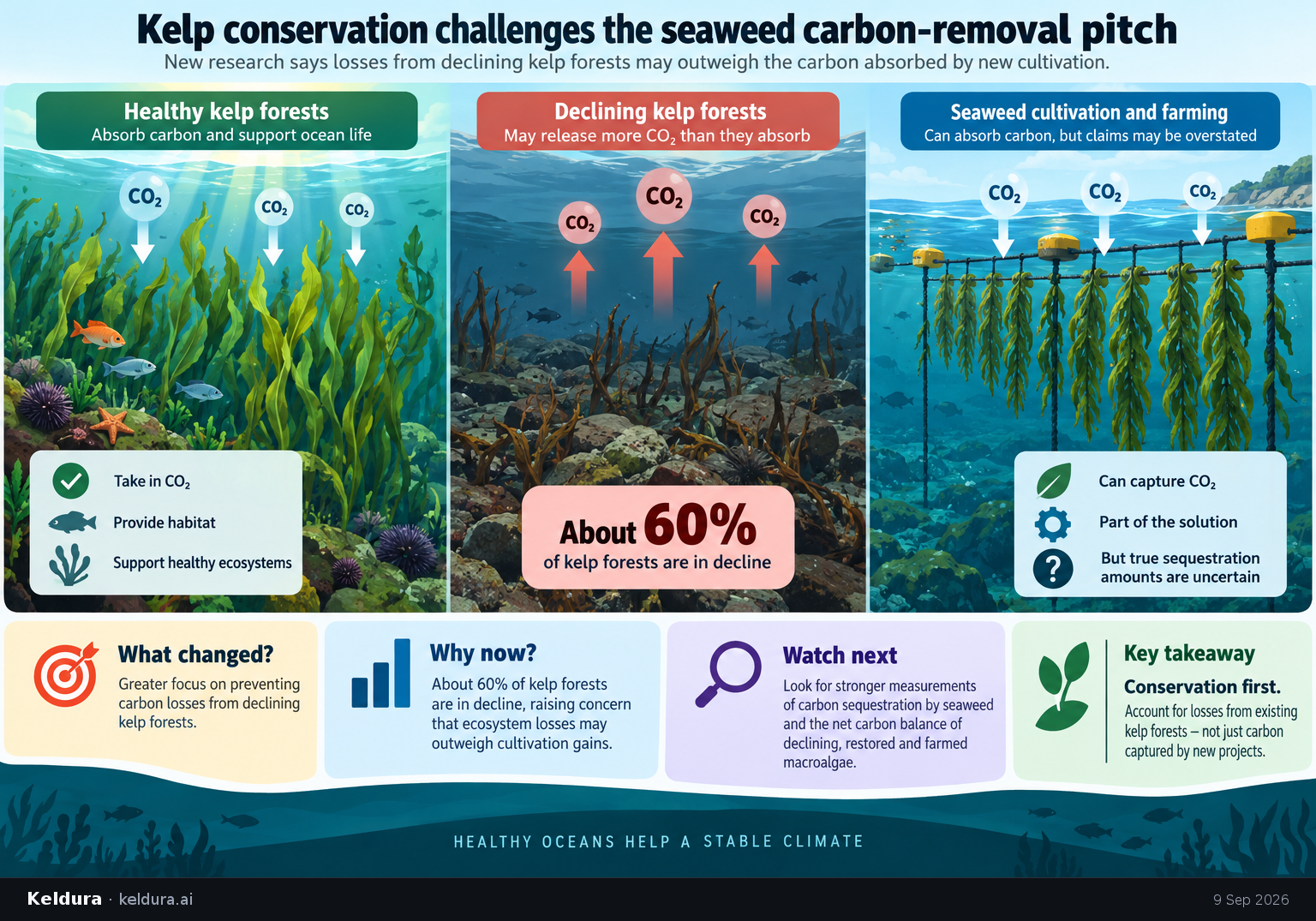
A new study argues that cultivating seaweed is being overstated as a climate solution because carbon released through seaweed loss may exceed the amount absorbed by new cultivation.
Why it matters: Governments, researchers and companies considering seaweed for emissions offsets need to account for losses from existing kelp forests rather than counting only carbon captured by new projects.
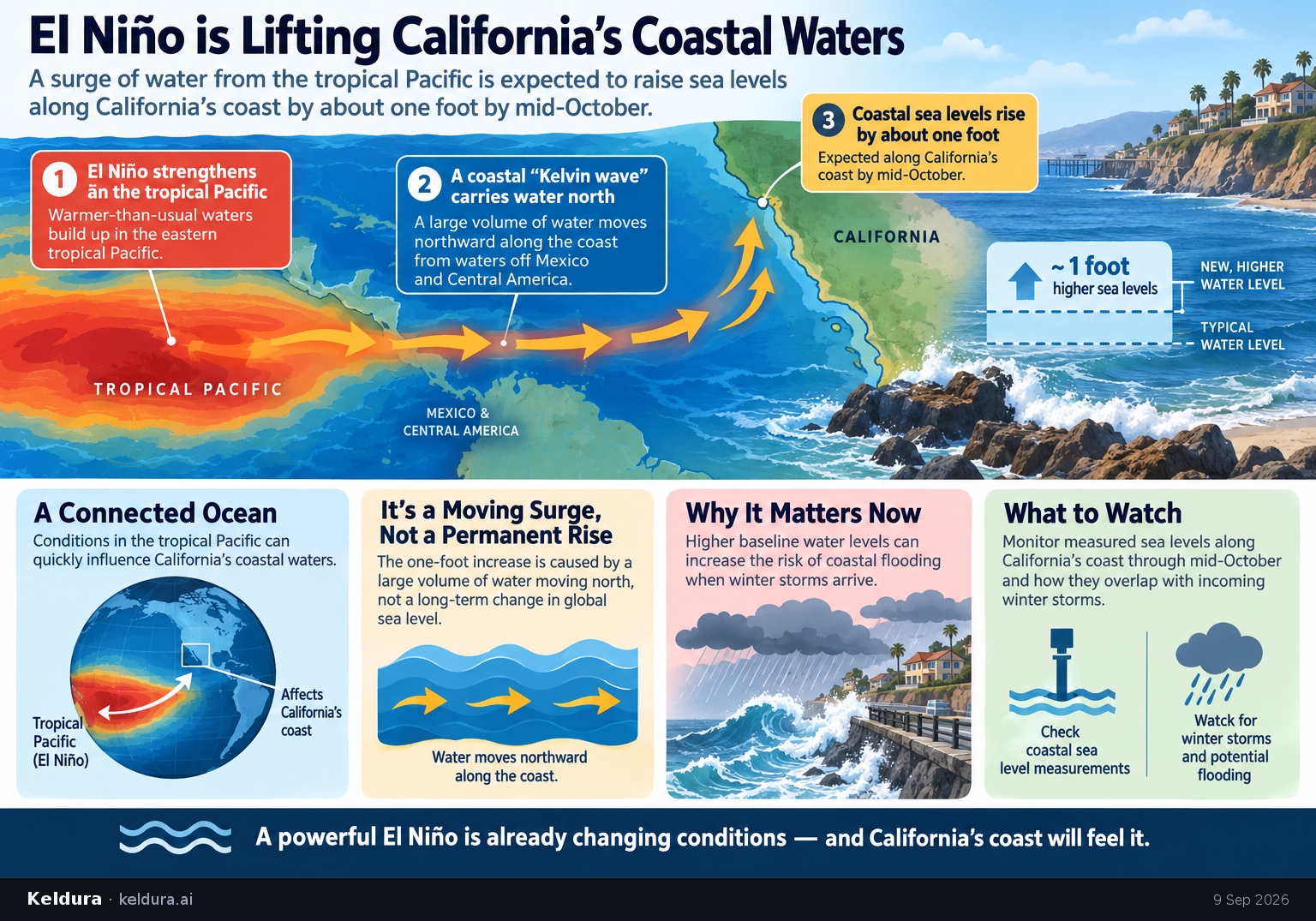
El Niño is expected to raise sea level along California’s coast by about one foot by mid-October as water moves northward from waters off Mexico and Central America.
Why it matters: The elevated baseline would leave California’s coast facing higher water levels as winter storms approach, increasing the relevance of coastal flood monitoring.
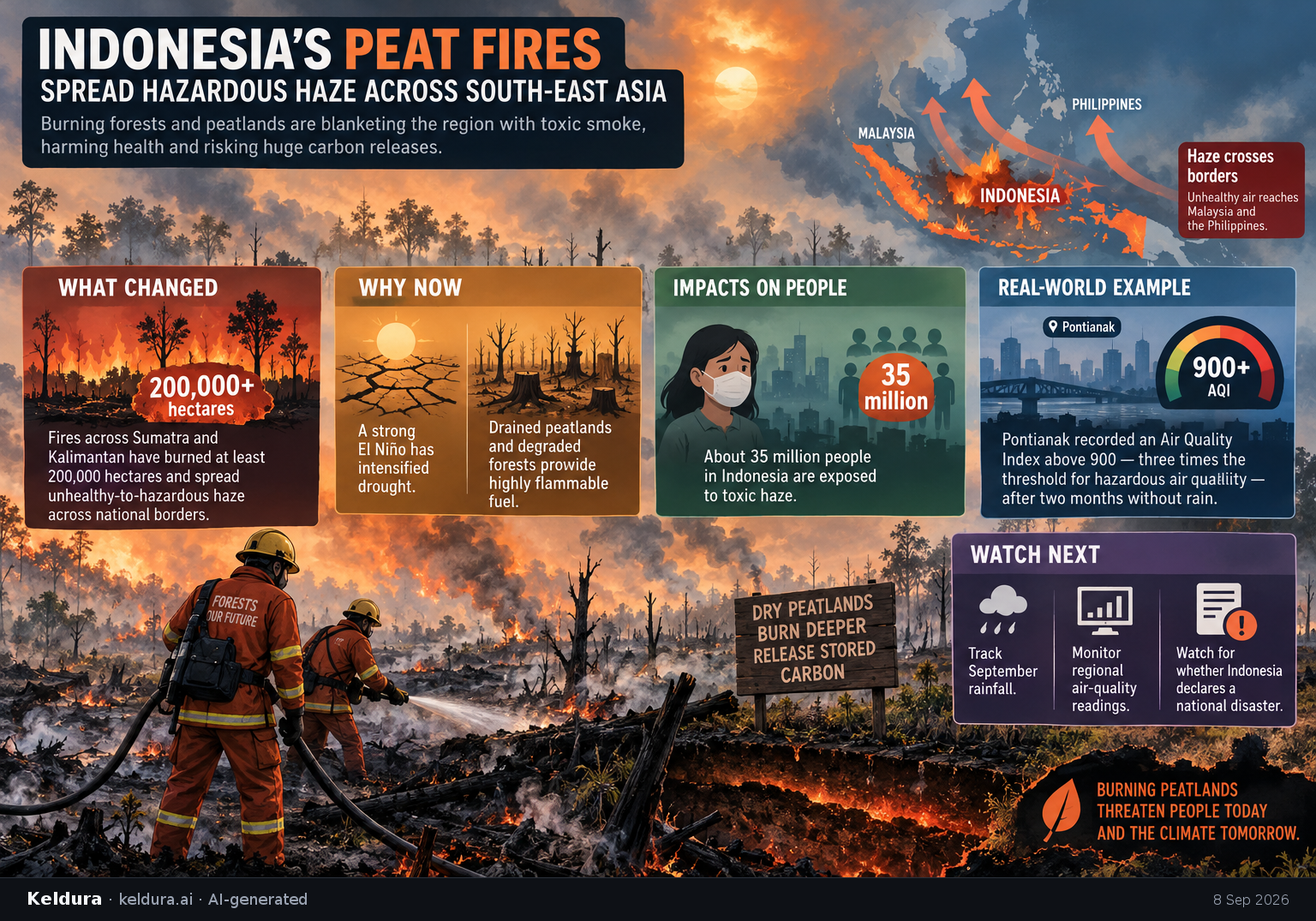
Months of forest and land fires, intensified by a super El Niño and drought, have burned at least 200,000 hectares across Indonesia, with another tracker estimating more than 285,000 hectares so far this year.
Why it matters: The crisis combines an immediate regional health emergency with a climate feedback: dry peat can burn underground, spread persistent smoke and release carbon accumulated over thousands of years. With…
Fires across Sumatra and Kalimantan have burned at least 200,000 hectares and spread unhealthy-to-hazardous haze across national borders.[1][6]
Why now
A strong El Niño has intensified drought, while drained peatlands and degraded forests provide highly flammable fuel.[1][5]
Watch next
Track September rainfall, regional air-quality readings and whether Indonesia declares a national disaster as dry conditions reach their expected peak.[1][5]
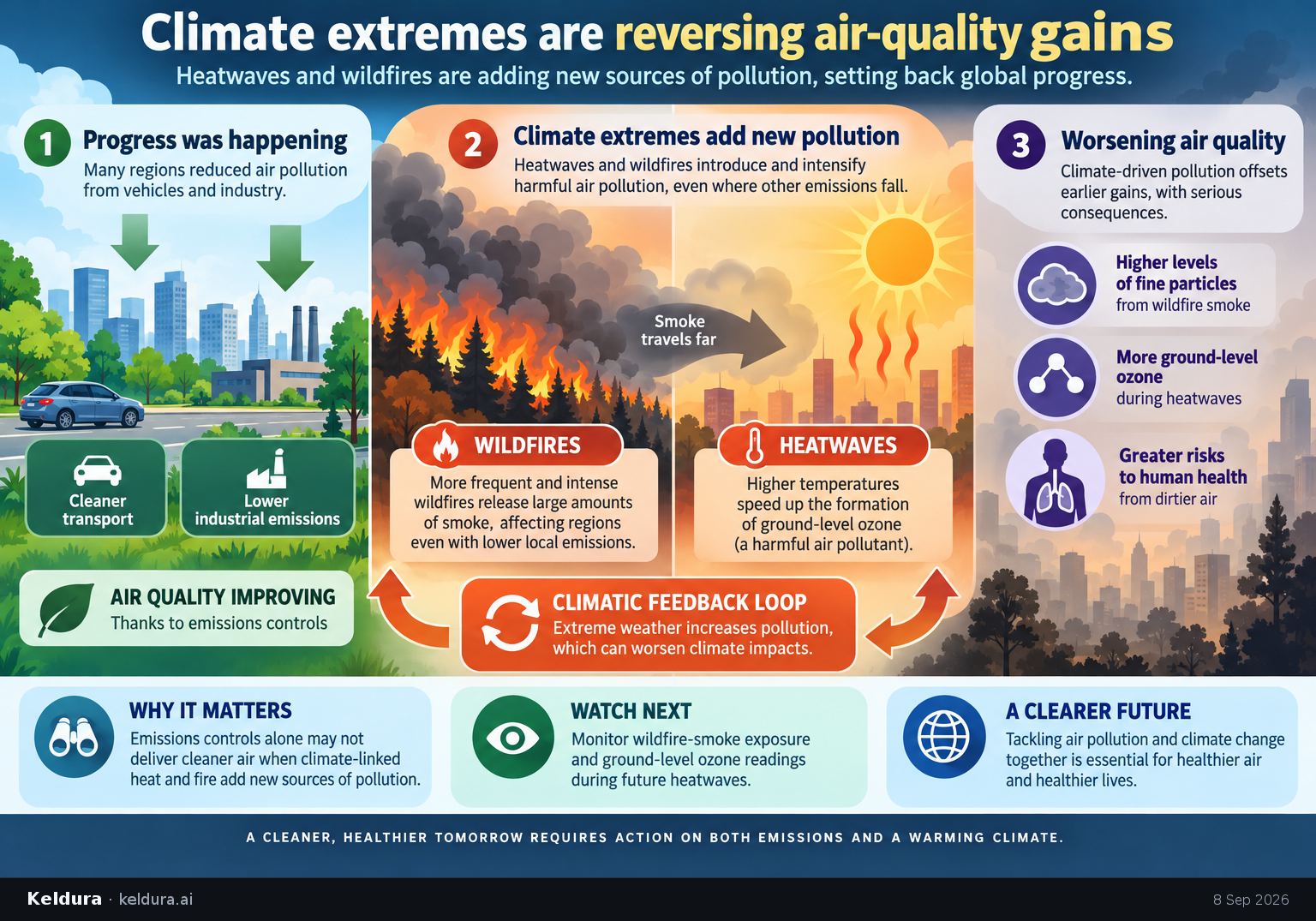
A new WMO report finds that worsening wildfires and heatwaves are hindering improvements in air quality around the world.
Why it matters: The findings show that emissions controls on transport and industry may not deliver cleaner air on their own when climate-linked heat and fire introduce new sources of dangerous pollution.
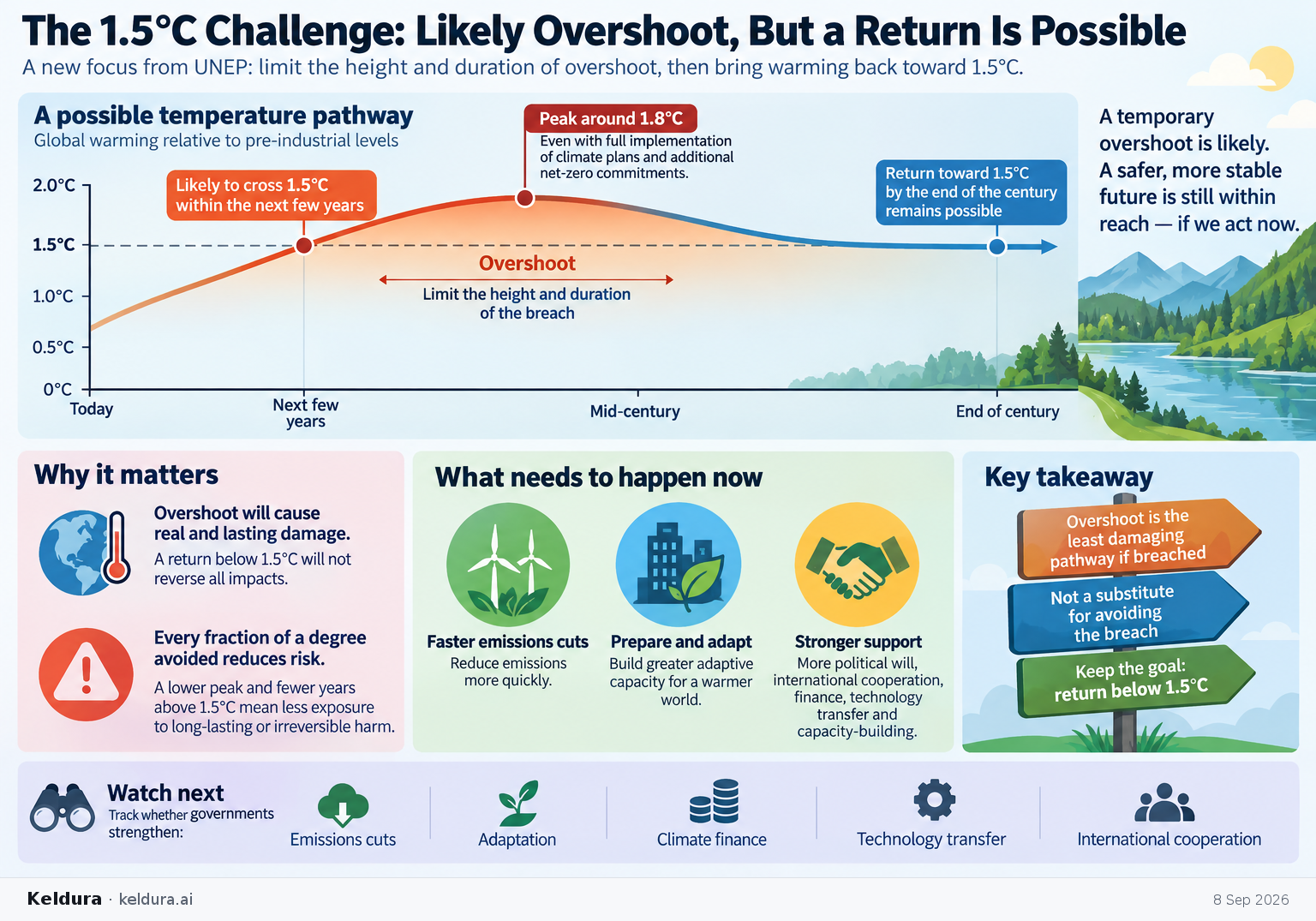
Why it matters: A return below 1.5°C would not reverse all damage incurred during an overshoot, so every fraction of a degree avoided and every year removed from the breach would reduce exposure to long-lasting or i…
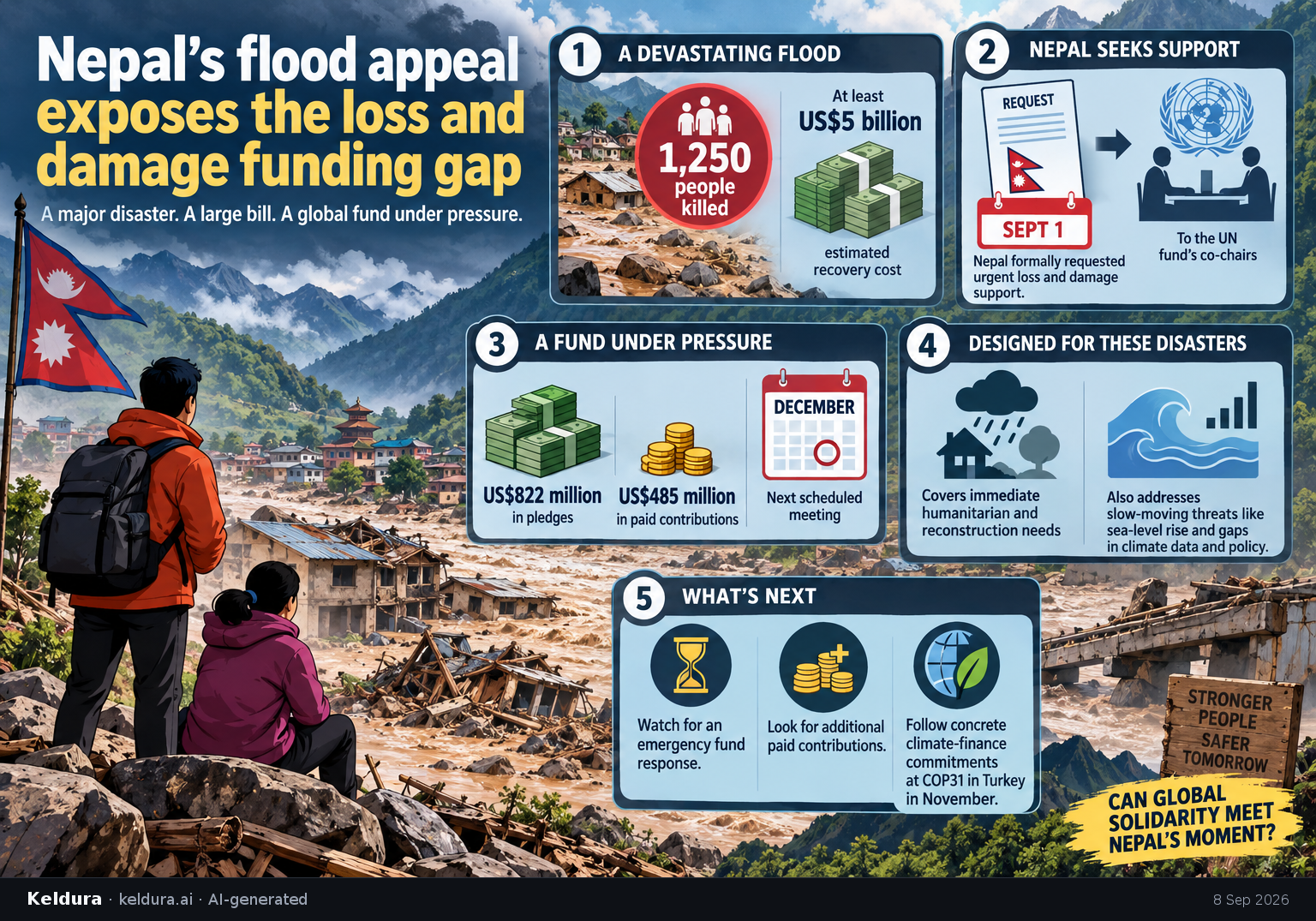
Nepal has requested immediate support from the UN climate loss and damage fund after catastrophic floods killed 1,250 people and left an estimated recovery bill of at least US$5 billion.
Why it matters: Nepal’s needs dwarf the fund’s available resources, making the request an early test of whether the international climate-finance system can deliver timely assistance at the scale required after a ma…
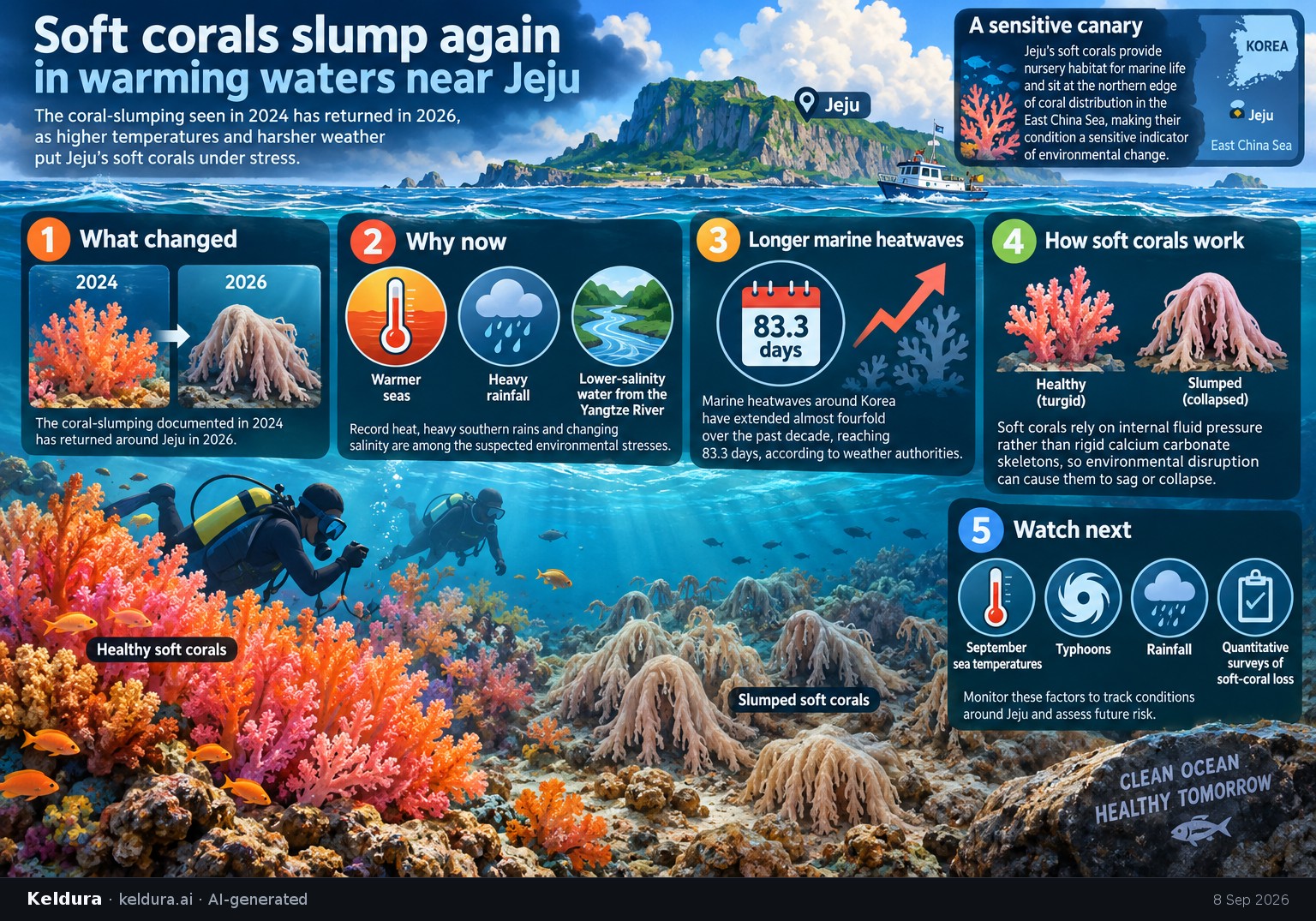
Divers and scientists report that soft corals around Jeju are again sagging, collapsing and dying after two years of rising temperatures and harsher weather.
Why it matters: Jeju’s soft corals provide nursery habitat supporting the local marine ecosystem and occupy the northern edge of coral distribution in the East China Sea, making their condition a sensitive indicator…