Keldura Daily Open Keldura

Keldura Daily · Cheatsheets

Health & Medicine cheatsheets.

Every Health & Medicine cheatsheet Keldura Daily has published, newest first.

Latest cheatsheets

Health & Medicine

Read in Briefings

Health & Medicine

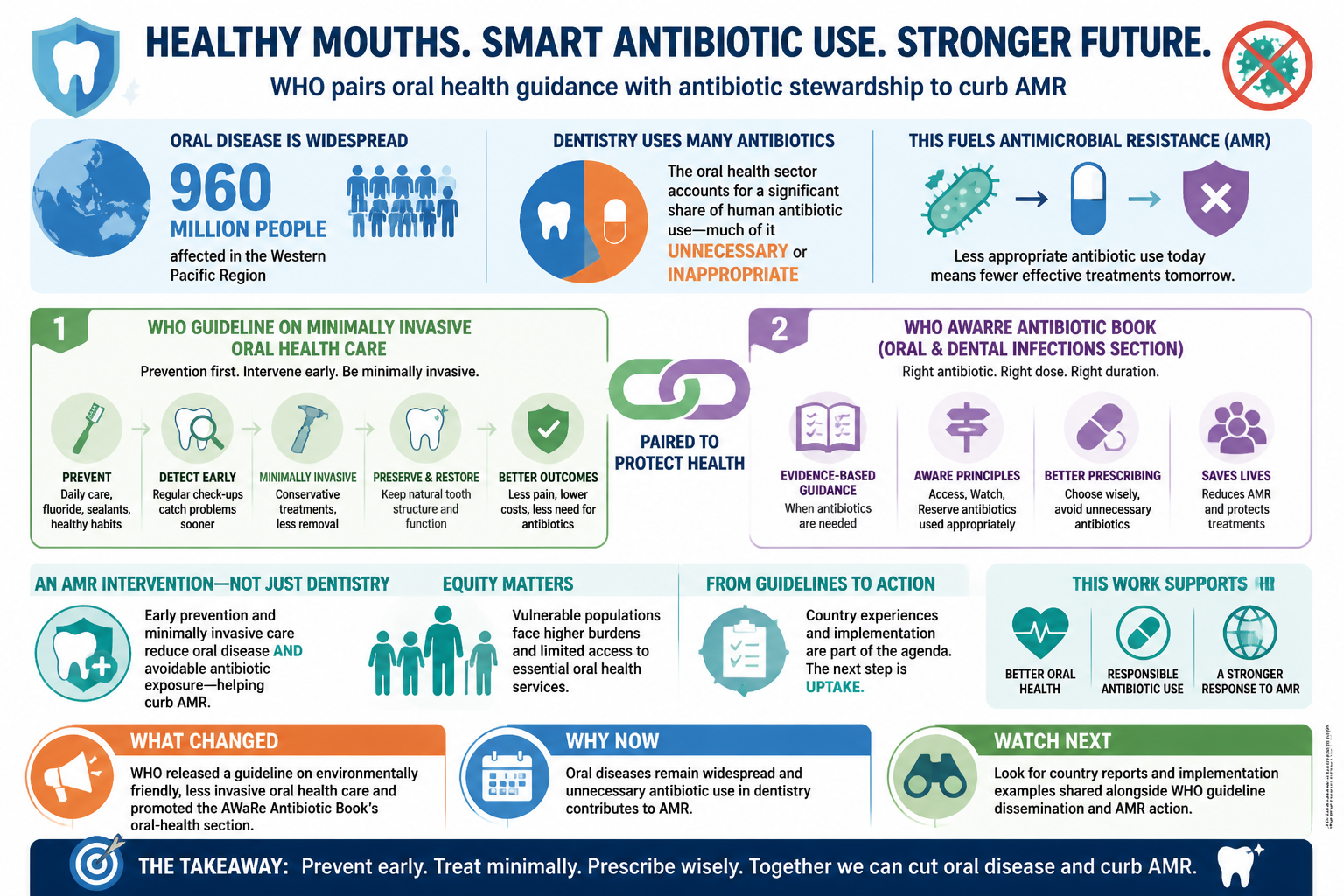
WHO pairs oral health guidance with antibiotic stewardship to curb AMR

WHO says oral diseases affect an estimated 960 million people in the Western Pacific Region and that access to essential oral health services remains limited.

Cheatsheet for WHO pairs oral health guidance with antibiotic stewardship to curb AMR. Text equivalent is attached.

Why it matters: This links routine dental care to one of the biggest global health threats: antimicrobial resistance. If countries adopt prevention-focused, minimally invasive approaches earlier, they may reduce bot…

Open cheatsheet → Post to X

What changed
WHO released a guideline on environmentally friendly, less invasive oral health care and promoted the AWaRe Antibiotic Book’s oral-health section [1].
Why now
Oral diseases remain widespread while unnecessary antibiotic use in dentistry contributes to AMR [1].
Watch next
Look for country reports or implementation examples shared alongside WHO guideline dissemination and AMR action [1].

Health & Medicine

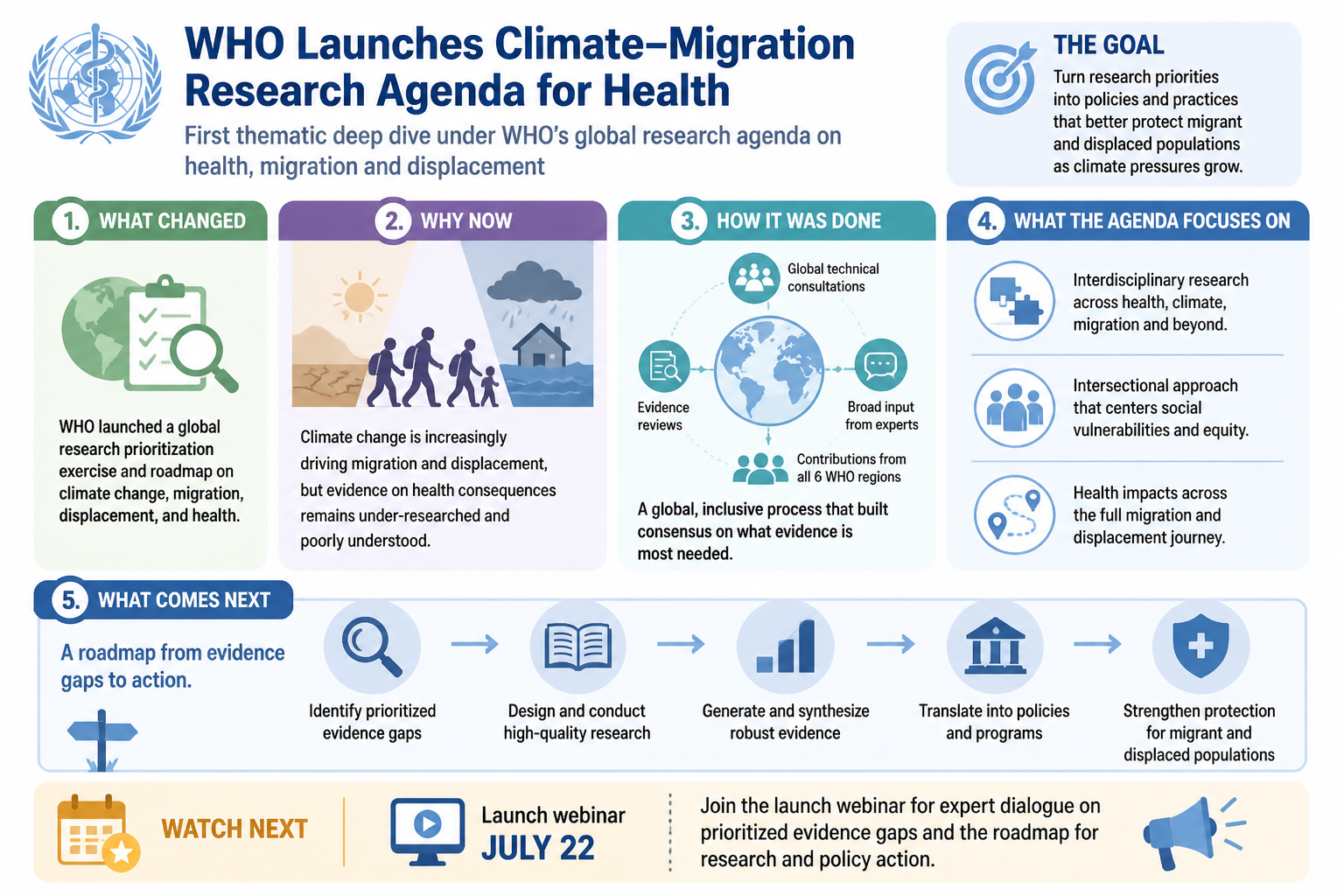
WHO launches climate-migration research agenda for migrant and displaced health

Cheatsheet for WHO launches climate-migration research agenda for migrant and displaced health. Text equivalent is attached.

Why it matters: Climate change is increasingly driving migration and displacement, but WHO says the health consequences remain under-researched and poorly understood. Setting a shared research agenda is a practical…

Open cheatsheet → Post to X

What changed
WHO launched a global research prioritization exercise and roadmap on climate change, migration, displacement, and health [2].
Why now
WHO says the climate–migration–health nexus is growing, but evidence on health consequences is still thin [2].
Watch next
Track the July 22 launch webinar for the prioritized evidence gaps and any stated research-to-policy follow-up [2].

Health & Medicine

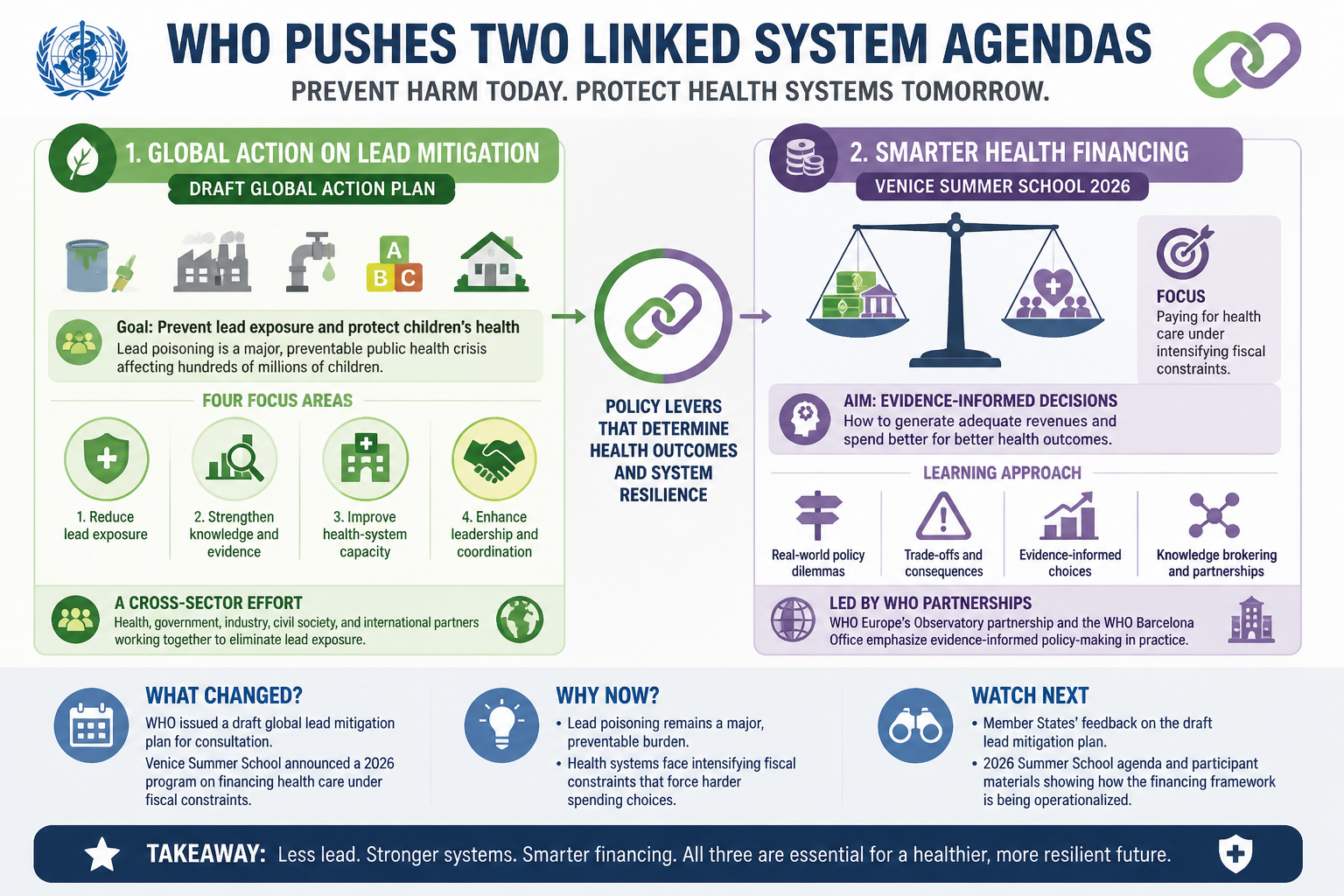
WHO pushes two linked system agendas: lead mitigation and smarter health financing

WHO has published a draft Global Action Plan on lead mitigation, developed in response to World Health Assembly resolution WHA78.27, with four focus areas.

Cheatsheet for WHO pushes two linked system agendas: lead mitigation and smarter health financing. Text equivalent is attached.

Why it matters: These are not separate technical exercises; they both target the policy levers that determine whether health systems can prevent harm and sustain services under pressure. Lead poisoning is framed as…

Open cheatsheet → Post to X

What changed
WHO issued a draft global lead mitigation plan, and the Venice Summer School announced a 2026 program on financing health care under fiscal constraints [8][1].
Why now
Lead poisoning remains a major preventable burden, while health systems face intensifying fiscal constraints that force harder spending choices [8][1].
Watch next
Consultation feedback on the lead plan and the 2026 Summer School agenda or participant materials showing how the financing framework is being operationalized [8][1].

Health & Medicine

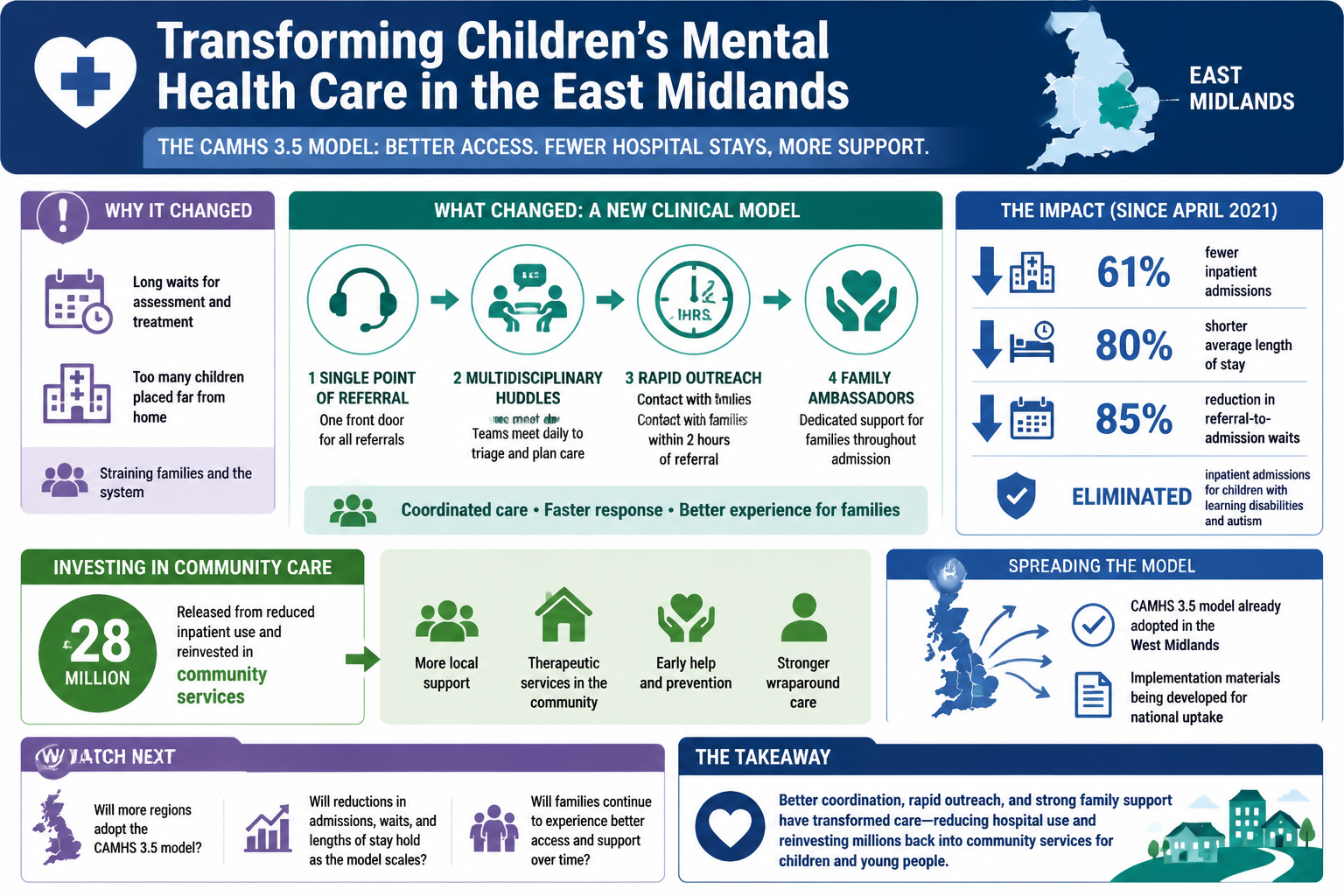
NHS England reports major gains from redesigning children’s mental health care in the East Midlands

A new clinical model in the East Midlands has transformed children and young people’s mental health services after long waits and too many out-of-area placements prompted a redesign.

Cheatsheet for NHS England reports major gains from redesigning children’s mental health care in the East Midlands. Text equivalent is attached.

Why it matters: This is a concrete example of service redesign improving access, reducing hospitalization, and redirecting money back into community care. The scale of the changes suggests that better coordination a…

Open cheatsheet → Post to X

What changed
The East Midlands CAMHS collaborative replaced fragmented pathways with faster outreach, coordinated triage, and stronger family support [2].
Why now
The redesign was prompted by long waits and excessive out-of-area placements that were straining the system and families [2].
Watch next
Whether additional regions adopt CAMHS 3.5 and whether reported reductions in admissions, waits, and lengths of stay hold as the model scales [2].

Health & Medicine

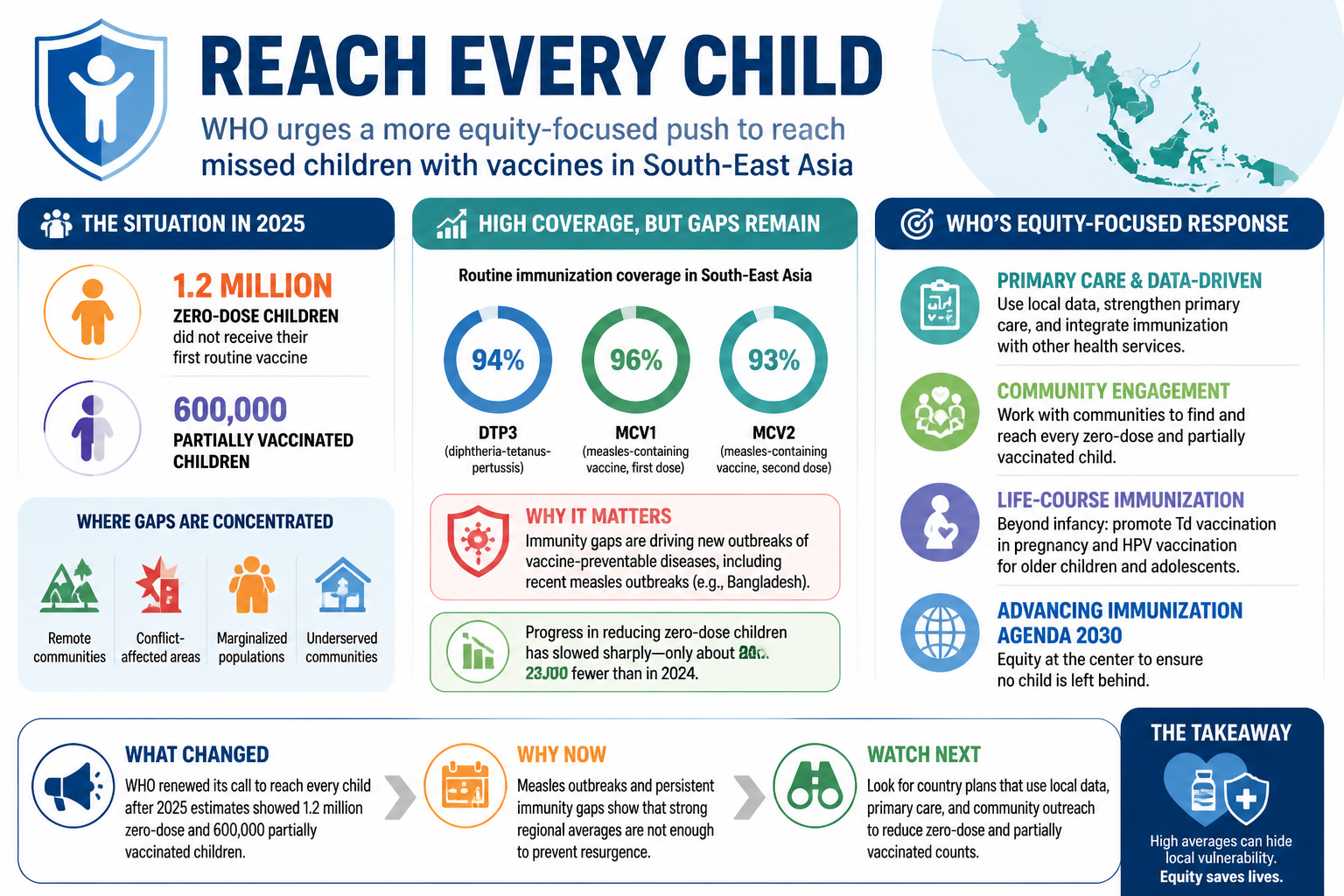
WHO urges a more equity-focused push to reach missed children with vaccines in South-East Asia

WHO said nearly 1.2 million children in the South-East Asia Region did not receive their first routine vaccine in 2025, while 600,000 remained partially vaccinated, even as routine coverage stayed high.

Cheatsheet for WHO urges a more equity-focused push to reach missed children with vaccines in South-East Asia. Text equivalent is attached.

Why it matters: WHO says the remaining immunity gaps are driving new outbreaks of vaccine-preventable diseases, and it specifically linked recent measles outbreaks, including in Bangladesh, to those gaps. The messag…

Open cheatsheet → Post to X

What changed
WHO renewed its call to reach every child after 2025 estimates showed 1.2 million zero-dose children and 600,000 partially vaccinated children in South-East Asia.[2]
Why now
Measles outbreaks and persistent immunity gaps show that strong regional averages are not enough to prevent resurgence.[2]
Watch next
Look for country plans that use local data, primary care, and community outreach to reduce zero-dose and partially vaccinated counts.[2]

Health & Medicine

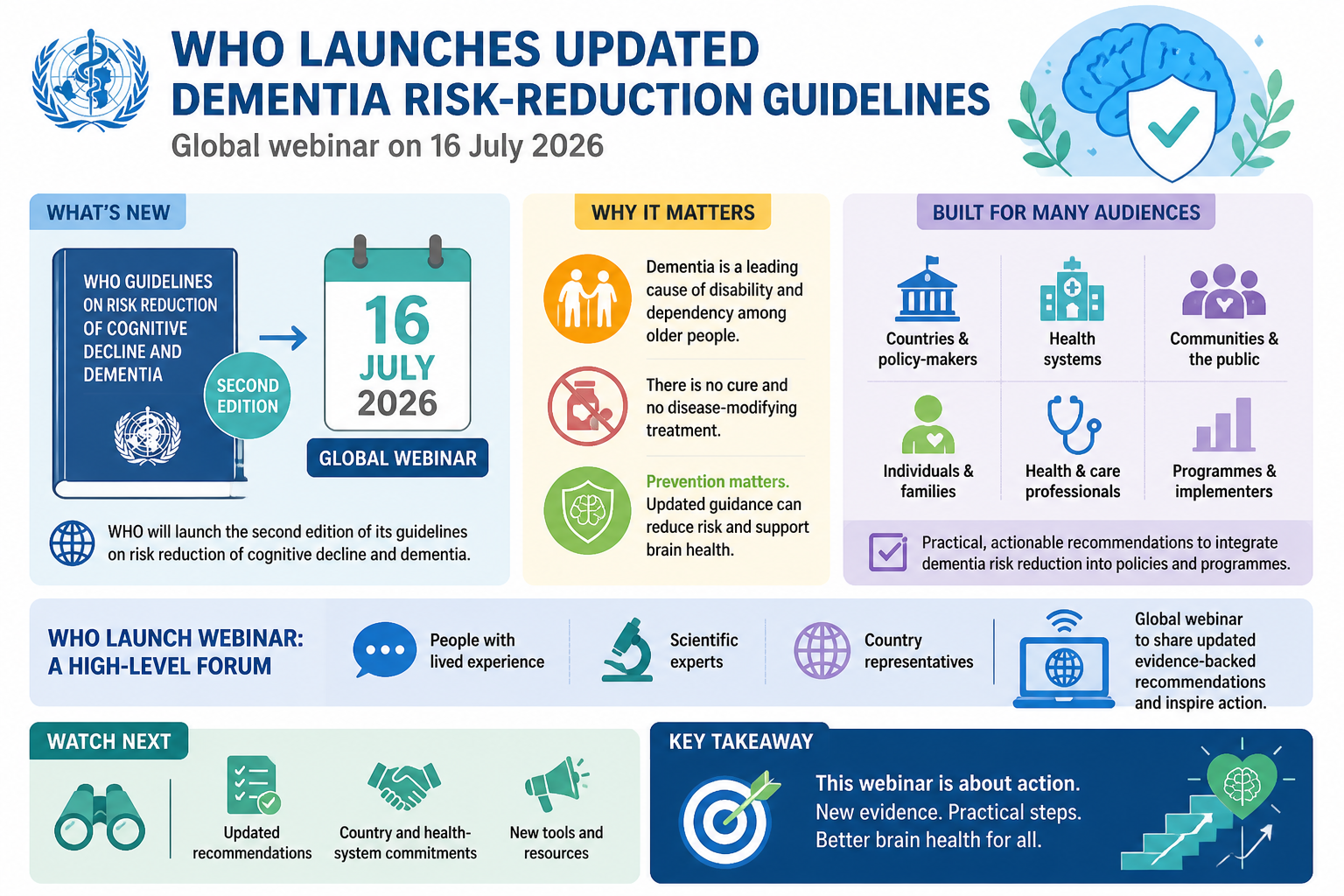
WHO will launch updated dementia risk-reduction guidelines in a global webinar

WHO announced a global webinar on 16 July 2026 to launch the second edition of its guidelines on risk reduction of cognitive decline and dementia.

Cheatsheet for WHO will launch updated dementia risk-reduction guidelines in a global webinar. Text equivalent is attached.

Why it matters: WHO describes dementia as a leading cause of disability and dependency among older people, and says prevention matters because there are no disease-modifying treatments or a cure. Updated prevention…

Open cheatsheet → Post to X

What changed
WHO is releasing the second edition of its dementia risk-reduction guidelines in a global webinar on 16 July 2026.[1]
Why now
WHO says dementia is a major cause of disability and dependency, and prevention is especially important because there is no cure or disease-modifying treatment.[1]
Watch next
Look for the updated recommendations and any country or health-system commitments announced during or after the webinar.[1]

Health & Medicine

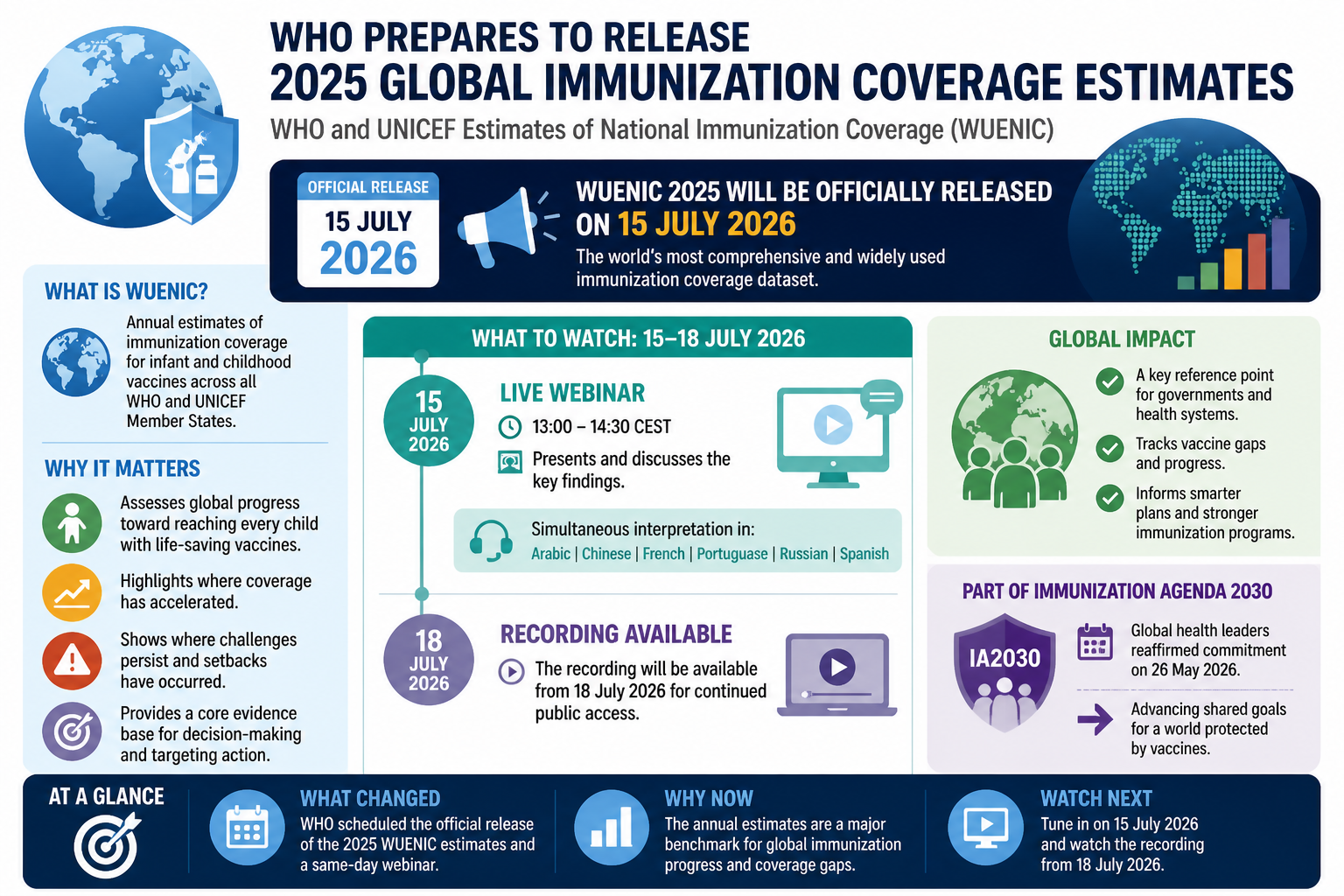
WHO prepares to release 2025 global immunization coverage estimates

WHO says the 2025 WHO and UNICEF Estimates of National Immunization Coverage (WUENIC) will be officially released on 15 July 2026, with a public webinar the same day to present and discuss the key findings.

Cheatsheet for WHO prepares to release 2025 global immunization coverage estimates. Text equivalent is attached.

Why it matters: WHO says WUENIC helps assess global progress toward reaching every child with life-saving vaccines and highlights where coverage has accelerated, where challenges persist, and where setbacks have occ…

Open cheatsheet → Post to X

What changed
WHO scheduled the official release of the 2025 WUENIC estimates and a same-day webinar to present the findings [1].
Why now
The annual estimates are a major benchmark for global immunization progress and coverage gaps [1].
Watch next
The July 15 webinar and the recording posted from 18 July 2026 [1].

Health & Medicine

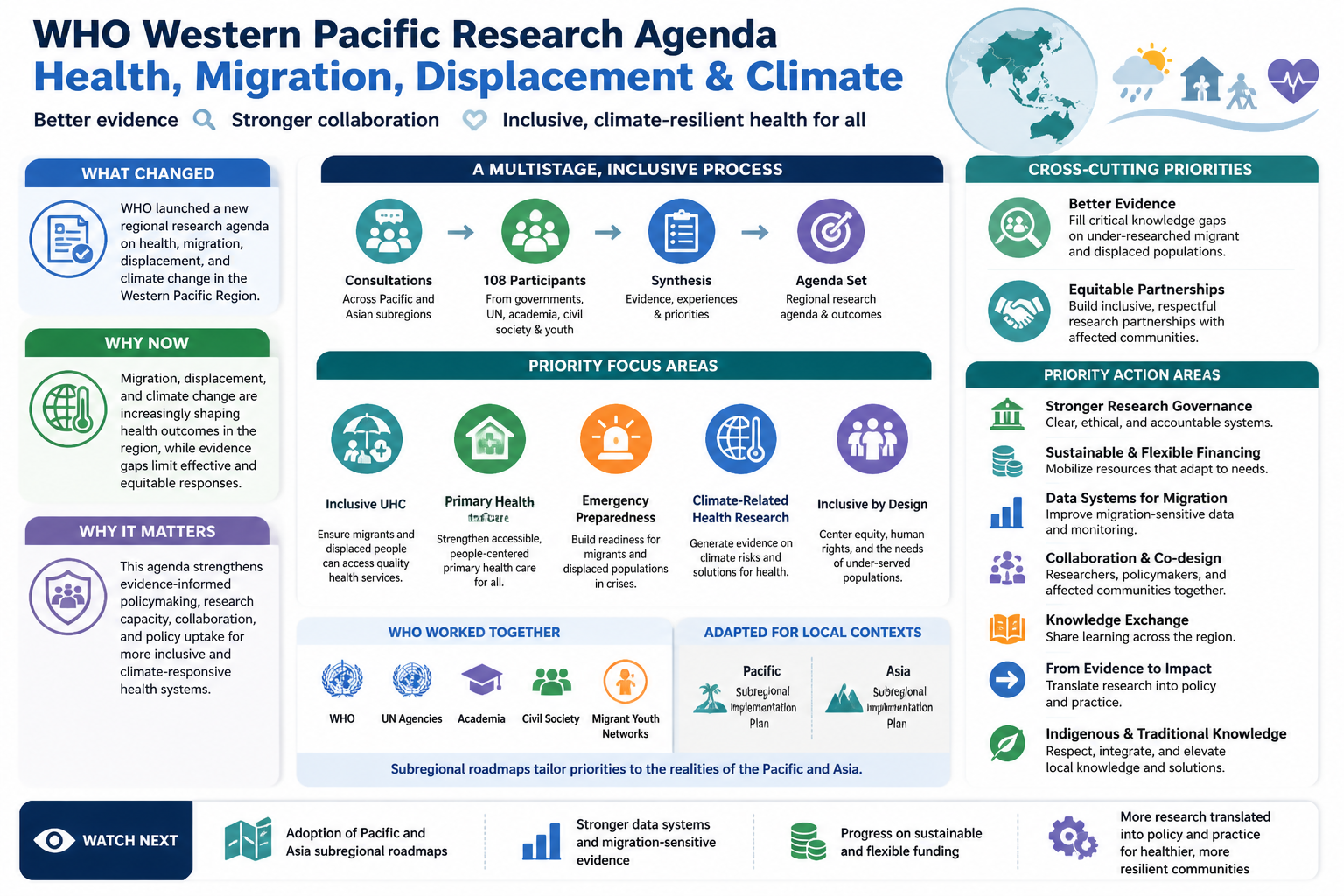
WHO launches Western Pacific research agenda on climate, migration, displacement and health

Cheatsheet for WHO launches Western Pacific research agenda on climate, migration, displacement and health. Text equivalent is attached.

Why it matters: WHO says migration, displacement and climate change are increasingly shaping health outcomes in the Western Pacific Region, while evidence gaps still limit effective and equitable responses. The road…
Open cheatsheet → Post to X

What changed
WHO published a new regional research agenda focused on health, migration, displacement, and climate change in the Western Pacific Region [2].
Why now
WHO says the region faces growing migration- and climate-related health pressures alongside persistent evidence gaps [2].
Watch next
Adoption of subregional roadmaps and visible moves on data systems, funding, and research-to-policy implementation [2].

That's the desk. Every cheatsheet here started as a link. Yours can too.

Cheatsheet your own link — free