Every Climate & Environment cheatsheet Keldura Daily has published, newest first. Each cheatsheet is compiled by Keldura's AI from the sources it cites.
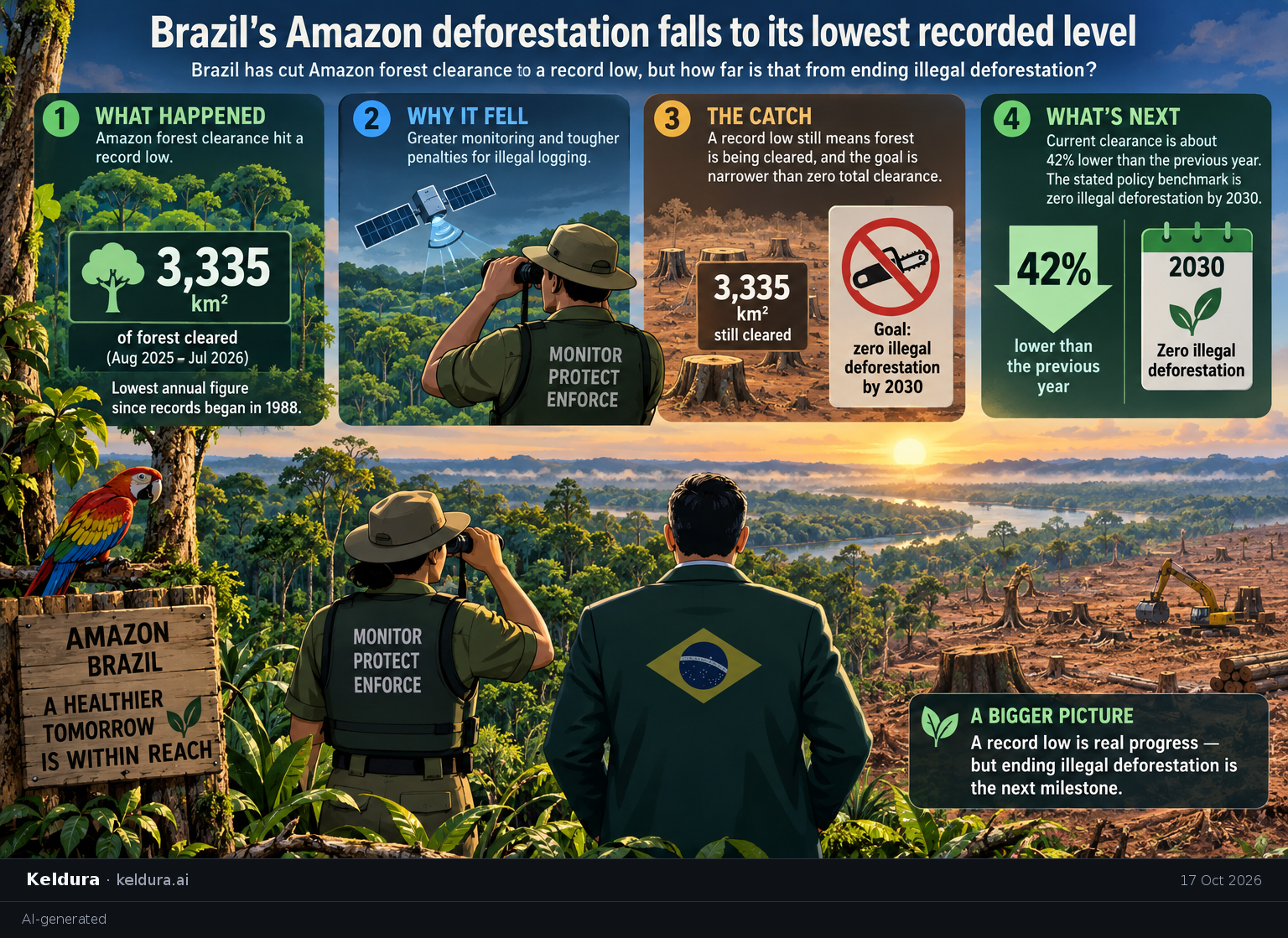
Brazil has cut Amazon forest clearance to a record low, but how far is that from ending illegal deforestation?
On October 16, Brazil released satellite figures showing Amazon deforestation fell to 3,335 square kilometres in the year through July 2026.
Why it matters: The figures show a substantial reduction in annual forest loss rather than simply a new pledge: deforestation has fallen every year since 2022 and is down 71.2 percent over four years. The distinctio…
Amazon forest clearance fell to 3,335 square kilometres in August 2025–July 2026, the lowest annual figure since records began in 1988. [4][5]
Why
AFP attributes the decline to greater monitoring and tougher penalties for illegal logging. [4]
The catch
A record low still means 3,335 square kilometres were cleared; Lula's stated goal is zero illegal deforestation by 2030, not zero total clearance. [4]
What's next
The stated policy benchmark is zero illegal deforestation by 2030; the current annual clearance figure is about 42 percent below the previous year's. [4]
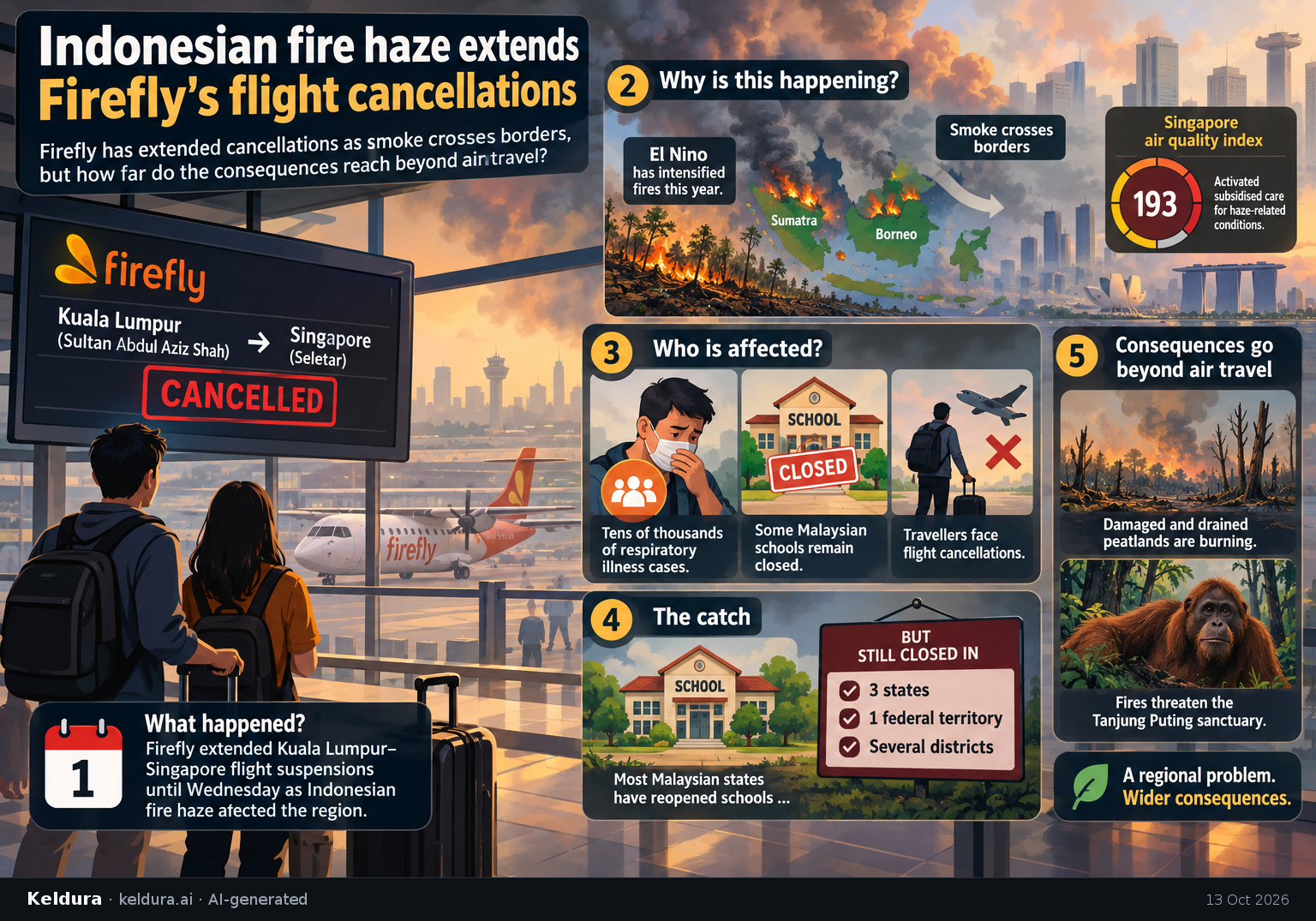
Firefly has extended cancellations as smoke crosses borders, but how far do the consequences reach beyond air travel?
On October 13, 2026, AFP reported that Firefly had extended Kuala Lumpur–Singapore flight cancellations until Wednesday because of Indonesian fire haze.
Why it matters: This is an environmental disruption with several routes into daily life: cancelled flights, respiratory illness and interrupted schooling. The haze has caused tens of thousands of respiratory illness…
Firefly extended Kuala Lumpur–Singapore flight suspensions until Wednesday as Indonesian fire haze affected the region. [5]
Why
The airline described the suspension as a proactive safety measure; El Nino has intensified fires on Borneo and Sumatra. [5]
Who pays
Travellers face cancellations, communities have recorded tens of thousands of respiratory illness cases, and some Malaysian schools remain closed. [5]
The catch
Air quality improved enough for most Malaysian states to reopen schools, but closures continued in three states, one federal territory and several districts. [5]
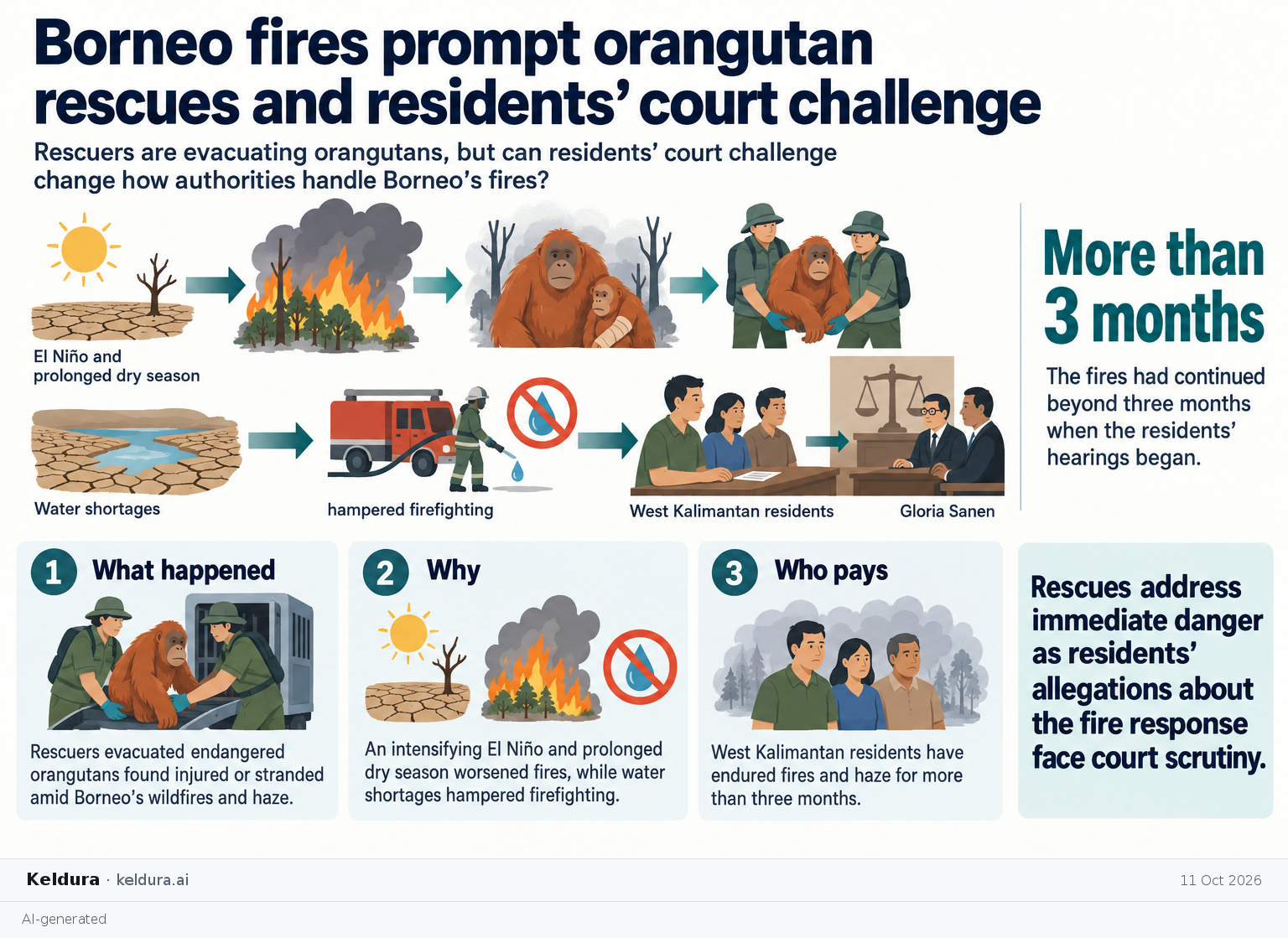
Rescuers are evacuating orangutans, but can residents’ court challenge change how authorities handle Borneo’s fires?
On October 10, 2026, rescuers were evacuating endangered orangutans in Borneo, after residents’ hearings over authorities’ handling of the fires began that week.
Why it matters: The fires are affecting both endangered wildlife and residents, while water shortages are hampering firefighting. The court case puts authorities’ handling and supervision of the response under scrut…
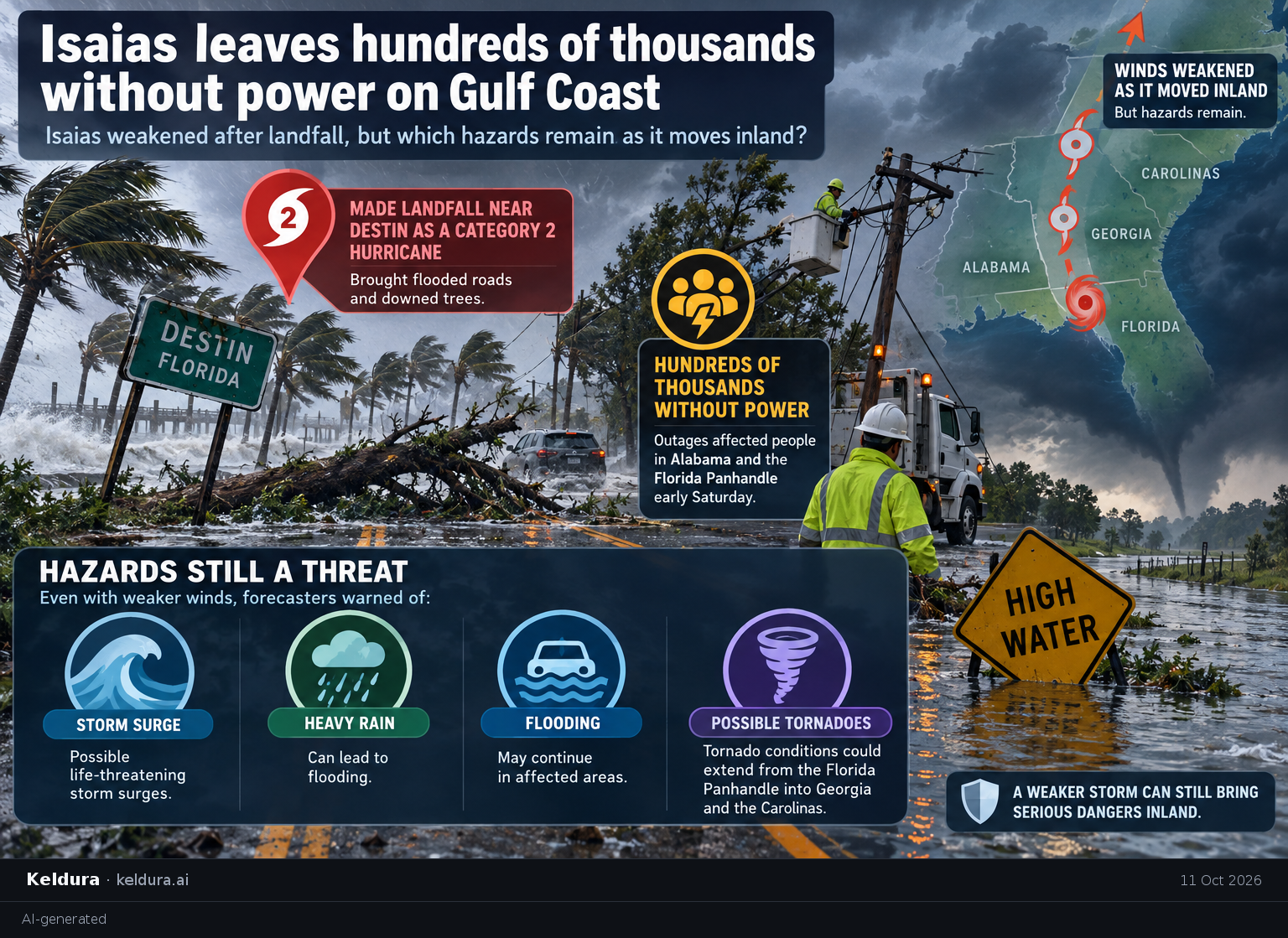
Isaias weakened after landfall, but which hazards remain as it moves inland?
On October 10, 2026, hundreds of thousands in Alabama and the Florida Panhandle were without power after Isaias made landfall near Destin on Friday as a Category 2 hurricane.
Why it matters: Falling wind speeds do not mean all danger has passed: coastal storm-surge risks and inland rain and tornado risks can persist as the storm moves away from its landfall location. Widespread outages a…
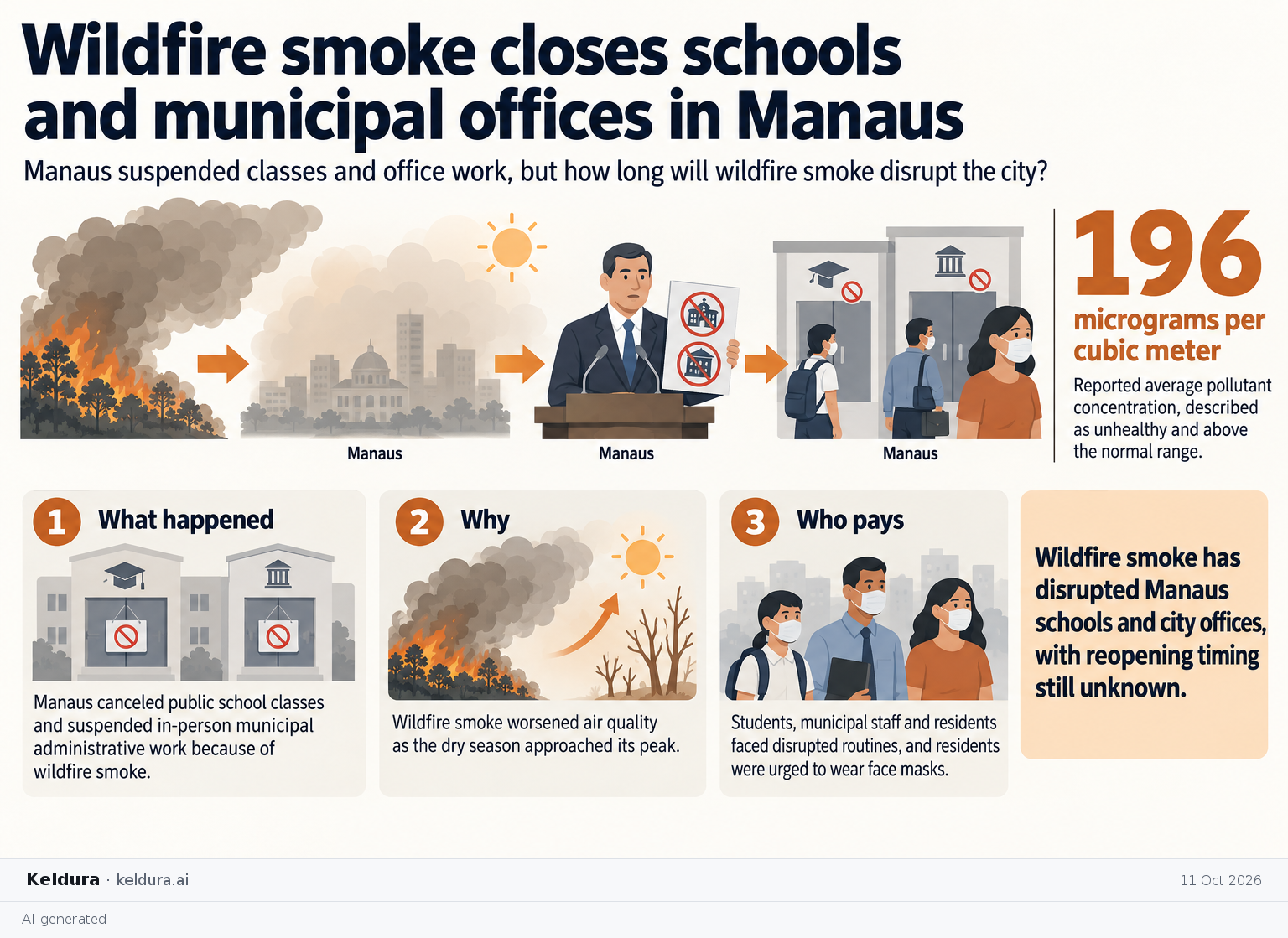
Manaus suspended classes and office work, but how long will wildfire smoke disrupt the city?
On October 9, 2026, Manaus suspended in-person municipal administrative work and canceled public school classes as wildfire smoke worsened air quality.
Why it matters: Wildfire impacts reached schools and city services, not just areas directly affected by flames. The closures show how degraded air quality can interrupt daily routines across an urban population.
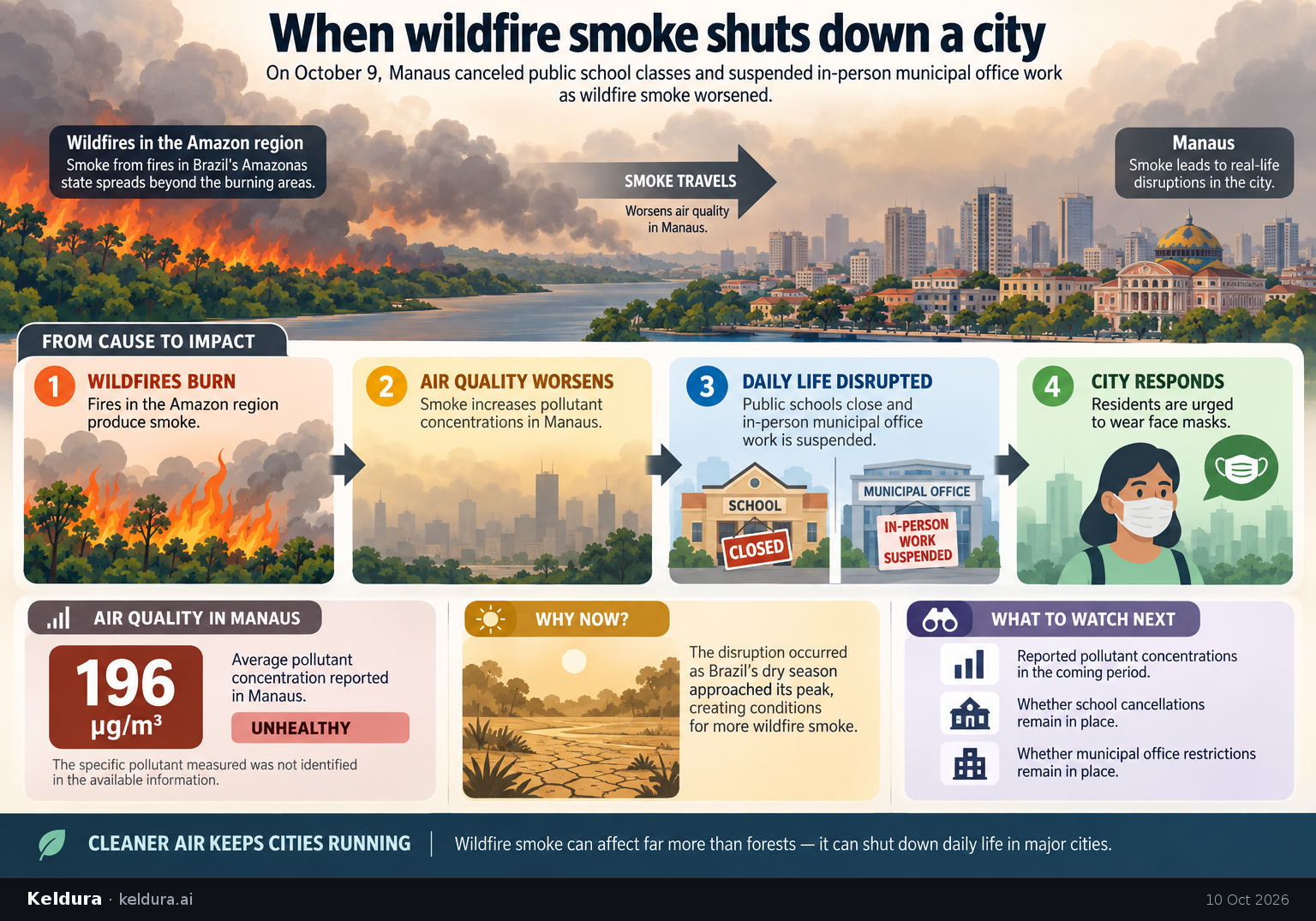
On October 9, Manaus canceled public school classes and suspended in-person municipal office work as wildfire smoke worsened.
Why it matters: The disruption extends beyond the burning areas: smoke has made air quality a reason to interrupt education and municipal office operations in Brazil’s largest Amazon region city.
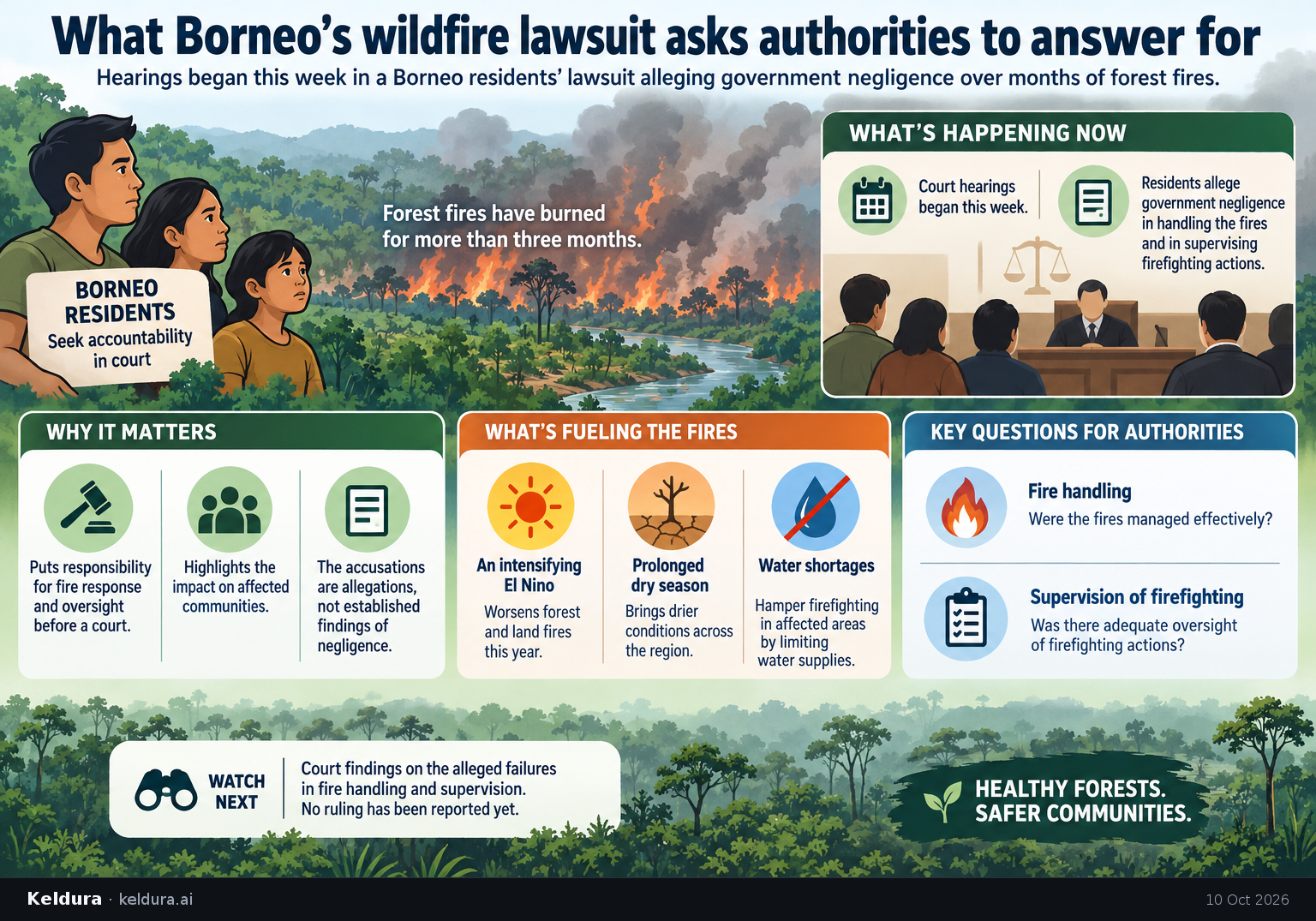
Hearings began this week in a Borneo residents’ lawsuit alleging government negligence over months of forest fires.
Why it matters: The case puts responsibility for fire response and oversight before a court, while prolonged dry conditions and water shortages are hampering firefighting. The residents’ accusations remain allegatio…
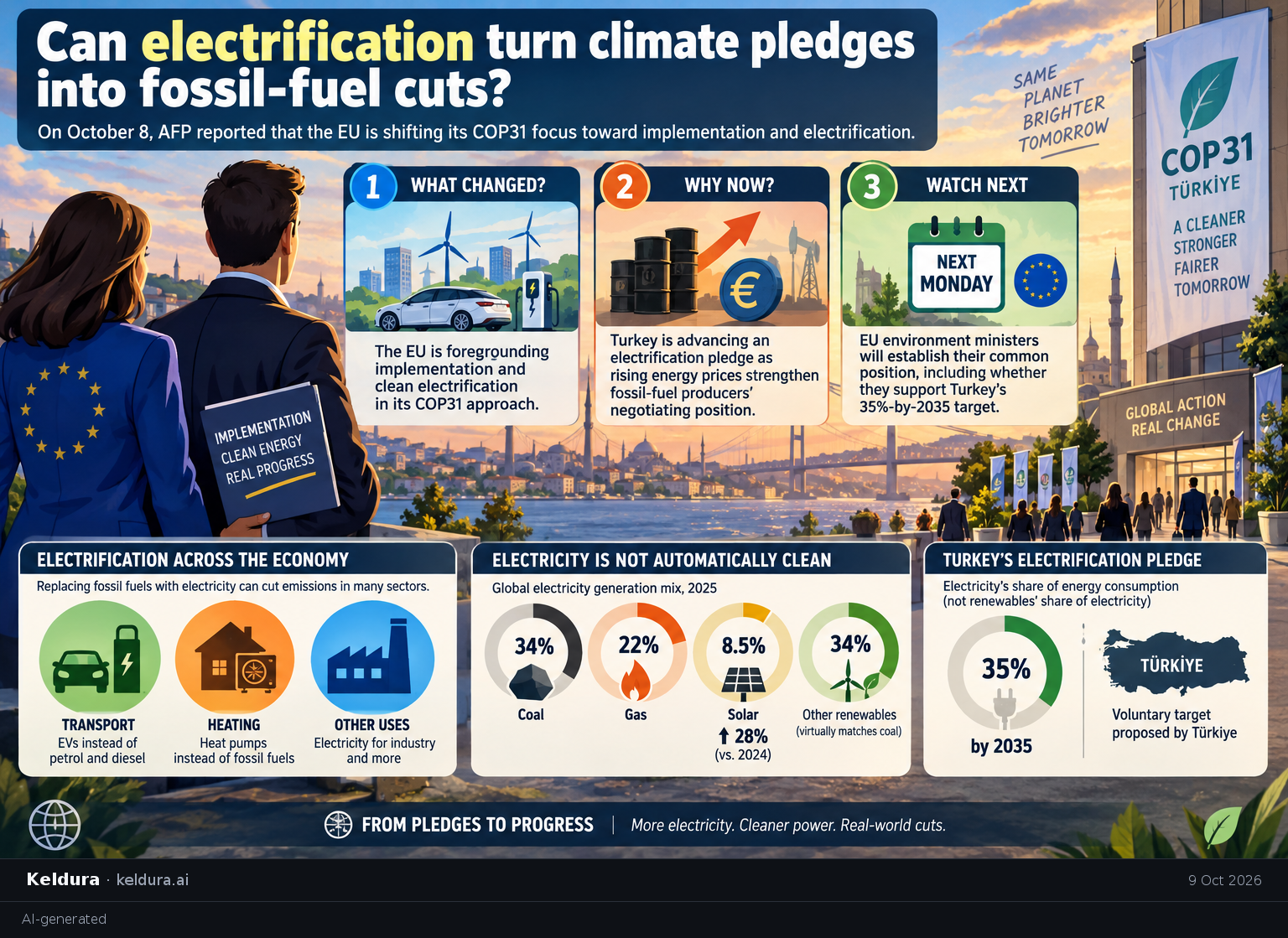
On October 8, AFP reported that the EU is shifting its COP31 focus toward implementation and electrification.
Why it matters: Electrification links climate diplomacy to practical changes in transport, heating and other energy uses, but electricity is not automatically clean: coal and gas still supplied 34 percent and 22 per…
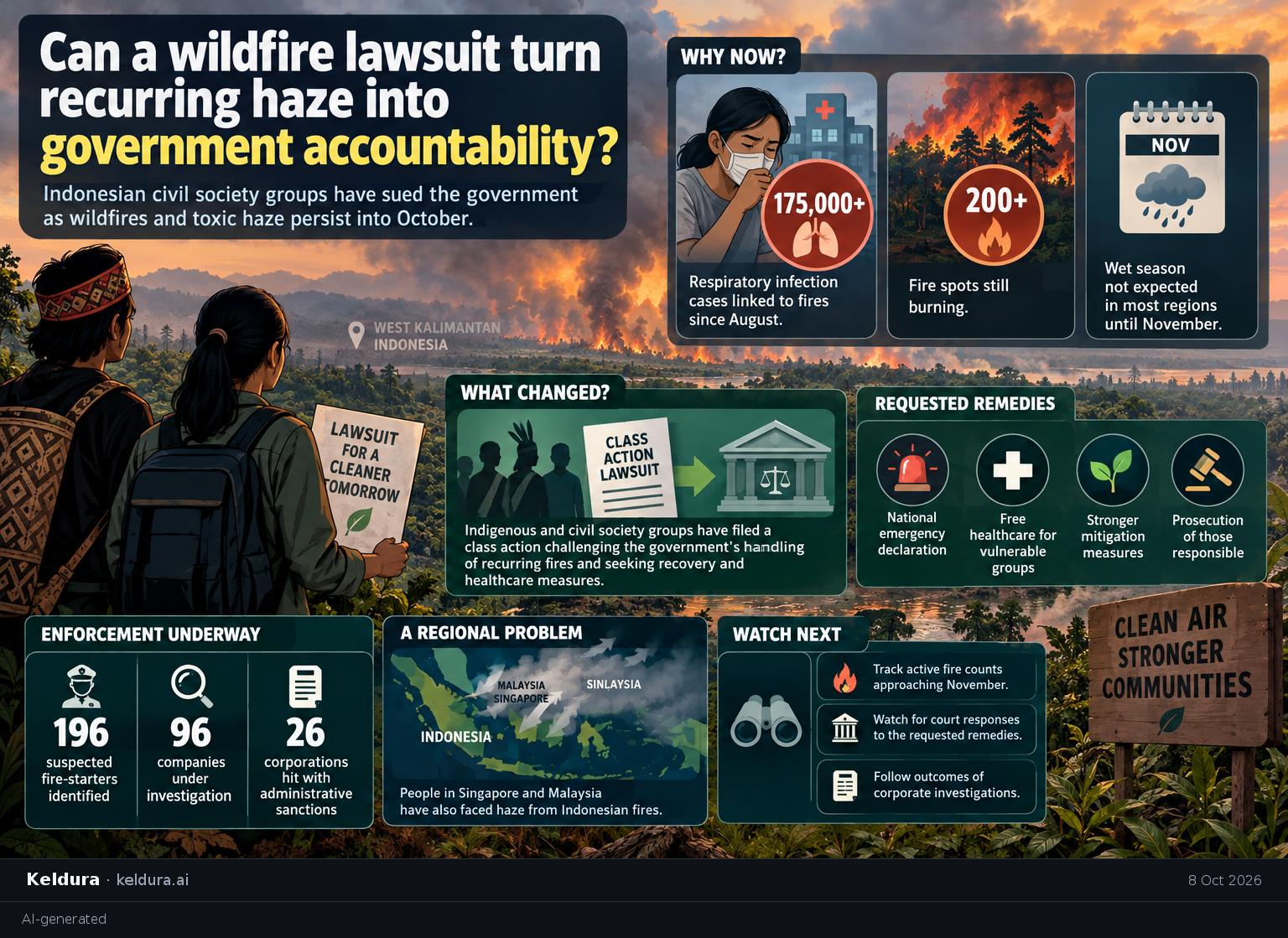
Indonesian civil society groups have sued the government as wildfires and toxic haze persist into October.
Why it matters: The case seeks to connect fire prevention with recovery obligations, including healthcare costs, rather than treating firefighting as the entire response. Its outcome is uncertain: an earlier lawsuit…
A new class action challenges government handling of recurring fires and seeks recovery and healthcare measures. [2][4]
Why now
Fires remain active, with at least 175,000 linked respiratory infections recorded since August and more than 200 fire spots still burning. [2]
Watch next
Track active fire counts approaching the expected November wet season, court responses to the requested remedies and outcomes of corporate investigations. [2]
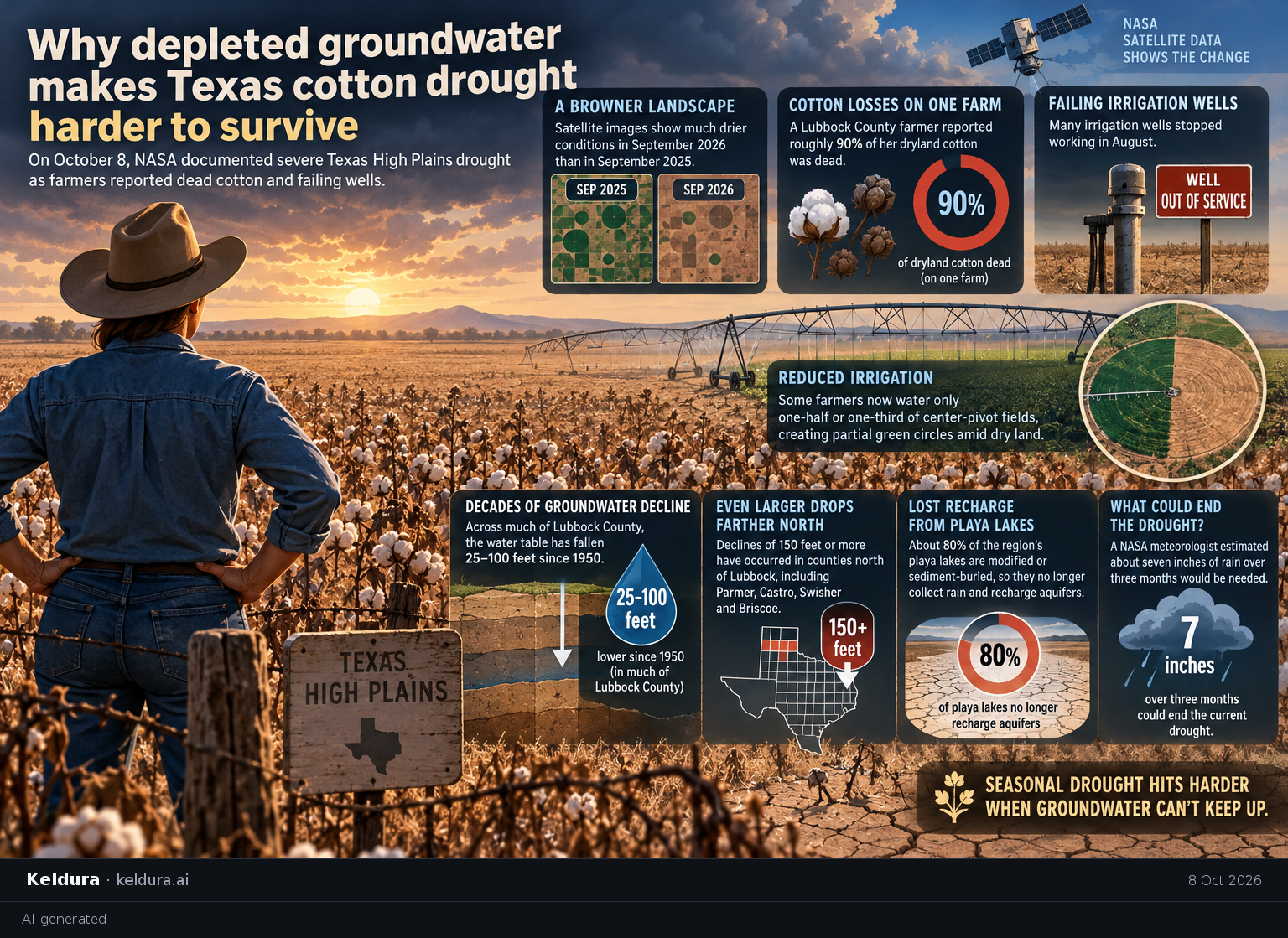
On October 8, NASA documented severe Texas High Plains drought as farmers reported dead cotton and failing wells.
Why it matters: Groundwater is becoming a less reliable fallback when rain fails, leaving farmers exposed to both seasonal drought and long-term aquifer depletion. Recharge is also constrained: NASA reports that abo…
The 2026 drought coincided with failing irrigation wells and severe cotton losses; satellite images show a browner landscape than in September 2025. [5]
Why now
Seasonal dryness is hitting an already depleted aquifer, while many playa lakes no longer provide their natural recharge function. [5]
Watch next
Track three-month rainfall totals and U.S. Drought Monitor conditions against the cited estimate of roughly seven inches needed to end the current drought. [5]
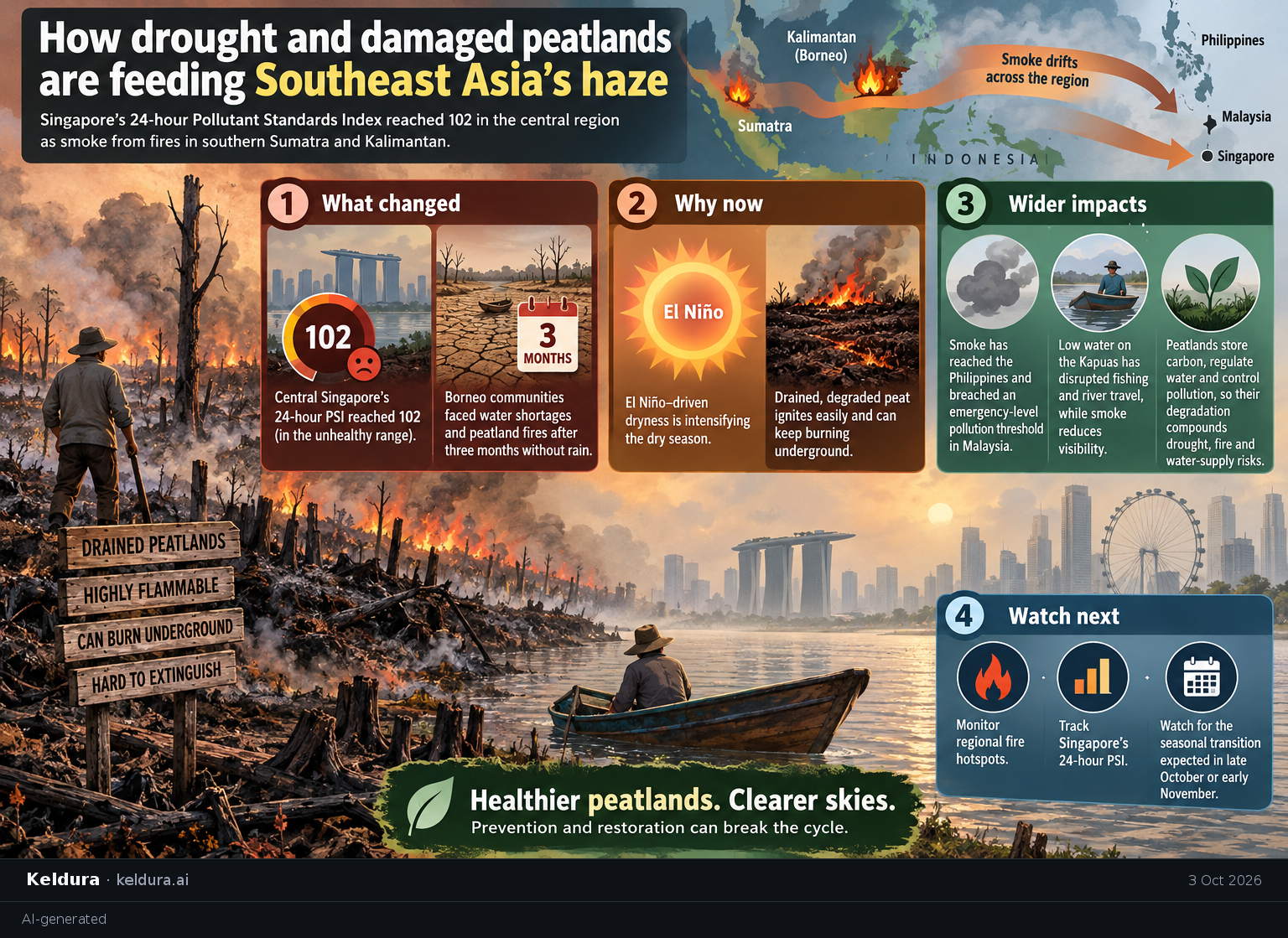
Singapore’s 24-hour Pollutant Standards Index reached 102 in the central region as smoke from fires in southern Sumatra and Kalimantan.
Why it matters: Drained peat is highly flammable, can burn underground and is difficult to extinguish, allowing local land degradation to become a prolonged regional air-pollution problem. Strong El Niño conditions…
Central Singapore’s 24-hour PSI reached 102, while Borneo communities experienced water shortages and peatland fires after three months without rain.[3][5]
Why now
El Niño-driven dryness is interacting with drained, degraded peat that ignites easily and can keep burning underground.[3][5]
Watch next
Monitor regional fire hotspots, Singapore’s 24-hour PSI and the timing of the seasonal transition expected in late October or early November.[3]
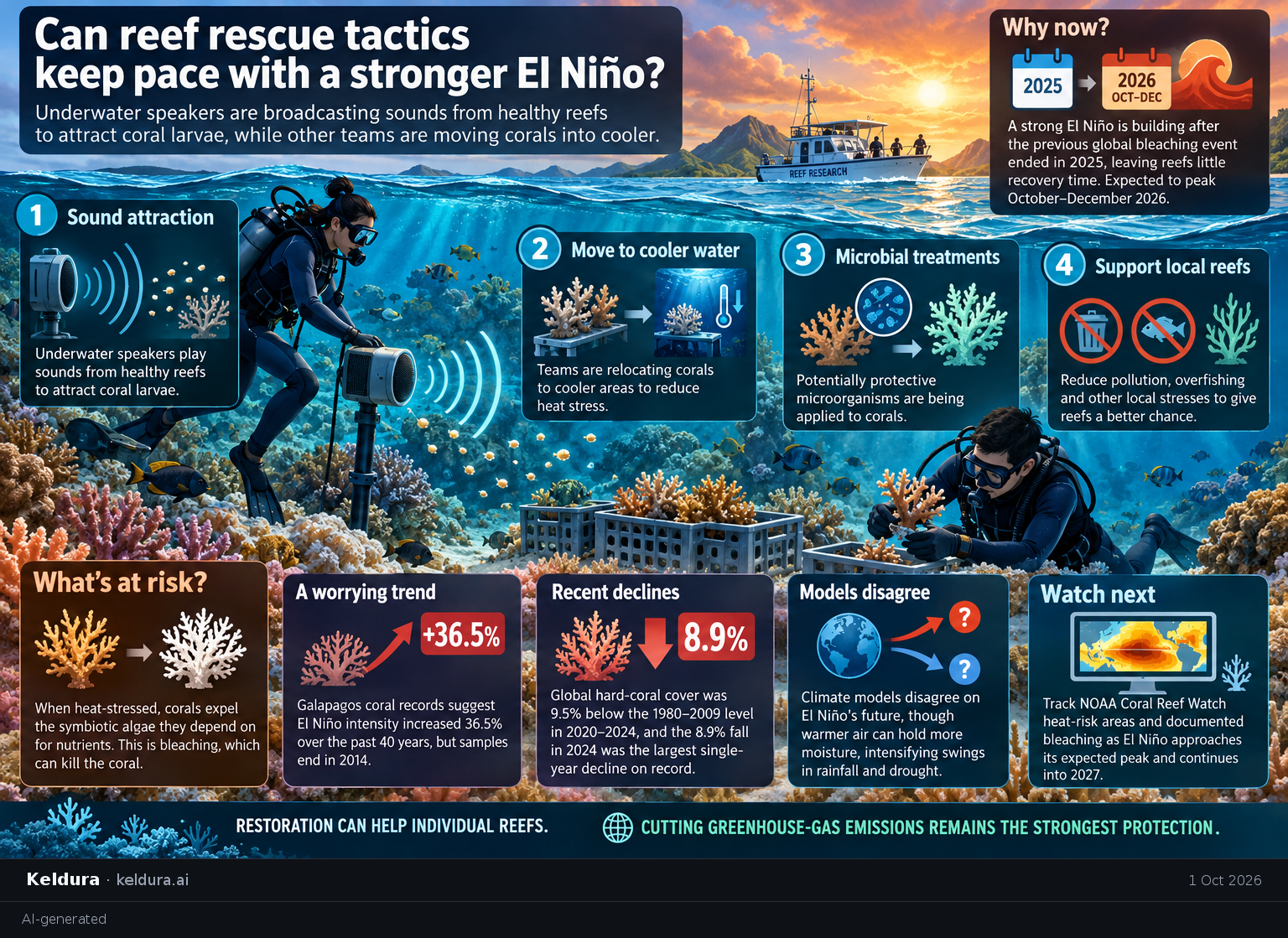
Underwater speakers are broadcasting sounds from healthy reefs to attract coral larvae, while other teams are moving corals into cooler.
Why it matters: Global hard-coral cover in 2020–2024 was 9.5% below the 1980–2009 level, and the 8.9% fall in 2024 was the largest recorded single-year decline. Restoration can support individual reefs, but scientis…
Researchers are pairing acoustic attraction, coral relocation and microbial treatments with efforts to reduce local reef stresses.[2]
Why now
A strong El Niño is building after the previous global bleaching event ended in 2025, leaving reefs little recovery time.[2][6]
Watch next
Track NOAA Coral Reef Watch heat-risk areas and documented bleaching as El Niño approaches its expected October–December 2026 peak and continues into 2027.[2][6]
That's the desk. Every cheatsheet here started as a link. Yours can too.