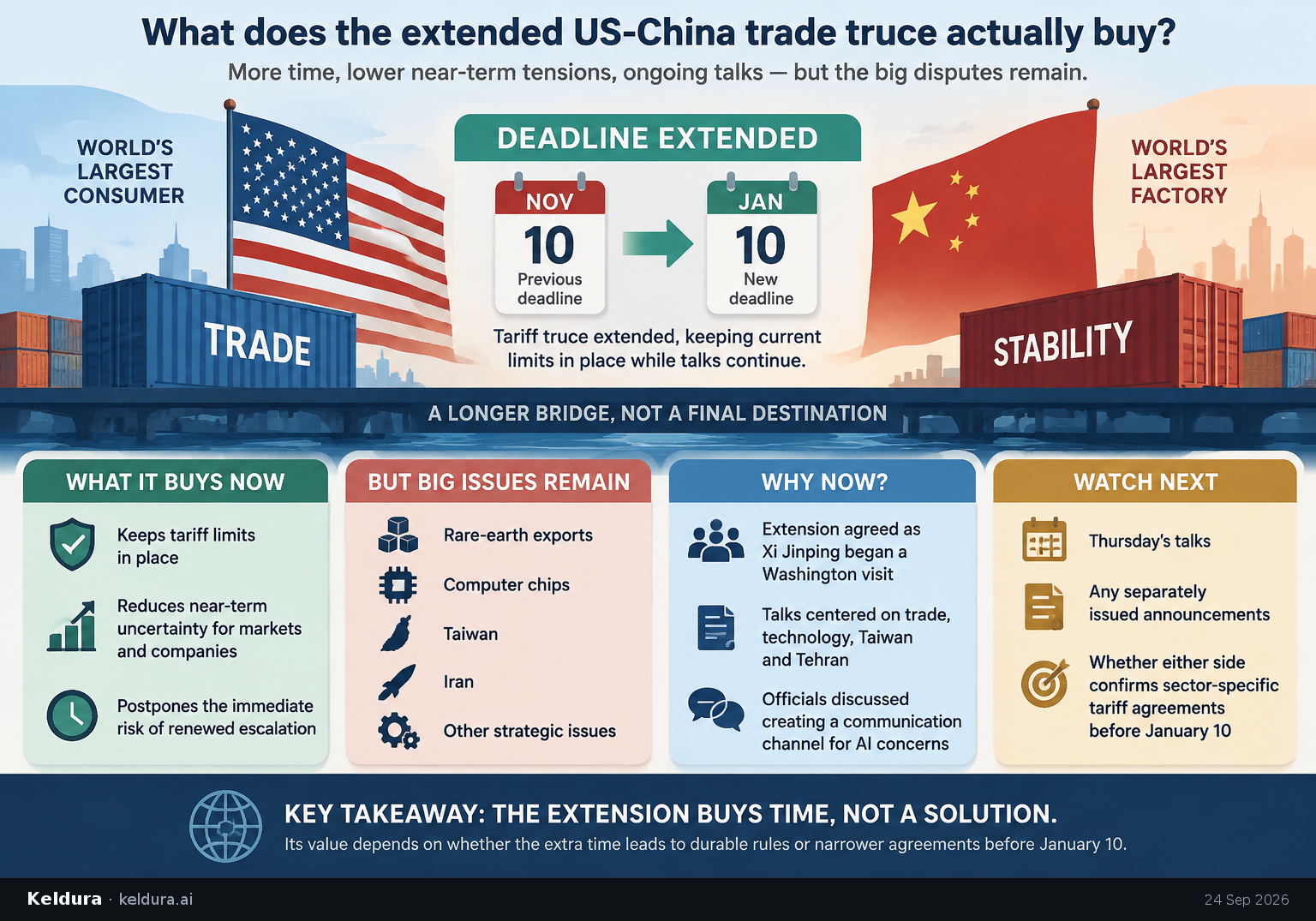
The extension moves the truce’s deadline from November 10 to January 10, preserving limits on tariffs between the world’s two largest.
Why it matters: The pause can reduce near-term uncertainty for global markets and companies after the 2025 tariff conflict produced triple-digit levies between the two economies. Its economic value depends on whethe…
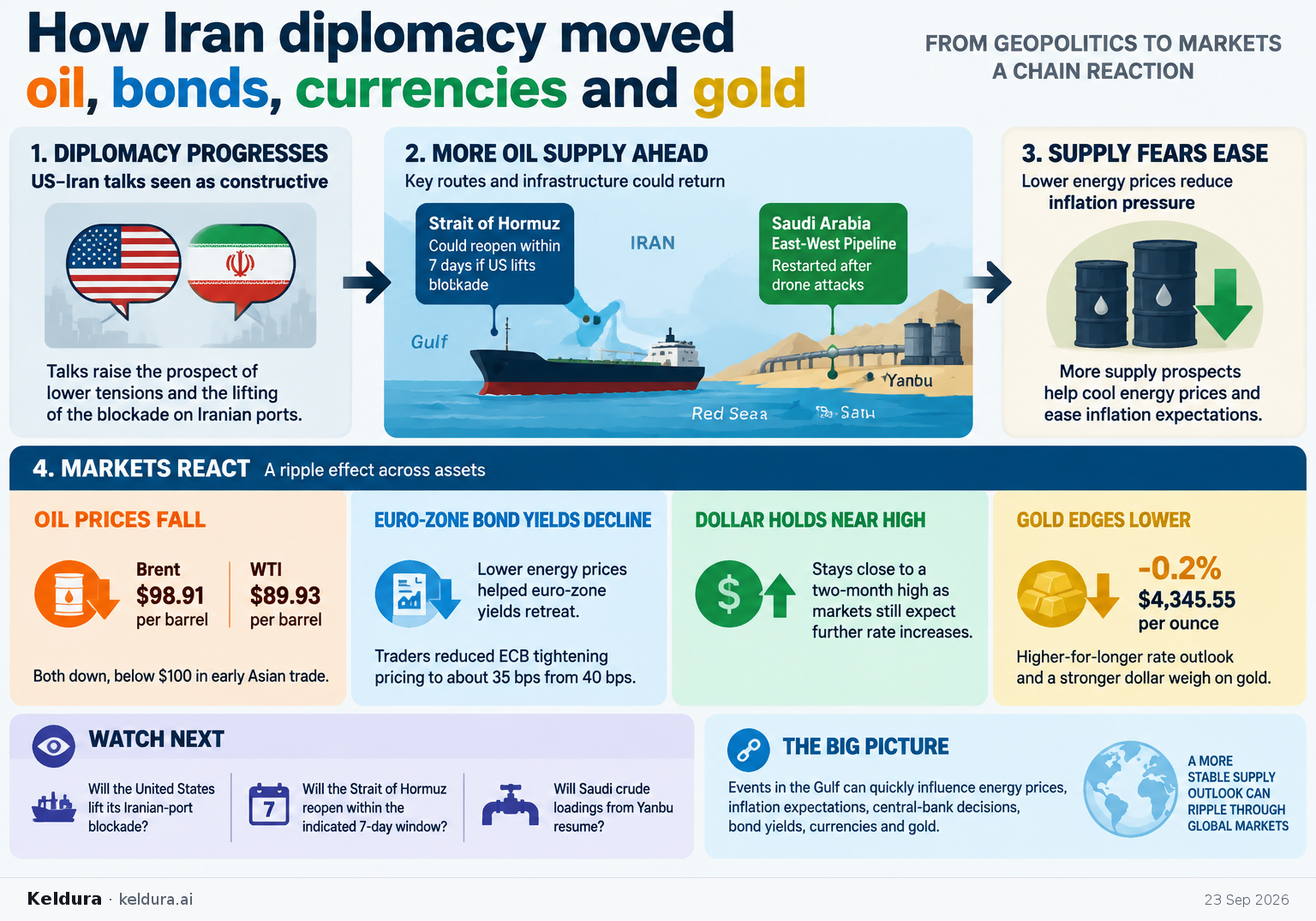
Oil prices fell on Wednesday after Donald Trump described US-Iran talks at the United Nations as productive.
Why it matters: The moves illustrate the transmission chain from the Strait of Hormuz and Gulf oil infrastructure to inflation expectations, central-bank pricing, bond yields and dollar-sensitive assets such as gold.
Brent and WTI fell below $100 in early Asian trade, while euro-zone yields declined and spot gold eased 0.2%.[5][8]
Why now
US-Iran talks, the possible reopening of the Strait of Hormuz and resumed operations on Saudi Arabia’s East-West Pipeline reduced immediate supply fears.[8]
Watch next
Track whether the United States lifts its Iranian-port blockade, whether the Strait reopens within the indicated seven-day window and whether Saudi crude loadings from Yanbu resume.[8]
The Nasdaq reached a second consecutive record close on Tuesday as investors returned to AI-related stocks.
Why it matters: The divergence suggests that enthusiasm for potential AI profits is outweighing high financing and energy costs for selected technology companies, but it is not producing an equally broad advance acr…
The Nasdaq rose 0.45% to its second straight record close, while the S&P 500 was flat and the Dow lost 0.36%.[9]
Why now
AI-related shares rallied as investors responded positively to Meta Platforms’ newly launched assistant and renewed expectations that AI products can justify heavy investment.[4][9]
Watch next
Monitor whether Nasdaq breadth improves from the session’s 48 new highs versus 110 new lows and whether gains spread beyond chip stocks.[9]
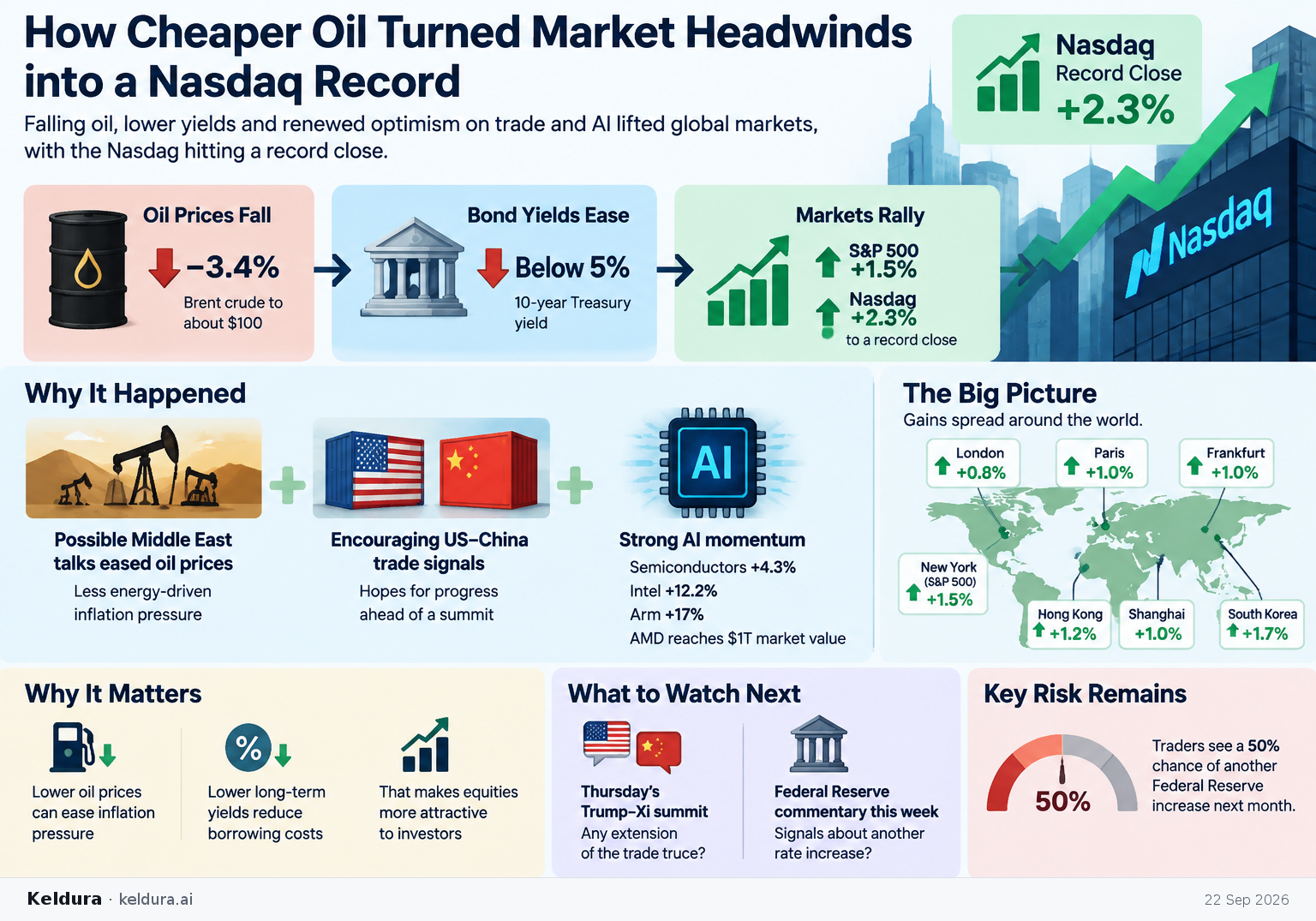
Global stocks rallied on Monday as oil and long-term bond yields fell, with AI chipmakers propelling the Nasdaq to a record close.
Why it matters: Lower oil prices can ease energy-driven inflation pressure, while lower long-term yields reduce borrowing costs and make equities relatively more attractive; their simultaneous retreat therefore remo…
Brent crude retreated toward $100, the 10-year Treasury yield fell below 5%, and the Nasdaq gained about 2.3% to a record close.[2][4][5]
Why now
Markets reacted to possible Middle East negotiations, encouraging US-China trade signals and evidence that AI investment was still expanding.[1][2]
Watch next
Watch Thursday’s Trump-Xi summit for any extension of the trade truce, alongside this week’s Federal Reserve commentary for signals about another rate increase.[1][2]
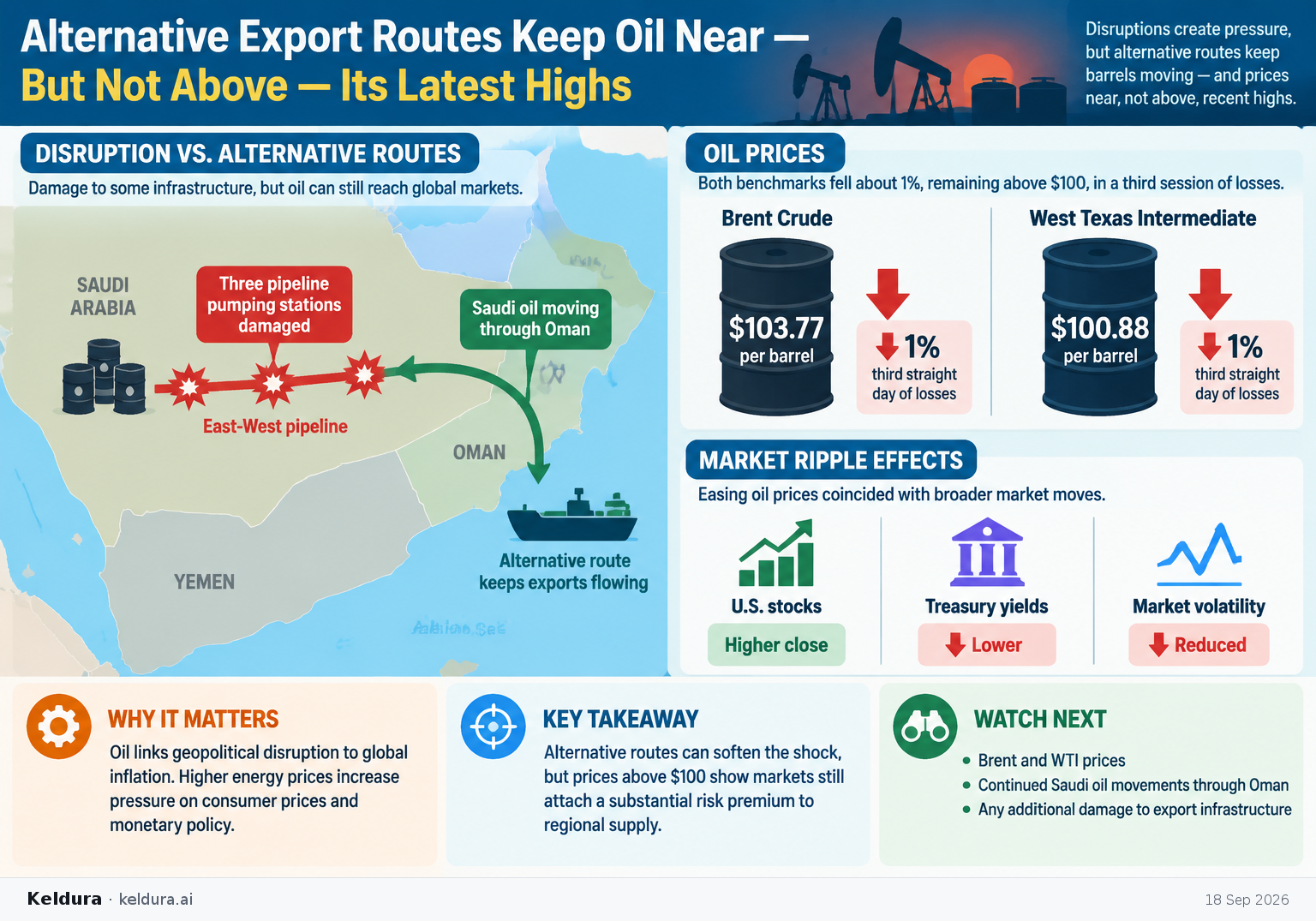
Oil fell about 1% on September 18 as alternative routes for Middle Eastern barrels eased fears of immediate supply losses.
Why it matters: Oil remains a direct link between geopolitical disruption and global inflation: energy prices have surged since the Middle East conflict intensified, increasing pressure on consumer prices and moneta…
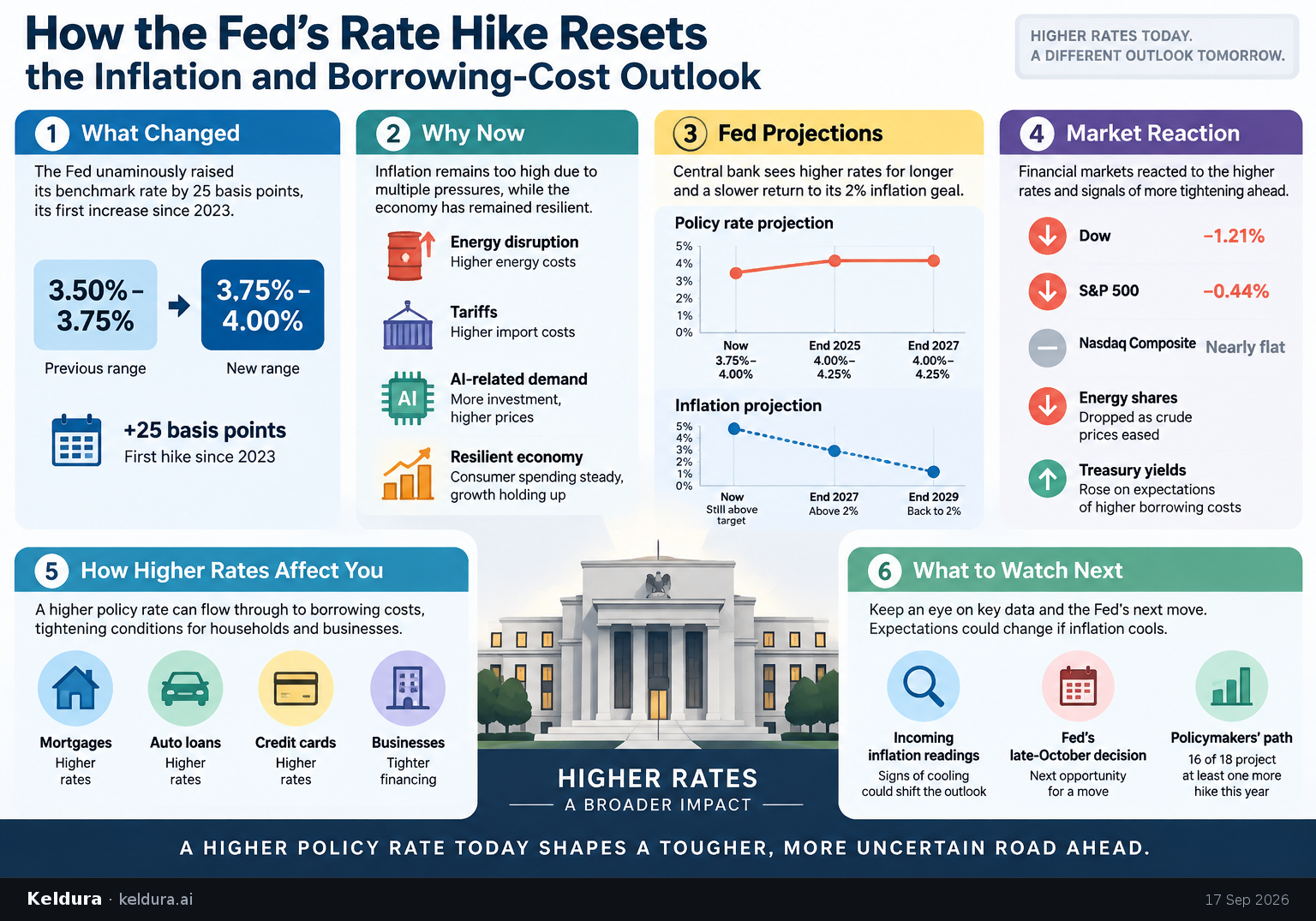
On September 16, the U.S. Federal Reserve raised its benchmark rate by a quarter point and signaled that more tightening could follow.
Why it matters: Higher policy rates can flow through to mortgages, auto loans and credit cards, tightening conditions for households and businesses. The immediate market response included lower U.S. equities, while…
The FOMC unanimously raised its target range by 25 basis points to 3.75%-4.00%, the first increase since 2023.[5]
Why now
Inflation remained too high as energy disruption, tariffs and AI-related demand added price pressure, while consumer spending and economic growth stayed resilient.[5][7]
Watch next
Track incoming inflation readings and the Fed’s late-October decision; cooling inflation could change expectations, although 16 of 18 policymakers currently project at least one more hike this year.[7]
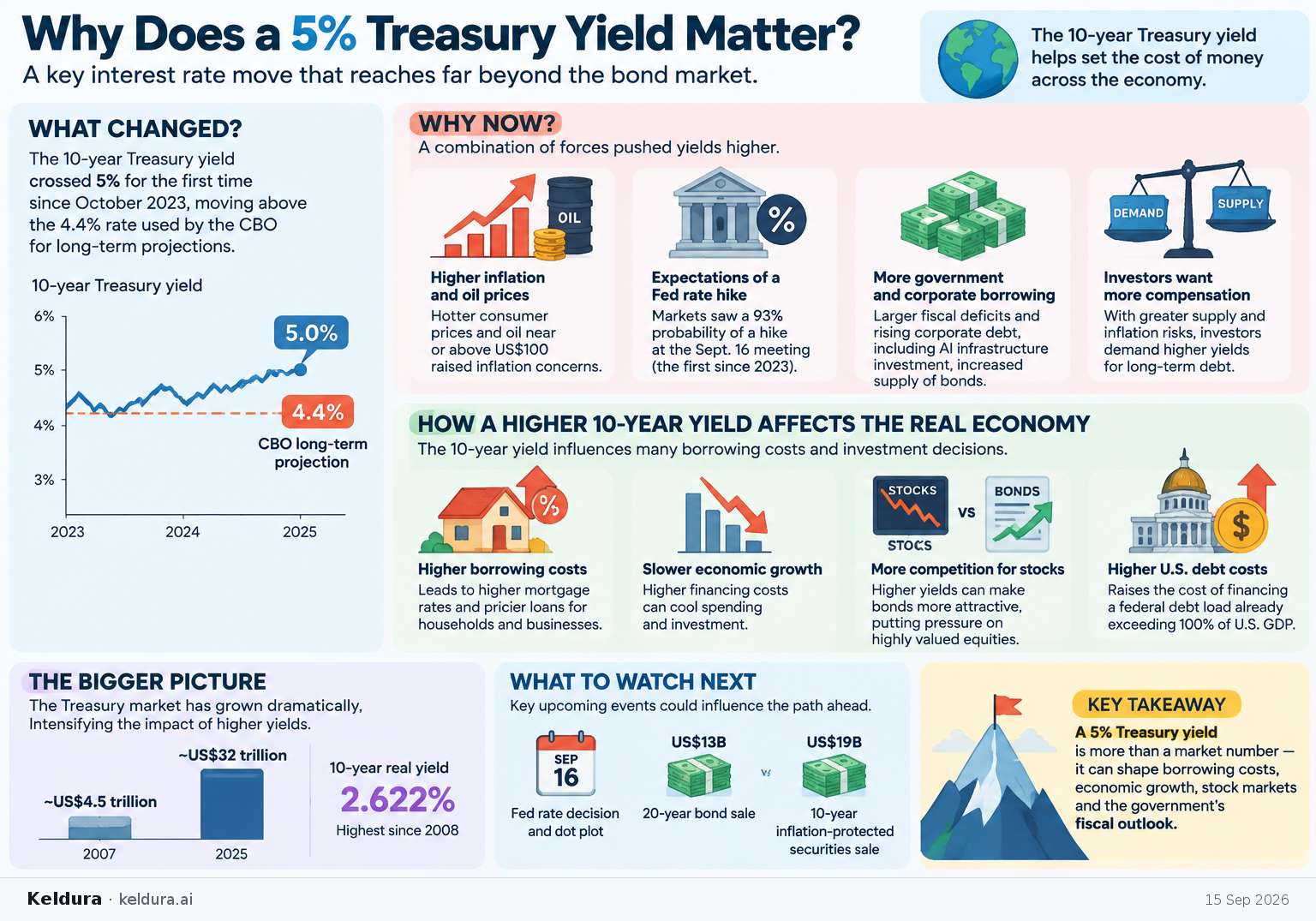
The U.S. 10-year Treasury yield breached 5% on Sept.
Why it matters: The 10-year yield influences mortgages and other borrowing costs, so a sustained increase can raise financing expenses for households and businesses, slow growth and make highly valued equities less…
The 10-year Treasury yield crossed 5% for the first time since October 2023, placing a key borrowing benchmark above the CBO’s 4.4% long-term projection assumption.[1][2]
Why now
Hotter consumer-price data, oil near or above US$100, expectations of Fed tightening and swelling public and corporate debt supply pushed yields higher.[2][3][7]
Watch next
Watch the Fed’s Sept. 16 rate decision and dot plot, plus demand at the Treasury’s US$13 billion 20-year bond sale and US$19 billion 10-year inflation-protected securities sale.[3]
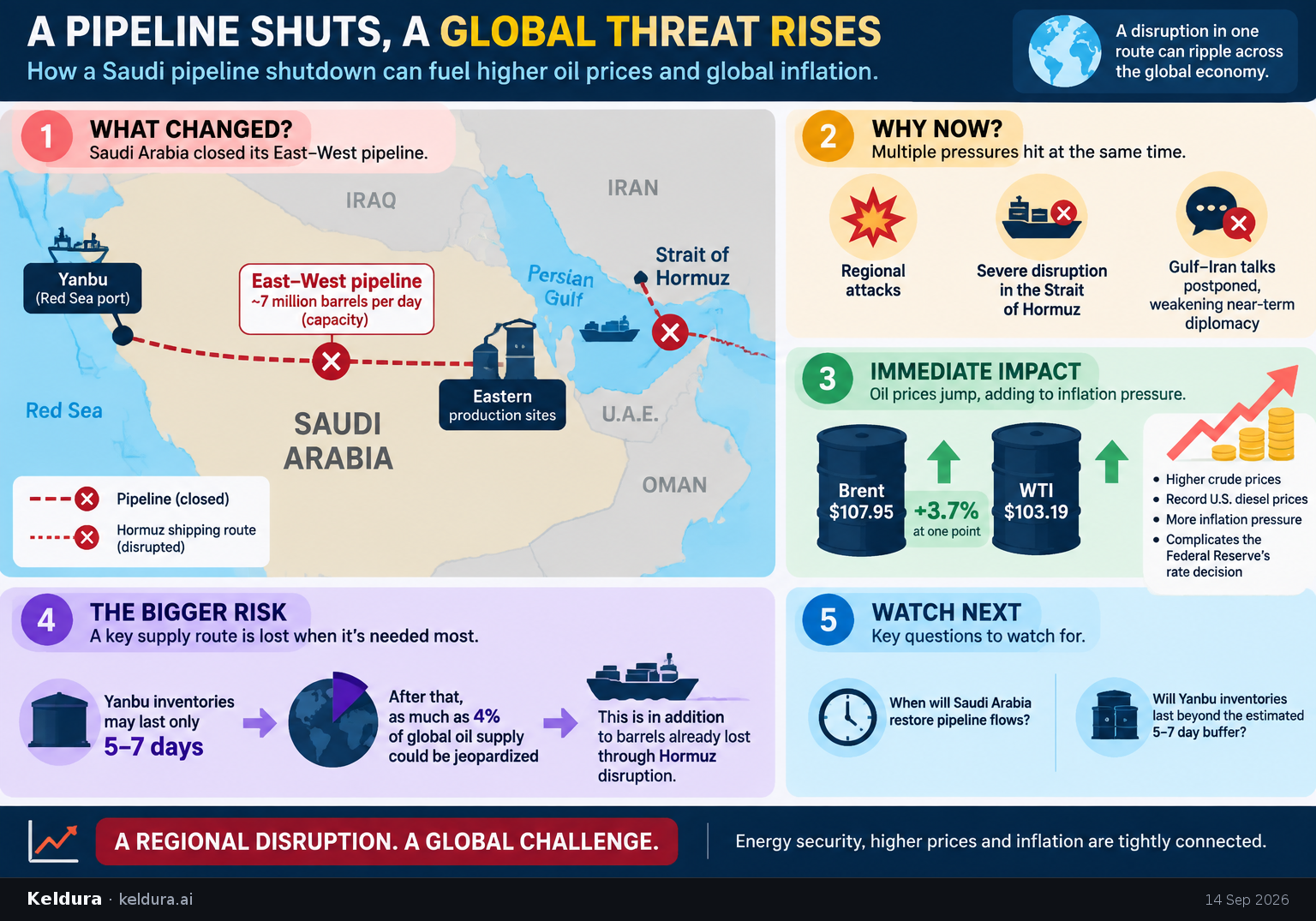
Why it matters: The closure removes a major alternative to Hormuz at a time when regional shipping is already constrained, potentially exposing as much as 4% of global oil supply once inventories at Yanbu are deplet…
Saudi Arabia closed the East-West pipeline, removing a route with roughly seven million barrels per day of capacity that bypasses Hormuz.[3]
Why now
The closure coincides with severe Hormuz disruption, continued regional attacks and the postponement of Gulf-Iran talks.[3][4]
Watch next
Watch for a Saudi timeline for restoring pipeline flows and whether Yanbu inventories extend beyond the estimated five-to-seven-day export buffer.[3][4]
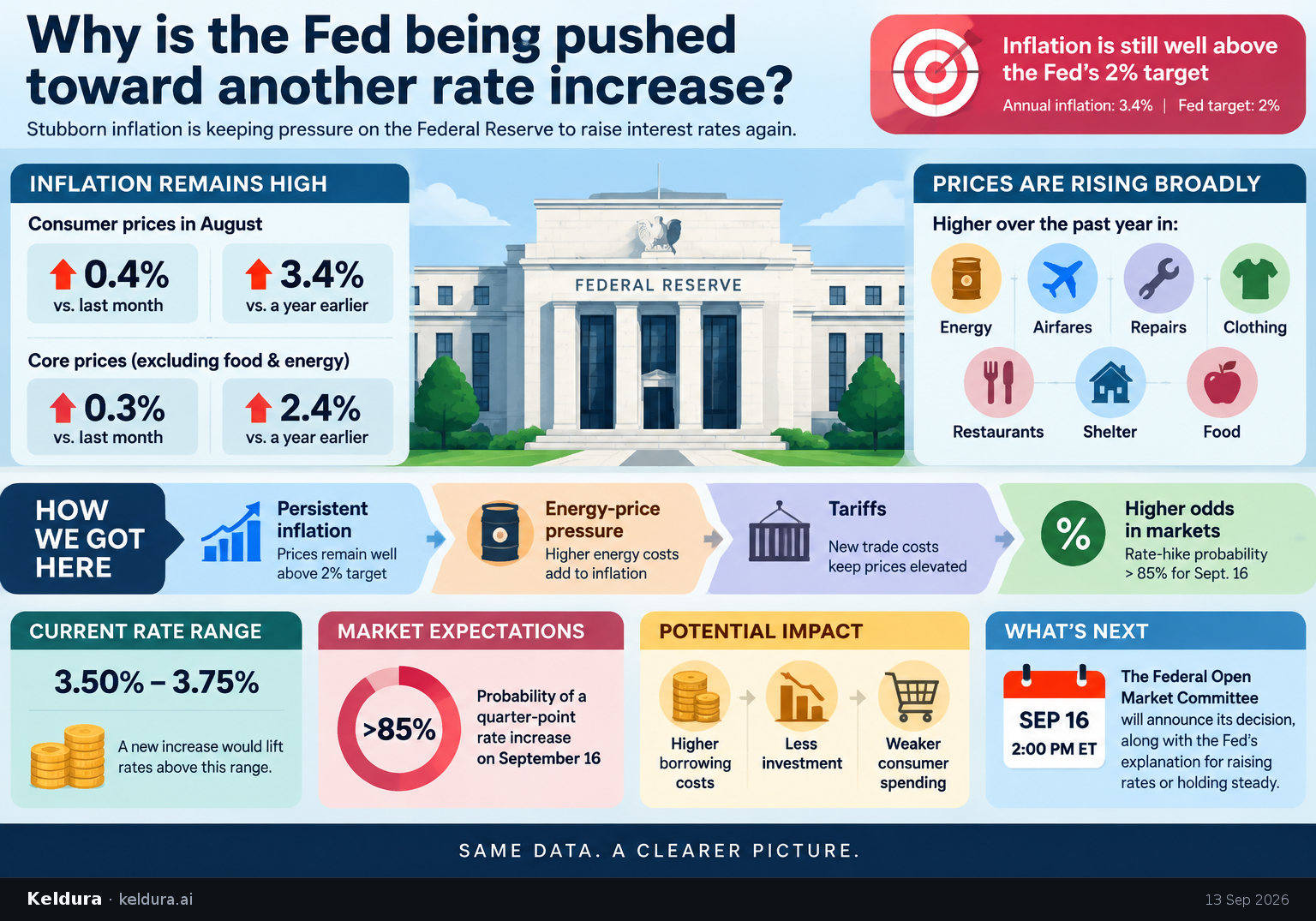
August inflation data released on September 11 pushed traders toward expecting a Federal Reserve rate increase at its September 16 meeting.
Why it matters: A rate increase would raise borrowing costs and restrain investment and consumption, while the decision will also test whether Fed chair Kevin Warsh can demonstrate independence amid White House dema…
August consumer prices rose 0.4% month over month, while annual inflation held at 3.4%.[6]
Why now
Persistent inflation and energy-price pressure pushed market odds of a September 16 rate increase above 85%.[2]
Watch next
The Federal Open Market Committee will announce its decision on September 16 at 2 p.m. Eastern time, alongside the Fed's explanation for raising rates or holding steady.[2]
Brent crude reached $109.97 a barrel as oil flows through the Strait of Hormuz remained restricted, helping send global bond yields higher.
Why it matters: A rate increase would make mortgages, credit cards and auto loans more expensive, even as higher yields improve returns for some savers. The repricing is already affecting portfolios: U.S. equity fun…
Brent reached $109.97, U.S. monthly inflation accelerated to 0.4%, and the market-implied probability of a September Fed hike rose to nearly 90%.[1][2][3]
Why now
Restricted oil flows through the Strait of Hormuz lifted energy prices while accelerating core inflation suggested that pressure was spreading beyond fuel.[1][2]
Watch next
The Federal Reserve is scheduled to announce its rate decision at 2 p.m. ET on September 16.[2]
Kevin Warsh used his August 28 Jackson Hole speech to open the door to a Federal Reserve rate increase as soon as September.
Why it matters: The decision could turn on data released shortly before the meeting, making the August employment report and the next consumer-price reading unusually consequential for borrowing costs, bond yields a…
On September 10, investors sold stocks and bonds as surging oil prices intensified inflation concerns on both sides of the Atlantic.
Why it matters: Higher energy prices can sustain inflation just as rising government-bond yields make mortgages, business loans and other borrowing more expensive; they also reduce the relative appeal of equities an…
Brent reached US$107, the ECB lifted rates to 2.5%, and the S&P 500 lost 0.58% as sovereign yields climbed.[1][2]
Why now
Energy-supply disruption renewed inflation fears, while a US$6 billion Treasury buyback fell short of market expectations.[1][5]
Watch next
The August US consumer-price release on September 11 and the Federal Reserve decision on September 16 will provide the next observable tests of rate-hike expectations.[1][2][5]
That's the desk. Every cheatsheet here started as a link. Yours can too.