The ECB raised rates on Thursday as disrupted Middle Eastern energy supplies intensified inflation pressure across major economies.
Why it matters: Energy costs flow through transport, manufacturing and household bills, making inflation harder to contain without tighter monetary policy; diesel is particularly consequential because it powers truc…
Long-term US yields surged after the Treasury announced a $6 billion bond buyback that investors judged too small.
Why it matters: Treasury yields serve as reference rates across the US economy, so sustained increases can make mortgages and business loans more expensive, slow growth and weigh on share prices. The reaction also i…
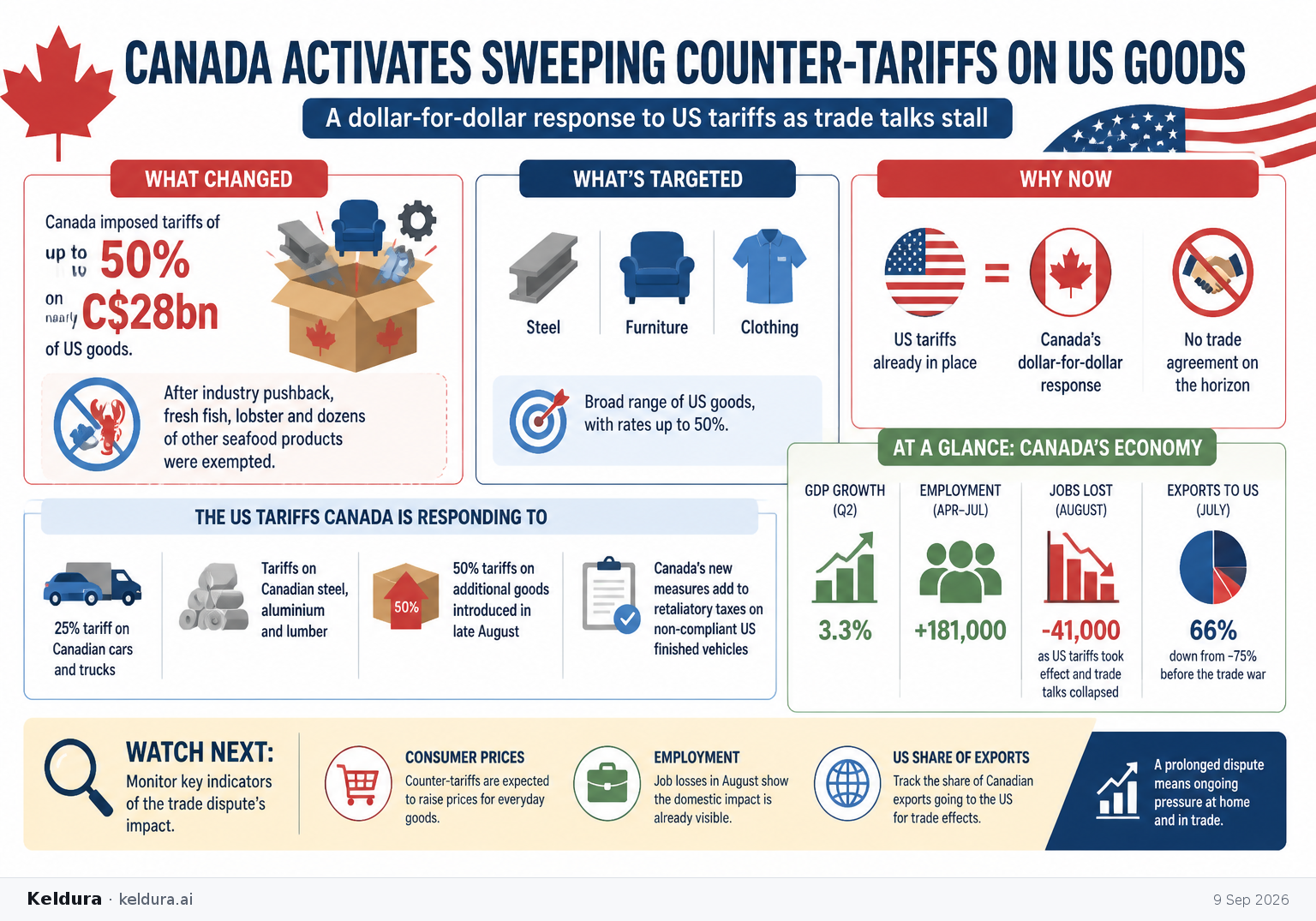
Canada’s retaliatory tariffs took effect Tuesday, covering nearly C$28bn ($20bn) of US products and reaching rates as high as 50%.
Why it matters: Economists warn that the counter-tariffs will raise Canadian consumer prices for everyday goods, while businesses are preparing for a prolonged dispute with the country’s largest trading partner.
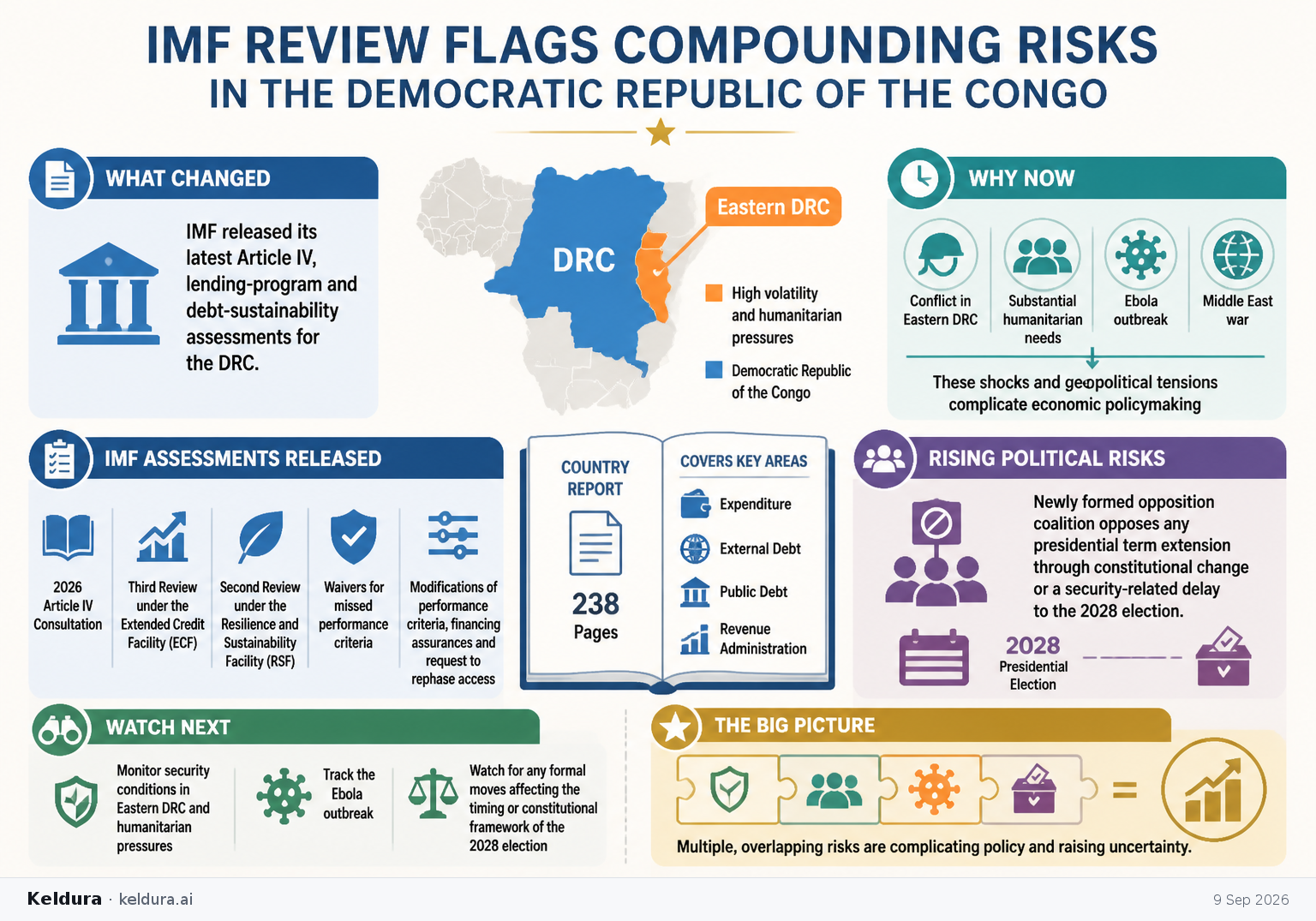
Why it matters: The IMF says volatile security conditions in Eastern DRC, substantial humanitarian pressures, the Middle East war and a recent Ebola outbreak are complicating public policy, while political risks are…
The IMF released its latest Article IV, lending-program and debt-sustainability assessments for the Democratic Republic of the Congo.[3]
Why now
The review comes as conflict, humanitarian needs, Ebola and rising political tension complicate economic policymaking.[3]
Watch next
Track Eastern DRC security and humanitarian conditions, the Ebola outbreak, and any formal moves affecting the timing or constitutional framework of the 2028 presidential election.[3]
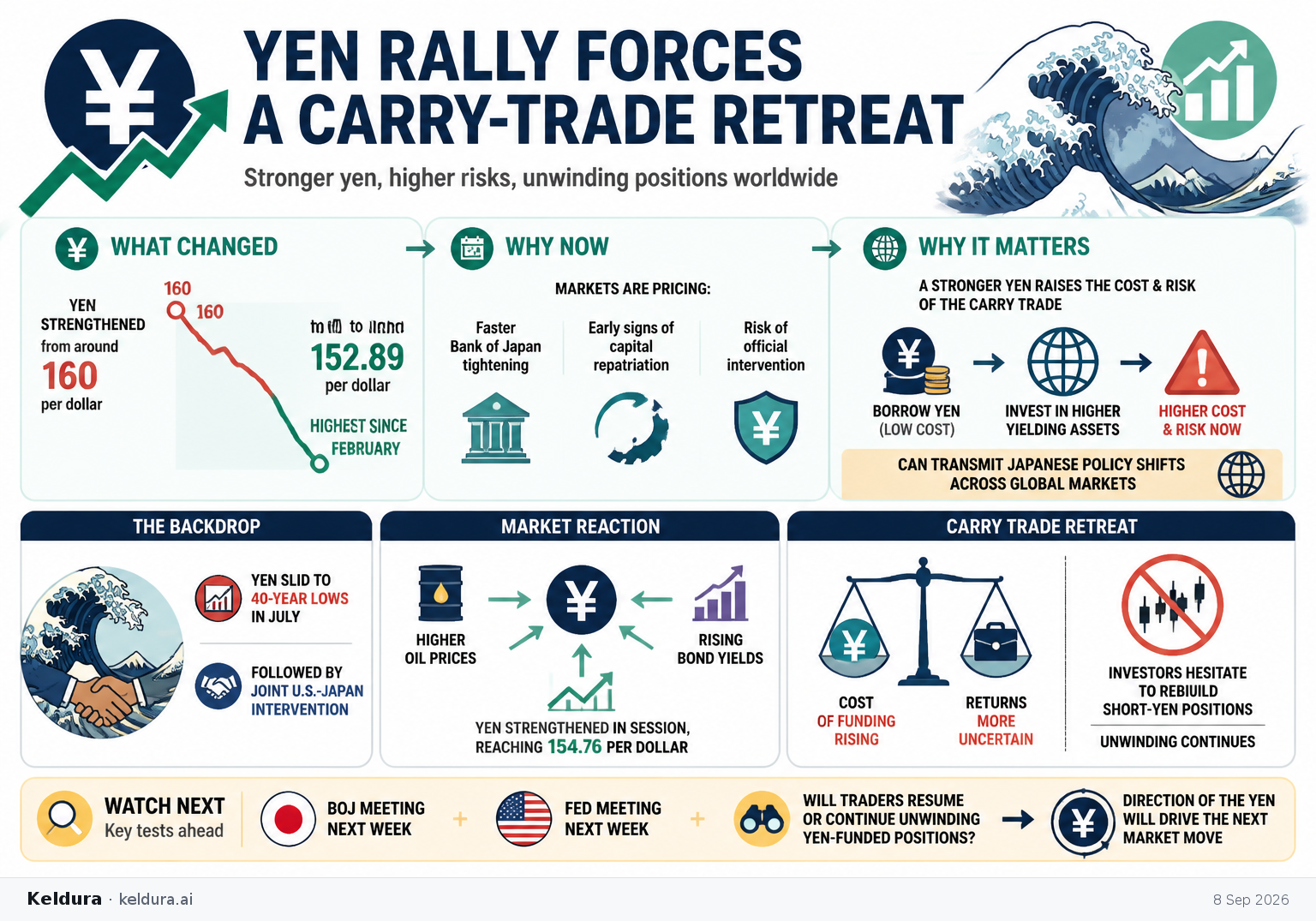
The yen strengthened to 152.89 per dollar, its highest level since February, after trading near 160 less than a week earlier.
Why it matters: A stronger yen raises the cost and risk of a strategy widely used to finance investments in higher-yielding currencies and assets, potentially transmitting Japanese policy shifts across global market…
The yen rapidly moved from around 160 to 152.89 per dollar, its strongest level since February.[1]
Why now
Markets are pricing faster Bank of Japan tightening while accounting for capital repatriation and official intervention risk.[1]
Watch next
The observable tests are next week’s central-bank meetings in Japan and the U.S., alongside whether traders resume or continue unwinding yen-funded positions.[1]
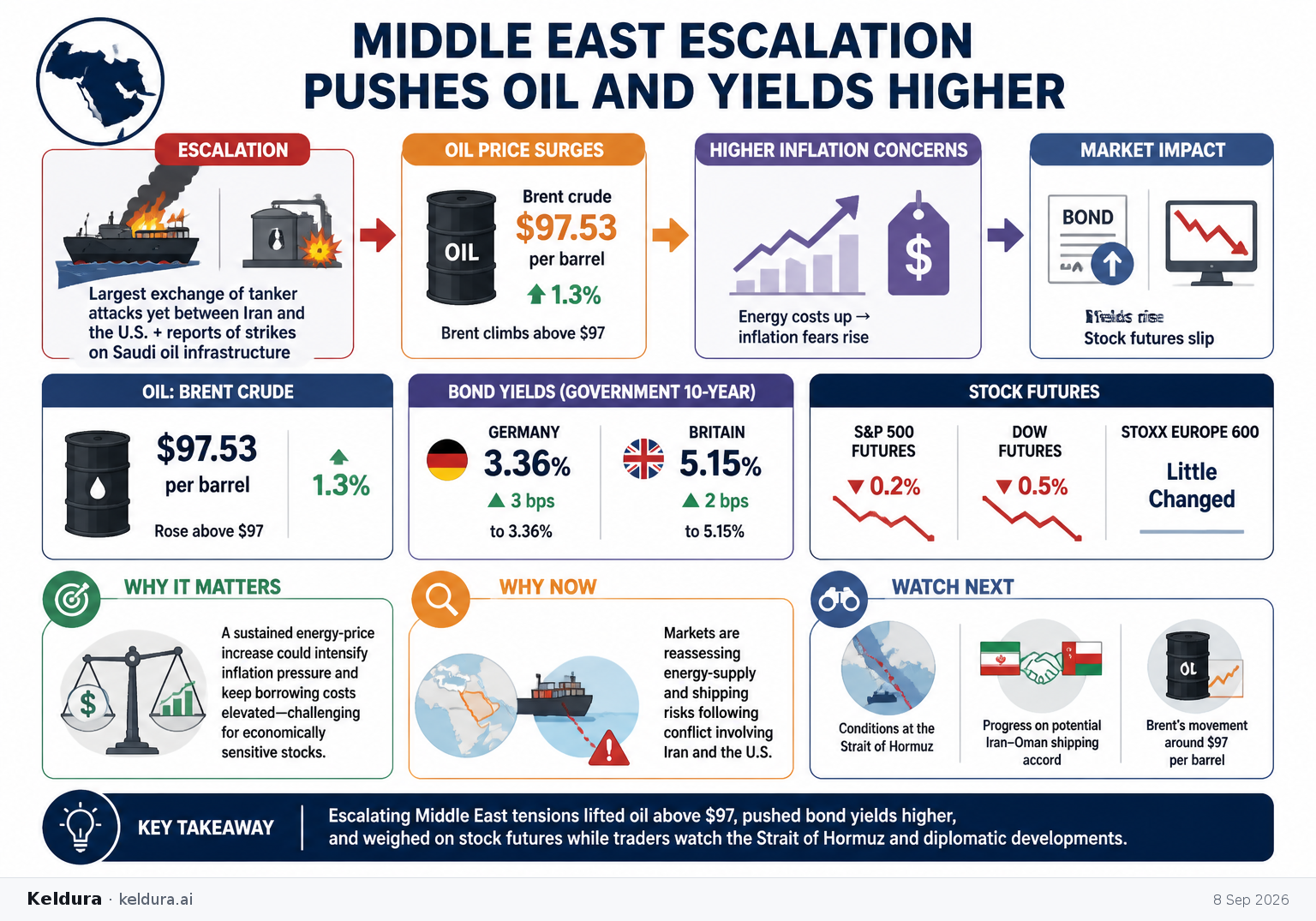
Brent crude climbed above $97 a barrel after the largest exchange of tanker attacks yet between Iran and the U.S., alongside reports of strikes on Saudi oil infrastructure.
Why it matters: A sustained energy-price increase could intensify inflation pressure and keep borrowing costs elevated, creating a difficult backdrop for economically sensitive equities.
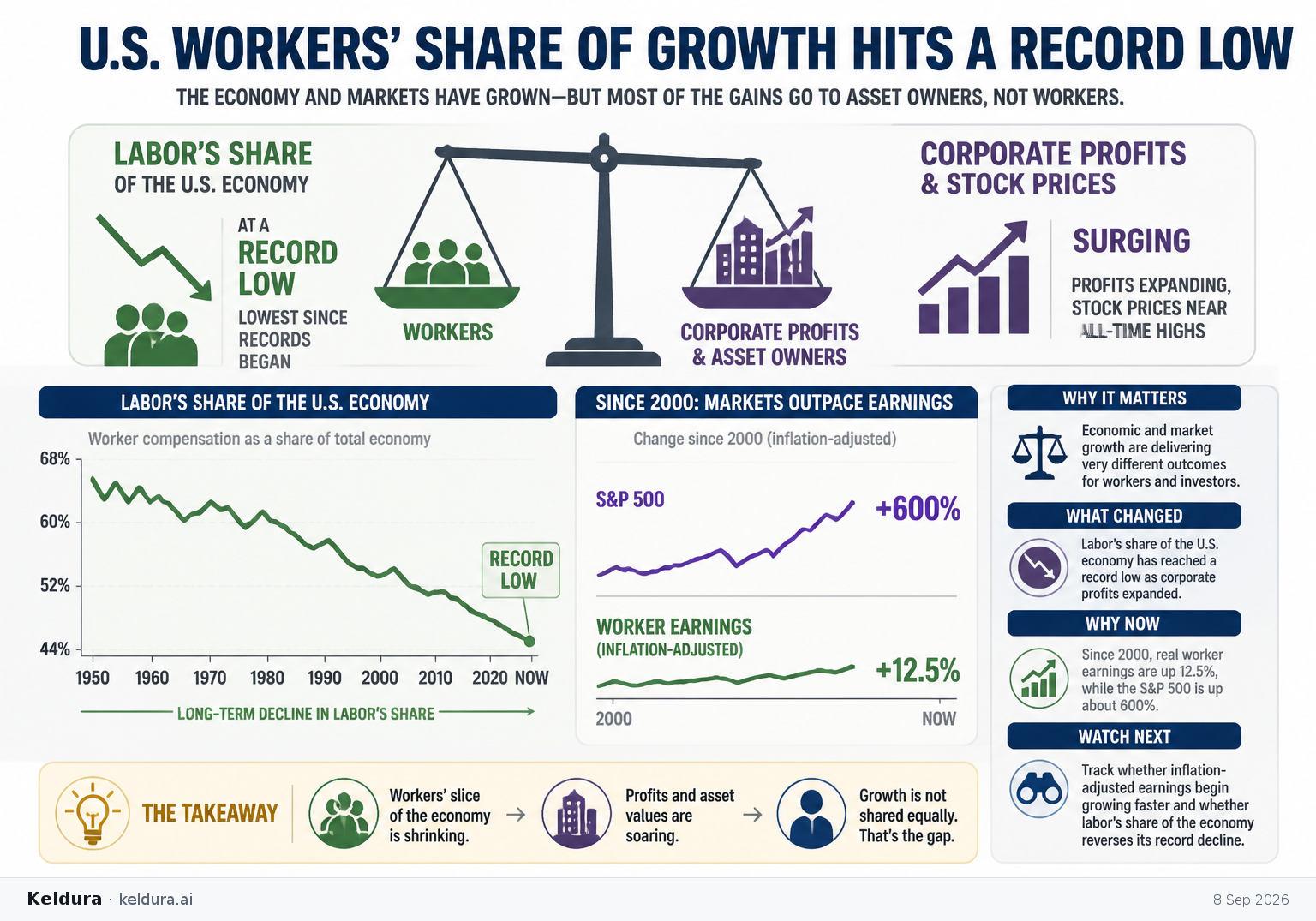
Wages have fallen to their lowest recorded share of the growing U.S.
Why it matters: The widening gap between asset appreciation and real earnings shows that economic and market growth is delivering markedly different outcomes for workers and investors.
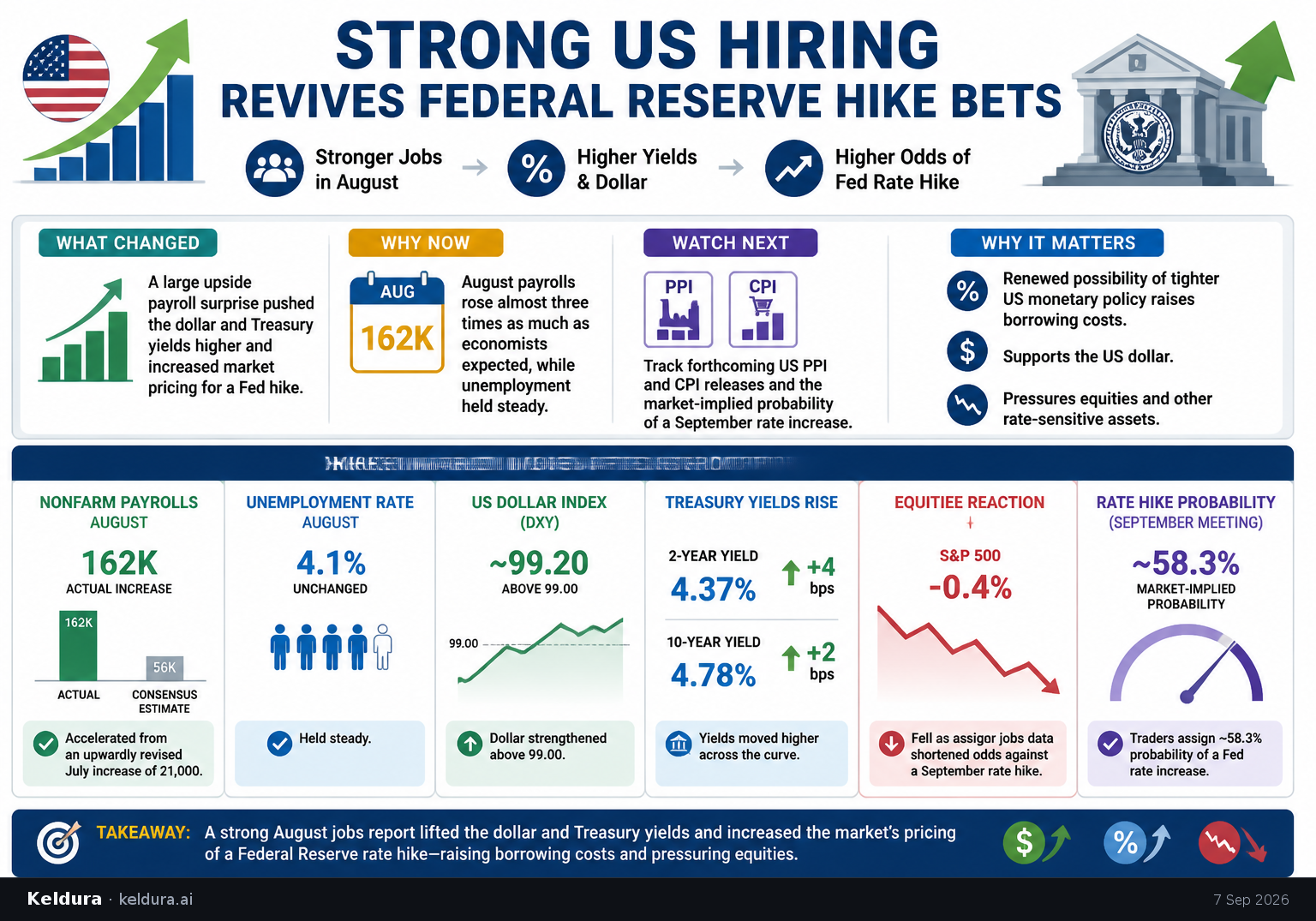
US nonfarm payrolls increased by 162,000 in August, exceeding the 56,000 consensus estimate, while unemployment remained at 4.1%.
Why it matters: A renewed possibility of tighter US monetary policy raises borrowing costs and supports the dollar, while putting pressure on equities and other rate-sensitive assets.
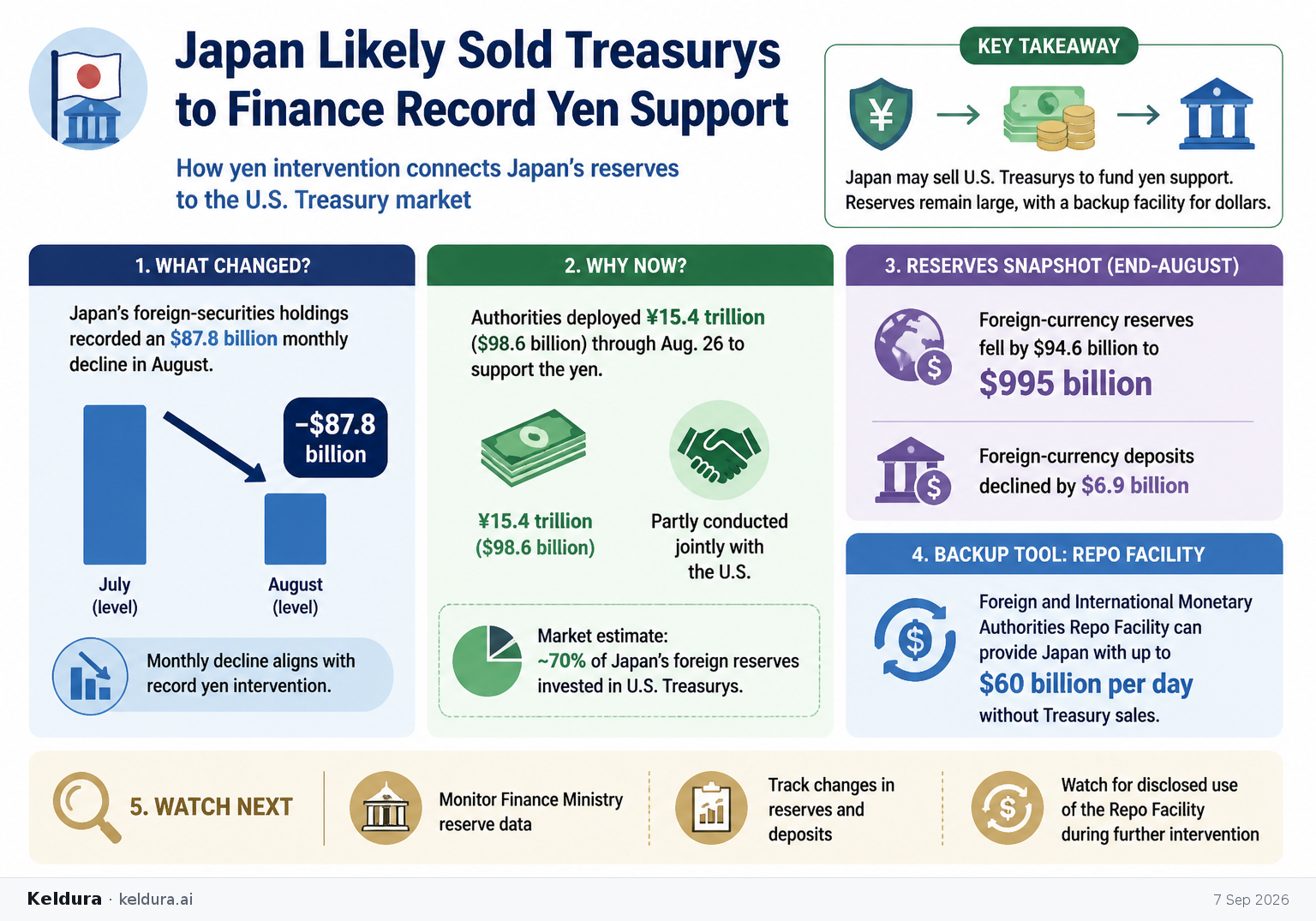
Japan’s foreign-securities holdings fell by $87.8 billion in August, close to the scale of its recent intervention to support the yen.
Why it matters: Selling reserve assets can transmit Japan’s currency defense into the US Treasury market, although Tokyo retains substantial reserves and has access to a facility designed to provide dollars without…
Japan’s foreign-securities holdings recorded an $87.8 billion monthly decline following record yen intervention.[3]
Why now
Authorities deployed ¥15.4 trillion through Aug. 26 to support the yen, including a joint operation with the US.[3]
Watch next
Monitor Finance Ministry reserve data and any disclosed use of the Foreign and International Monetary Authorities Repo Facility during further intervention.[3]
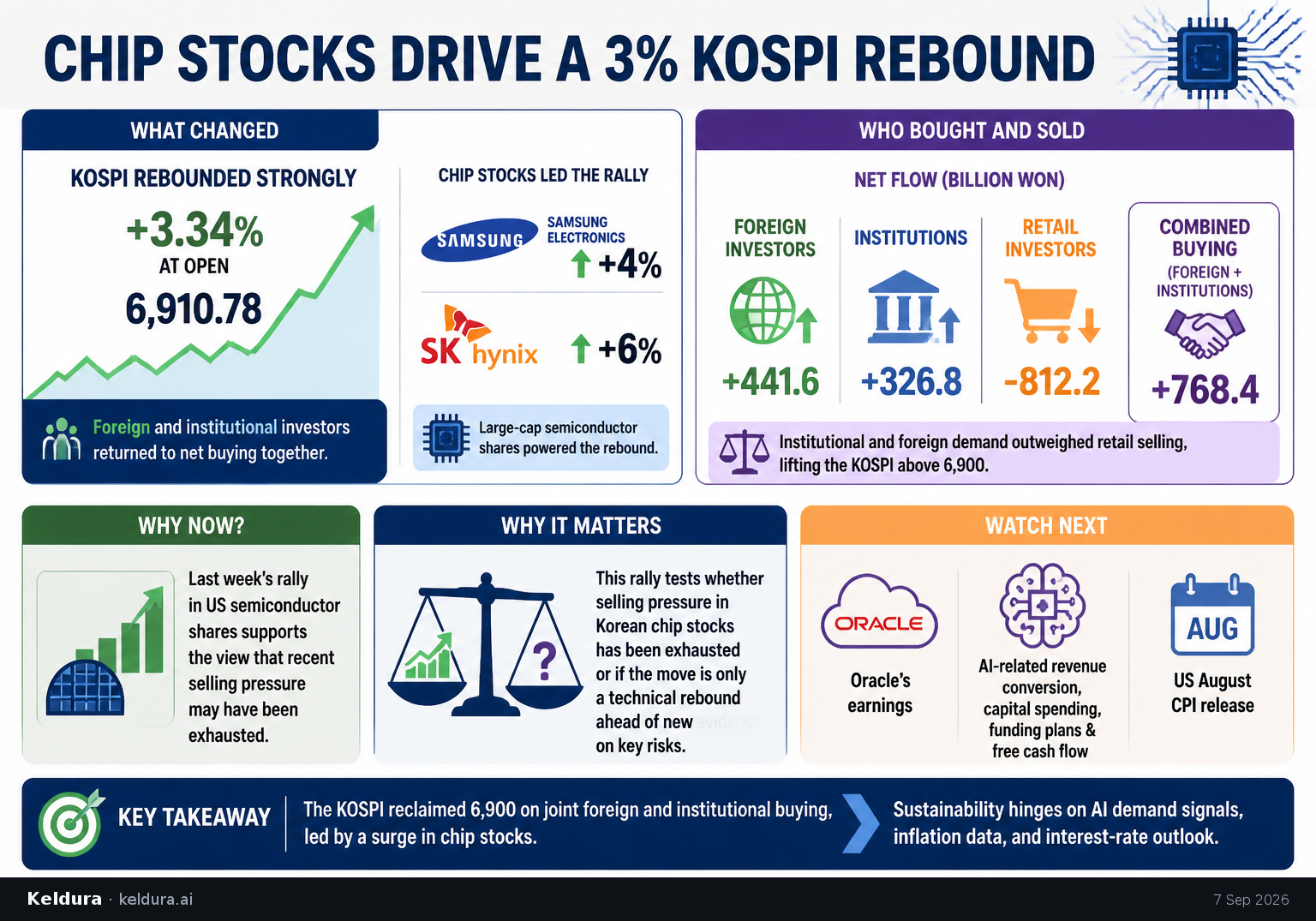
The KOSPI opened 3.34% higher at 6,910.78 as foreign and institutional investors jointly returned to net buying.
Why it matters: The rally tests whether selling pressure in Korean chip stocks has been exhausted or whether the move is only a technical rebound ahead of fresh evidence on AI demand, inflation and interest rates.
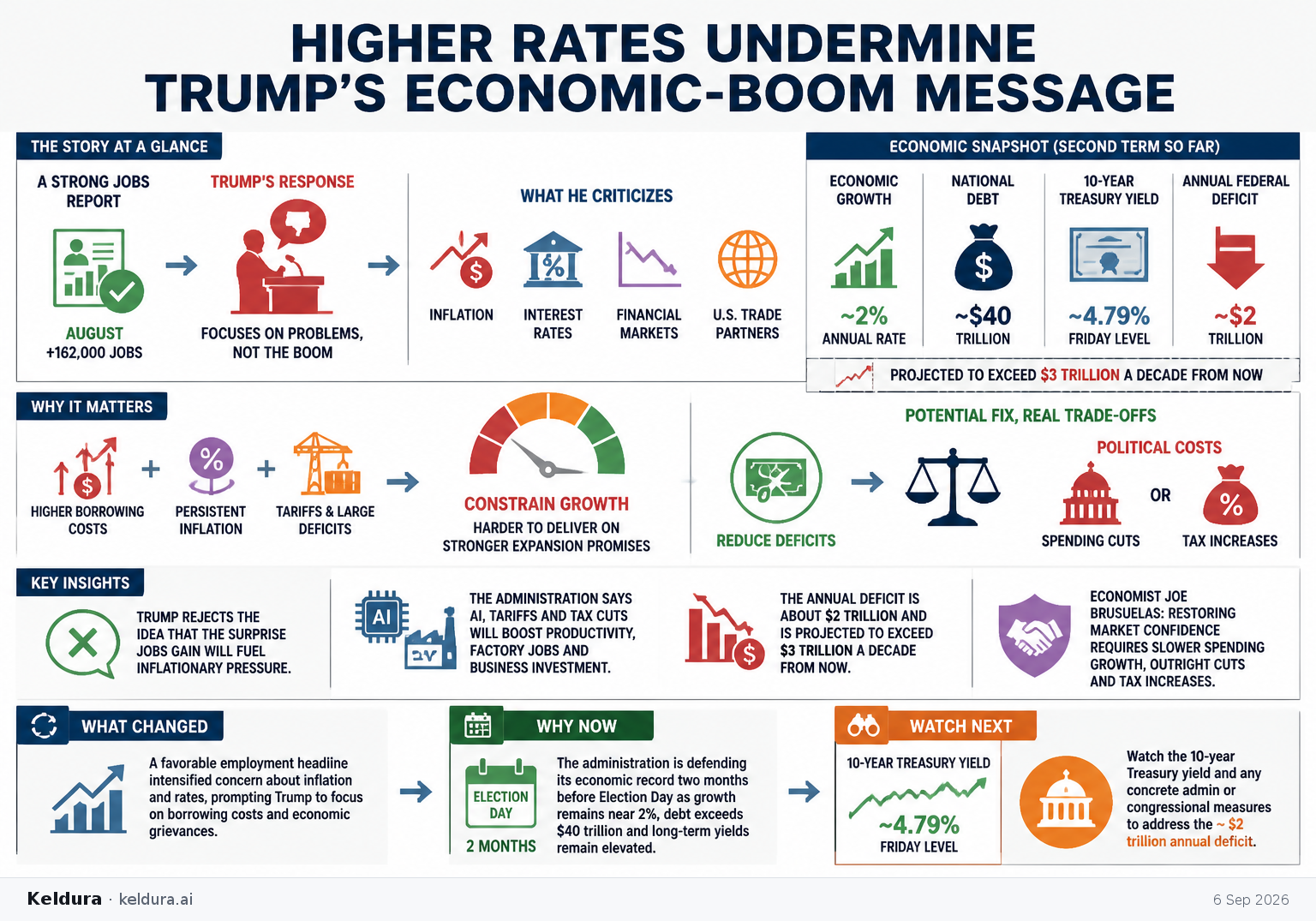
President Donald Trump responded to the positive August jobs report by criticizing inflation, interest rates, financial markets and U.S.
Why it matters: Higher government borrowing costs constrain growth and make Trump’s promises of stronger expansion harder to reconcile with persistent inflation, tariffs and large deficits. Reducing deficits could e…
A favorable employment headline intensified concern about inflation and rates, prompting Trump to focus on borrowing costs and economic grievances. [3][4]
Why now
The administration is defending its economic record two months before Election Day as growth remains near 2%, debt exceeds $40 trillion and long-term Treasury yields remain elevated. [3][4]
Watch next
Watch the 10-year Treasury yield from its roughly 4.79% Friday level and any concrete administration or congressional measures addressing the approximately $2 trillion annual deficit. [3][4]
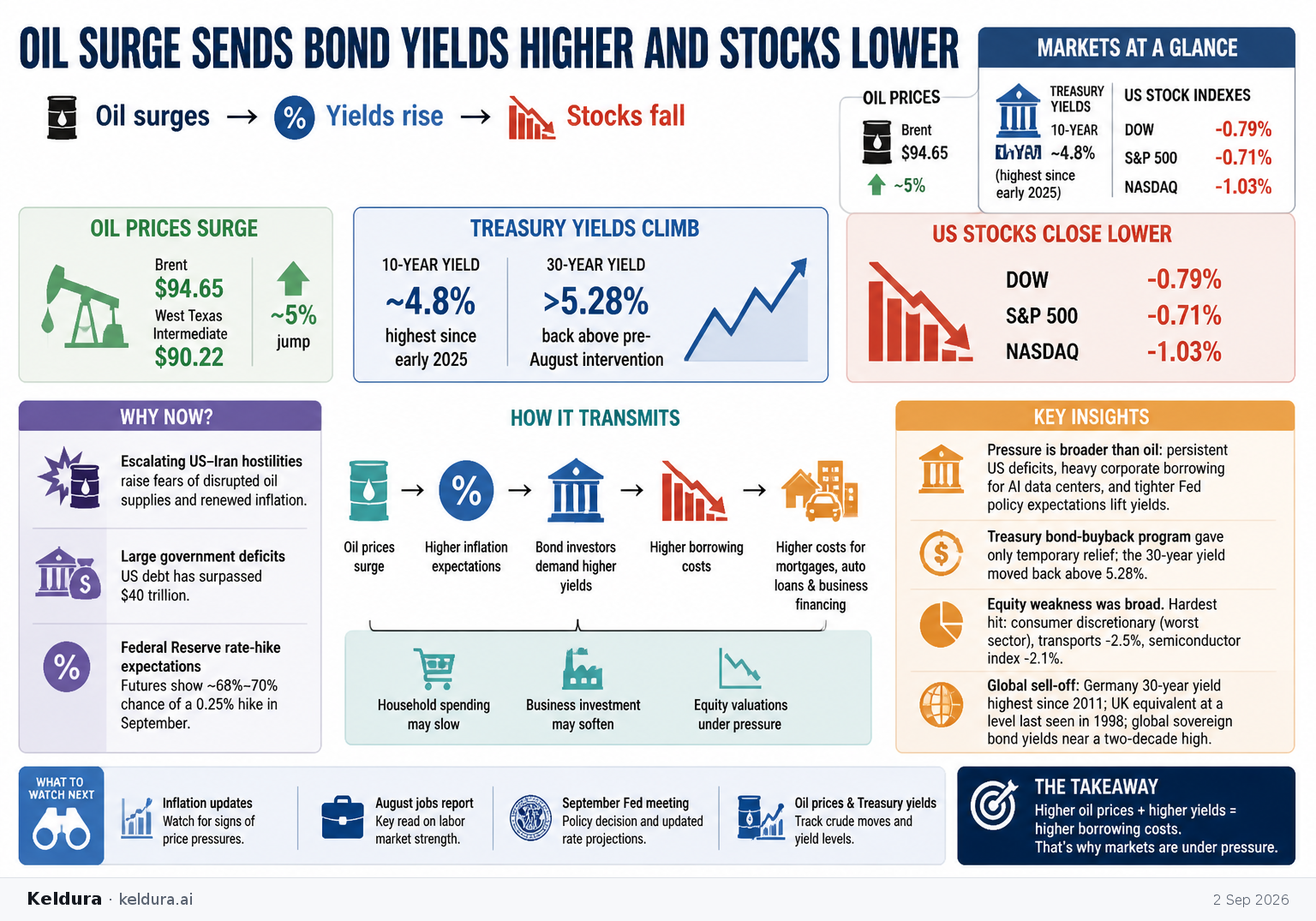
Renewed US-Iran hostilities lifted Brent crude to $94.65 and West Texas Intermediate to $90.22, while the 10-year Treasury yield approached 4.8%, its highest level since early 2025.
Why it matters: Higher Treasury yields feed into mortgages, auto loans and corporate financing, potentially restraining household spending, business expansion and equity valuations. The sell-off is also testing gove…
Oil jumped about 5%, the 10-year Treasury yield neared 4.8%, the 30-year yield exceeded 5.28% and all three major US stock indexes closed lower.[2][4][5]
Why now
Escalating US-Iran fighting raised fears of disrupted oil supplies and renewed inflation, while large government deficits and Federal Reserve rate-hike expectations deepened the bond sell-off.[1][2][4]
Watch next
Watch the inflation updates and August jobs report ahead of the Federal Reserve’s September meeting, alongside observable moves in crude prices and Treasury yields.[2][3]
That's the desk. Every cheatsheet here started as a link. Yours can too.