Every cheatsheet Keldura Daily has published, newest first: the news hook, why it matters, and the sources it came from. Each cheatsheet is compiled by Keldura's AI from the sources it cites.
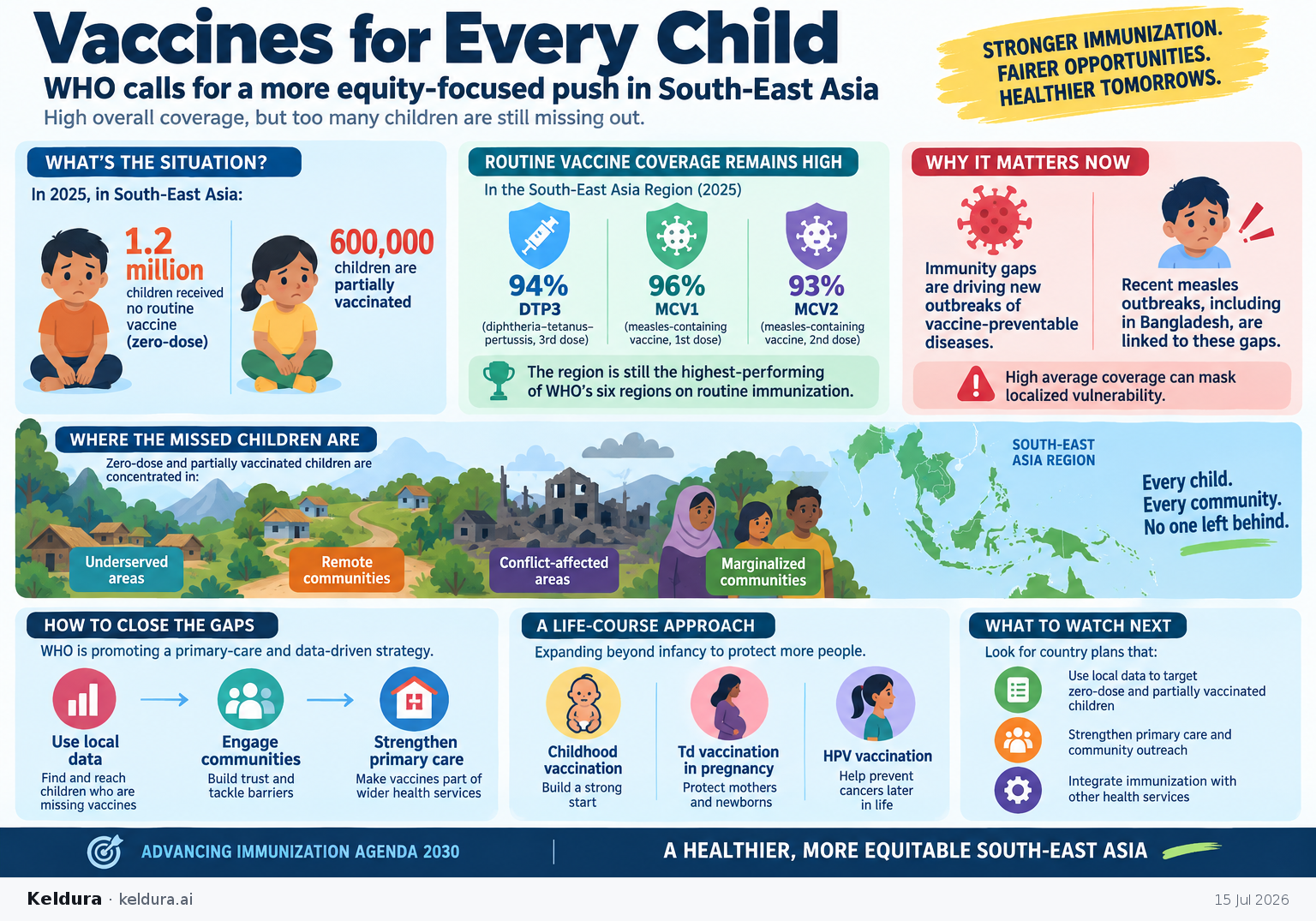
WHO said nearly 1.2 million children in the South-East Asia Region did not receive their first routine vaccine in 2025, while 600,000 remained partially vaccinated, even as routine coverage stayed high.
Why it matters: WHO says the remaining immunity gaps are driving new outbreaks of vaccine-preventable diseases, and it specifically linked recent measles outbreaks, including in Bangladesh, to those gaps. The messag…
WHO renewed its call to reach every child after 2025 estimates showed 1.2 million zero-dose children and 600,000 partially vaccinated children in South-East Asia.[2]
Why now
Measles outbreaks and persistent immunity gaps show that strong regional averages are not enough to prevent resurgence.[2]
Watch next
Look for country plans that use local data, primary care, and community outreach to reduce zero-dose and partially vaccinated counts.[2]
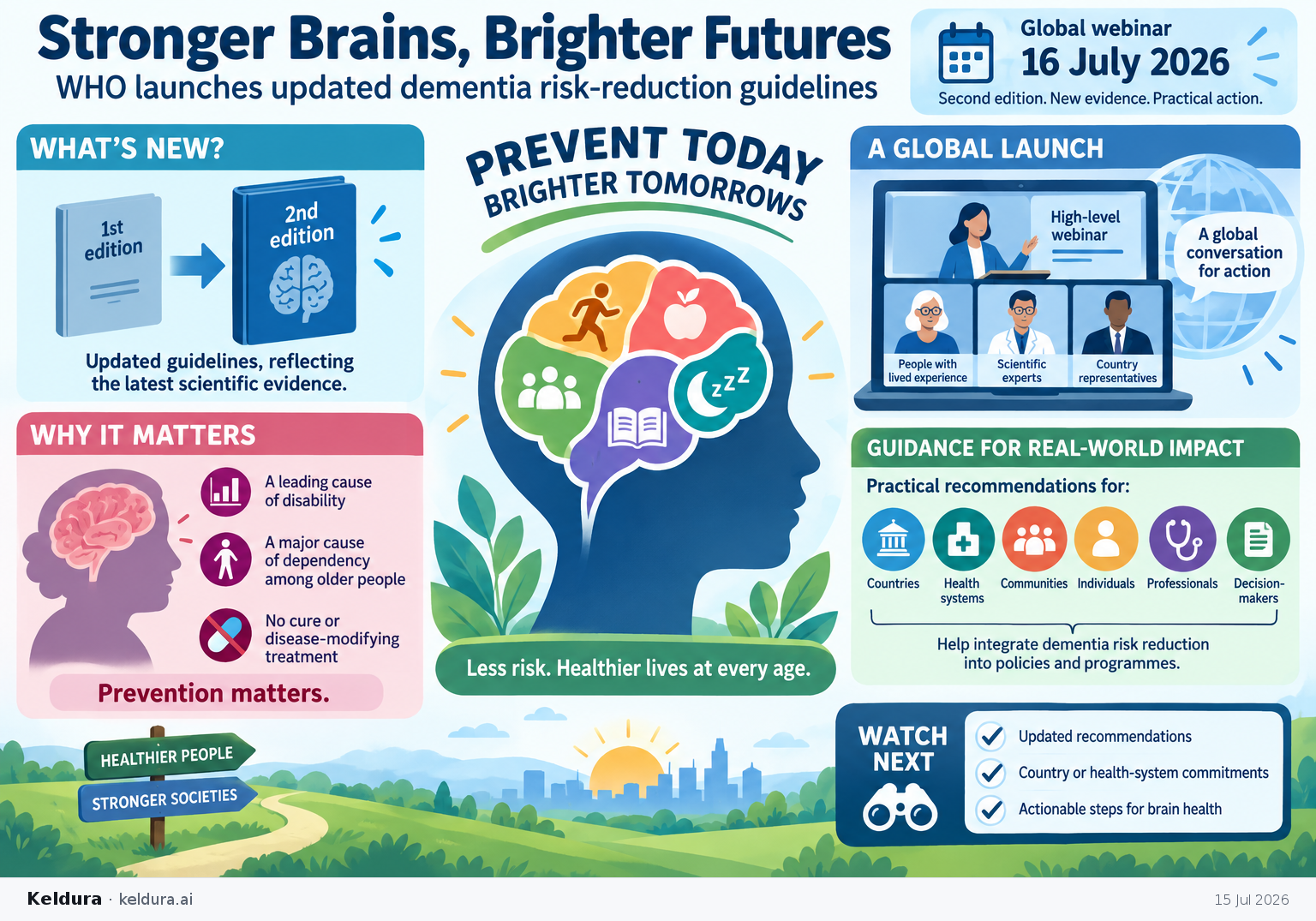
WHO announced a global webinar on 16 July 2026 to launch the second edition of its guidelines on risk reduction of cognitive decline and dementia.
Why it matters: WHO describes dementia as a leading cause of disability and dependency among older people, and says prevention matters because there are no disease-modifying treatments or a cure. Updated prevention…
WHO is releasing the second edition of its dementia risk-reduction guidelines in a global webinar on 16 July 2026.[1]
Why now
WHO says dementia is a major cause of disability and dependency, and prevention is especially important because there is no cure or disease-modifying treatment.[1]
Watch next
Look for the updated recommendations and any country or health-system commitments announced during or after the webinar.[1]
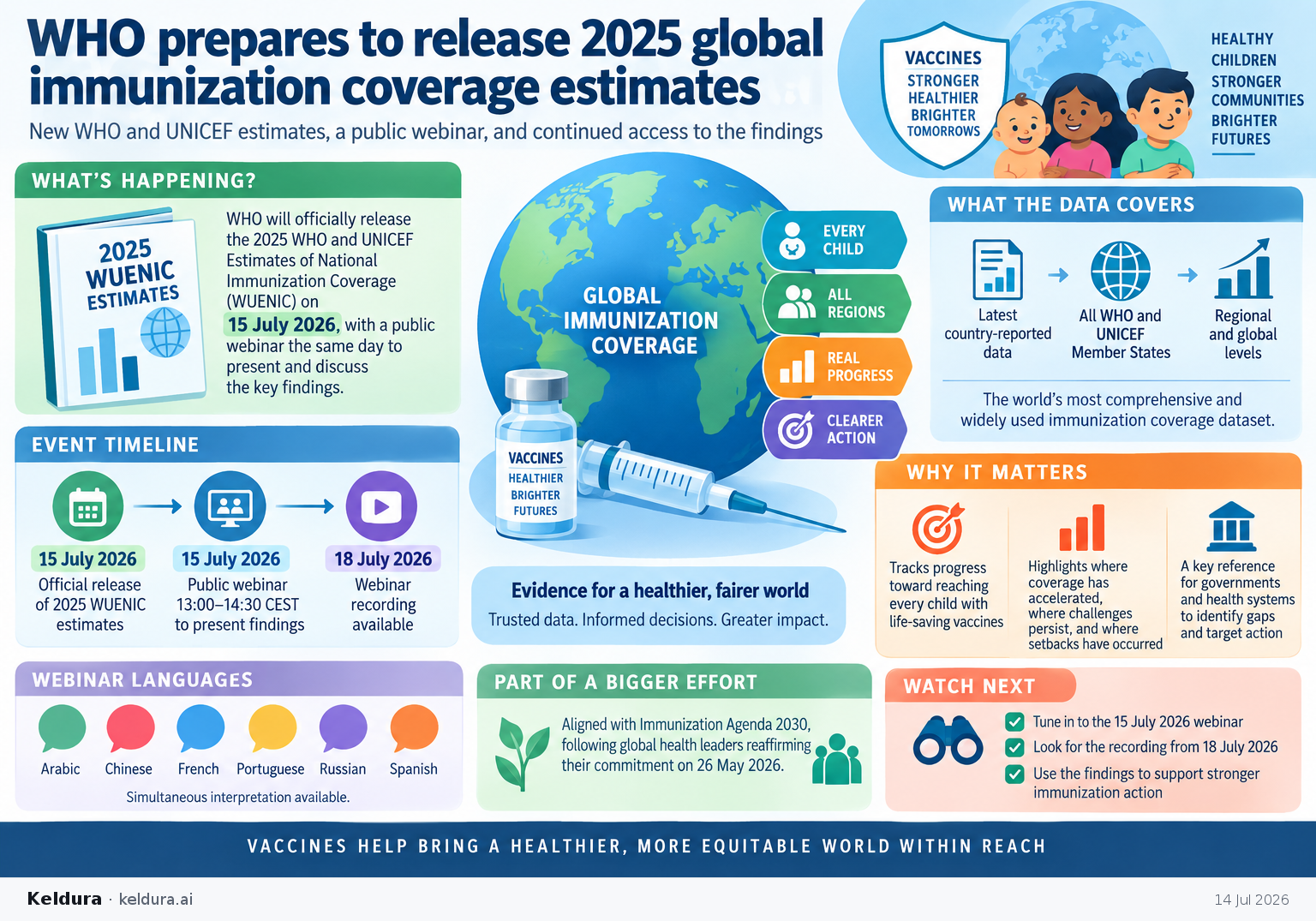
WHO says the 2025 WHO and UNICEF Estimates of National Immunization Coverage (WUENIC) will be officially released on 15 July 2026, with a public webinar the same day to present and discuss the key findings.
Why it matters: WHO says WUENIC helps assess global progress toward reaching every child with life-saving vaccines and highlights where coverage has accelerated, where challenges persist, and where setbacks have occ…
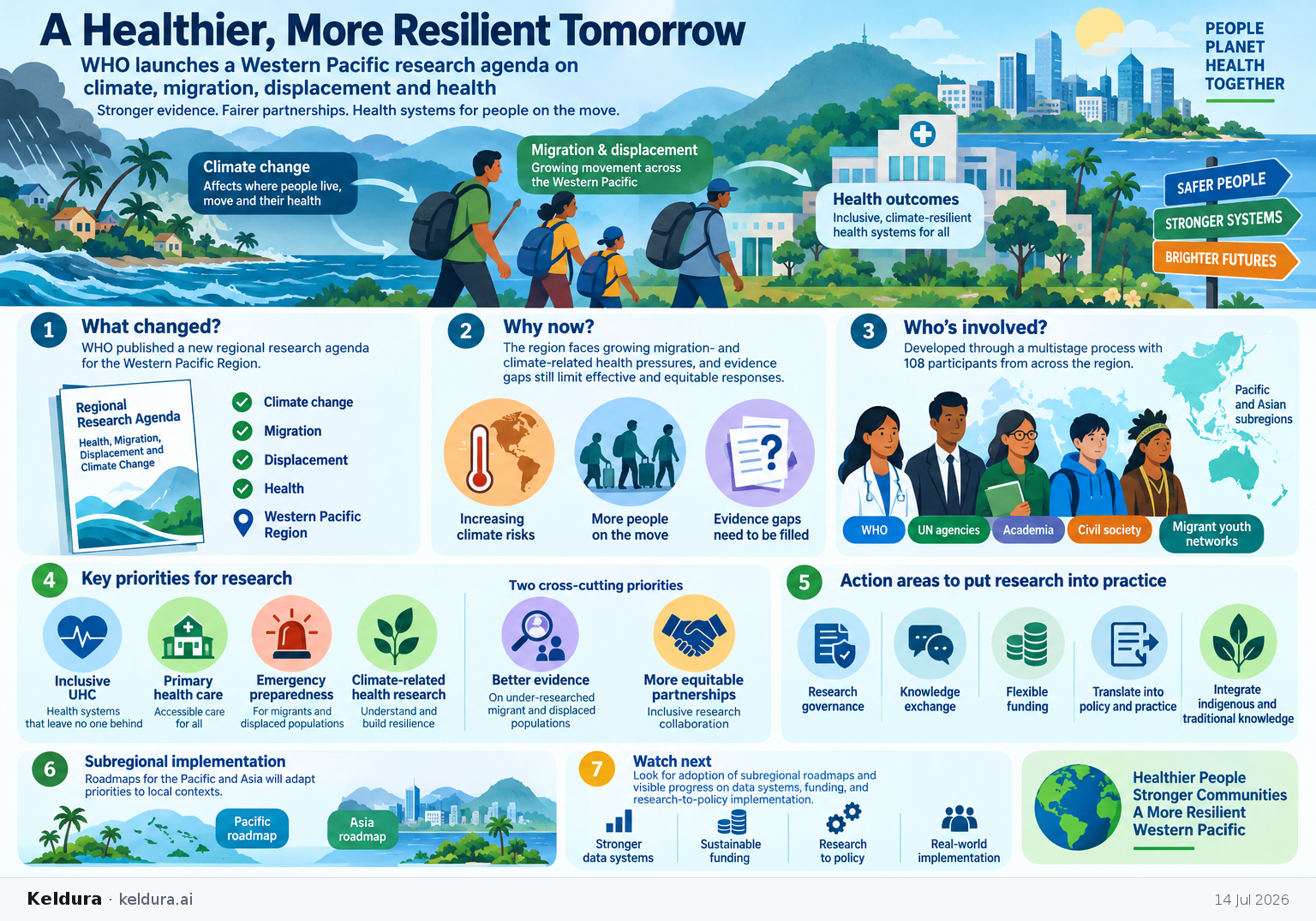
Why it matters: WHO says migration, displacement and climate change are increasingly shaping health outcomes in the Western Pacific Region, while evidence gaps still limit effective and equitable responses. The road…
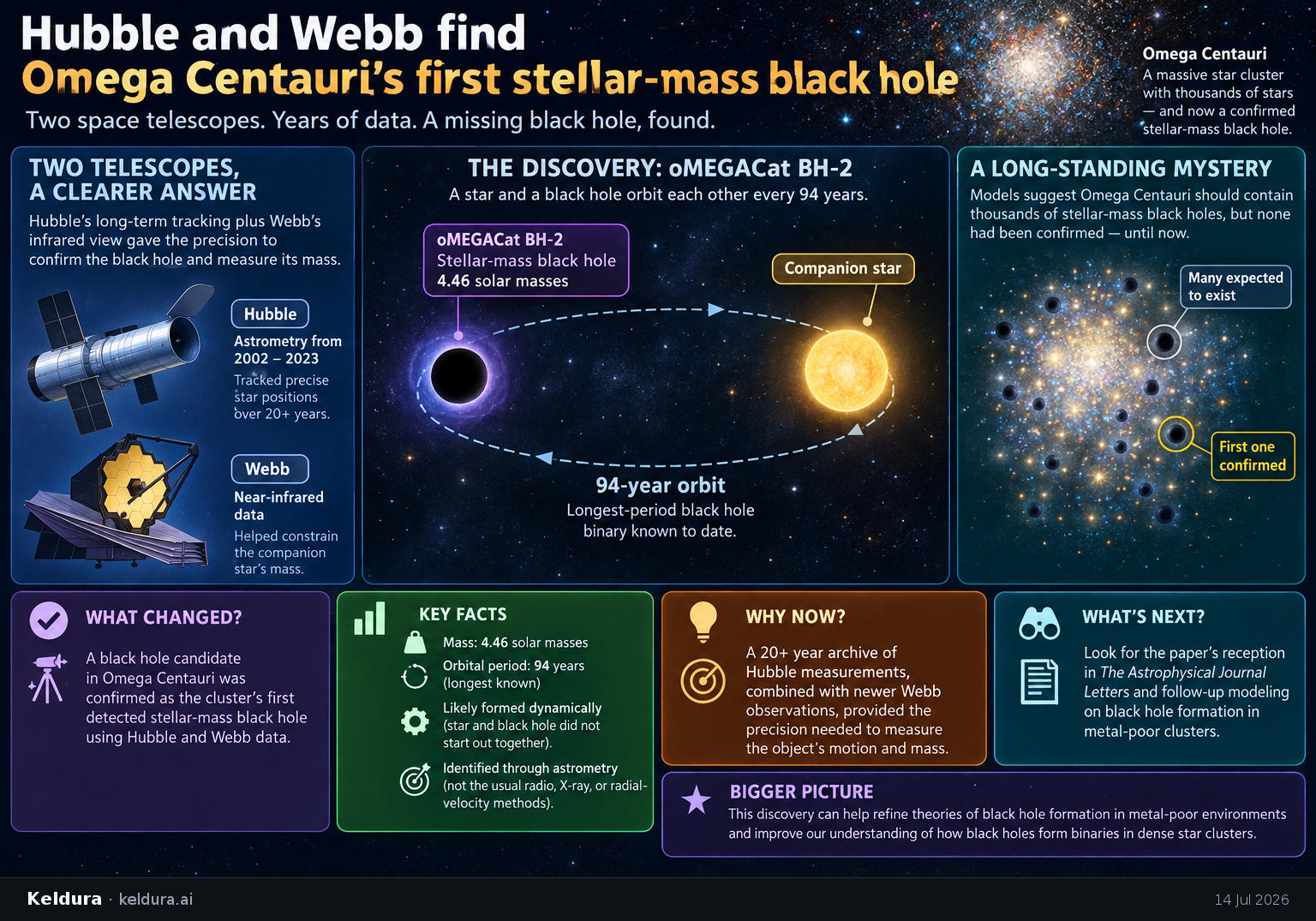
Astronomers using more than 20 years of NASA Hubble Space Telescope archival data, plus recent James Webb Space Telescope observations, say they have identified the first stellar-mass black hole in Omega Centauri.
Why it matters: This is a notable step in resolving a long-standing gap in what scientists expected to find inside Omega Centauri, where models suggest thousands of stellar-mass black holes should exist. The result…
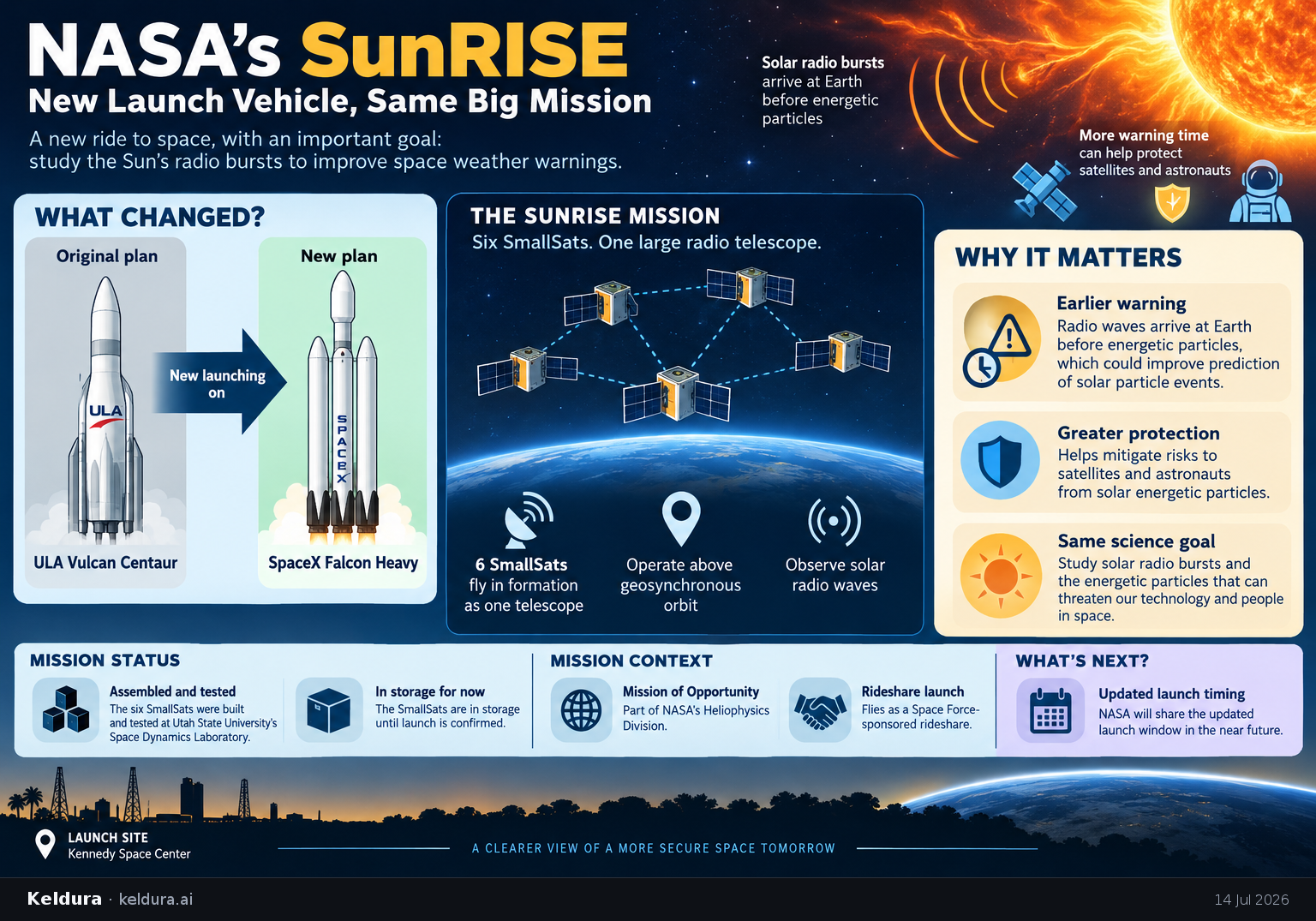
NASA says its SunRISE mission will now launch on a SpaceX Falcon Heavy from Kennedy Space Center, replacing the originally planned United Launch Alliance Vulcan Centaur.
Why it matters: The launch-vehicle switch is a material mission change because it affects how and when SunRISE reaches orbit, while leaving the science goal intact. The mission is aimed at improving prediction and m…
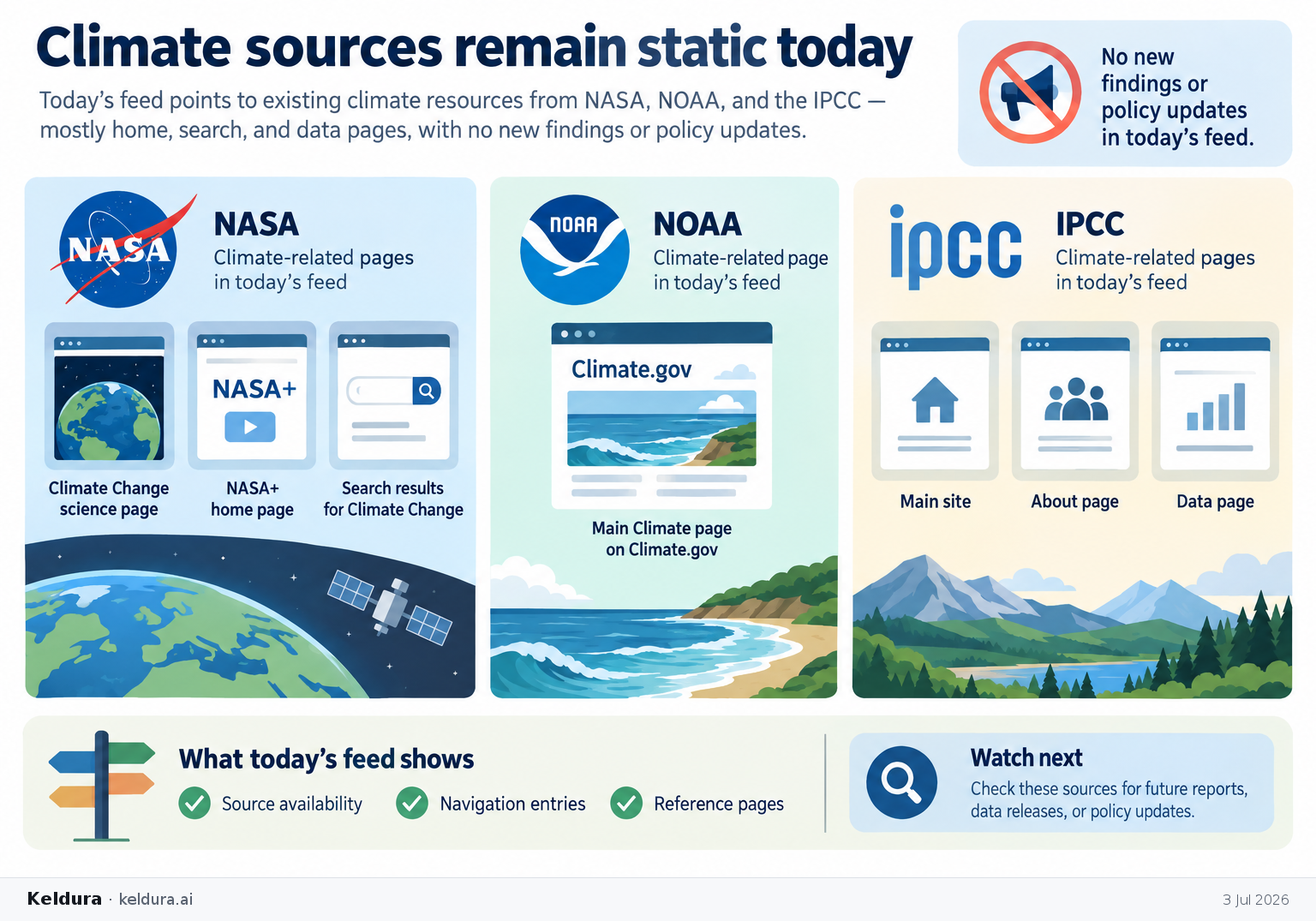
The monitored climate sources mainly surface general reference pages from NASA, NOAA, and the IPCC, with no specific new findings or policy updates included.
Why it matters: NASA’s climate-related material in this feed includes a Climate Change science page, the NASA+ home page, and search results for Climate Change. These items indicate where NASA organizes its climate…
NASA’s climate-related material in this feed includes a Climate Change science page, the NASA+ home page, and search results for Climate Change [1][2][3]. These items indicate where NASA organizes its climate content, but the claims do not provide any new scientific results or announcements [1][2][3].
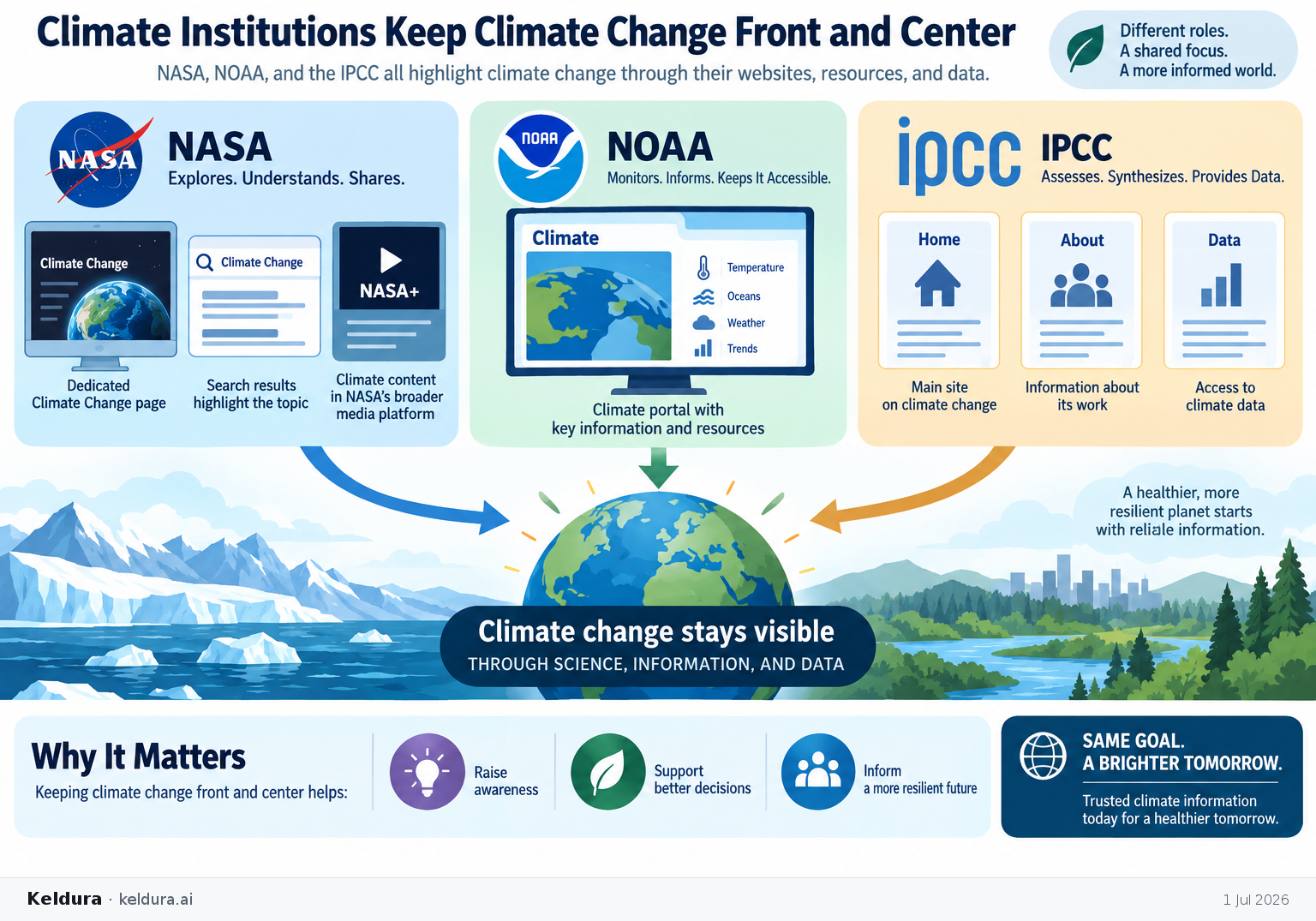
NASA, NOAA, and the IPCC all continue to foreground climate change across their official sites and resources.
Why it matters: NASA’s climate-related pages remain prominently available, including a dedicated Climate Change page and search results tied to that topic. The inclusion of NASA+ alongside these climate references s…
NASA’s climate-related pages remain prominently available, including a dedicated Climate Change page and search results tied to that topic [1][3]. The inclusion of NASA+ alongside these climate references suggests climate content is being presented within the agency’s broader public-facing media ecosystem [2].
Why now
Grounded source item
Watch next
Grounded source item
That's the desk. Every cheatsheet here started as a link. Yours can too.