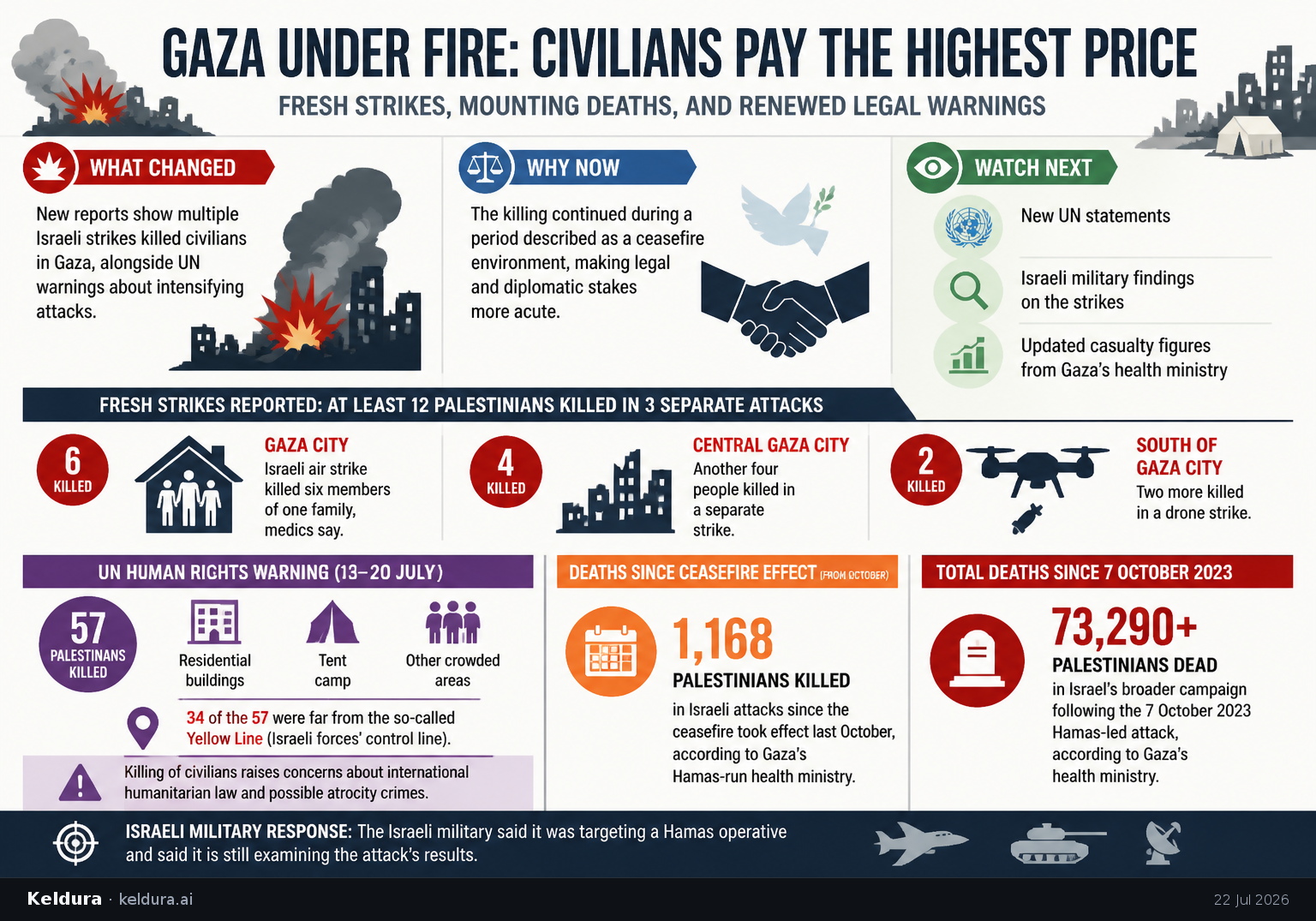
Why it matters: The reporting suggests the Gaza conflict remains highly lethal even after the ceasefire framework cited in the article, with civilian harm continuing to draw international scrutiny. That raises press…
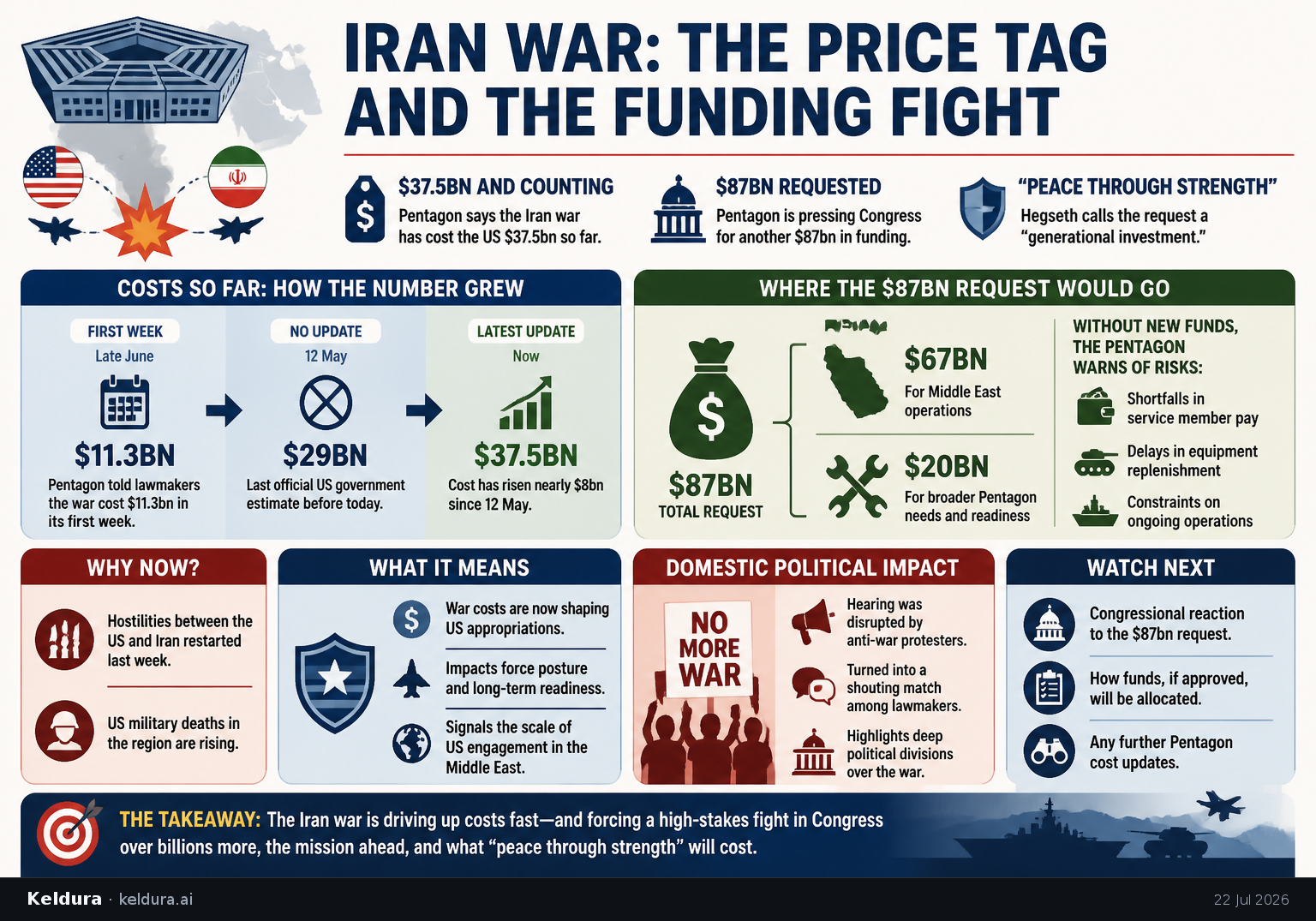
Why it matters: This is a major budget and war-policy signal: the fighting is now shaping US appropriations, force posture, and the scale of American engagement in the Middle East. The funding request also shows how…
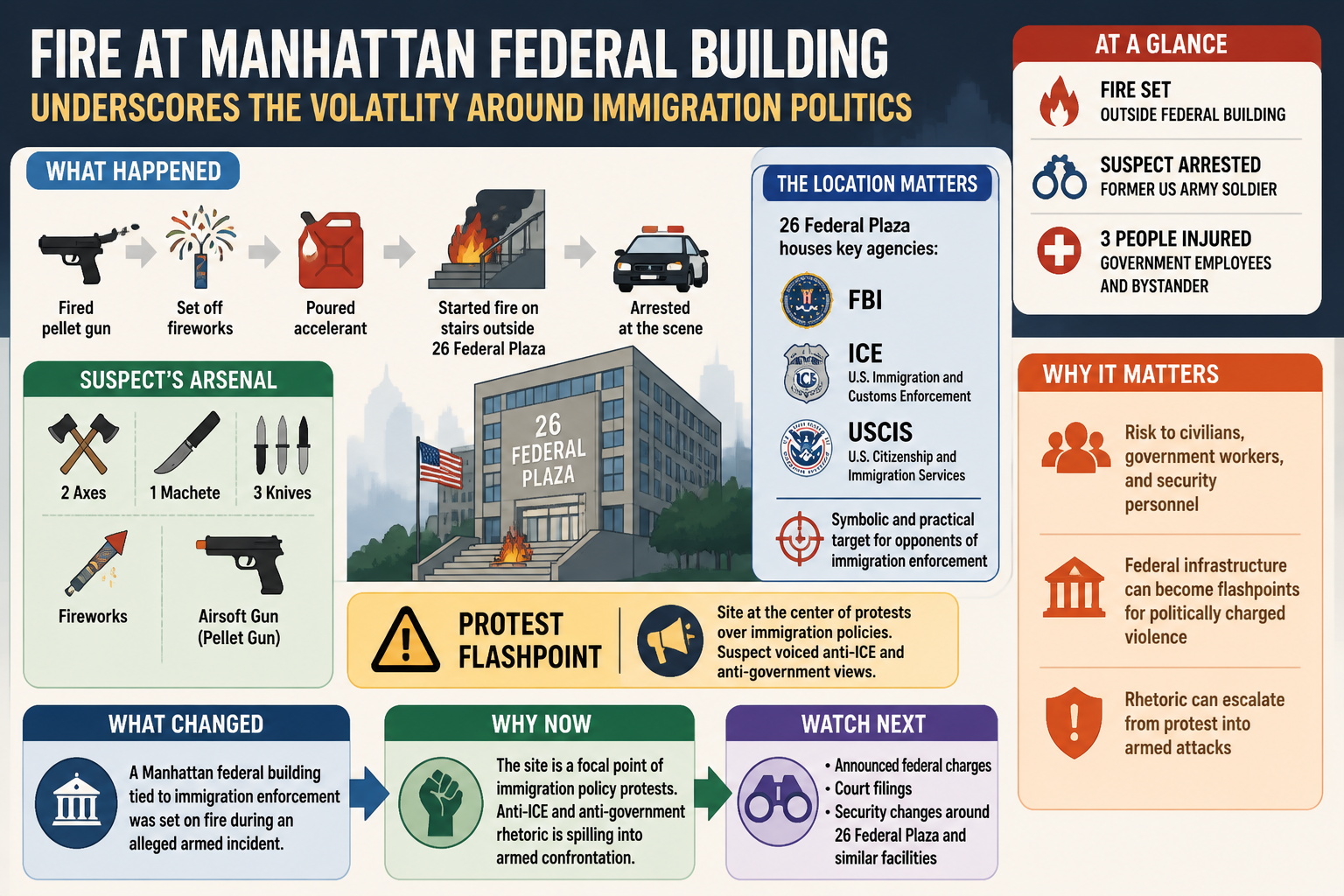
Why it matters: The incident shows how immigration enforcement sites can become flashpoints for politically charged violence, creating risk for civilians, government workers, and security personnel. It also illustra…
A Manhattan federal building tied to immigration enforcement was set on fire during an alleged armed incident.[1]
Why now
Officials say the site sits at the center of protests over immigration policy and the suspect voiced anti-ICE and anti-government views during the incident.[1]
Watch next
Any announced federal charges, court filings, or security changes around 26 Federal Plaza and similar facilities.[1]
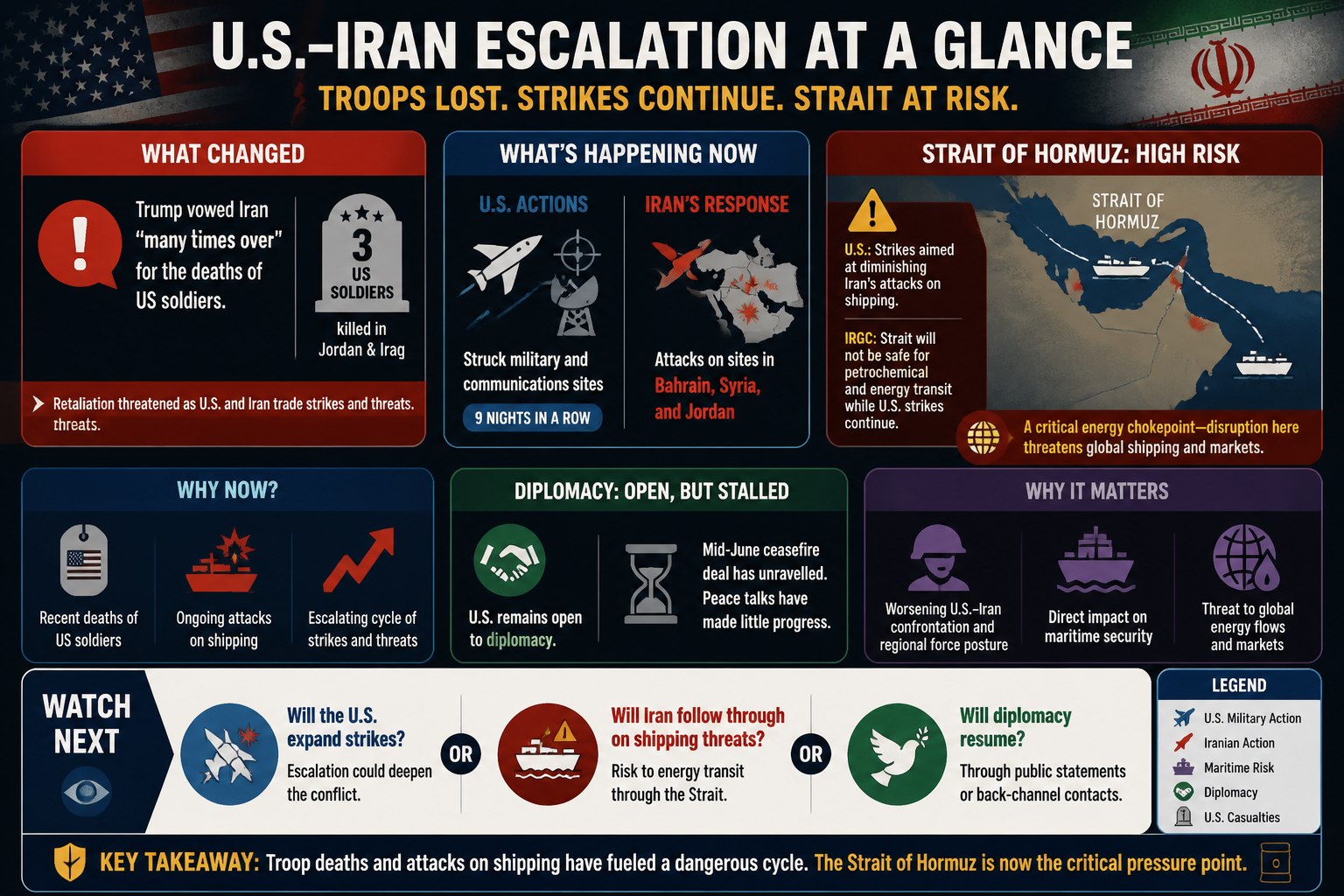
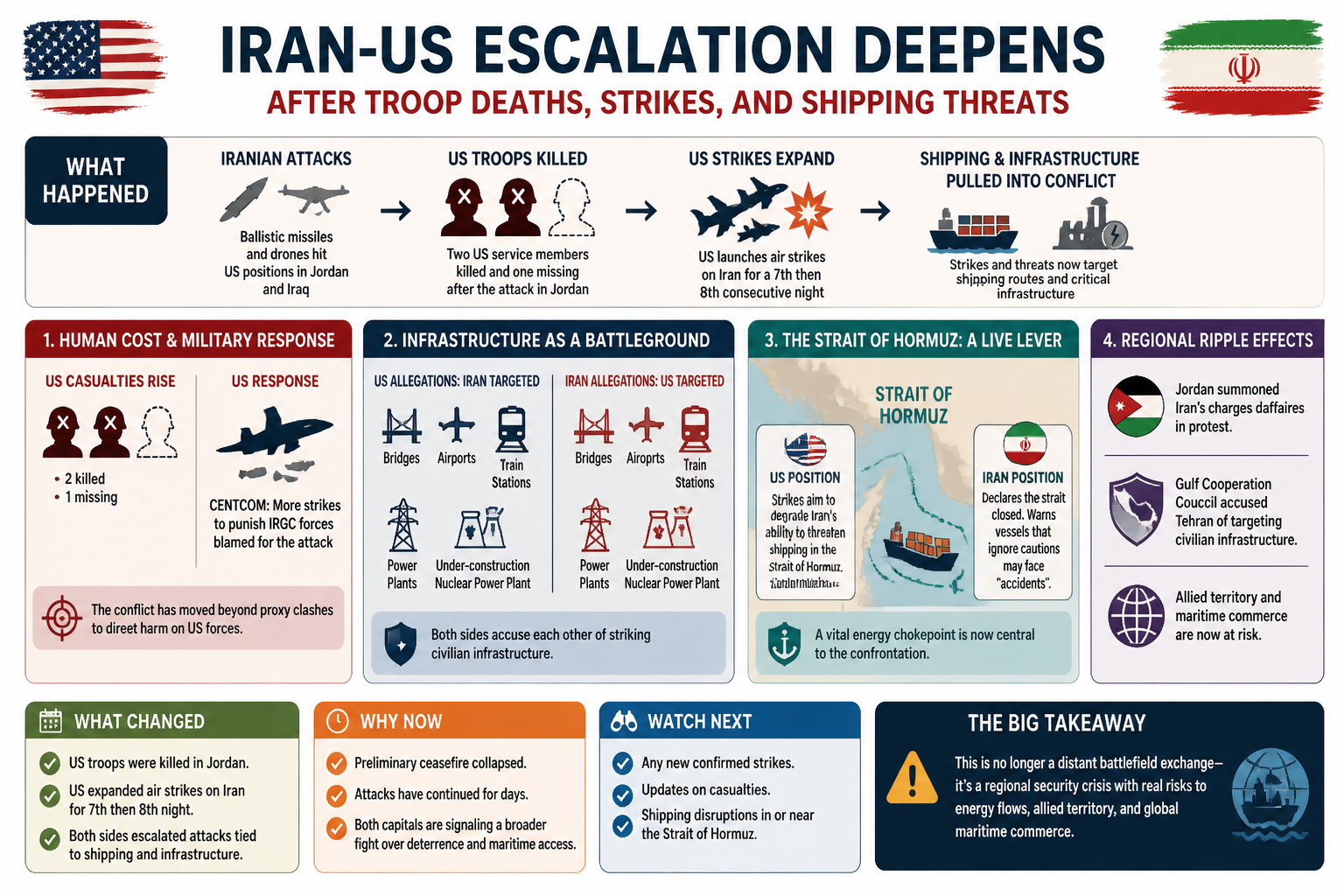
President Donald Trump said Iran would pay “many times over” for the deaths of US soldiers, following recent American fatalities in attacks linked to the confrontation with Tehran.
Why it matters: The exchange signals a sharp worsening in U.S.-Iran confrontation with direct implications for regional force posture and maritime security. Because the Strait of Hormuz is a critical energy chokepoi…
Why it matters: This is no longer just a battlefield exchange; it is becoming a regional security crisis with implications for energy flows, allied territory, and maritime commerce. The repeated casualties and infra…
US troops were killed in Jordan, the US expanded strikes on Iran, and both sides escalated attacks tied to shipping and infrastructure [2][5].
Why now
The preliminary ceasefire collapsed, attacks have continued for days, and both capitals are signaling a broader fight over deterrence and maritime access [2][5].
Watch next
Any new confirmed strikes, casualty updates, or shipping disruptions in or near the Strait of Hormuz [2][5].
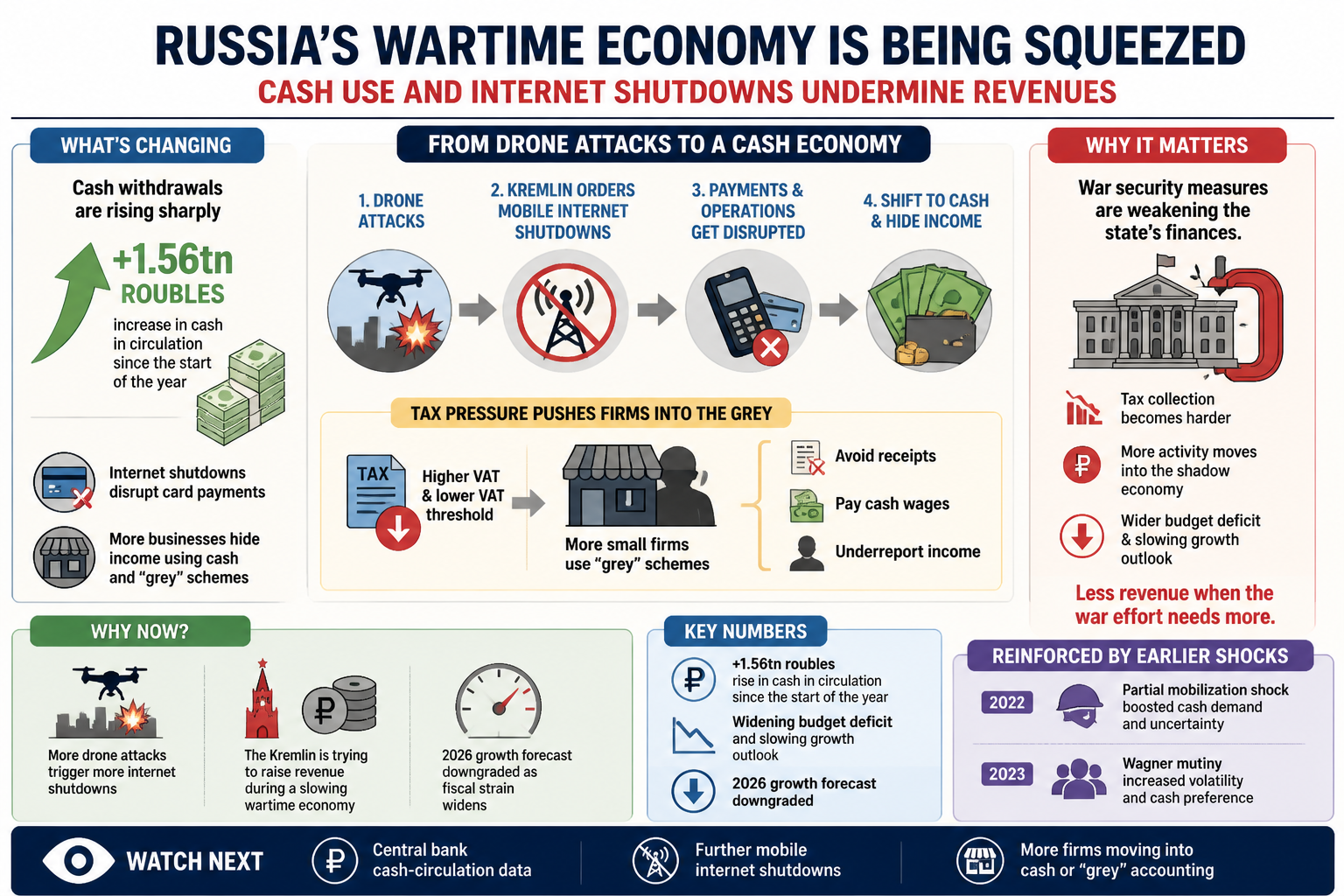
Russians are increasingly turning to cash as mobile internet shutdowns disrupt card payments and more businesses try to hide income under financial strain more than four years into the war with Ukraine.
Why it matters: This shows how the war is feeding back into Russia’s domestic economy: security measures meant to counter drones are also making tax collection harder and pushing more activity into the shadow econom…
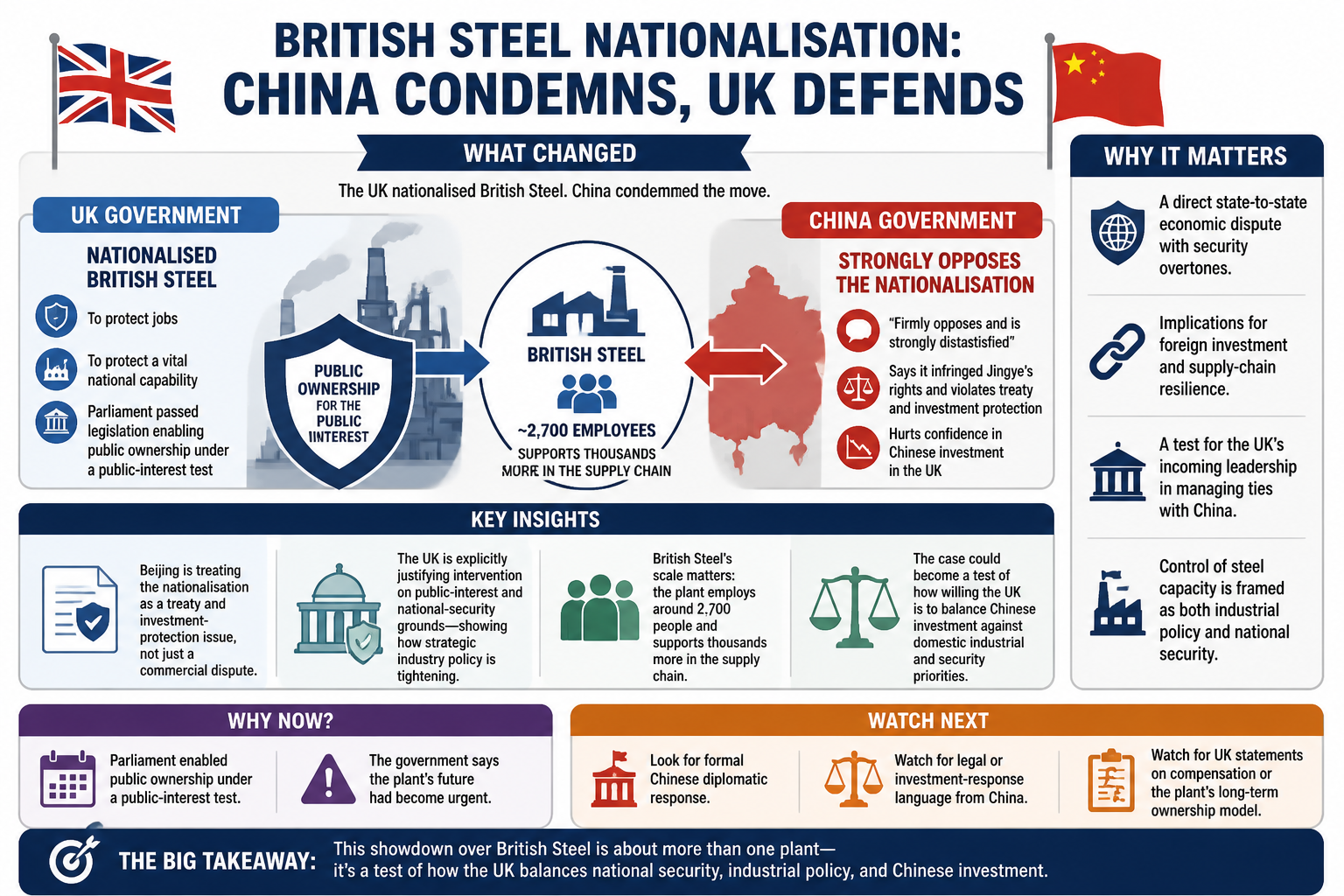
Why it matters: This is a direct state-to-state economic dispute with security overtones, because control of steel capacity is being framed as both an industrial-policy issue and a national-security issue. It also h…
The UK nationalised British Steel and China publicly condemned the move [7].
Why now
Parliament enabled public ownership under a public-interest test, and the government says the plant’s future had become urgent [7].
Watch next
Look for any formal Chinese diplomatic, legal, or investment-response language, and for UK statements on compensation or the plant’s long-term ownership model [7].
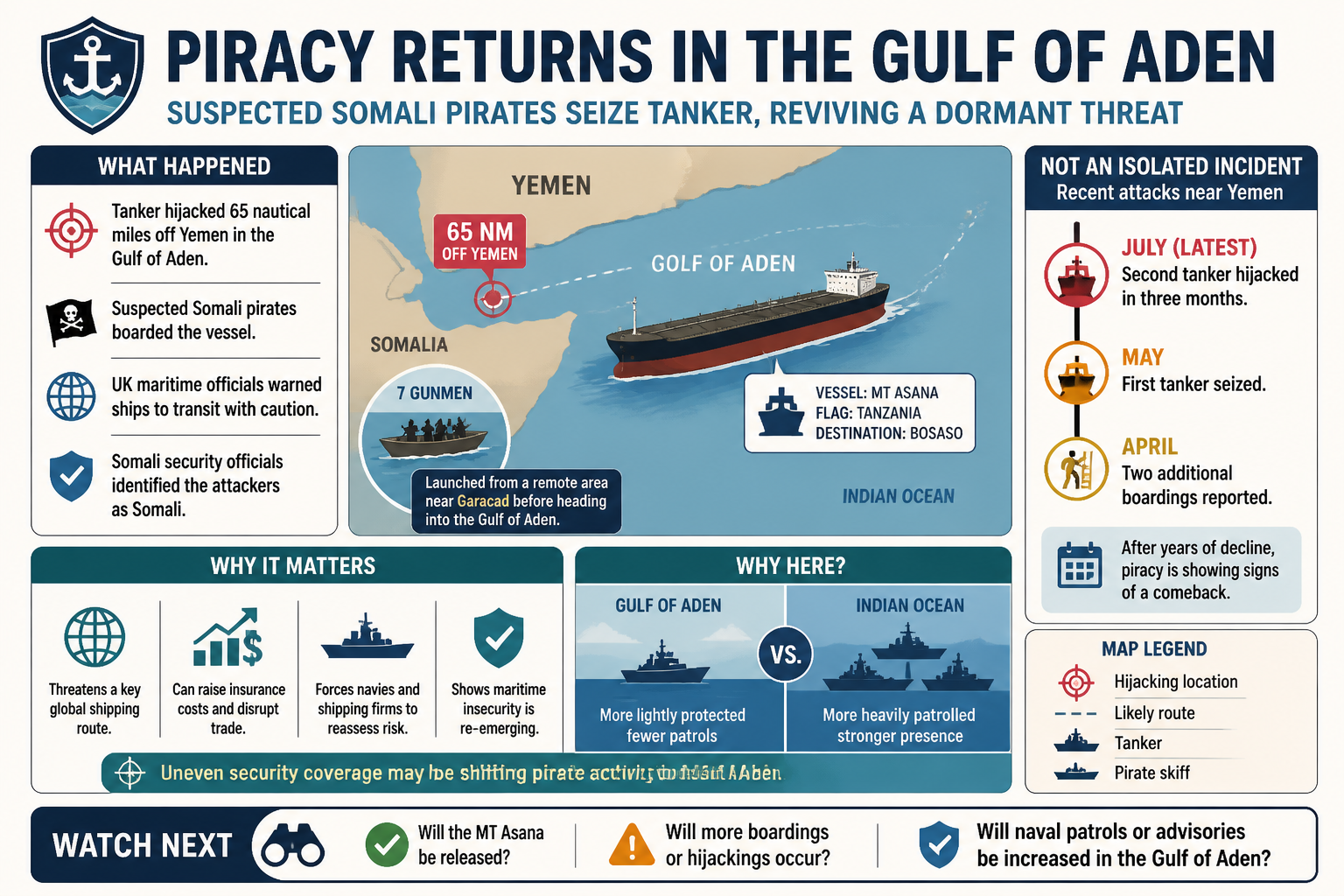
A tanker was hijacked in the Gulf of Aden off Yemen, with UK maritime officials warning other ships to transit with caution and Somali security officials identifying the attackers as Somali.
Why it matters: The incident shows maritime insecurity is re-emerging along a key global shipping route, which can raise insurance costs, disrupt trade, and force navies and shipping firms to reassess risk. It also…
Suspected Somali pirates hijacked another tanker in the Gulf of Aden [5].
Why now
The region has seen multiple recent attacks, suggesting piracy is making a comeback after years of decline [5].
Watch next
Monitor whether the vessel is released, whether more boardings are reported, and whether naval patrols or advisories are stepped up in the Gulf of Aden [5].
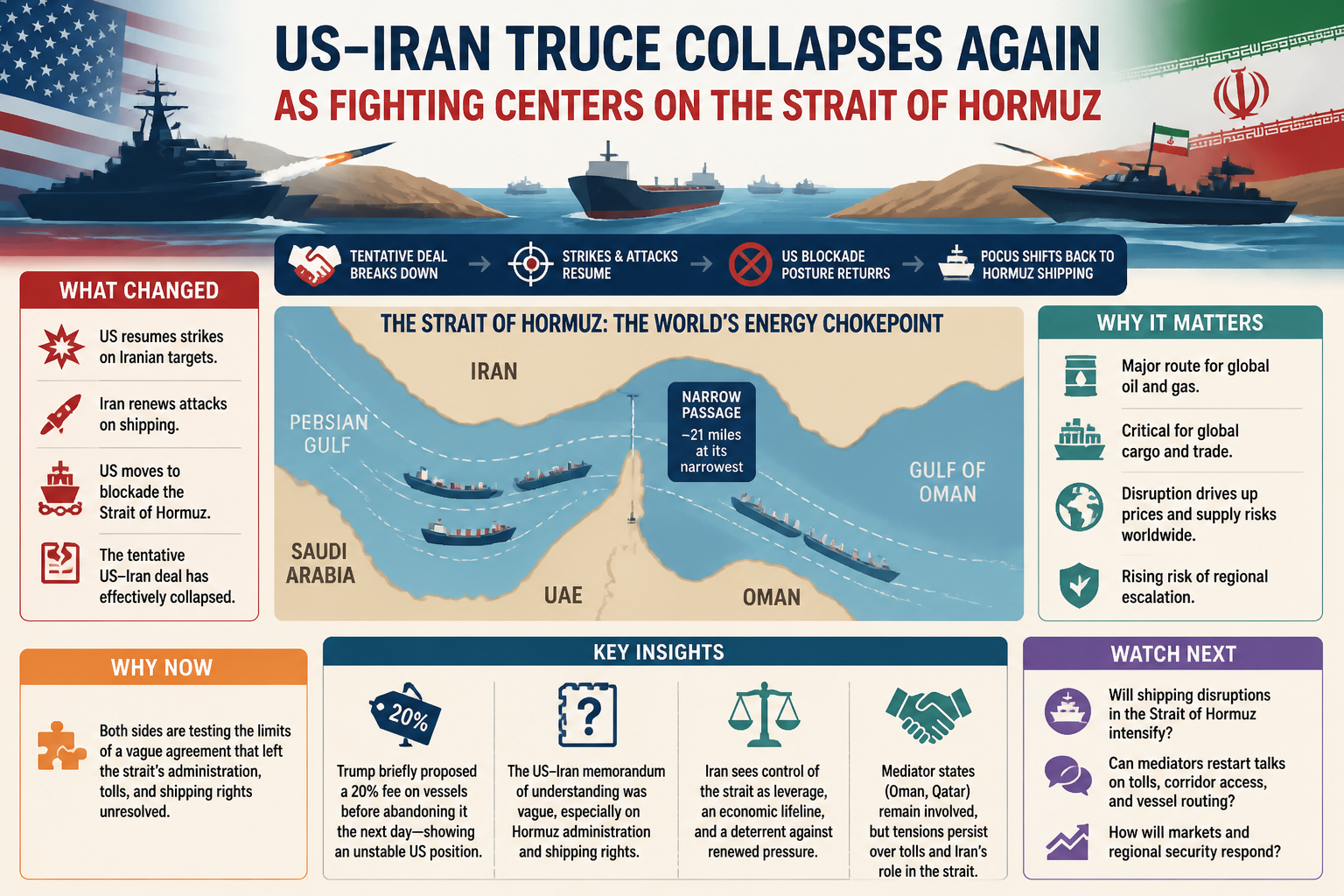
Why it matters: Hormuz is one of the world’s most important energy and shipping chokepoints, so the breakdown of even a tentative agreement has immediate implications for global oil, gas, cargo flows, and regional e…
The tentative US-Iran deal has effectively collapsed, the US has resumed strikes and a blockade posture, and fighting has shifted back toward Hormuz shipping.[2][3][4][5]
Why now
Both sides are again testing the limits of a vague agreement that left the strait’s administration unresolved.[3][4][5]
Watch next
Whether shipping disruptions in the Strait of Hormuz intensify or whether mediators can restart talks around tolls, corridor access, and vessel routing.[3][4][5]
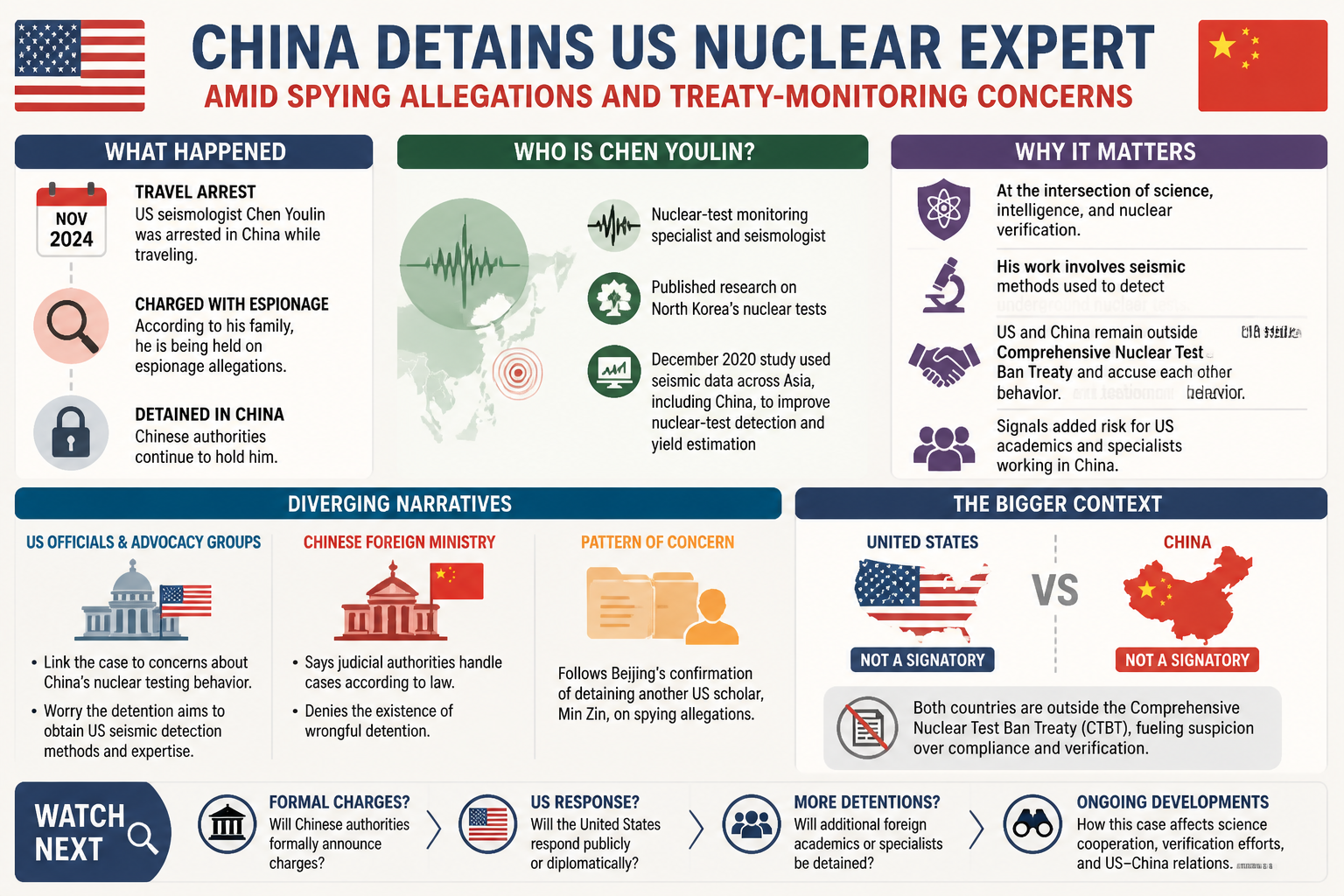
China has detained US seismologist Chen Youlin, who studied nuclear tests and had done work related to monitoring nuclear explosions, according to his family and hostage advocacy group Global Reach.
Why it matters: The detention raises tensions at the intersection of science, intelligence, and nuclear verification, especially because the expert’s work involved seismic detection methods used to identify undergro…