Every cheatsheet Keldura Daily has published, newest first: the news hook, why it matters, and the sources it came from. Each cheatsheet is compiled by Keldura's AI from the sources it cites.
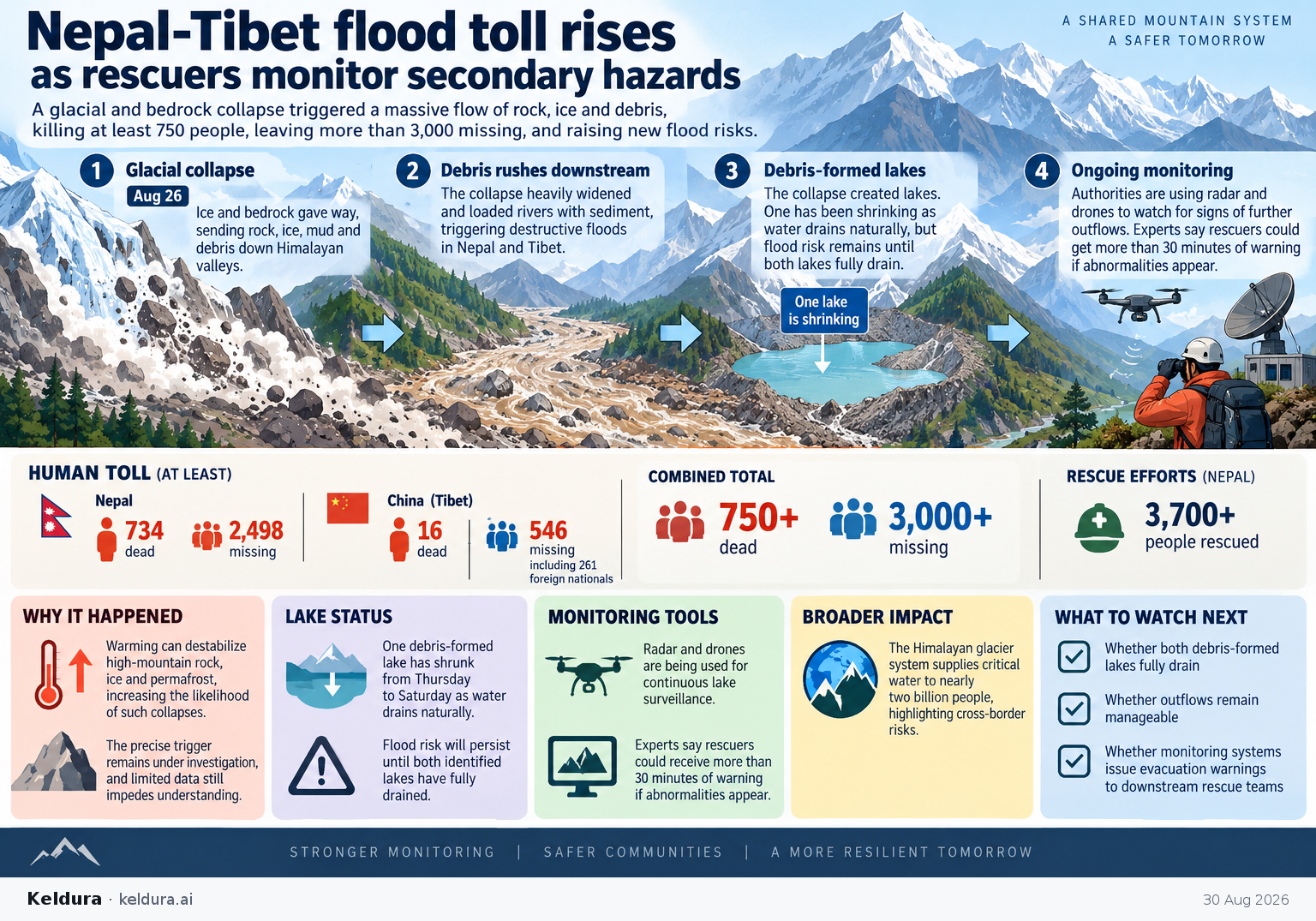
The combined toll from the Nepal-Tibet flash flood has reached at least 750 dead, with more than 3,000 people missing; more than 3,700 people have been rescued in Nepal.
Why it matters: The disaster illustrates the cross-border risks surrounding a Himalayan glacier system that supplies critical water to nearly two billion people. It also highlights the need for better monitoring and…
The confirmed combined death toll rose to at least 750, while more than 3,000 people remained missing and rescue teams faced warnings about rising waters.[1]
Why now
A glacial and bedrock collapse on Aug 26 sent rock, ice, mud and debris through Himalayan river systems; its precise trigger is still under investigation.[2][4][5]
Watch next
Track whether both debris-formed lakes fully drain, whether outflows remain manageable, and whether monitoring systems issue evacuation warnings to downstream rescue teams.[4]
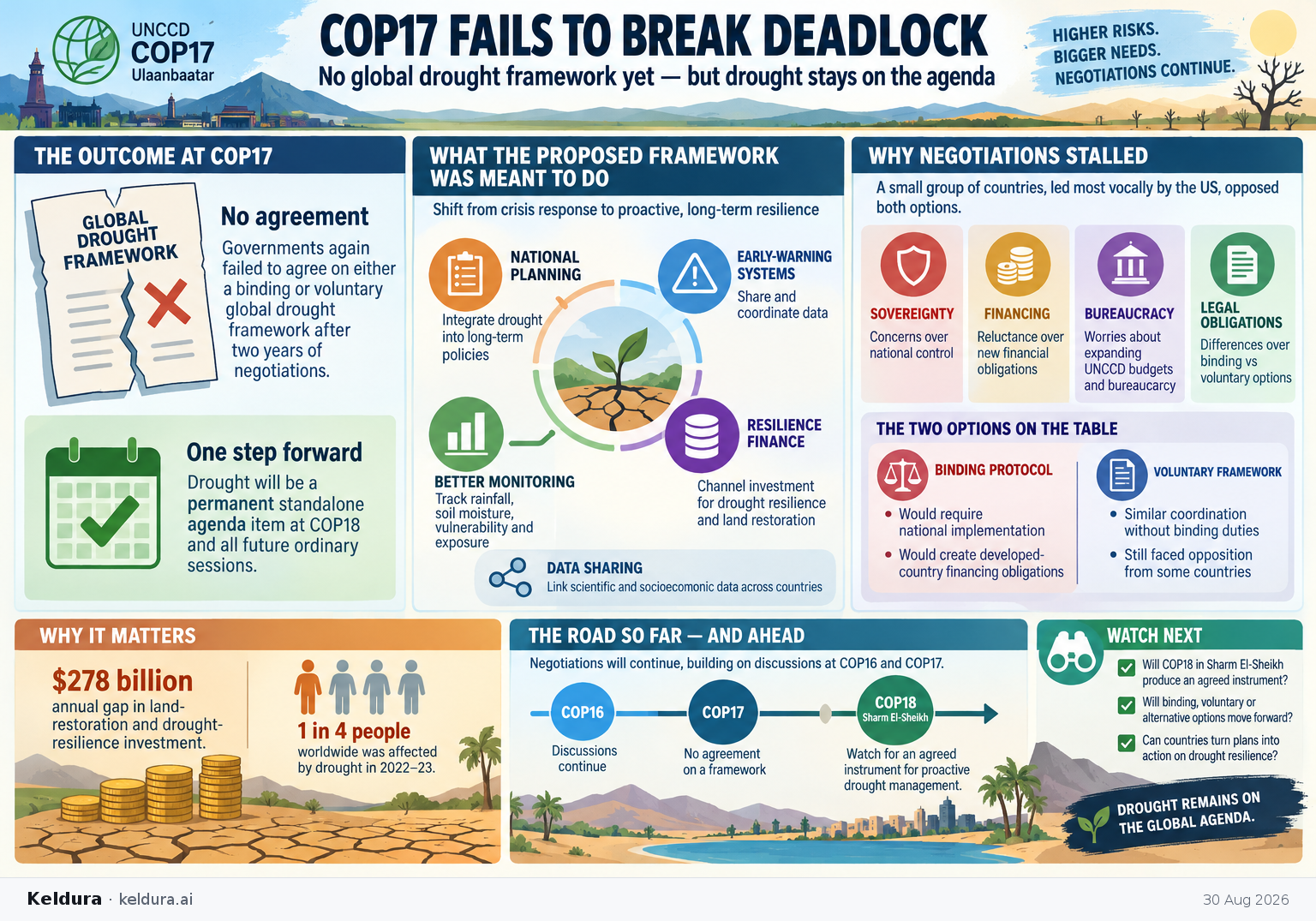
Governments at UNCCD COP17 in Ulaanbaatar again failed to agree on either a binding or voluntary global drought framework after two years of negotiations.
Why it matters: The deadlock leaves no coordinated global mechanism to close an estimated $278 billion annual gap in land-restoration and drought-resilience investment, even though one in four people was affected by…
COP17 closed without agreement on a global drought framework, but drought gained permanent standalone status on the agenda for COP18 and later sessions.[3]
Why now
Negotiators remained divided over legal obligations, sovereignty, financing and whether a new framework would expand UNCCD bureaucracy and budgets.[3]
Watch next
Watch whether COP18 in Sharm El-Sheikh produces an agreed instrument for proactive drought management and whether binding, voluntary or alternative options remain bracketed.[3]
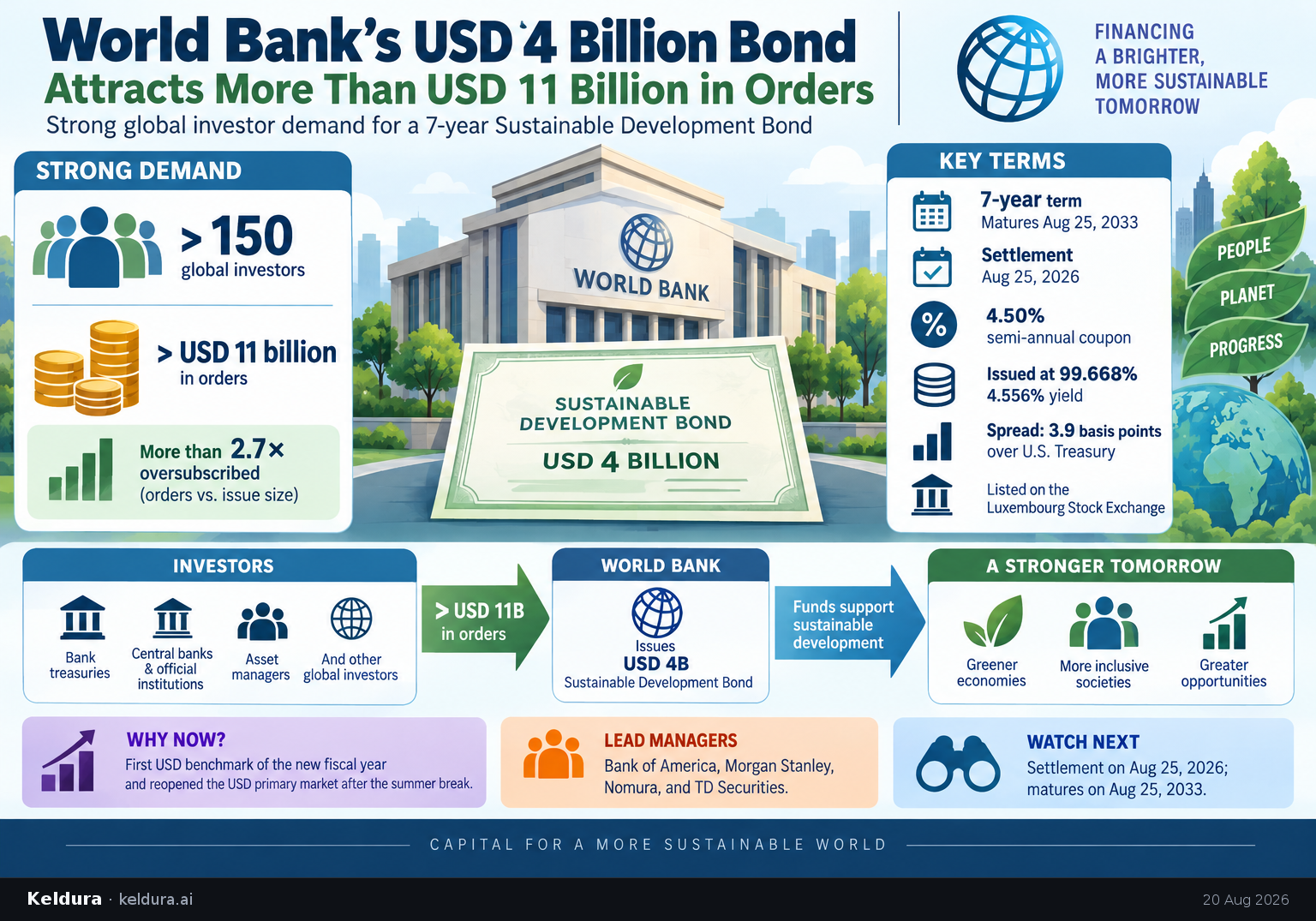
The World Bank priced a USD 4 billion, seven-year Sustainable Development Bond maturing on August 25, 2033, with settlement scheduled for August 25, 2026.
Why it matters: The heavily subscribed order book indicates strong institutional demand for highly rated sustainable-development debt as the World Bank returned to the USD benchmark market for its new fiscal year.
The World Bank priced a USD 4 billion benchmark Sustainable Development Bond after receiving more than USD 11 billion in orders from over 150 investors.[1]
Why now
The transaction marked the World Bank’s first USD benchmark of its new fiscal year and reopened the USD primary market after the summer break.[1]
Watch next
The observable next milestone is settlement on August 25, 2026; the bond is scheduled to mature on August 25, 2033.[1]
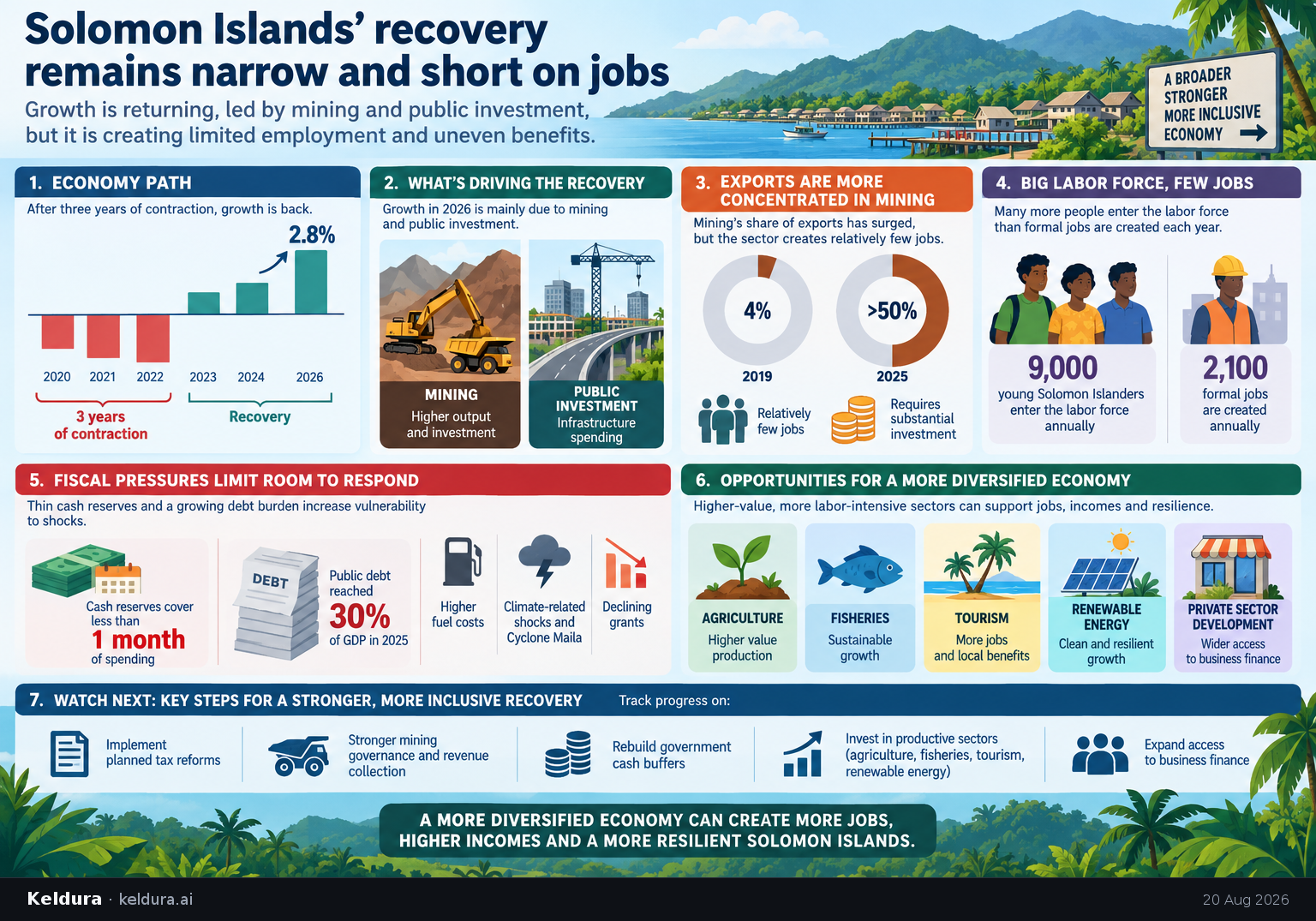
The World Bank projects Solomon Islands’ economy will grow 2.8% in 2026, mainly because of mining and public investment, after three consecutive years of contraction from 2020 through 2022 and a subsequent rebound.
Why it matters: About 9,000 young Solomon Islanders enter the labor force annually, but only around 2,100 formal jobs are created, making broader and more labor-intensive growth central to incomes and social resilie…
A new World Bank Economic Update put 2026 growth at 2.8% but found that the mining- and public-investment-led recovery is producing limited employment and uneven benefits.[2]
Why now
Mining’s export share has surged while labor-force entrants substantially outnumber new formal jobs, and thin cash reserves leave the country exposed to fiscal and climate shocks.[2]
Watch next
Observable indicators include implementation of planned tax reforms, stronger mining revenue collection, rebuilding of government cash buffers, and investment in agriculture, fisheries, tourism, renewable energy, and business finance.[2]
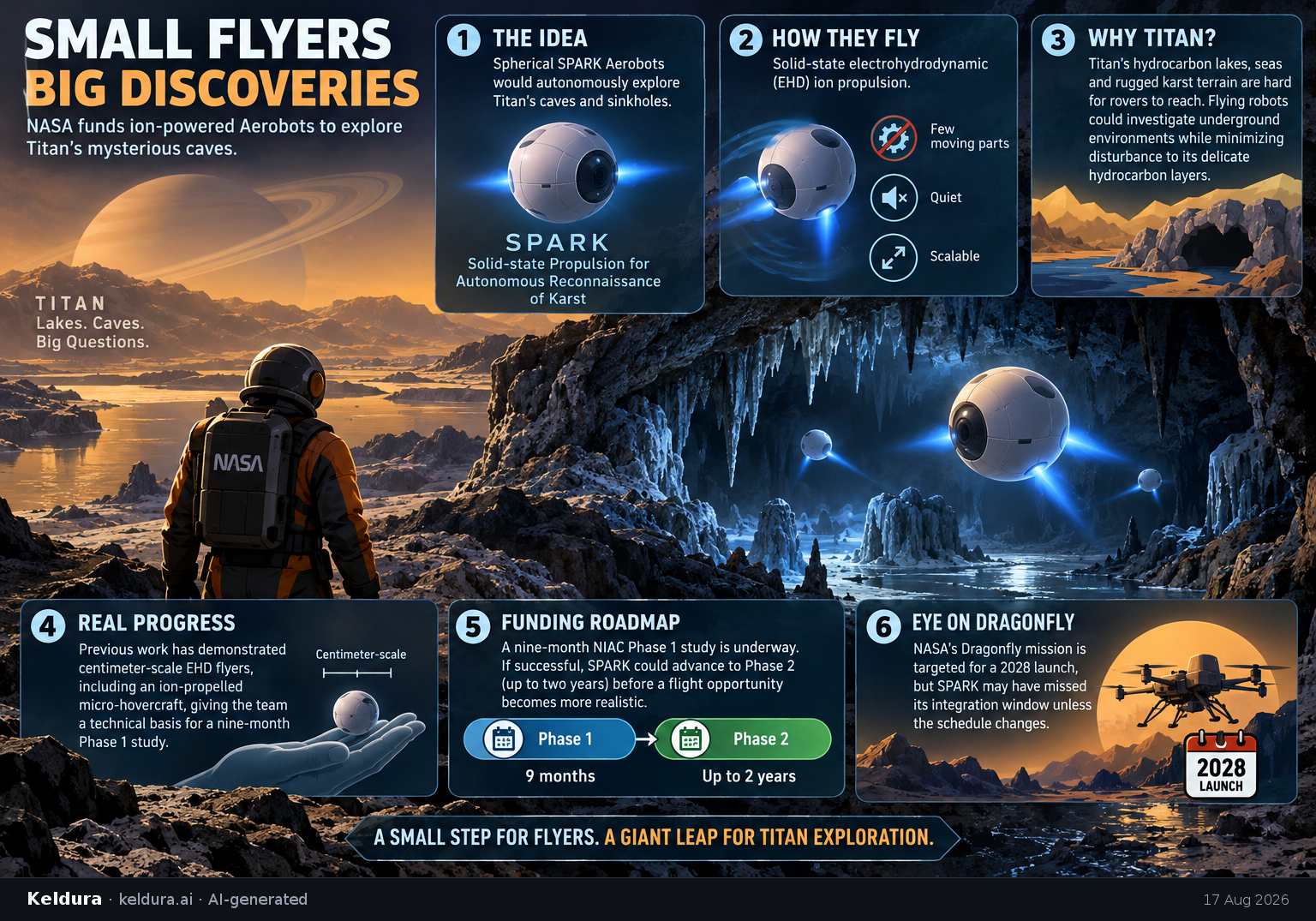
A nine-month Phase 1 grant from NASA Innovative Advanced Concepts will study SPARK, a concept for small spherical flying robots designed to explore Titan’s caves and sinkholes.
Why it matters: Titan’s hydrocarbon lakes, seas and rugged karst terrain are difficult for conventional rovers, so maneuverable flying robots could provide a way to investigate scientifically valuable underground en…
NASA awarded early-stage NIAC funding to study spherical SPARK Aerobots for autonomous reconnaissance of Titan’s caves.[1]
Why now
Prior work has demonstrated centimeter-scale EHD flyers, including an ion-propelled micro-hovercraft, giving the team a technical basis for the nine-month Phase 1 study.[1]
Watch next
Track whether SPARK completes Phase 1 and advances to the up-to-two-year Phase 2, as well as whether Dragonfly’s targeted 2028 launch schedule changes.[1]
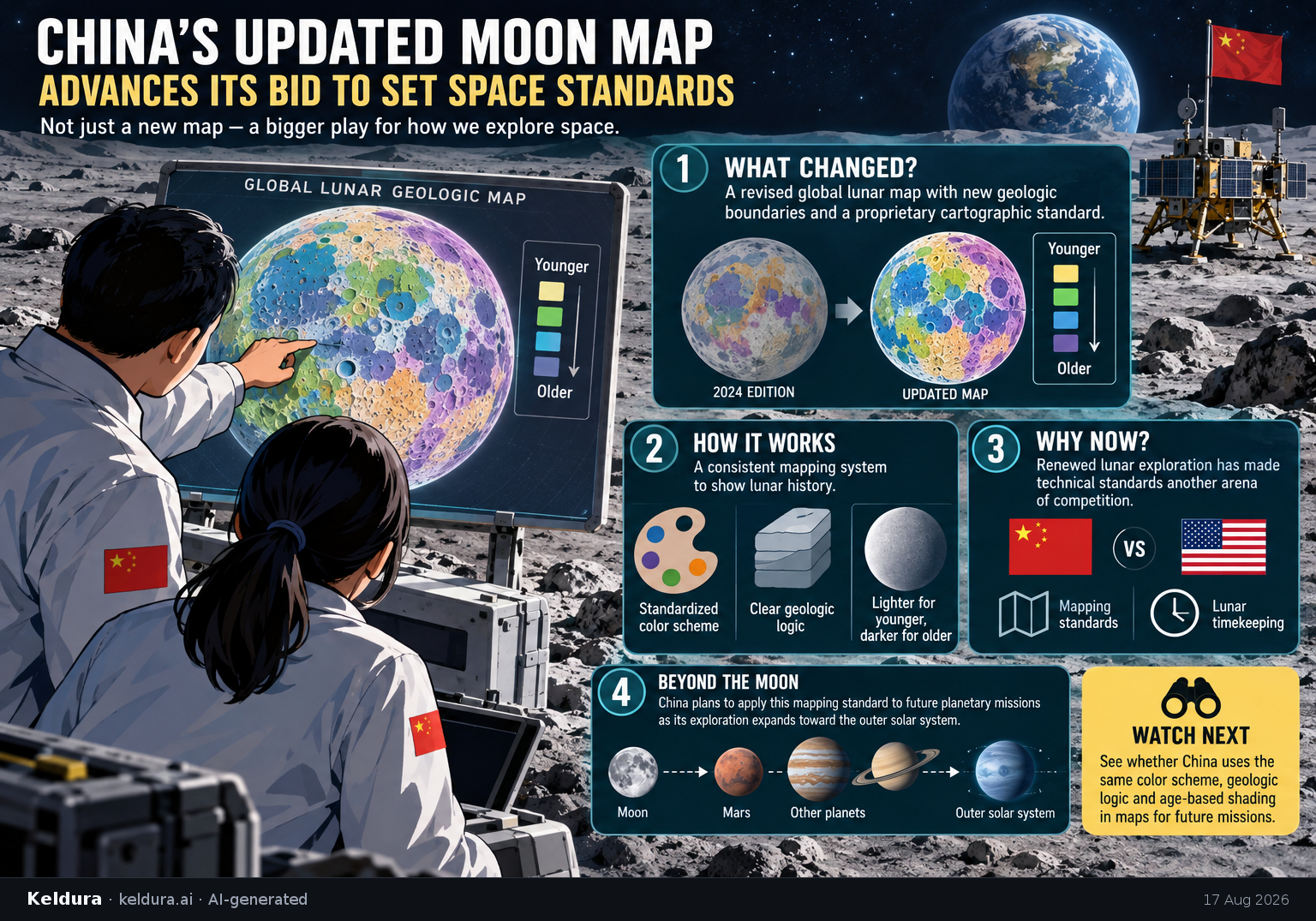
The Institute of Geology, Chinese Academy of Geological Sciences unveiled an updated 1:5 million-scale lunar map on Aug.
Why it matters: The initiative shows that competition in lunar and deep-space exploration extends beyond missions to control over technical conventions, intellectual-property frameworks and standards adopted for map…
Chinese researchers released a revised global lunar map with new geologic boundaries and a proprietary cartographic standard.[2]
Why now
Renewed lunar exploration has made technical standards—including mapping and lunar timekeeping—another arena of competition between China and the United States.[2]
Watch next
Observe whether China applies the map’s color scheme, geologic logic and age-based shading standard to maps produced for future planetary missions.[2]
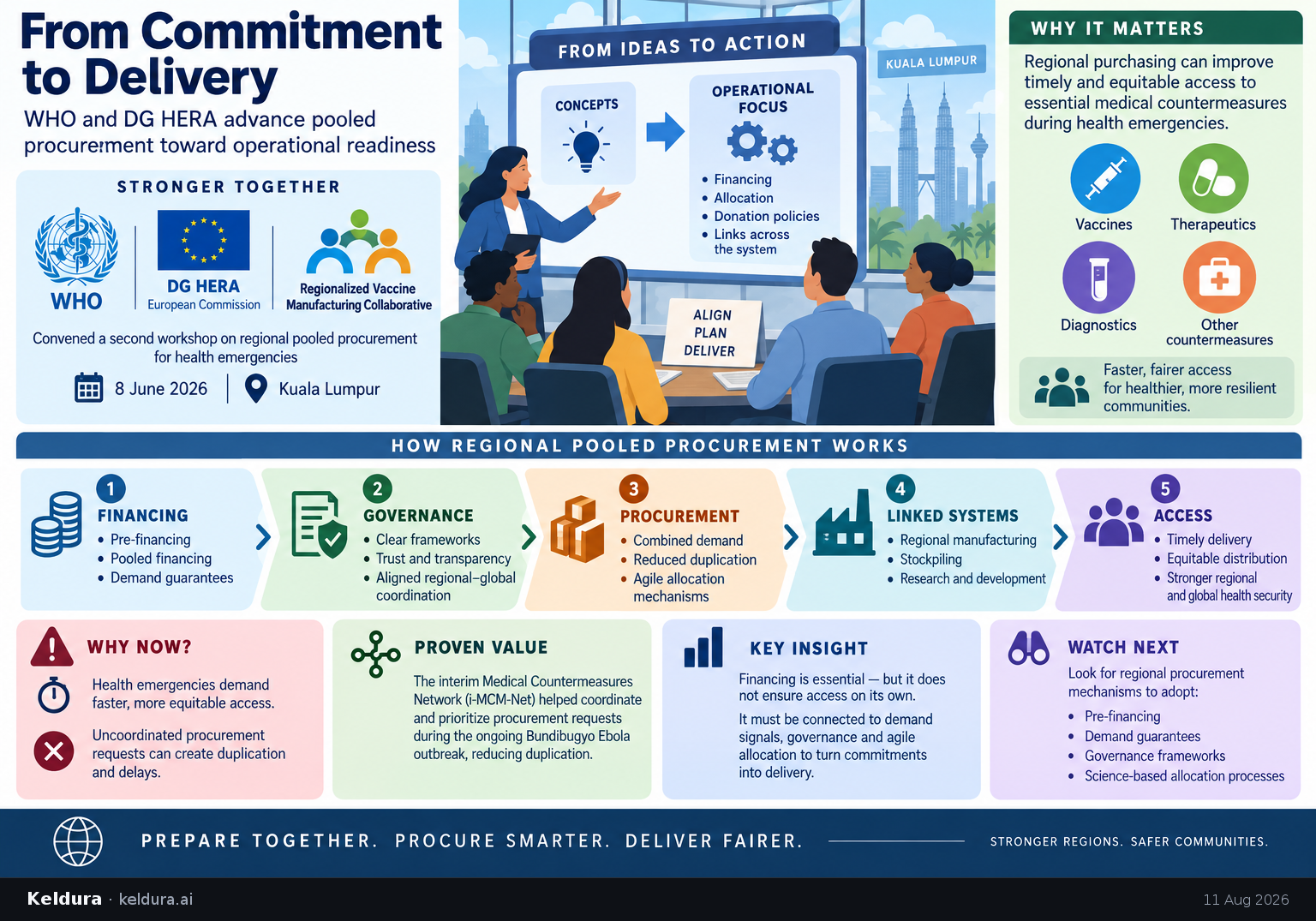
Why it matters: Regional purchasing systems could improve timely and equitable access to diagnostics, vaccines, therapeutics and other medical countermeasures, but the workshop found that financing must be connected…
WHO, DG HERA and partners advanced discussions from conceptual pooled procurement toward operational questions involving financing, allocation and cross-regional coordination.[1]
Why now
Health emergencies require faster and more equitable access to medical countermeasures, while current procurement requests can create duplication without structured global–regional coordination.[1]
Watch next
Watch for regional procurement mechanisms to adopt linked pre-financing, demand guarantees, governance frameworks and science-based allocation processes.[1]
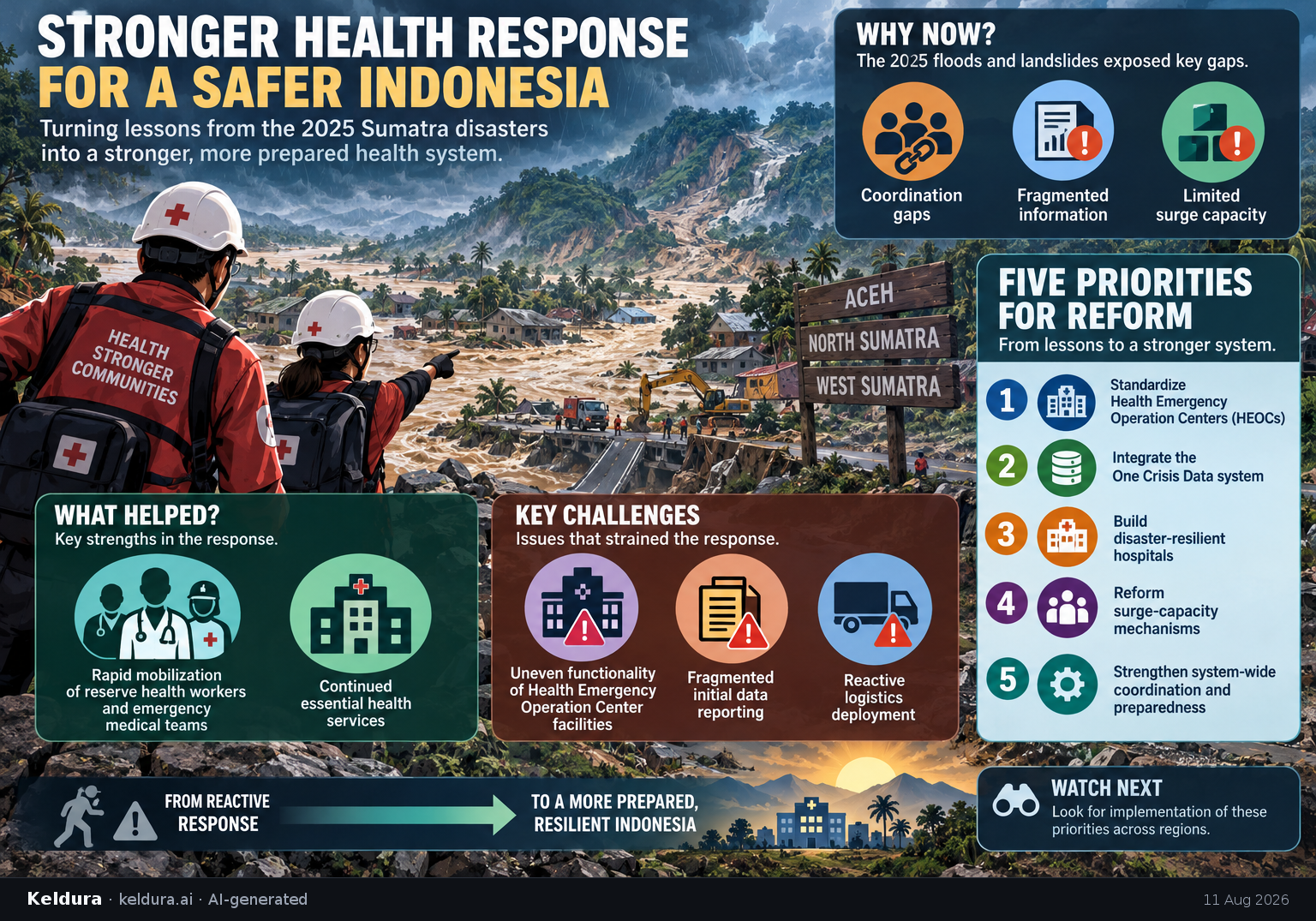
An after-action review of Indonesia’s response to severe floods and landslides in Aceh, North Sumatra and West Sumatra found that the late-2025 crisis strained coordination, data systems and surge capacity.
Why it matters: The findings give Indonesia a system-level reform agenda aimed at shifting health-emergency management from reactive deployment toward faster, coordinated and proactive preparedness across regions.
Indonesia converted lessons from the 2025 Sumatra disasters into five strategic priorities for strengthening its health-emergency system.[2]
Why now
The floods and landslides exposed coordination, information and surge-capacity gaps despite strong workforce mobilization and continuity of essential care.[2]
Watch next
Watch for implementation of standardized HEOCs, an integrated One Crisis Data system, disaster-resilient hospitals and reformed surge mechanisms.[2]
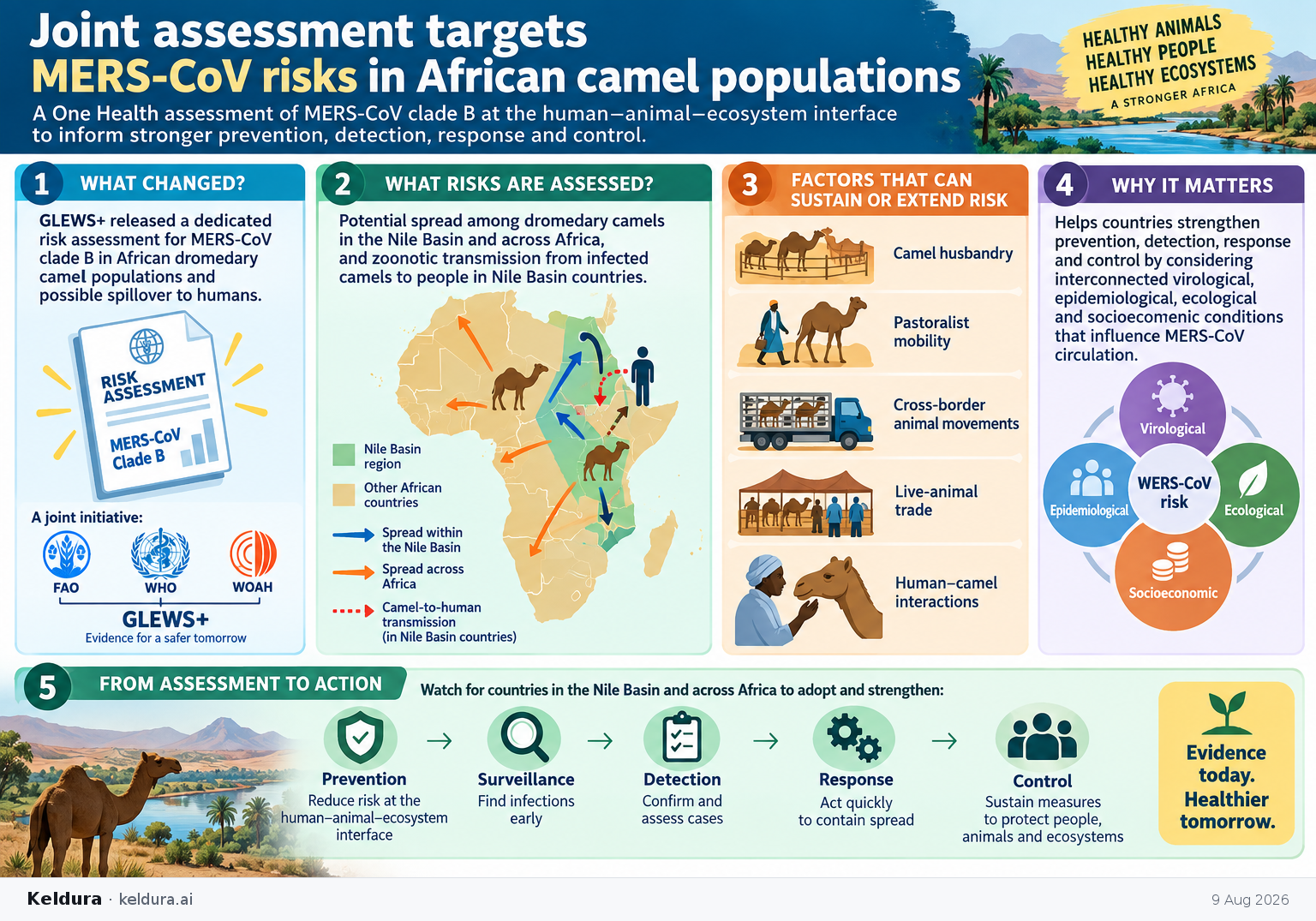
GLEWS+, a joint initiative of FAO, WHO and WOAH, has published an assessment of MERS-CoV clade B transmission risks at the human–animal–ecosystem interface.
Why it matters: The assessment is intended to help countries strengthen prevention, detection, response and control by considering the interconnected virological, epidemiological, ecological and socioeconomic condit…
GLEWS+ released a dedicated risk assessment for MERS-CoV clade B in African dromedary camel populations and possible spillover to humans.[1]
Why now
The assessment addresses factors that can sustain or extend transmission, including mobile pastoralism, animal trade, cross-border movements and close human–camel contact.[1]
Watch next
Watch for prevention, surveillance, detection and control measures adopted by Nile Basin and other African countries in response to the assessment.[1]
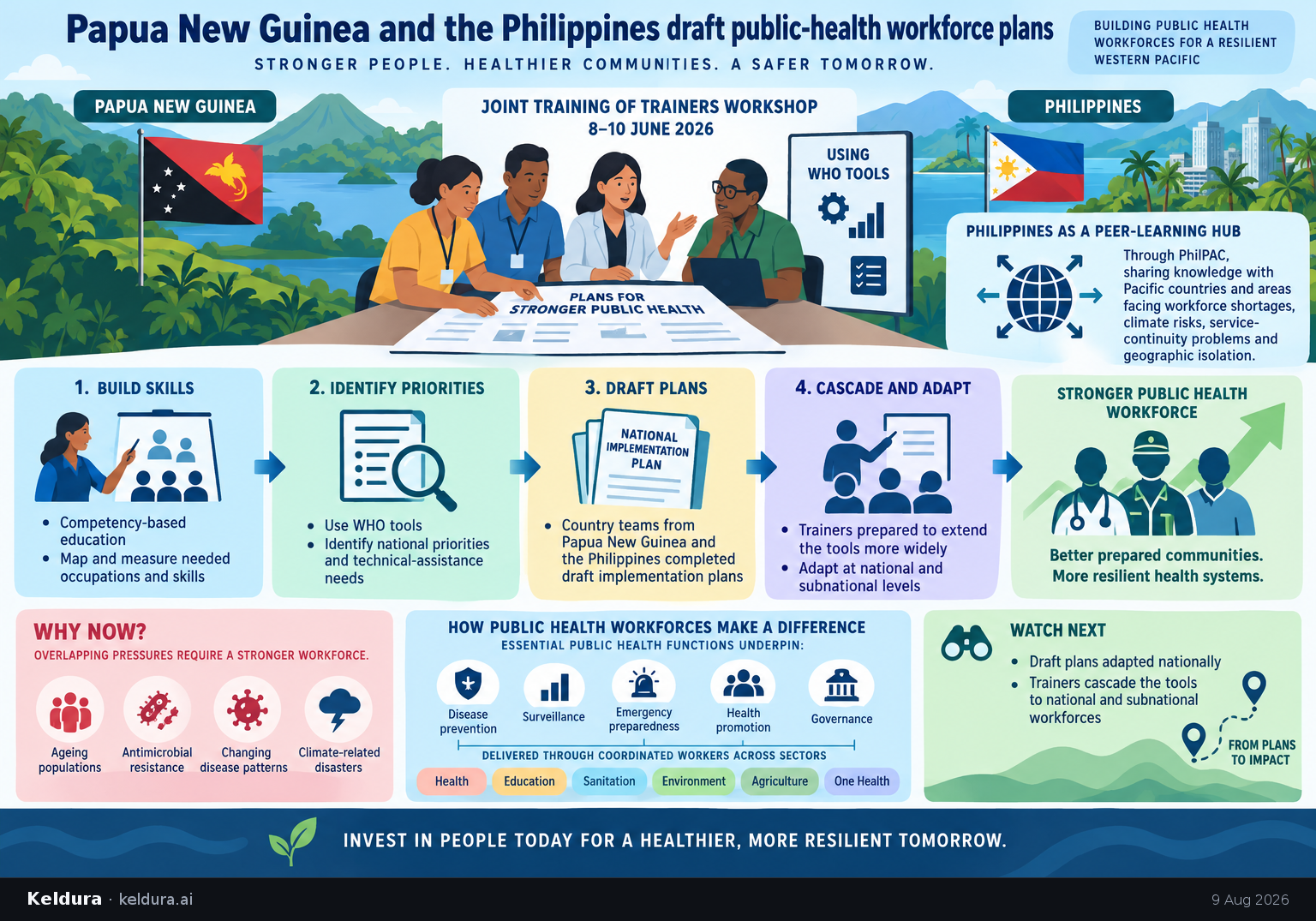
Health workforce leaders and public-health professionals from Papua New Guinea and the Philippines joined WHO experts for a Training of Trainers Workshop on 8–10 June 2026.
Why it matters: WHO says these functions underpin disease prevention, surveillance, emergency preparedness, health promotion and governance, while delivery depends on coordinated workers across health, education, sa…
Country teams from Papua New Guinea and the Philippines completed draft implementation plans and received training to extend WHO workforce tools more widely.[2]
Why now
Countries need coordinated capacity across multiple sectors to sustain routine services and prepare for health emergencies amid demographic, disease and climate pressures.[2]
Watch next
Watch for the draft plans to be adapted nationally and for trainers to cascade the tools to national and subnational workforces.[2]
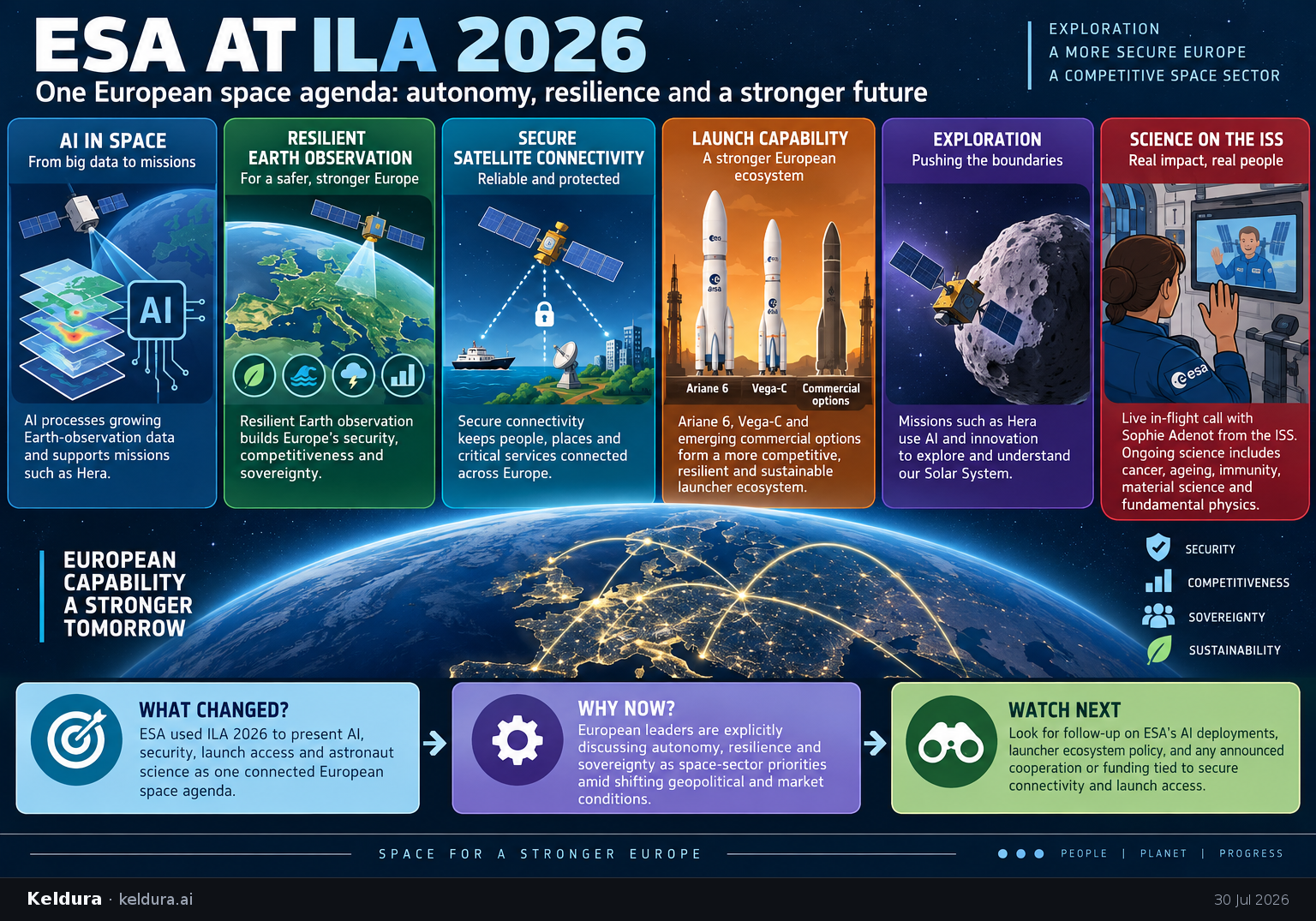
ESA’s second day at ILA Berlin International Airshow 2026 centered on Europe’s priorities in space, including exploration, cybersecurity and the future of the European space sector.
Why it matters: This matters because ESA is clearly linking space policy to Europe’s security, competitiveness and sovereignty, not just to scientific exploration. The focus on autonomy, launch access and secure com…
ESA used ILA 2026 to present AI, security, launch access and astronaut science as one connected European space agenda [1].
Why now
European leaders are explicitly discussing autonomy, resilience and sovereignty as space-sector priorities amid shifting geopolitical and market conditions [1].
Watch next
Look for follow-up on ESA’s AI deployments, launcher ecosystem policy, and any announced cooperation or funding tied to secure connectivity and launch access [1].
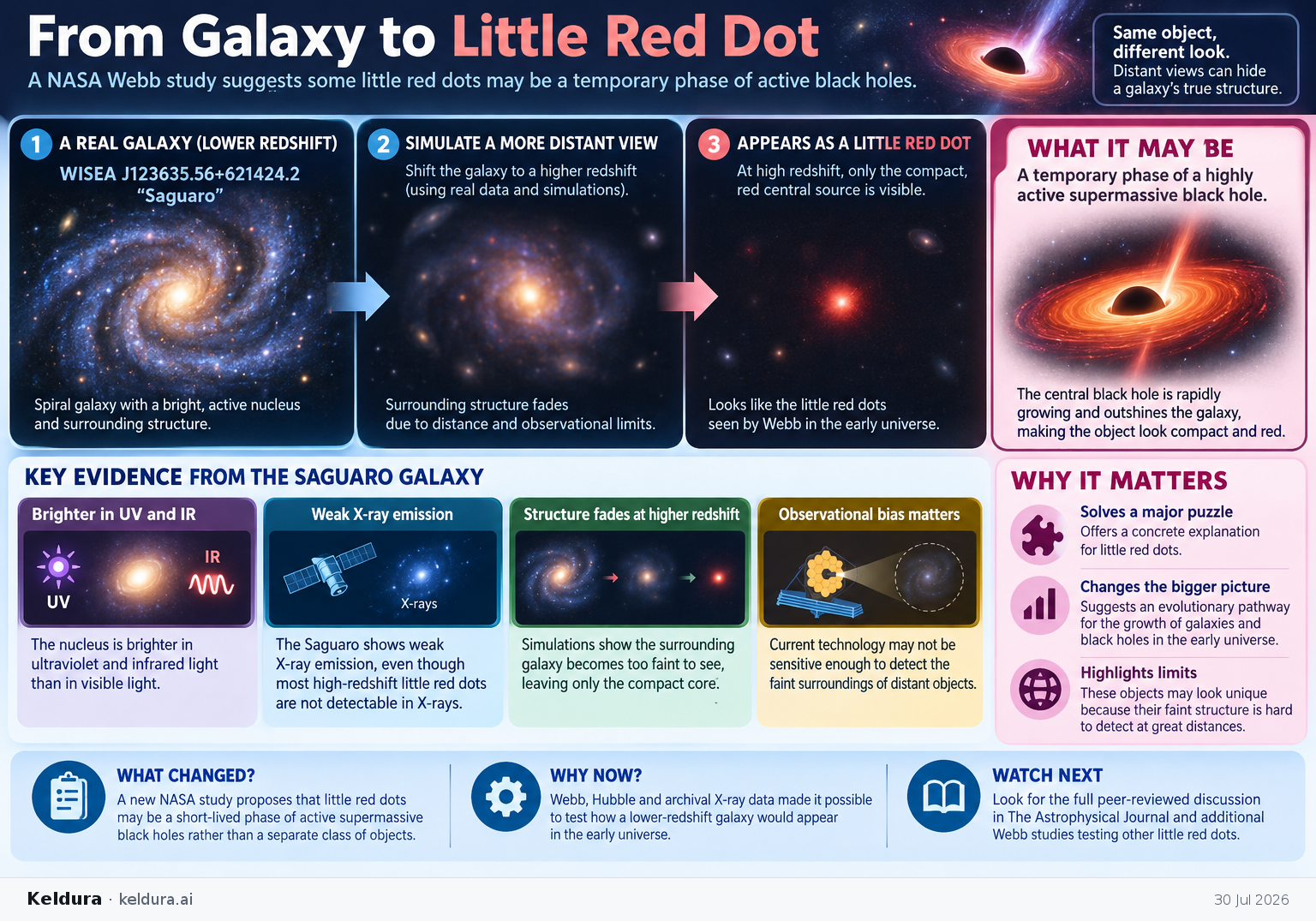
NASA scientists reported a new interpretation of little red dots, based on the spiral galaxy WISEA J123635.56+621424.2, nicknamed the “Saguaro”.
Why it matters: This matters because little red dots have been a major Webb-era puzzle, and the new work offers a concrete evolutionary pathway for objects seen in the early universe. If the interpretation holds, it…
NASA released a Webb-based study proposing that little red dots may be a short-lived phase of active supermassive black holes rather than a wholly separate class [5][6][7].
Why now
Webb, Hubble and archival X-ray data made it possible to test how a lower-redshift galaxy would appear if observed in the early universe [5][6][7].
Watch next
Look for the full peer-reviewed discussion in The Astrophysical Journal and any additional Webb studies testing whether other little red dots show the same hidden-structure pattern [5].
That's the desk. Every cheatsheet here started as a link. Yours can too.