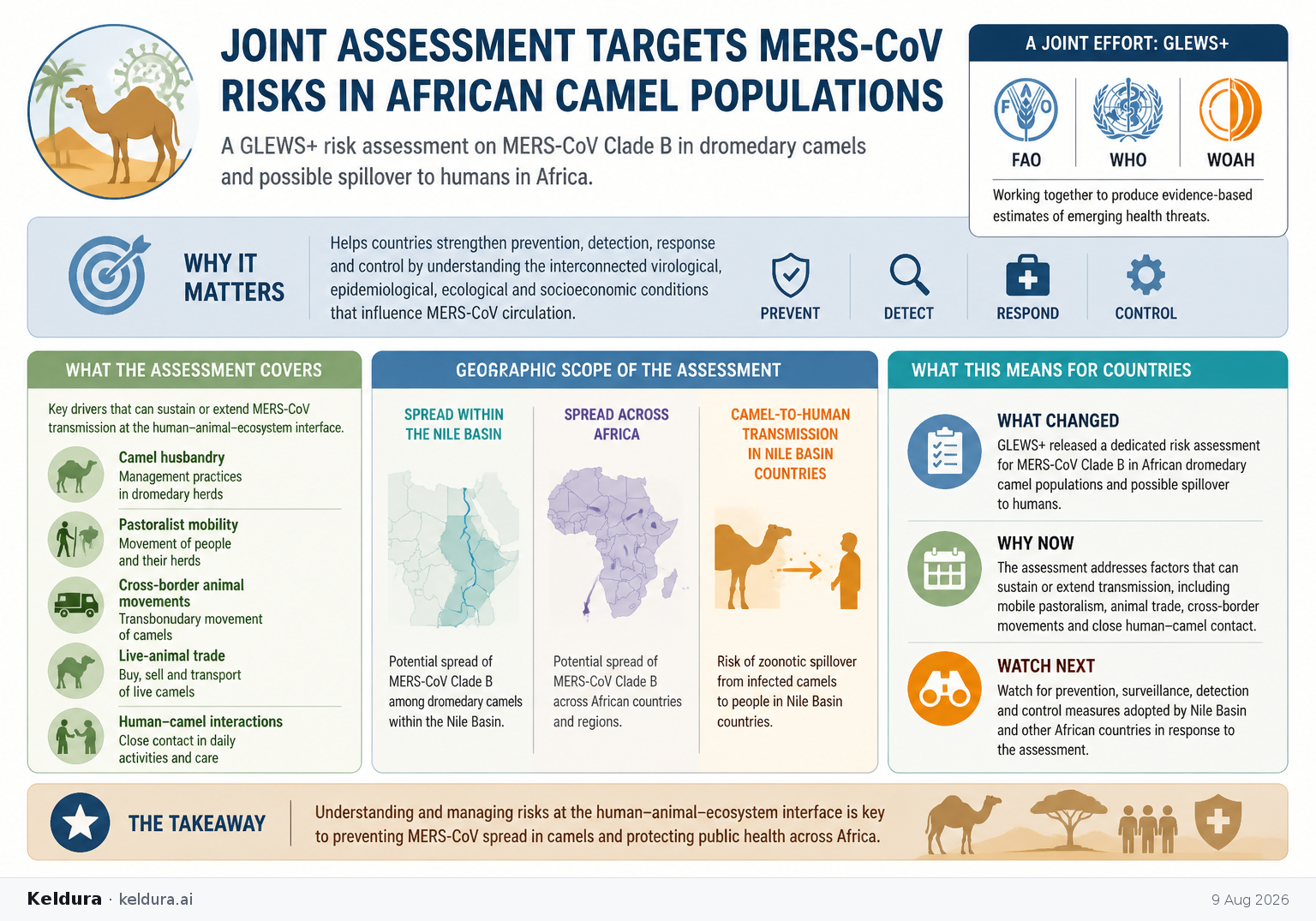
GLEWS+, a joint initiative of FAO, WHO and WOAH, has published an assessment of MERS-CoV clade B transmission risks at the human–animal–ecosystem interface.
Why it matters: The assessment is intended to help countries strengthen prevention, detection, response and control by considering the interconnected virological, epidemiological, ecological and socioeconomic condit…
GLEWS+ released a dedicated risk assessment for MERS-CoV clade B in African dromedary camel populations and possible spillover to humans.[1]
Why now
The assessment addresses factors that can sustain or extend transmission, including mobile pastoralism, animal trade, cross-border movements and close human–camel contact.[1]
Watch next
Watch for prevention, surveillance, detection and control measures adopted by Nile Basin and other African countries in response to the assessment.[1]
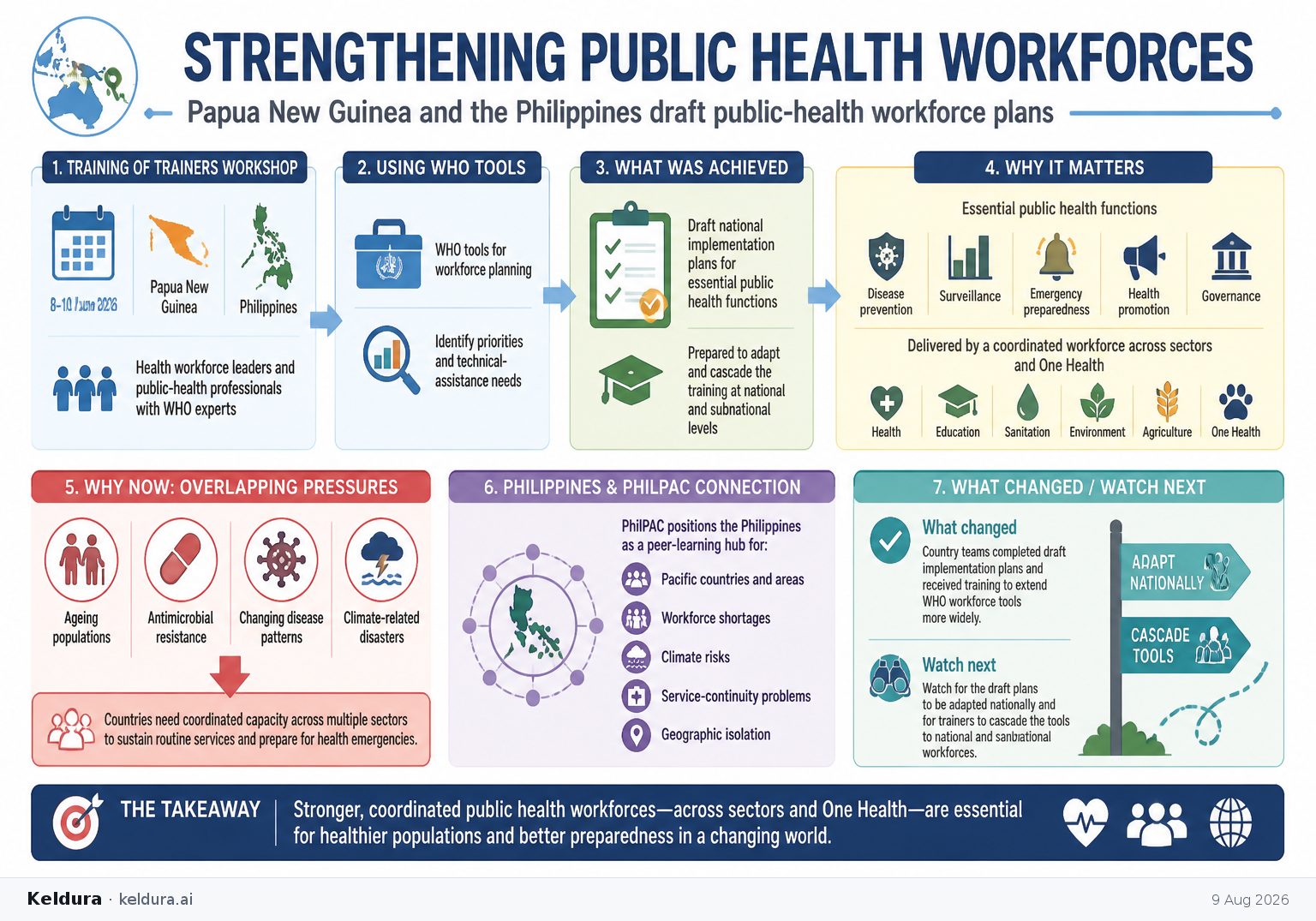
Health workforce leaders and public-health professionals from Papua New Guinea and the Philippines joined WHO experts for a Training of Trainers Workshop on 8–10 June 2026.
Why it matters: WHO says these functions underpin disease prevention, surveillance, emergency preparedness, health promotion and governance, while delivery depends on coordinated workers across health, education, sa…
Country teams from Papua New Guinea and the Philippines completed draft implementation plans and received training to extend WHO workforce tools more widely.[2]
Why now
Countries need coordinated capacity across multiple sectors to sustain routine services and prepare for health emergencies amid demographic, disease and climate pressures.[2]
Watch next
Watch for the draft plans to be adapted nationally and for trainers to cascade the tools to national and subnational workforces.[2]
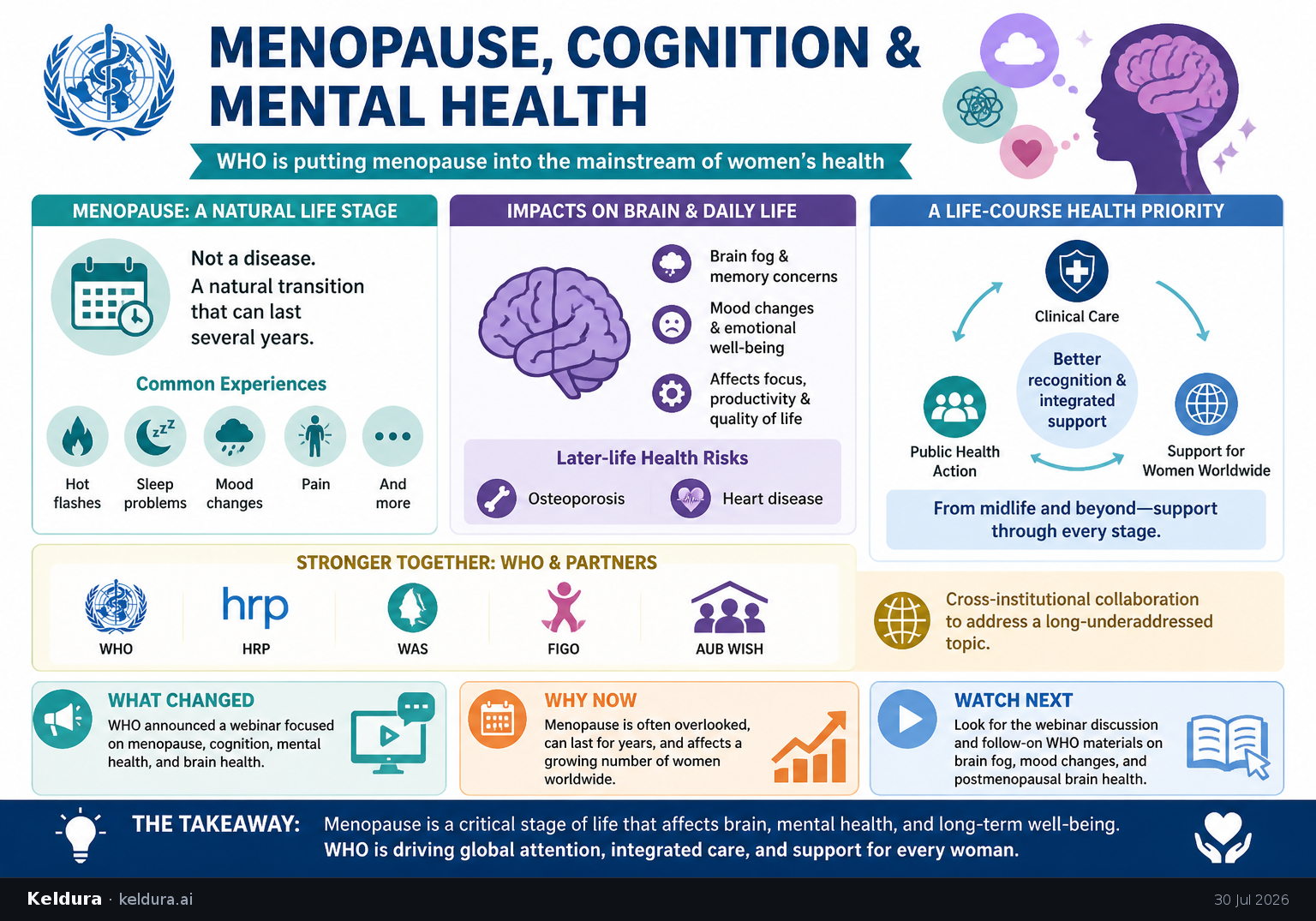
WHO says the second webinar in its series on menopause will address the effects of menopause on cognition and mental health, including brain fog, mood changes, and brain health in the postmenopausal years.
Why it matters: This matters because WHO is explicitly treating menopause as a life-course health issue rather than a narrow reproductive milestone, which can shape clinical priorities, public health messaging, and…
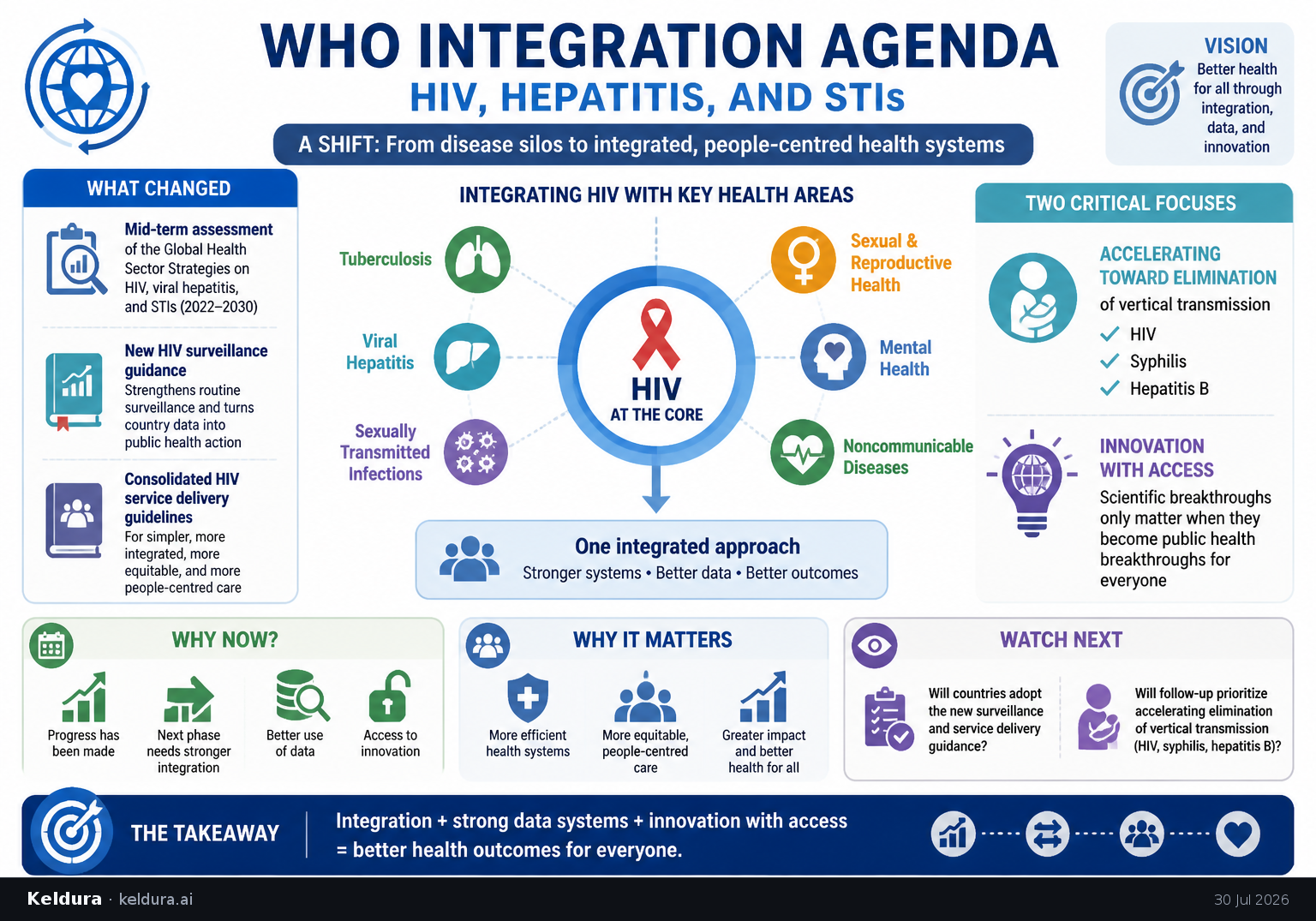
At the International AIDS Society, the WHO Director-General said WHO was launching the mid-term assessment of its Global Health Sector Strategies on HIV, viral hepatitis, and sexually transmitted infections for 2022 to…
Why it matters: This matters because it shows WHO moving from disease-specific responses toward more integrated service delivery, data systems, and health-system strengthening.
WHO launched a mid-term assessment and released new HIV surveillance and service delivery guidance [3].
Why now
WHO says progress has been made, but the next phase needs stronger integration, data use, and access to innovation [3].
Watch next
Monitor whether countries adopt the new surveillance and service delivery guidance and whether WHO follow-up centers on vertical transmission elimination [3].
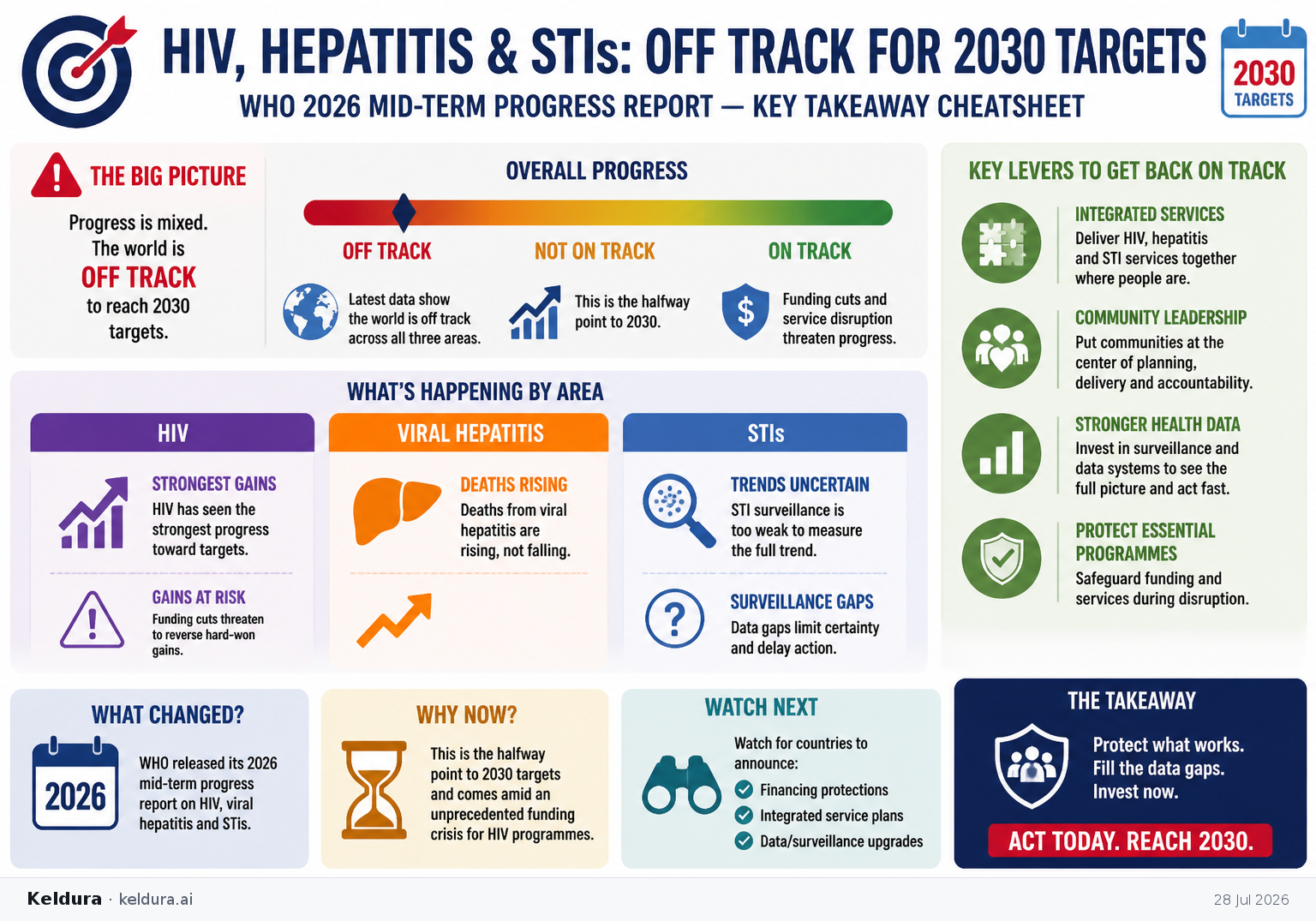
WHO’s 2026 mid-term progress report says progress is mixed and the world is off track to reach the 2030 targets for HIV, viral hepatitis and STIs.
Why it matters: This is a broad warning that the global response is no longer just about scale-up; it is about protecting hard-won gains from financing shocks and service disruption. The report points to integration…
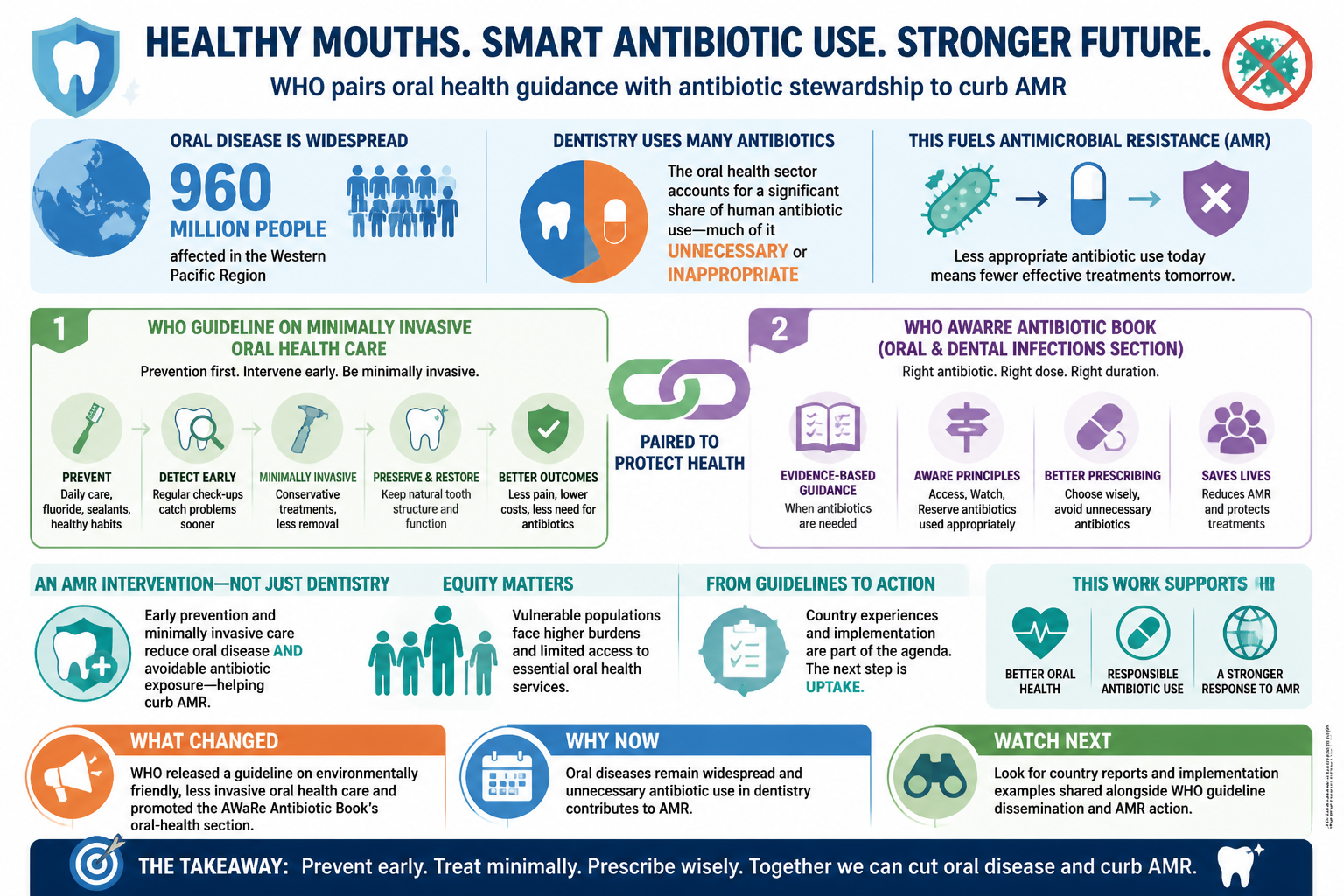
WHO says oral diseases affect an estimated 960 million people in the Western Pacific Region and that access to essential oral health services remains limited.
Why it matters: This links routine dental care to one of the biggest global health threats: antimicrobial resistance. If countries adopt prevention-focused, minimally invasive approaches earlier, they may reduce bot…
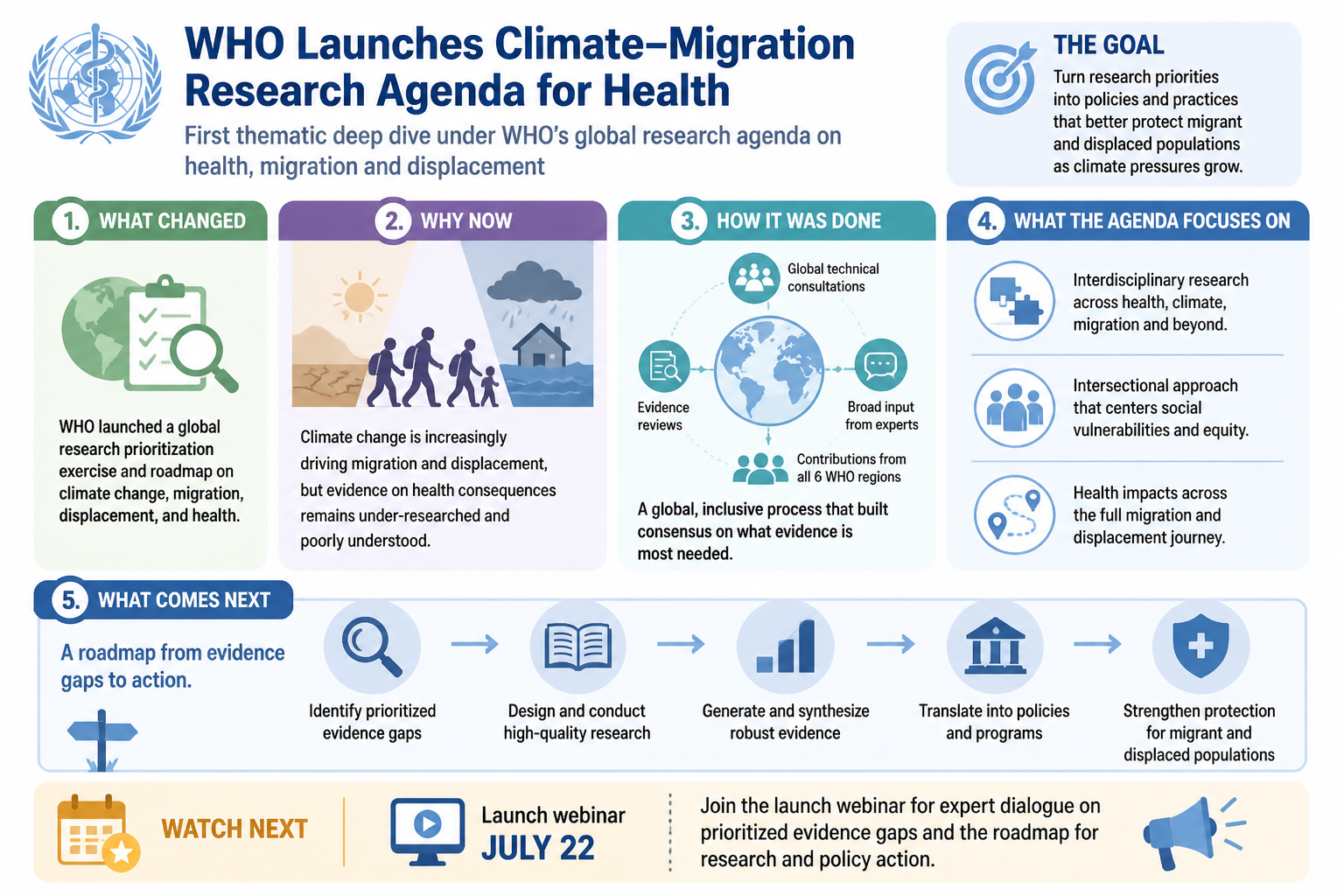
WHO has launched the Global Research Prioritization Exercise on Health, Migration, and Displacement in the Context of Climate Change, described as the first thematic deep dive under its global research agenda on health,…
Why it matters: Climate change is increasingly driving migration and displacement, but WHO says the health consequences remain under-researched and poorly understood. Setting a shared research agenda is a practical…
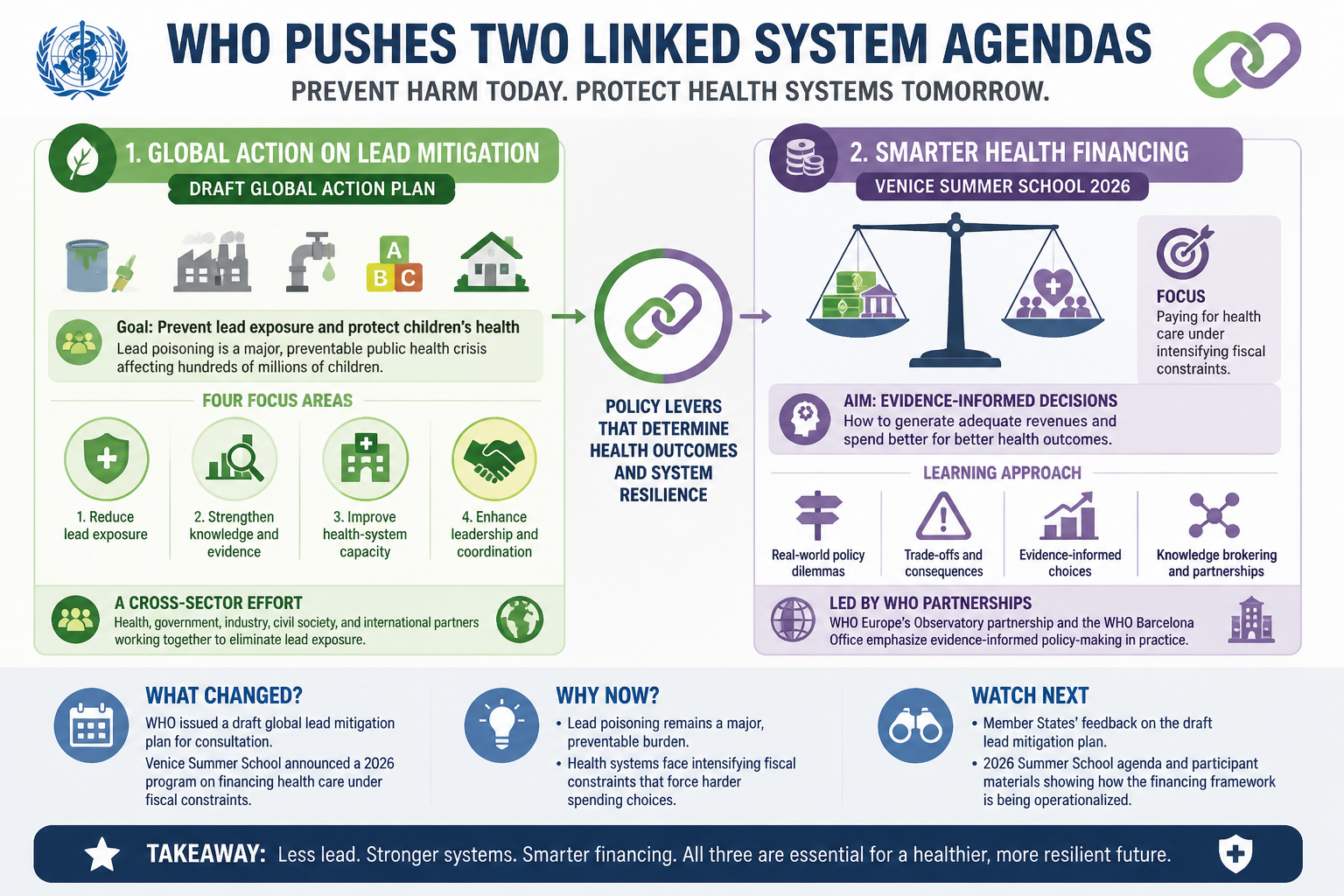
WHO has published a draft Global Action Plan on lead mitigation, developed in response to World Health Assembly resolution WHA78.27, with four focus areas: reducing lead exposure, strengthening knowledge and evidence, i…
Why it matters: These are not separate technical exercises; they both target the policy levers that determine whether health systems can prevent harm and sustain services under pressure. Lead poisoning is framed as…
WHO issued a draft global lead mitigation plan, and the Venice Summer School announced a 2026 program on financing health care under fiscal constraints [8][1].
Why now
Lead poisoning remains a major preventable burden, while health systems face intensifying fiscal constraints that force harder spending choices [8][1].
Watch next
Consultation feedback on the lead plan and the 2026 Summer School agenda or participant materials showing how the financing framework is being operationalized [8][1].
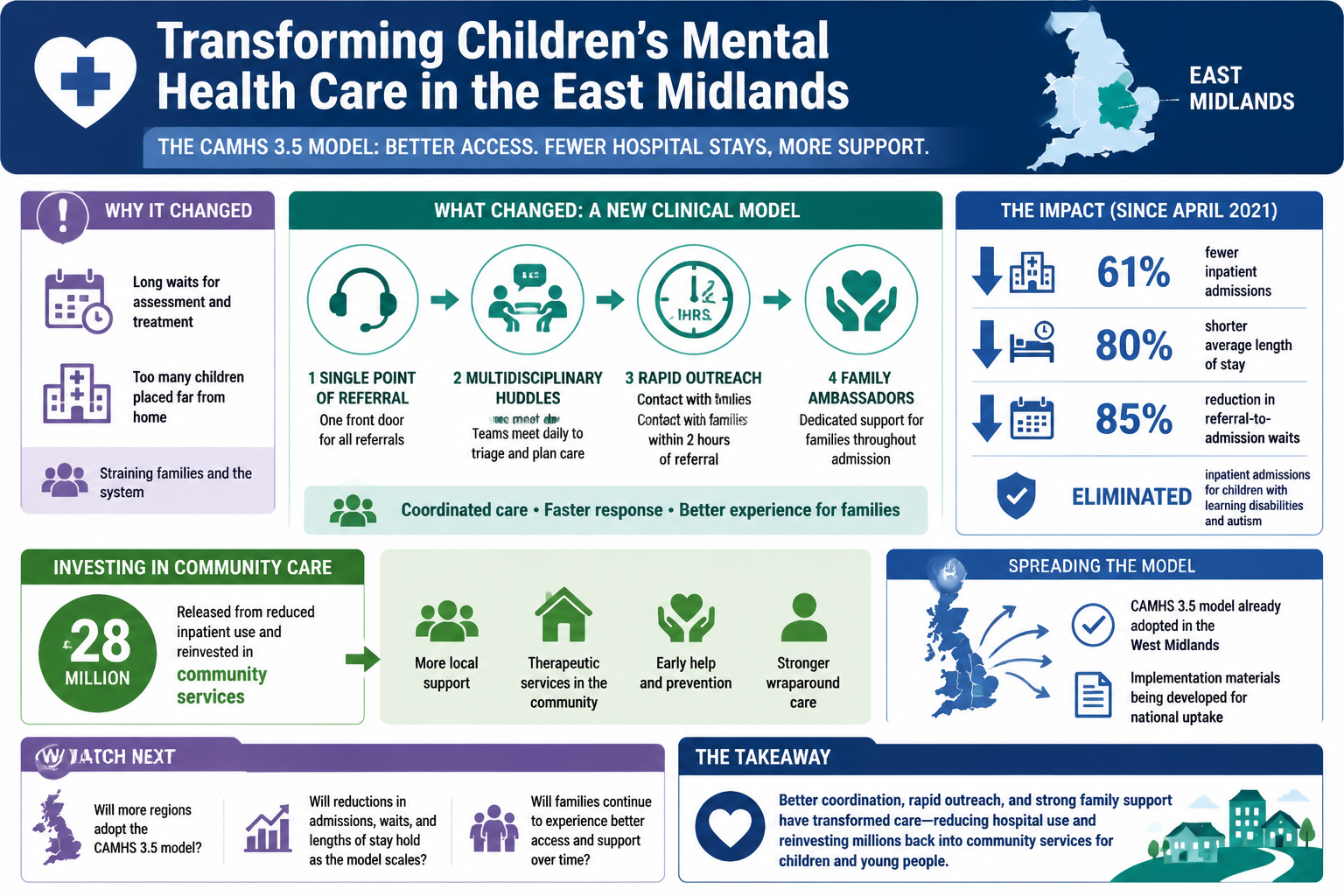
A new clinical model in the East Midlands has transformed children and young people’s mental health services after long waits and too many out-of-area placements prompted a redesign.
Why it matters: This is a concrete example of service redesign improving access, reducing hospitalization, and redirecting money back into community care. The scale of the changes suggests that better coordination a…
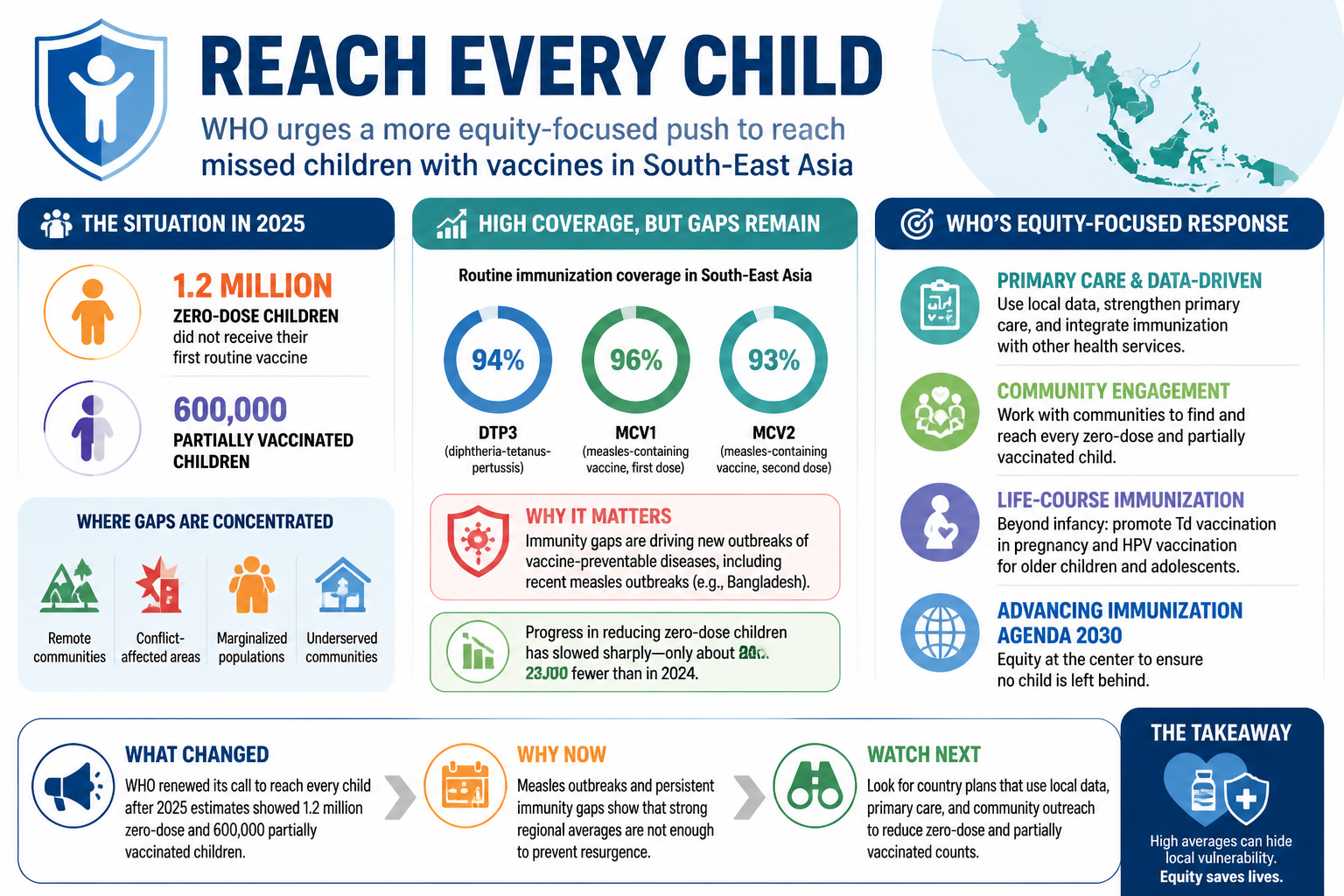
WHO said nearly 1.2 million children in the South-East Asia Region did not receive their first routine vaccine in 2025, while 600,000 remained partially vaccinated, even as routine coverage stayed high.
Why it matters: WHO says the remaining immunity gaps are driving new outbreaks of vaccine-preventable diseases, and it specifically linked recent measles outbreaks, including in Bangladesh, to those gaps. The messag…
WHO renewed its call to reach every child after 2025 estimates showed 1.2 million zero-dose children and 600,000 partially vaccinated children in South-East Asia.[2]
Why now
Measles outbreaks and persistent immunity gaps show that strong regional averages are not enough to prevent resurgence.[2]
Watch next
Look for country plans that use local data, primary care, and community outreach to reduce zero-dose and partially vaccinated counts.[2]
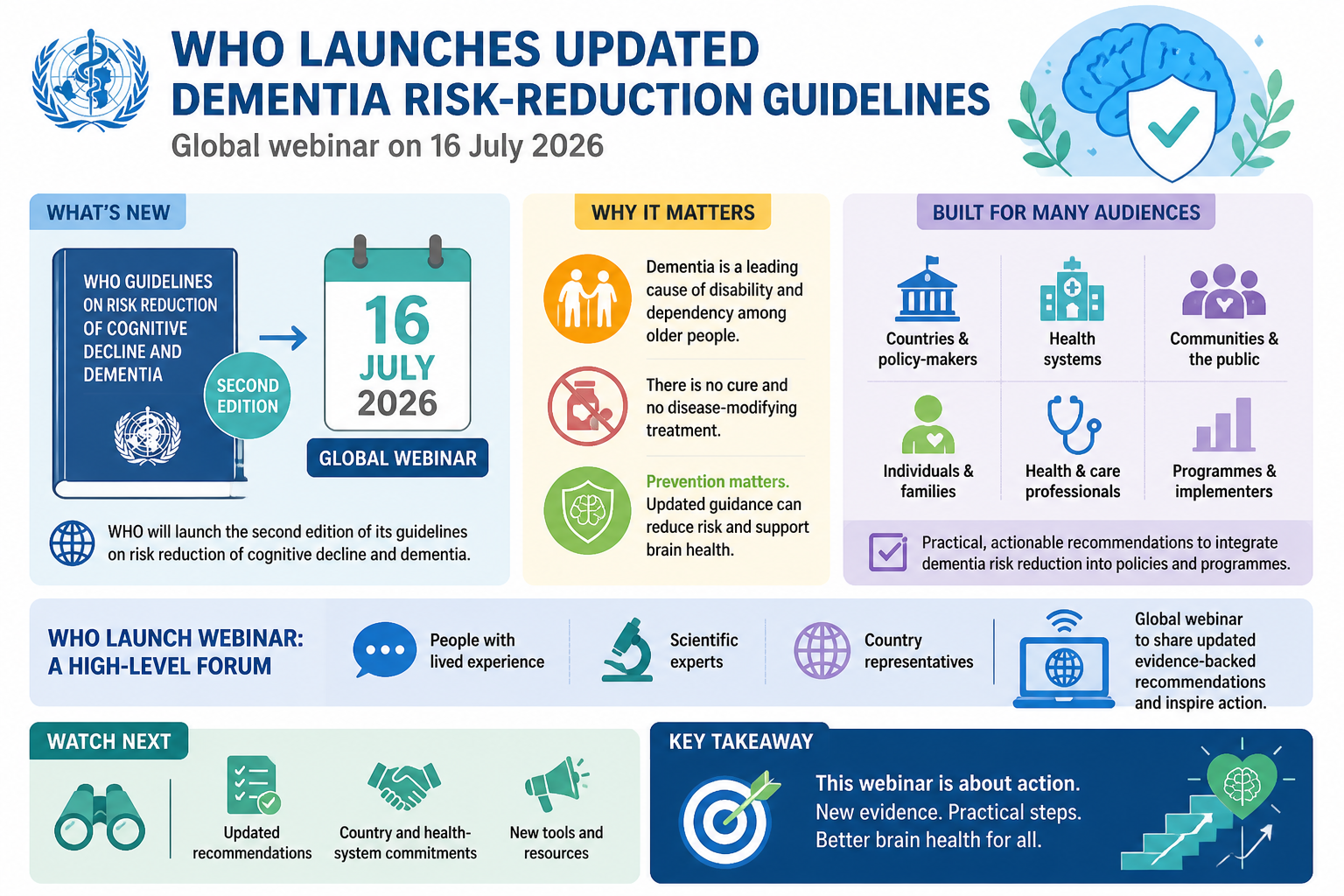
WHO announced a global webinar on 16 July 2026 to launch the second edition of its guidelines on risk reduction of cognitive decline and dementia.
Why it matters: WHO describes dementia as a leading cause of disability and dependency among older people, and says prevention matters because there are no disease-modifying treatments or a cure. Updated prevention…
WHO is releasing the second edition of its dementia risk-reduction guidelines in a global webinar on 16 July 2026.[1]
Why now
WHO says dementia is a major cause of disability and dependency, and prevention is especially important because there is no cure or disease-modifying treatment.[1]
Watch next
Look for the updated recommendations and any country or health-system commitments announced during or after the webinar.[1]
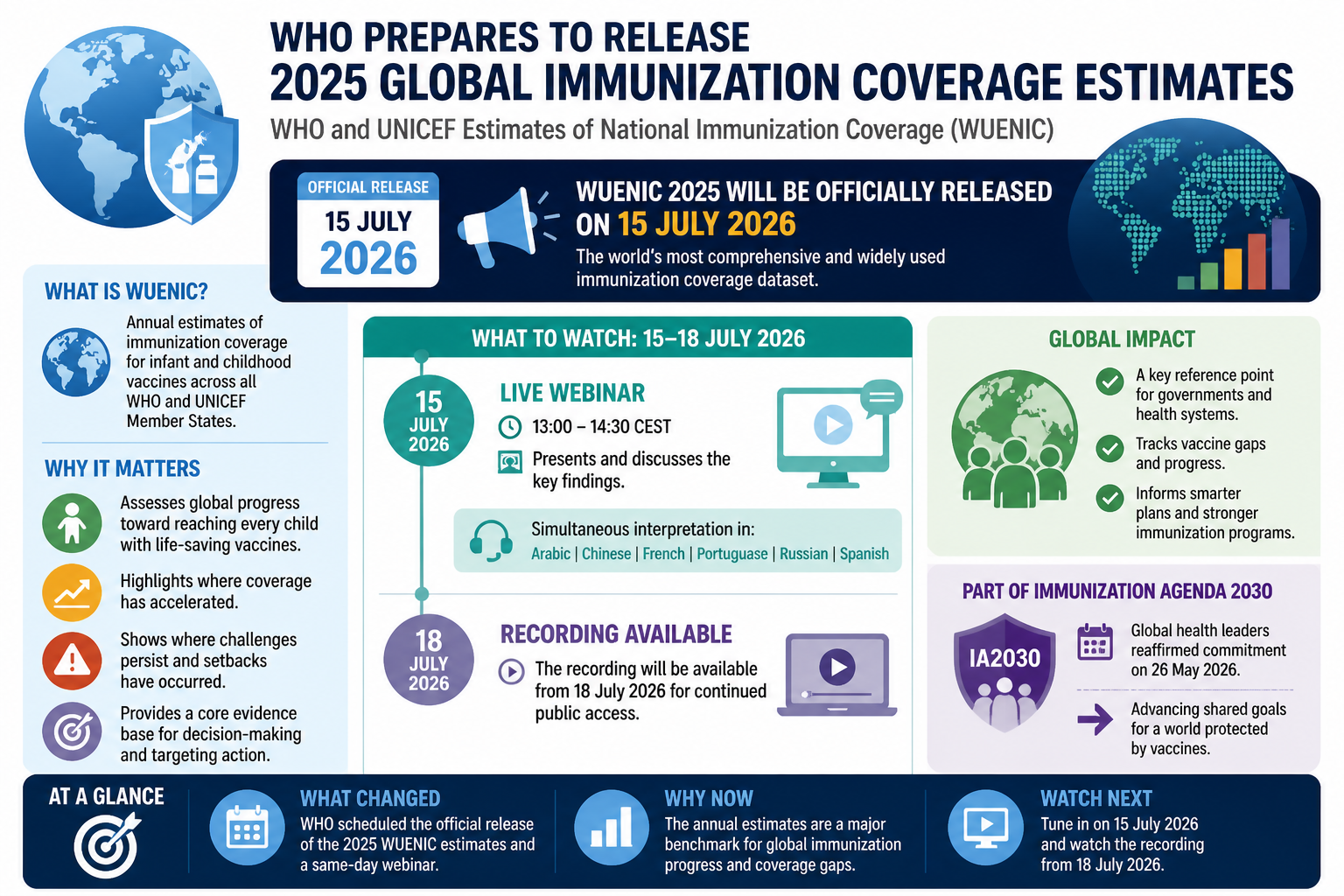
WHO says the 2025 WHO and UNICEF Estimates of National Immunization Coverage (WUENIC) will be officially released on 15 July 2026, with a public webinar the same day to present and discuss the key findings.
Why it matters: WHO says WUENIC helps assess global progress toward reaching every child with life-saving vaccines and highlights where coverage has accelerated, where challenges persist, and where setbacks have occ…