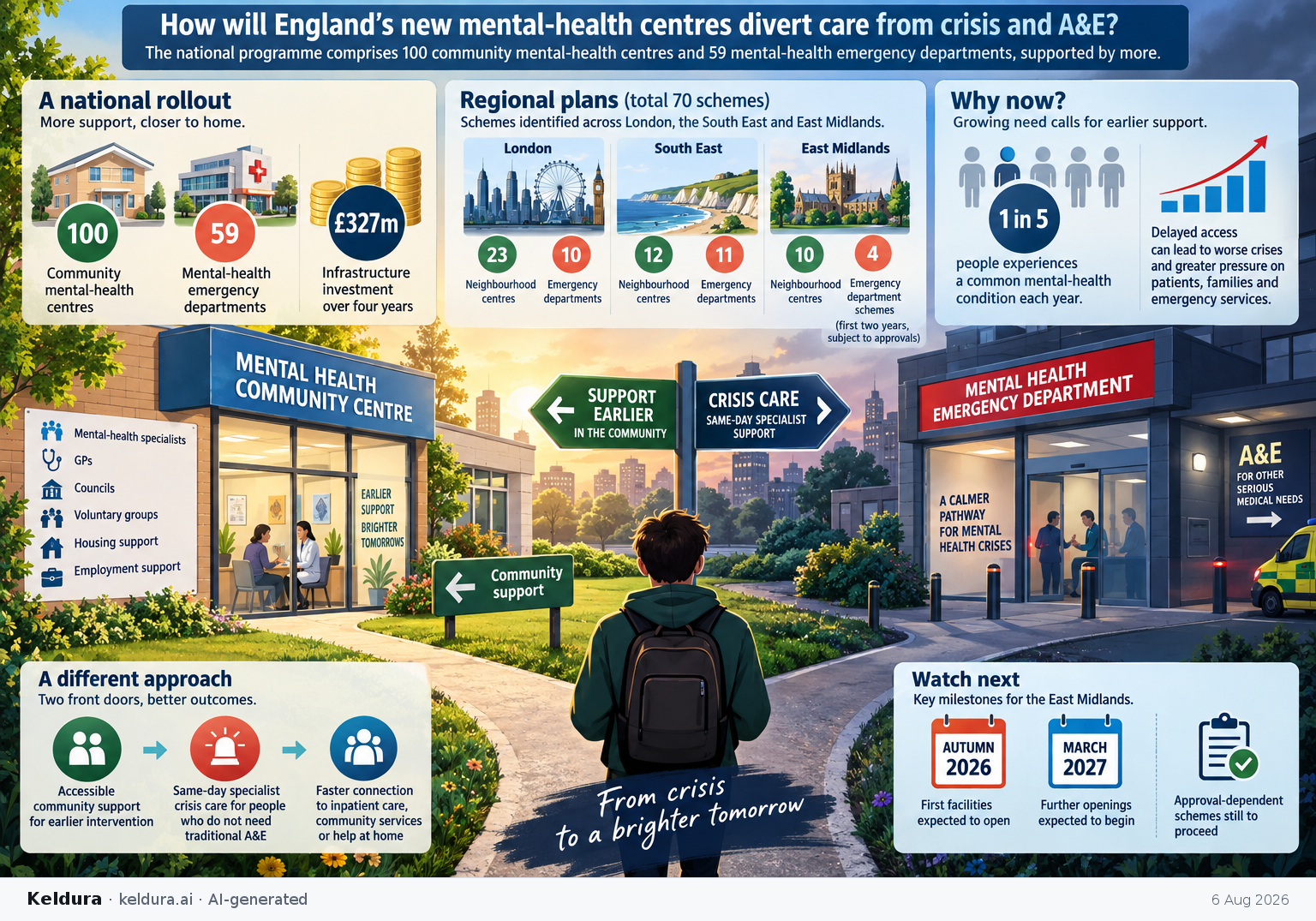
The national programme comprises 100 community mental-health centres and 59 mental-health emergency departments, supported by more.
Why it matters: Roughly one in five people experiences a common mental-health condition each year, while delayed access can allow problems to escalate into crises that place additional strain on patients, families a…
England is pursuing 100 community mental-health centres and 59 specialist mental-health emergency departments, including 70 schemes identified across London, the South East and East Midlands.[5][6][7]
Why now
The programme responds to growing mental-health need and supports a policy shift from crisis treatment toward earlier, community-based intervention.[5][6]
Watch next
Track whether the first East Midlands facilities open from autumn 2026, whether later openings begin from March 2027 and whether approval-dependent schemes proceed.[7]
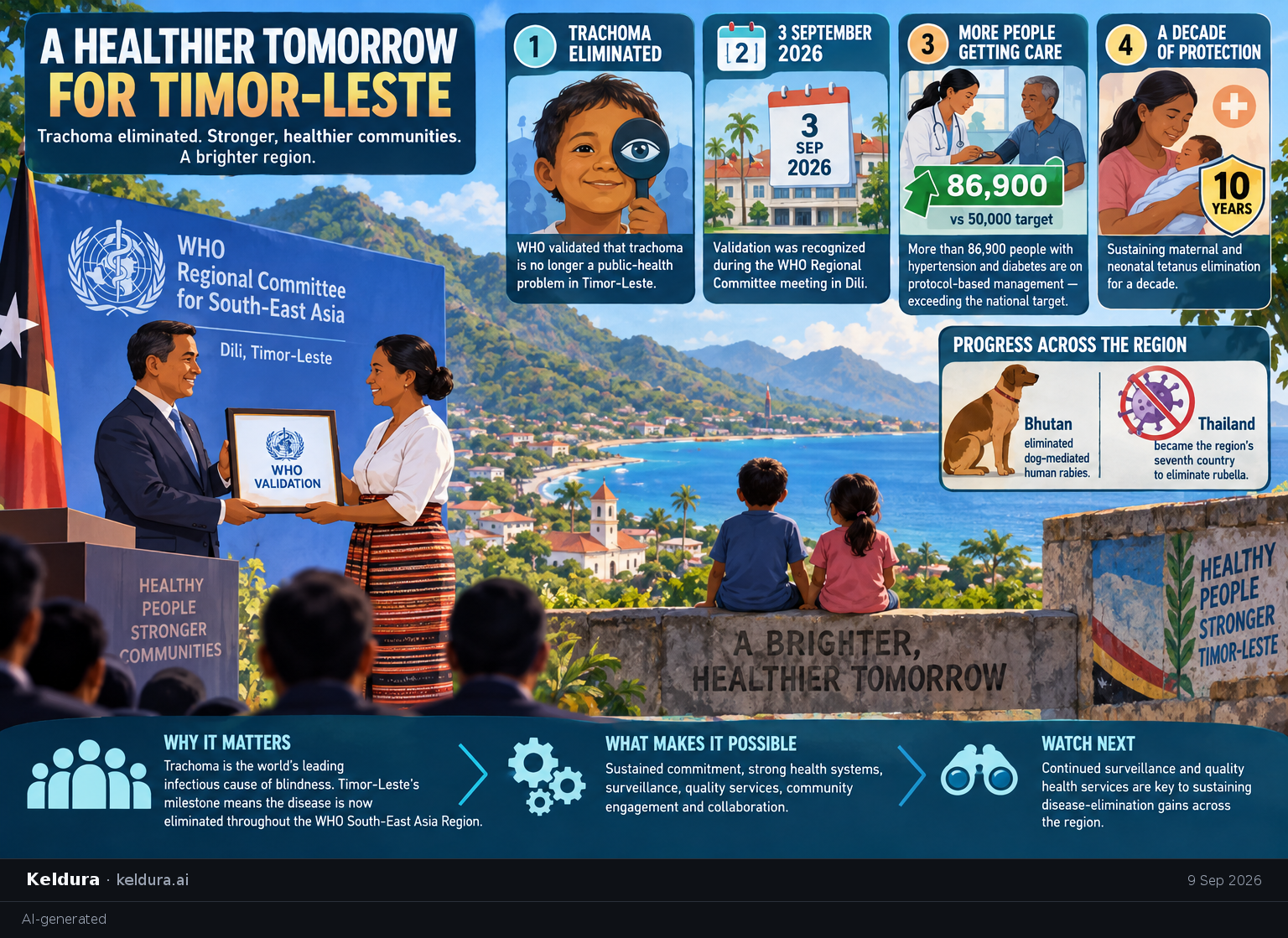
WHO validated Timor-Leste’s elimination of trachoma as a public-health problem on 3 September 2026, making it the final country with suspected endemic trachoma in the WHO South-East Asia Region to reach that milestone.
Why it matters: Because trachoma is the world’s leading infectious cause of blindness, Timor-Leste’s validation means the disease is now eliminated as a public-health problem throughout the WHO South-East Asia Regio…
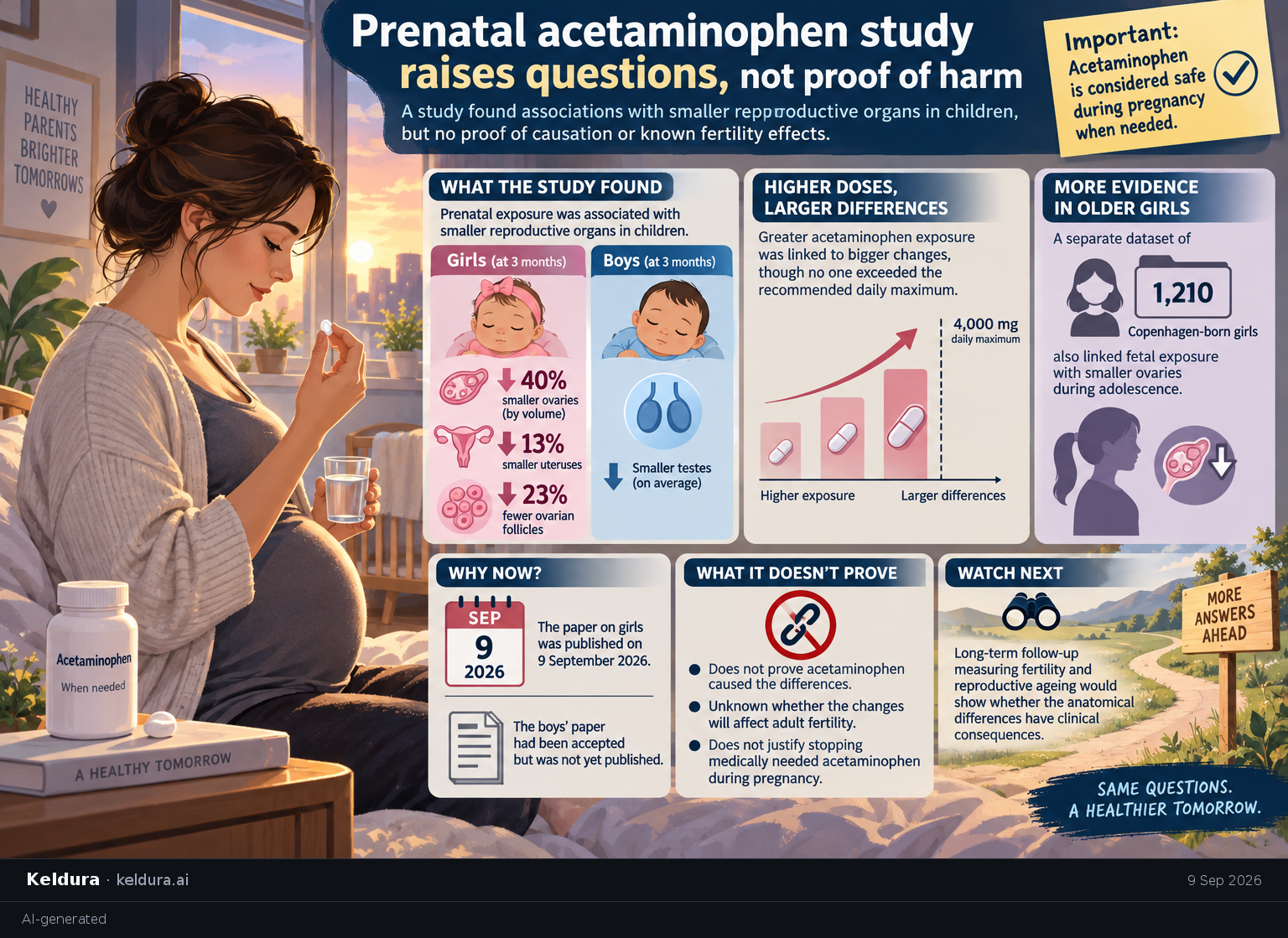
A Danish study of about 300 infant girls associated prenatal paracetamol, or acetaminophen, exposure with smaller ovaries at three months; researchers also reported smaller testes on average among exposed infant boys.
Why it matters: The findings warrant longer-term reproductive research, but the absence of demonstrated causation or known fertility consequences means they do not currently justify stopping medically needed acetami…
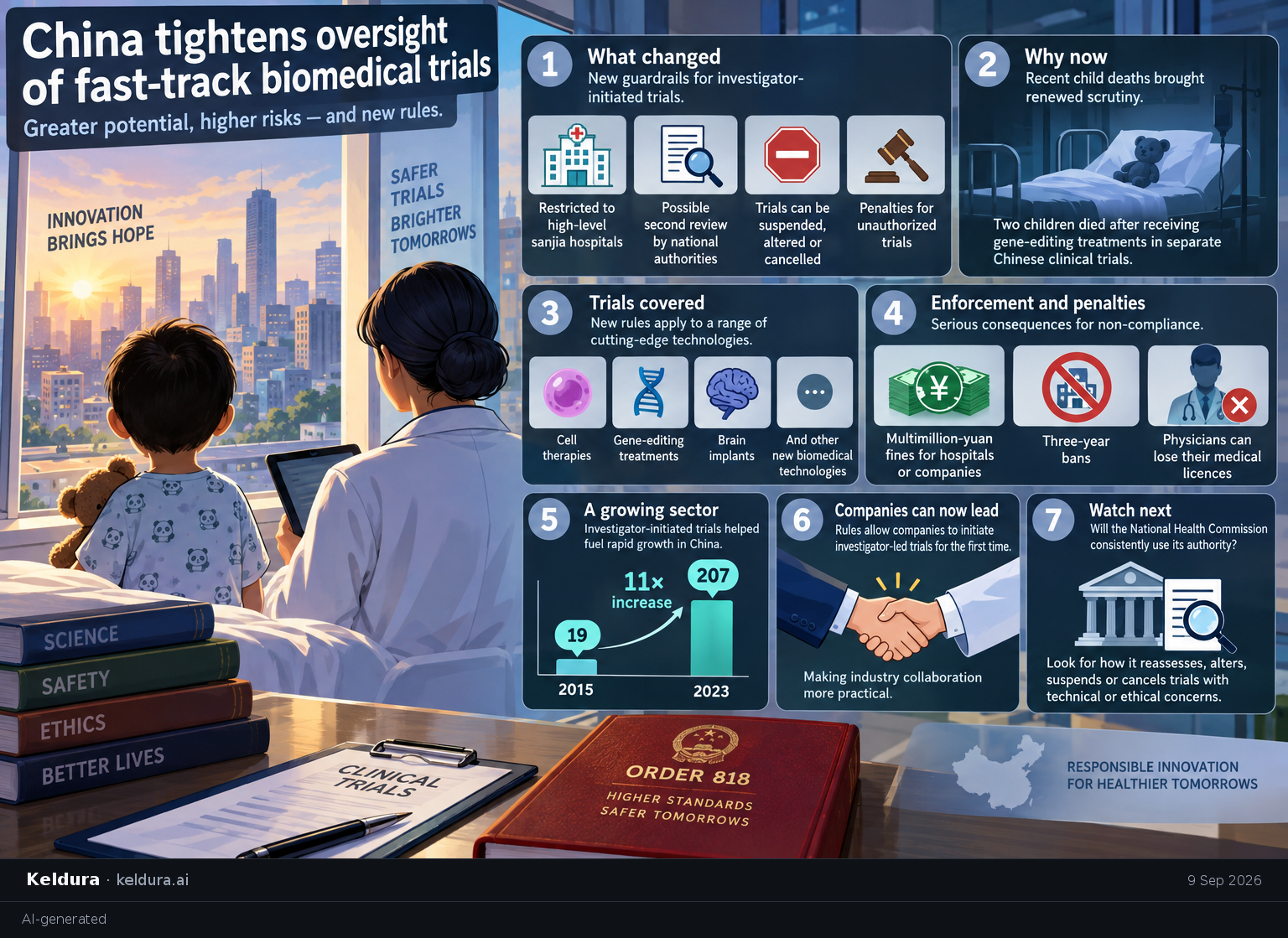
Reports that two children died after receiving gene-editing treatments in separate Chinese clinical trials have intensified scrutiny of the country’s investigator-initiated trial pathway.
Why it matters: Investigator-initiated trials have helped accelerate China’s cell and gene-therapy sector—the number registered annually rose elevenfold to 207 between 2015 and 2023—but their speed increases the imp…
China added institutional restrictions, possible secondary review, enforcement powers and penalties to oversight of investigator-initiated biomedical trials.[8]
Why now
The rules arrived shortly before reports of two child deaths brought renewed attention to the fast-track pathway.[8]
Watch next
Observe whether the National Health Commission consistently uses its authority to reassess, alter, suspend or cancel trials with technical or ethical concerns.[8]
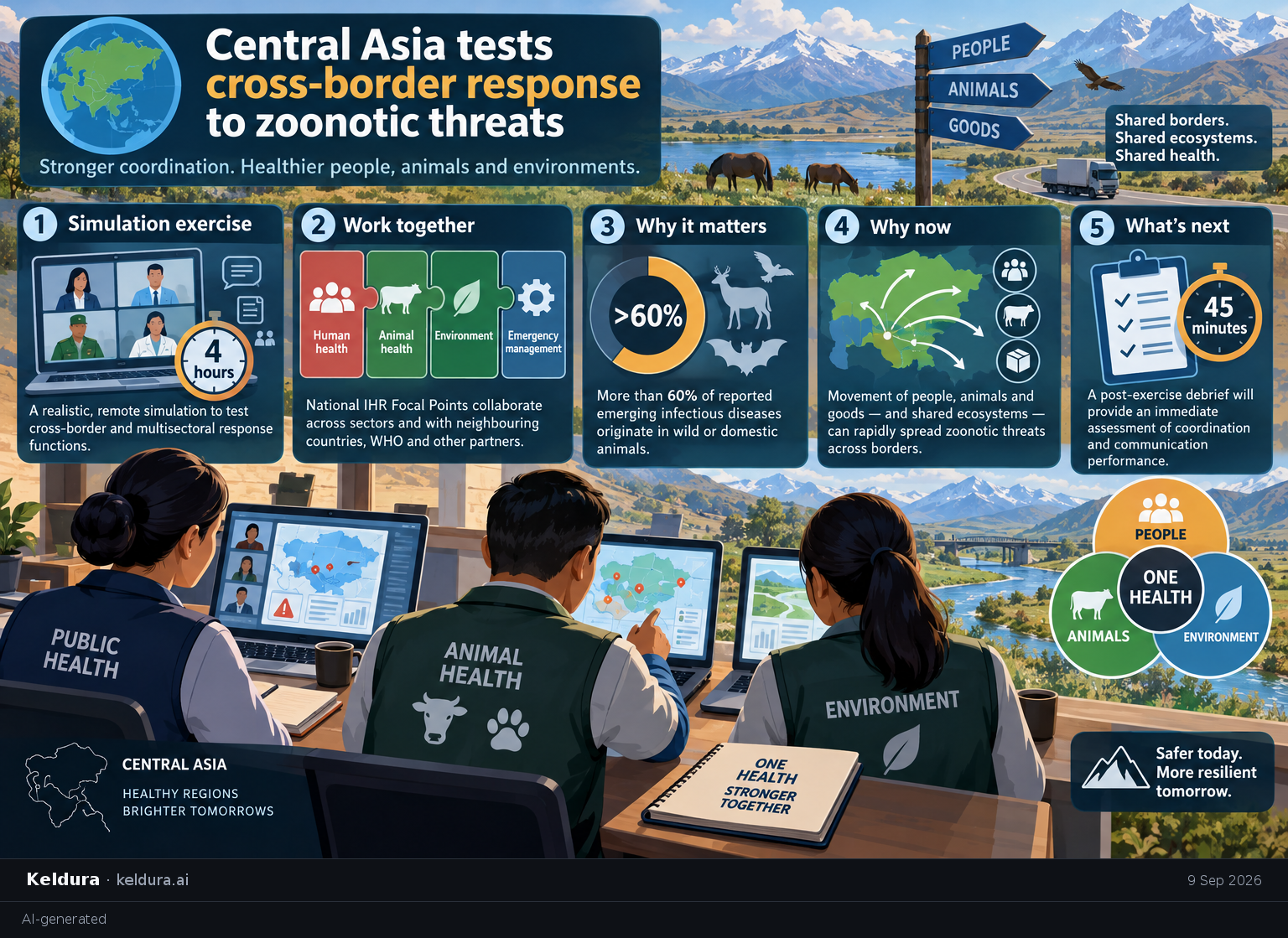
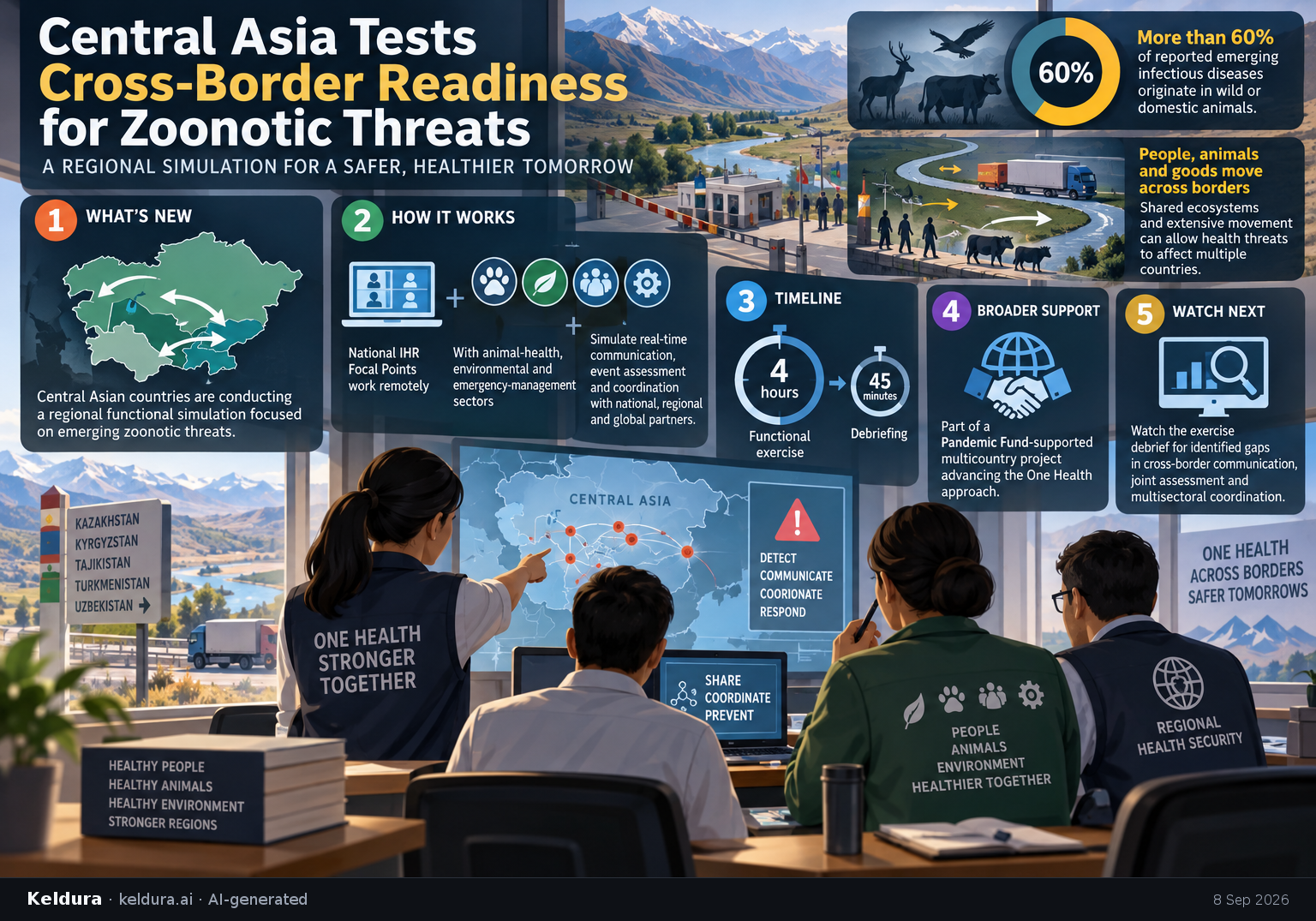
Exercise CARAVAN 2026 is a remote functional simulation designed to test cross-border coordination, communication and information-sharing for emerging zoonotic threats in Central Asia.
Why it matters: More than 60% of reported emerging infectious diseases originate in wild or domestic animals, while Central Asia’s movement of people, animals and goods and its shared ecosystems create pathways for…
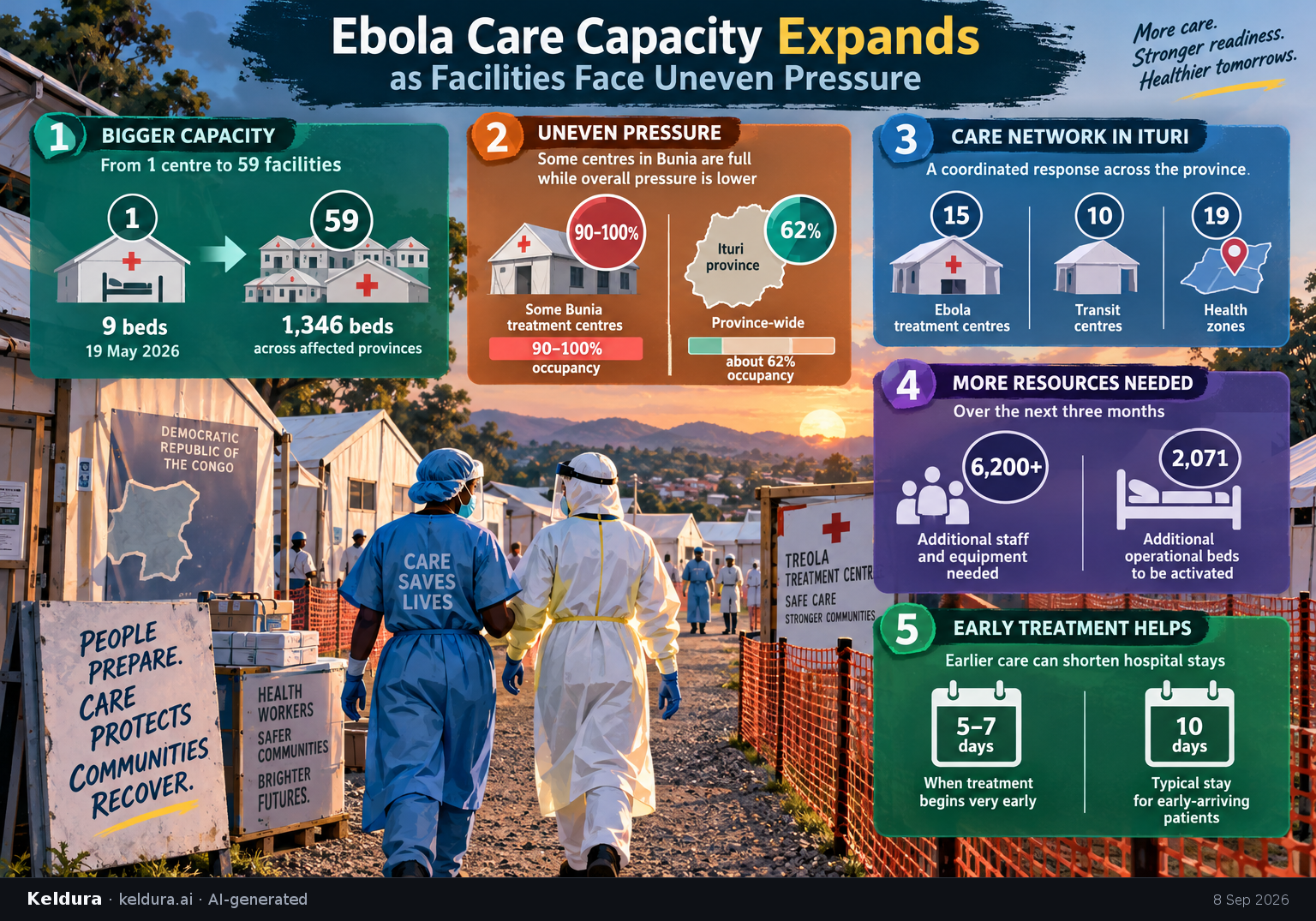
Why it matters: The uneven strain means aggregate bed availability can obscure severe local bottlenecks, while early treatment can shorten hospitalization and improve patients’ chances of recovery.
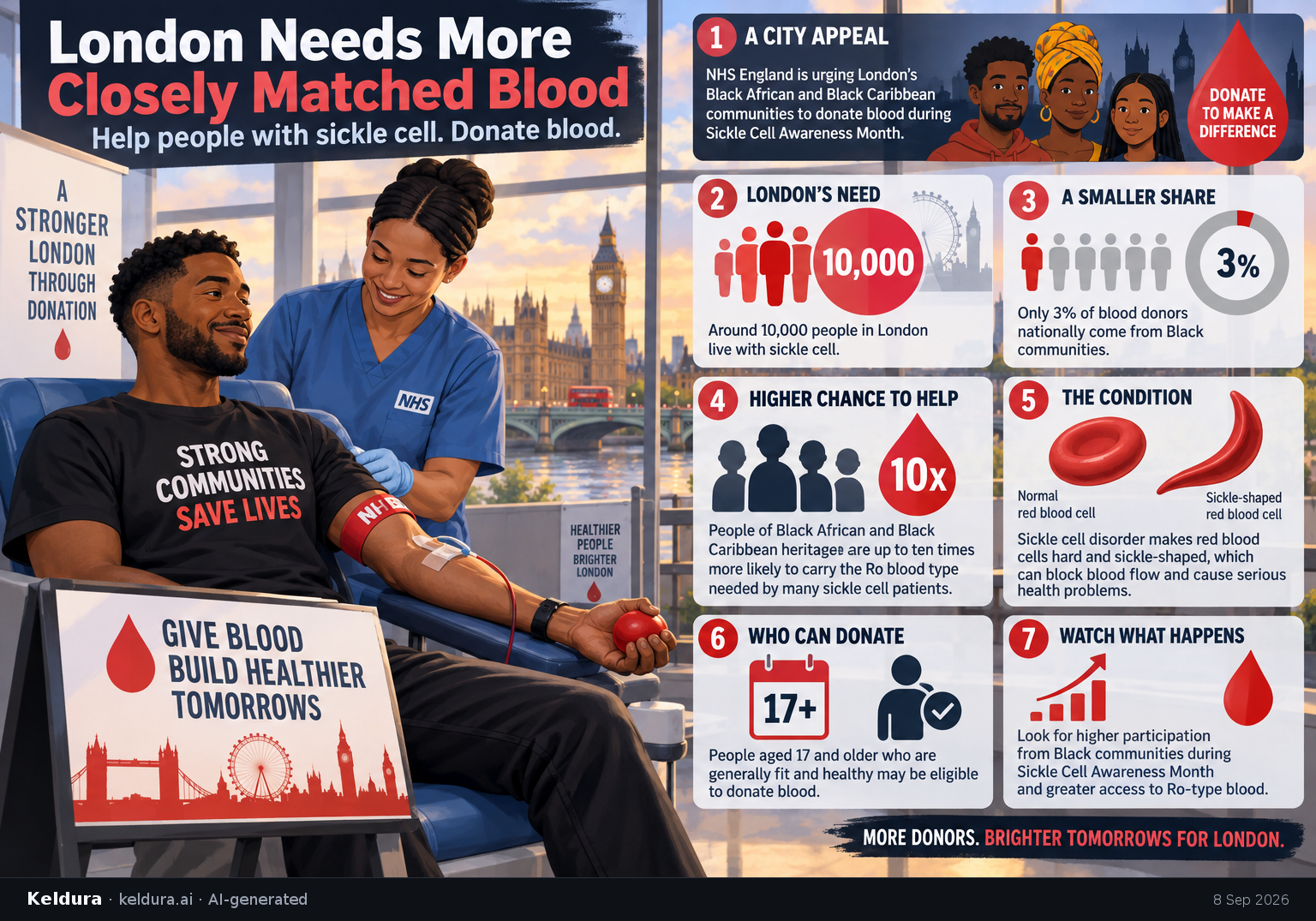
NHS England is urging London’s Black African and Black Caribbean communities to donate blood during Sickle Cell Awareness Month, citing approximately 10,000 sickle cell patients in the capital.
Why it matters: Sickle cell disorder can cause severe pain, organ damage and life-threatening complications, while transfusion outcomes depend on safe, closely matched blood that Black heritage donors are more likel…
Exercise CARAVAN 2026 will test how Central Asian countries coordinate, communicate and share information during an evolving simulated zoonotic emergency.
Why it matters: More than 60% of reported emerging infectious diseases originate in wild or domestic animals, while Central Asia’s cross-border movement of people, animals and goods can allow health threats to affec…
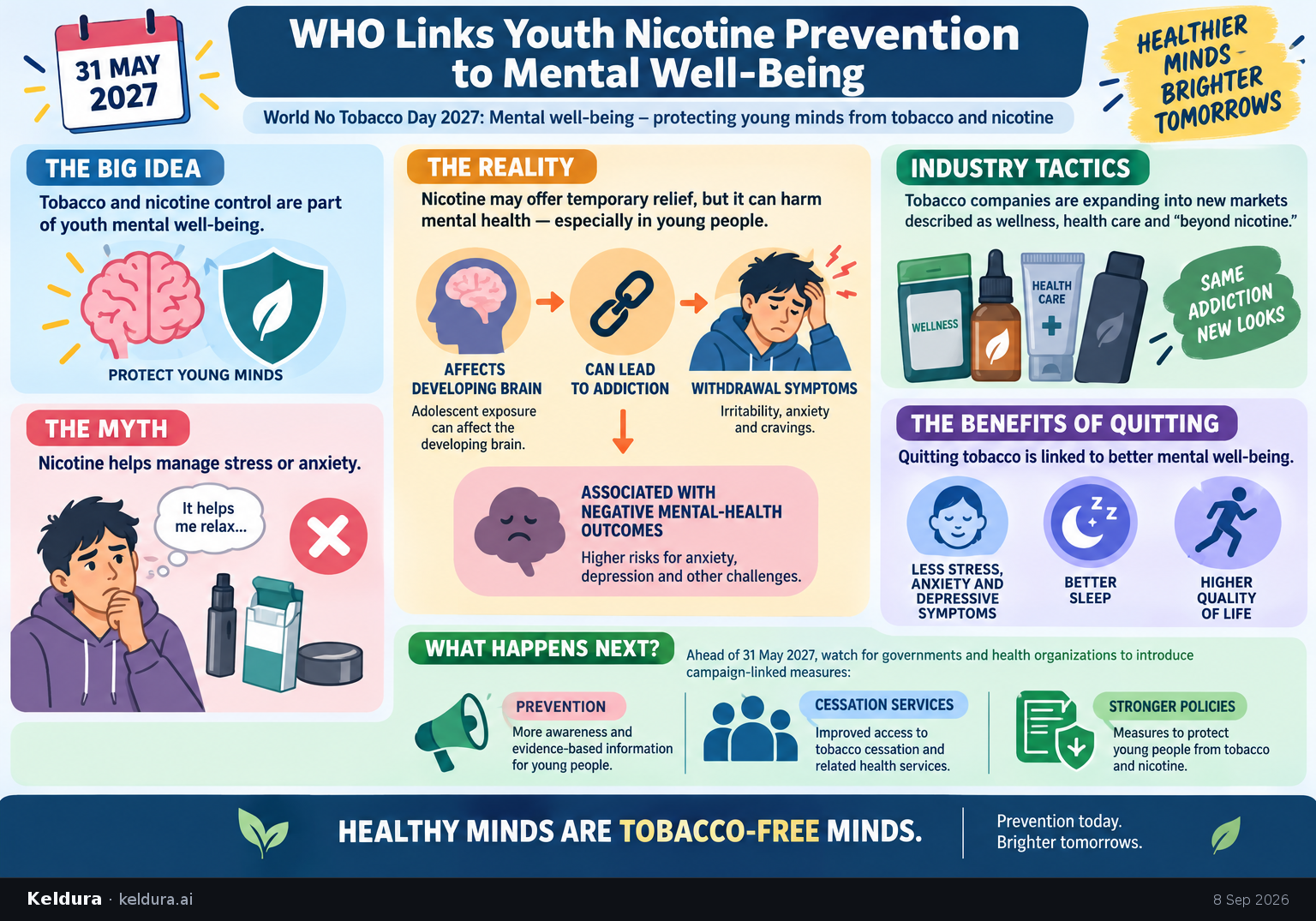
WHO selected “Mental well-being – protecting young minds from tobacco and nicotine” as the theme for World No Tobacco Day 2027.
Why it matters: Nicotine may offer temporary relief but can cause addiction, with withdrawal producing irritability, anxiety and cravings; adolescent exposure can also affect the developing brain and is associated w…
World No Tobacco Day 2027 will explicitly place tobacco and nicotine control within youth mental-well-being efforts.[5]
Why now
WHO says nicotine products are being positioned as coping tools while young people face academic, social and future-related pressures.[5]
Watch next
Watch for governments and health organizations to introduce campaign-linked prevention, cessation and youth-protection measures ahead of 31 May 2027.[5]
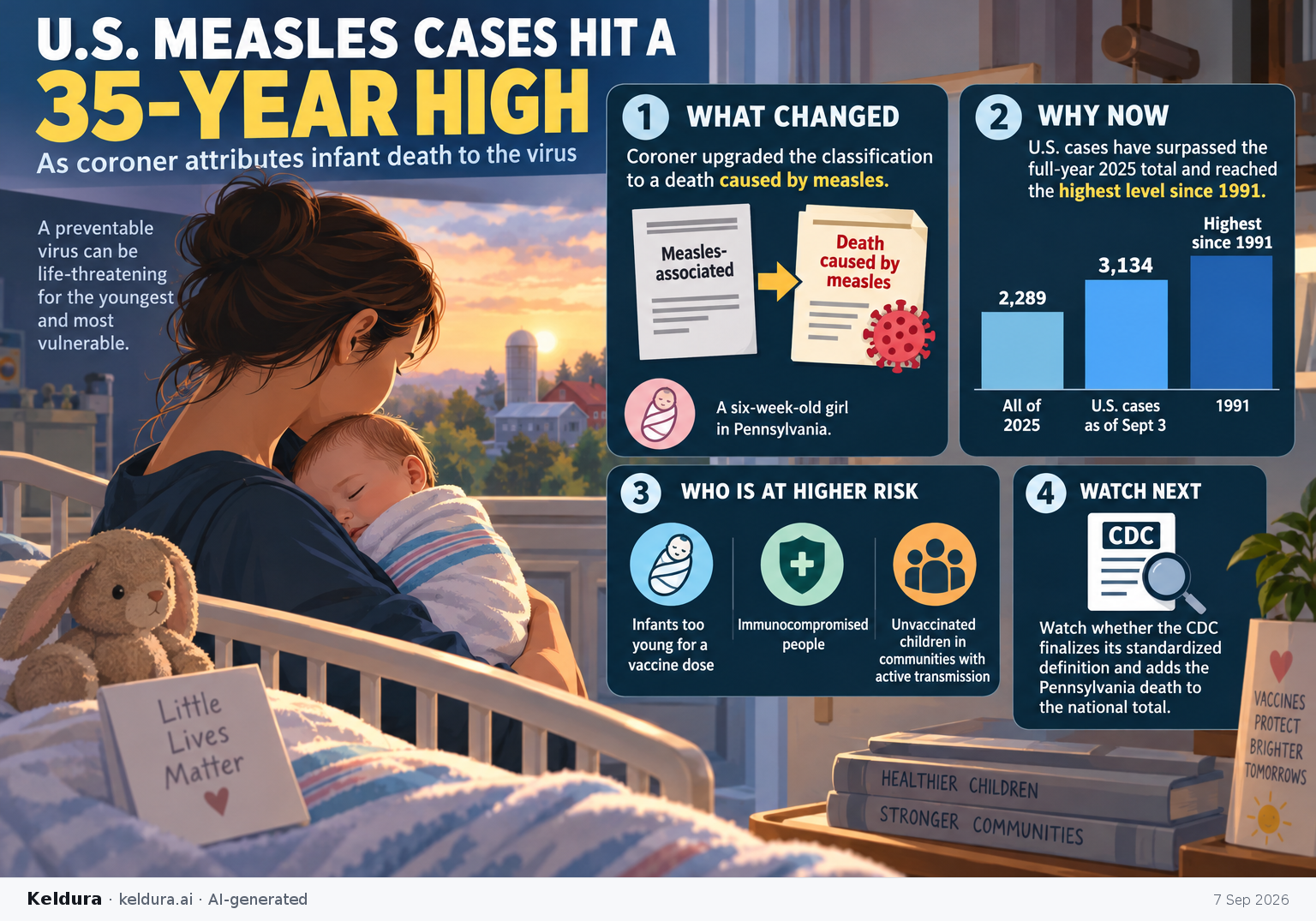
Lancaster County Coroner Stephen Diamantoni determined that measles caused the death of a medically fragile six-week-old girl, revising the case from measles-associated to a death caused by the infection.
Why it matters: The outbreak poses particular concern for infants too young for a first vaccine dose, immunocompromised people and unvaccinated children in communities with active transmission. The case also exposes…
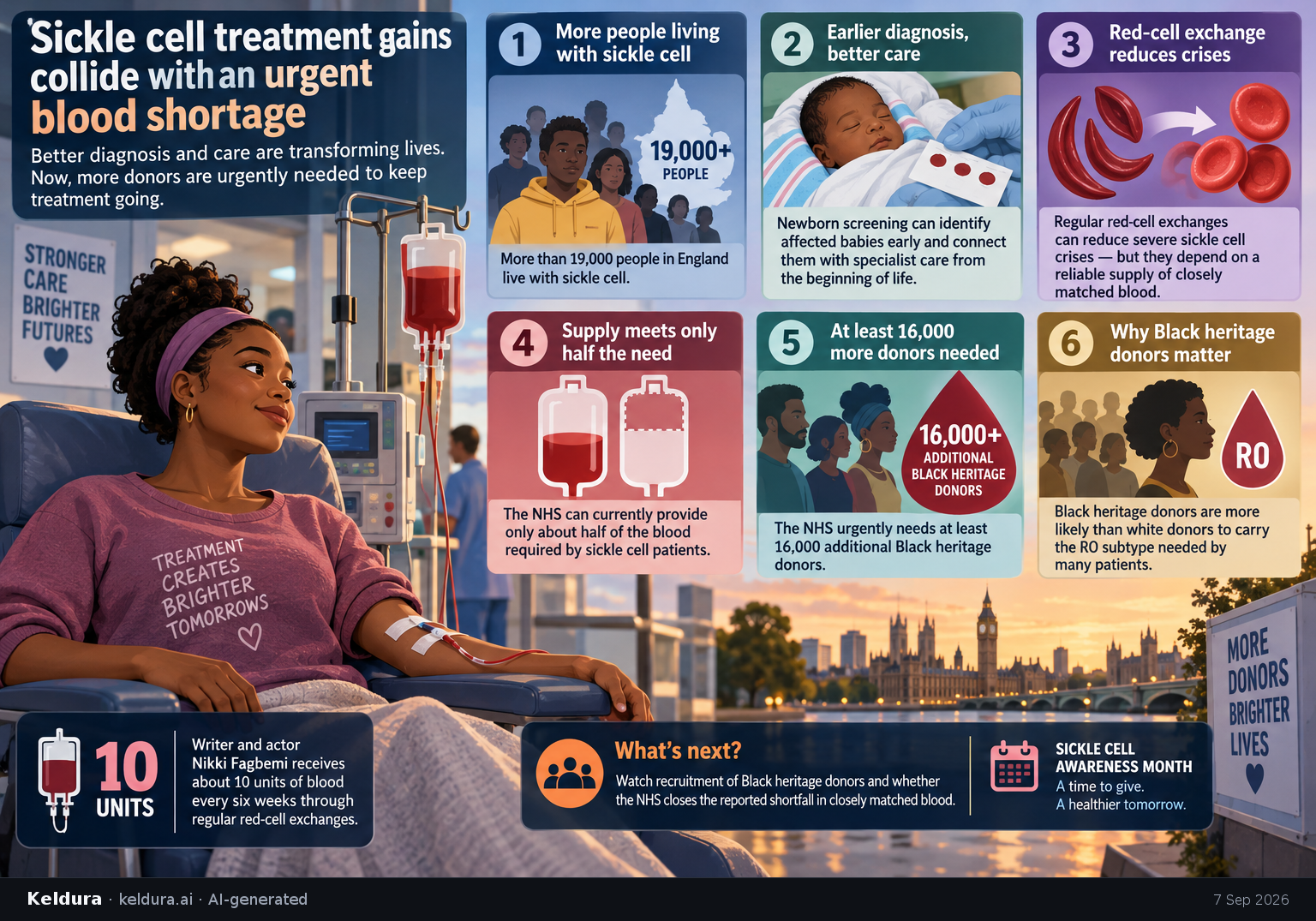
More than 19,000 people in England live with sickle cell, while newborn screening, specialist care and red-cell exchange have improved diagnosis and treatment.
Why it matters: Regular red-cell exchanges can reduce severe sickle cell crises, but their availability depends on a reliable supply of closely matched blood. Black heritage donors are especially important because t…
Improved screening and red-cell exchange are transforming care, but the NHS reports that blood supply meets only about half of current sickle cell demand.[1]
Why now
The NHS is using Sickle Cell Awareness Month to seek at least 16,000 more Black heritage donors.[1]
Watch next
Watch recruitment of Black heritage donors and whether the NHS closes the reported shortfall in closely matched blood.[1]
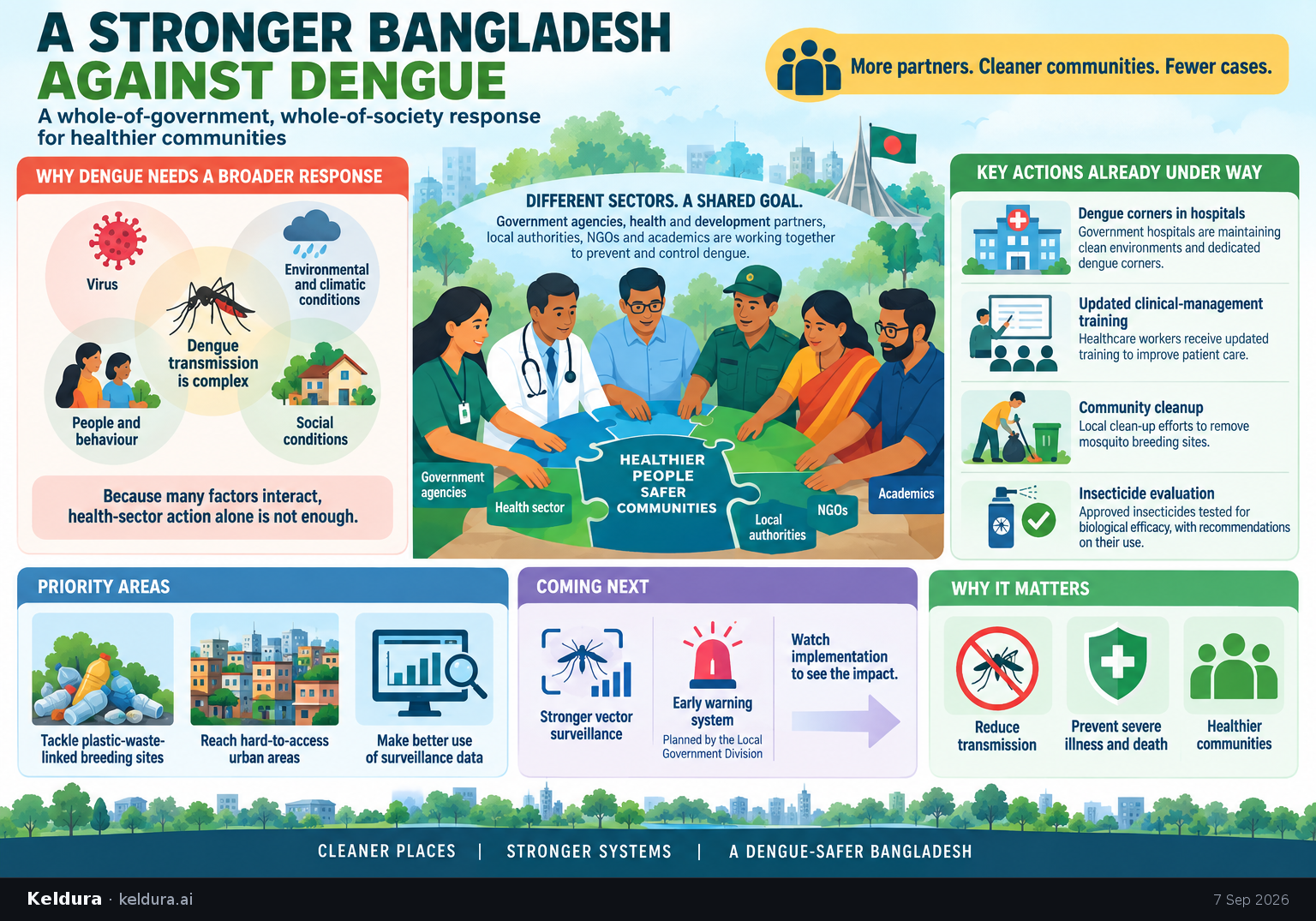
WHO convened Bangladesh government agencies, health and development partners, local authorities, NGOs and academics on August 24 to coordinate dengue prevention and control.
Why it matters: Dengue transmission reflects interactions among the virus, Aedes mosquitoes, people and environmental, climatic and social conditions, making health-sector action alone insufficient. Coordinated surv…
Bangladesh’s dengue response is being organized as a whole-of-government and whole-of-society effort rather than solely a clinical campaign.[5]
Why now
Officials describe dengue as a major public-health concern shaped by environmental, climatic and social factors as well as mosquito and human behavior.[5]
Watch next
Watch implementation of the Local Government Division’s planned vector-surveillance and early warning system.[5]
That's the desk. Every cheatsheet here started as a link. Yours can too.