Every cheatsheet Keldura Daily has published, newest first: the news hook, why it matters, and the sources it came from. Each cheatsheet is compiled by Keldura's AI from the sources it cites.
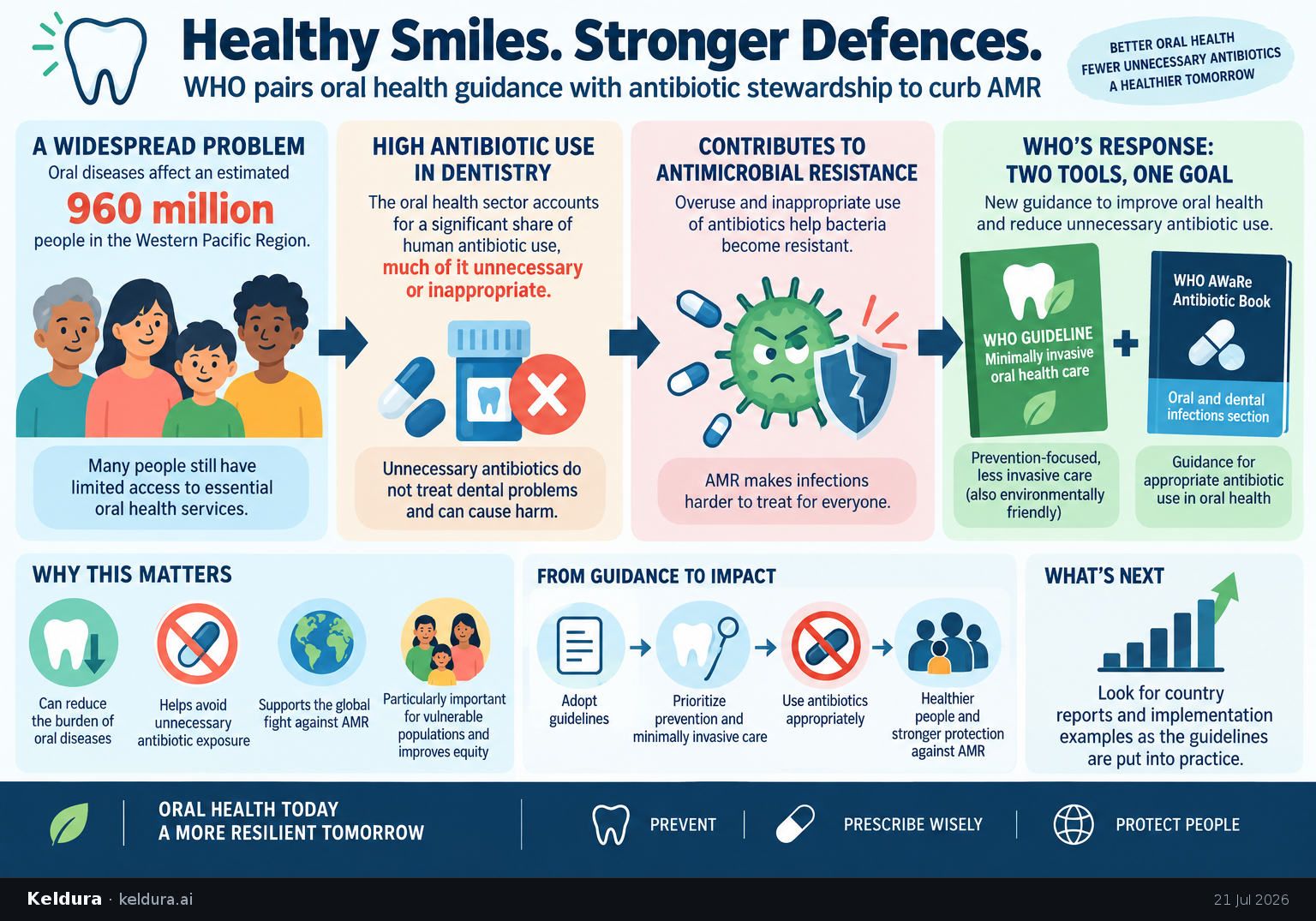
WHO says oral diseases affect an estimated 960 million people in the Western Pacific Region and that access to essential oral health services remains limited.
Why it matters: This links routine dental care to one of the biggest global health threats: antimicrobial resistance. If countries adopt prevention-focused, minimally invasive approaches earlier, they may reduce bot…
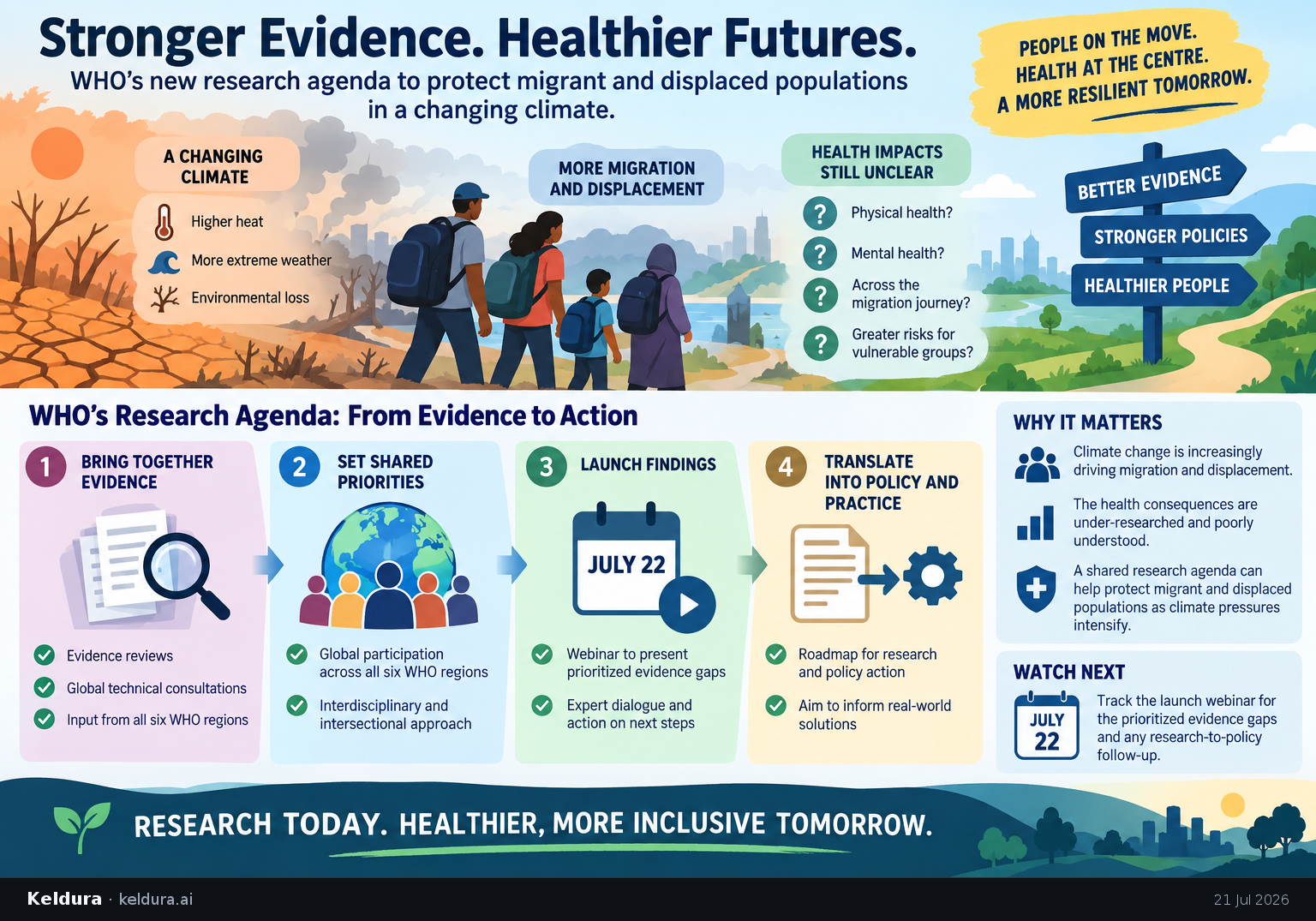
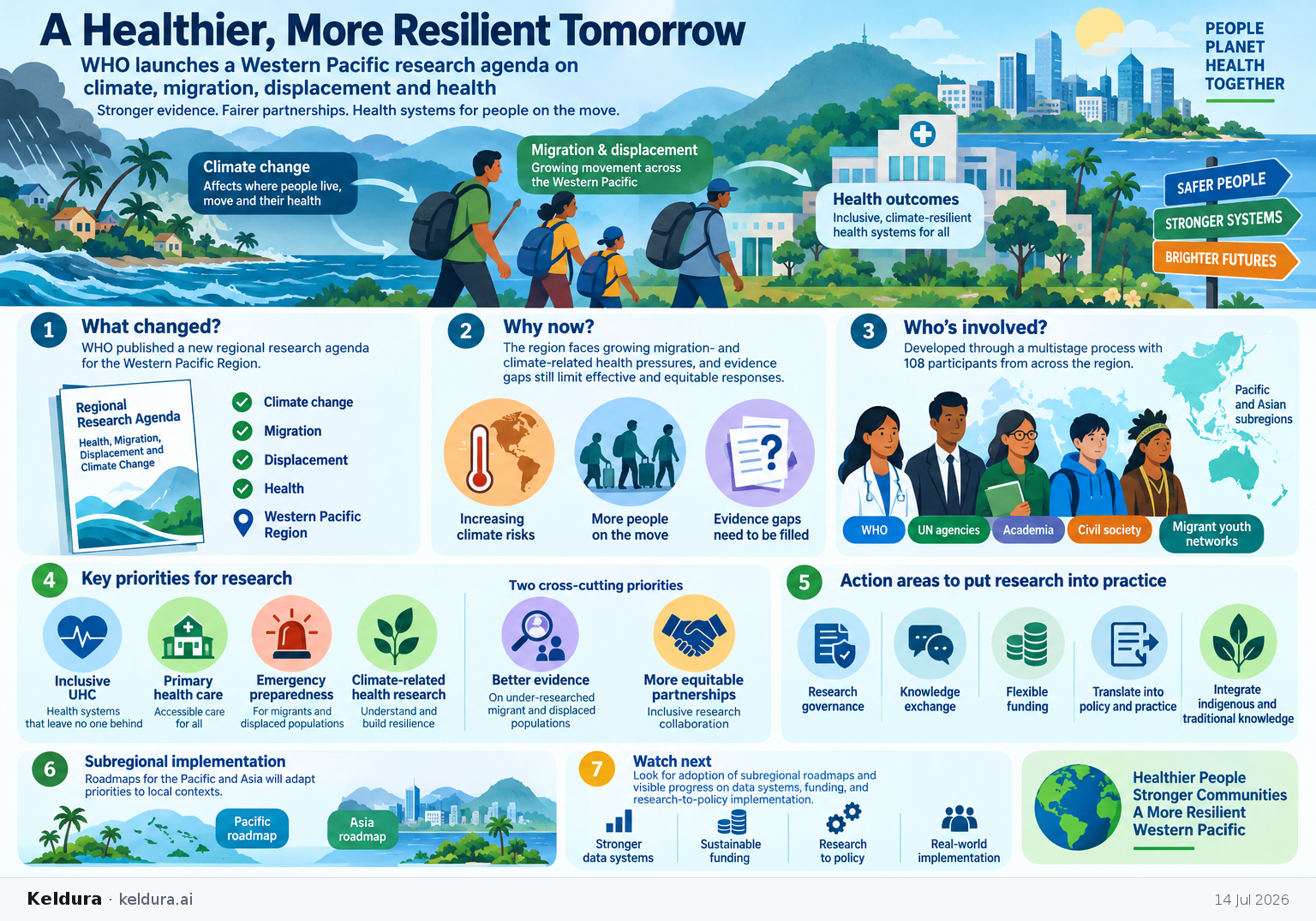
Why it matters: Climate change is increasingly driving migration and displacement, but WHO says the health consequences remain under-researched and poorly understood. Setting a shared research agenda is a practical…
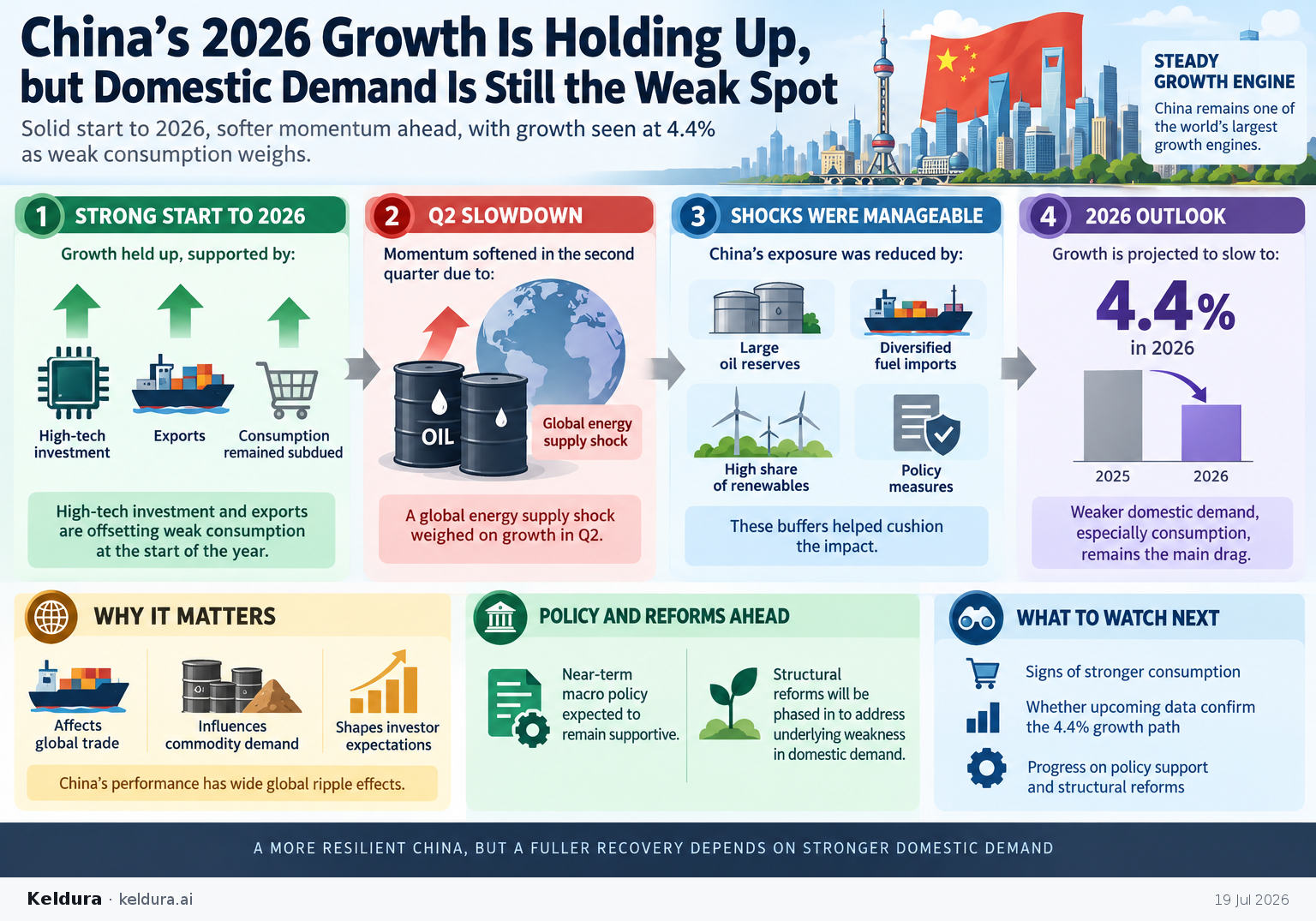
The World Bank’s China Economic Update says China maintained solid growth at the start of 2026, supported by high-tech investment and exports even as consumption stayed subdued.
Why it matters: This matters because China remains one of the world’s largest growth engines, so a moderation toward 4.4 percent in 2026 has implications for global trade, commodity demand, and investor expectations…
China’s growth outlook was revised to a softer 2026 pace, with weaker consumption still the main drag [2].
Why now
The second quarter was hit by a global energy supply shock, while domestic demand remained subdued [2].
Watch next
Look for signs of whether policy support and structural reforms improve consumption and whether the next macro data confirm the 4.4 percent growth path [2].
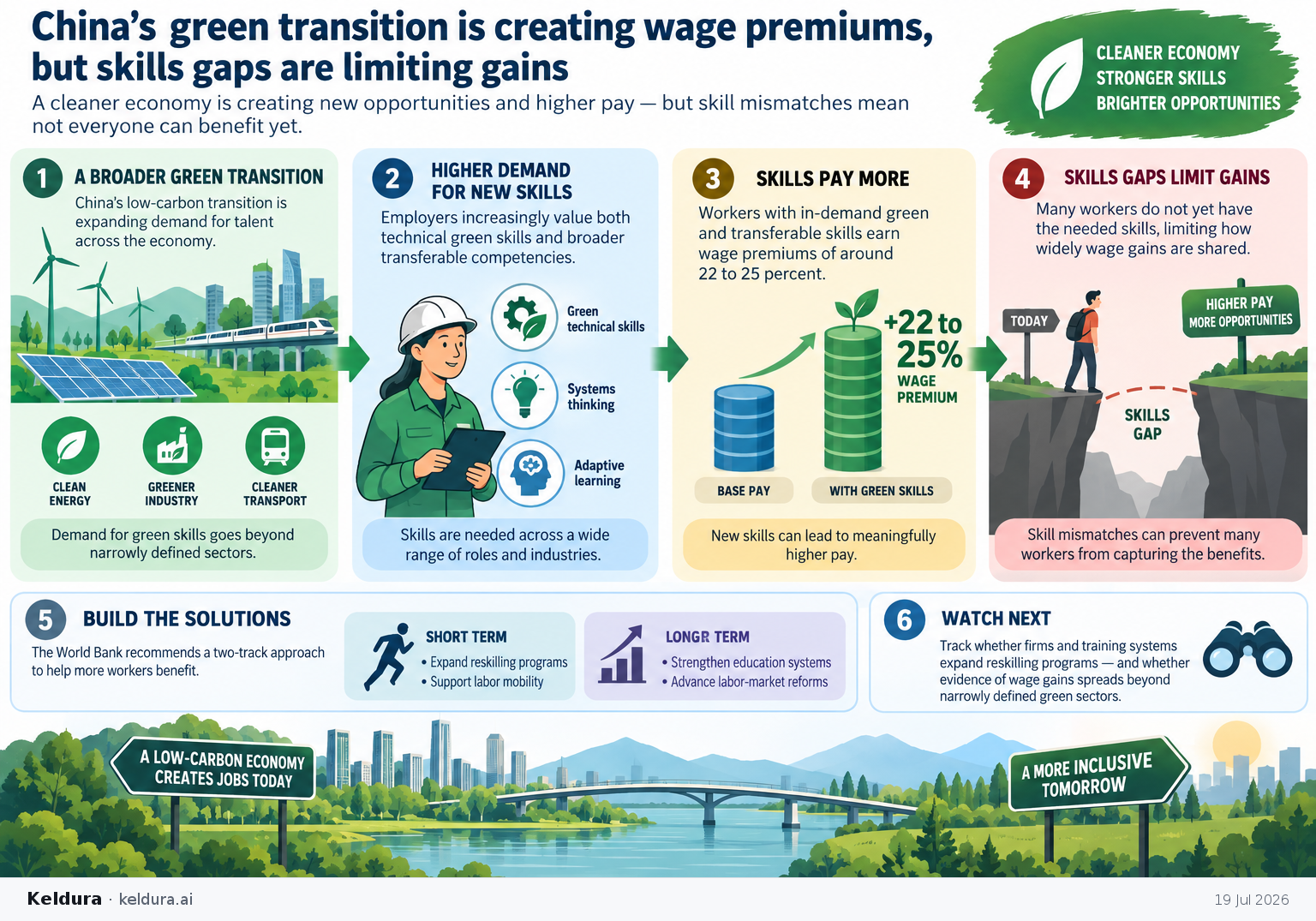
The same World Bank update says China’s low-carbon transition is reshaping its labor market, with demand rising for green technical skills and broader competencies such as systems thinking and adaptive learning.
Why it matters: This matters for markets and policymakers because the energy transition is not only an industrial story but also a labor-market story that affects productivity, wages, and the pace of inclusive growt…
Green-transition jobs are paying more, but skill mismatches are stopping workers from fully capturing the gains [2].
Why now
China’s low-carbon transition is broadening demand for both technical and transferable skills [2].
Watch next
Track whether firms and training systems expand reskilling programs and whether evidence of wage gains spreads beyond narrowly defined green sectors [2].
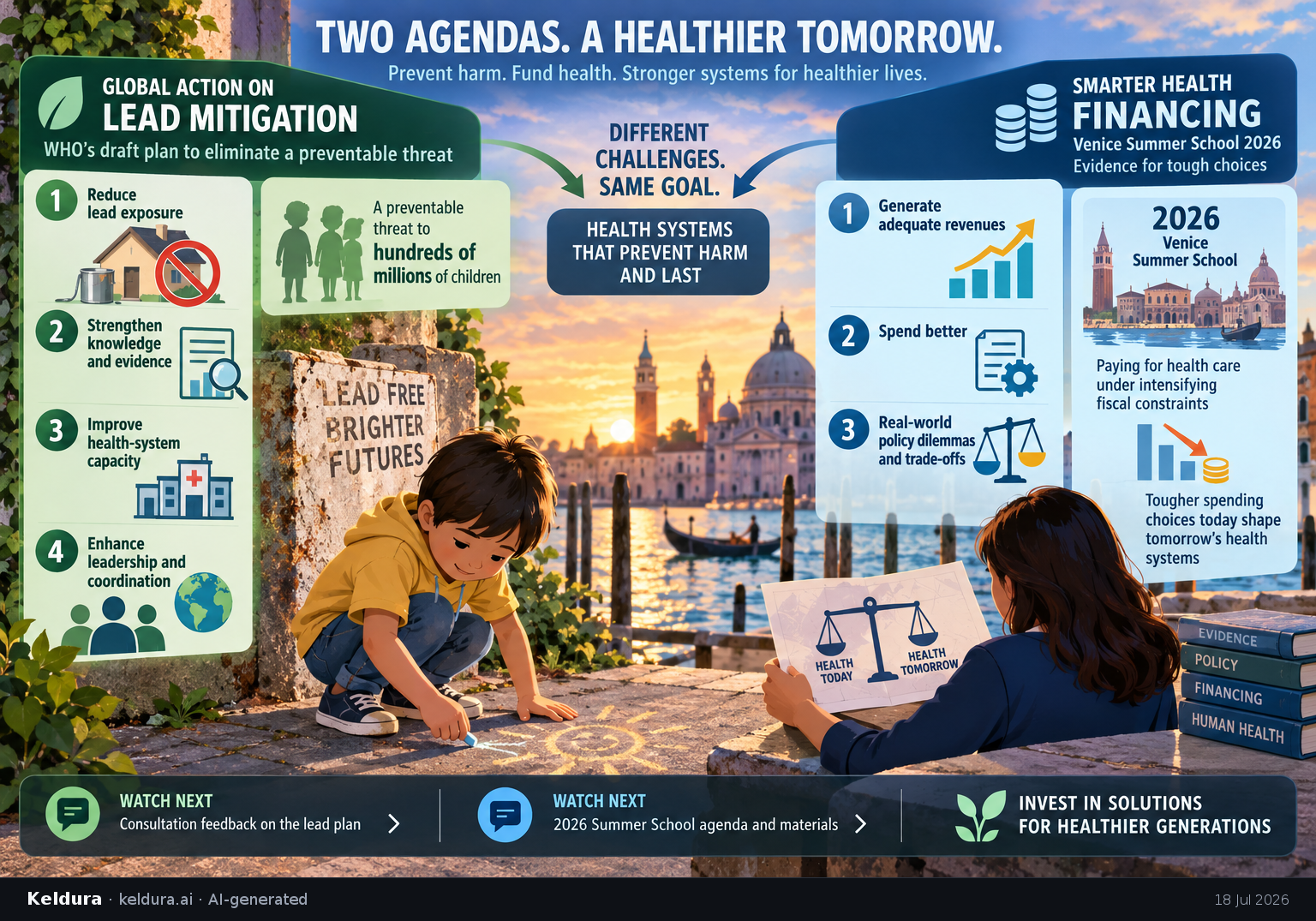
WHO has published a draft Global Action Plan on lead mitigation, developed in response to World Health Assembly resolution WHA78.27, with four focus areas.
Why it matters: These are not separate technical exercises; they both target the policy levers that determine whether health systems can prevent harm and sustain services under pressure. Lead poisoning is framed as…
WHO issued a draft global lead mitigation plan, and the Venice Summer School announced a 2026 program on financing health care under fiscal constraints [8][1].
Why now
Lead poisoning remains a major preventable burden, while health systems face intensifying fiscal constraints that force harder spending choices [8][1].
Watch next
Consultation feedback on the lead plan and the 2026 Summer School agenda or participant materials showing how the financing framework is being operationalized [8][1].
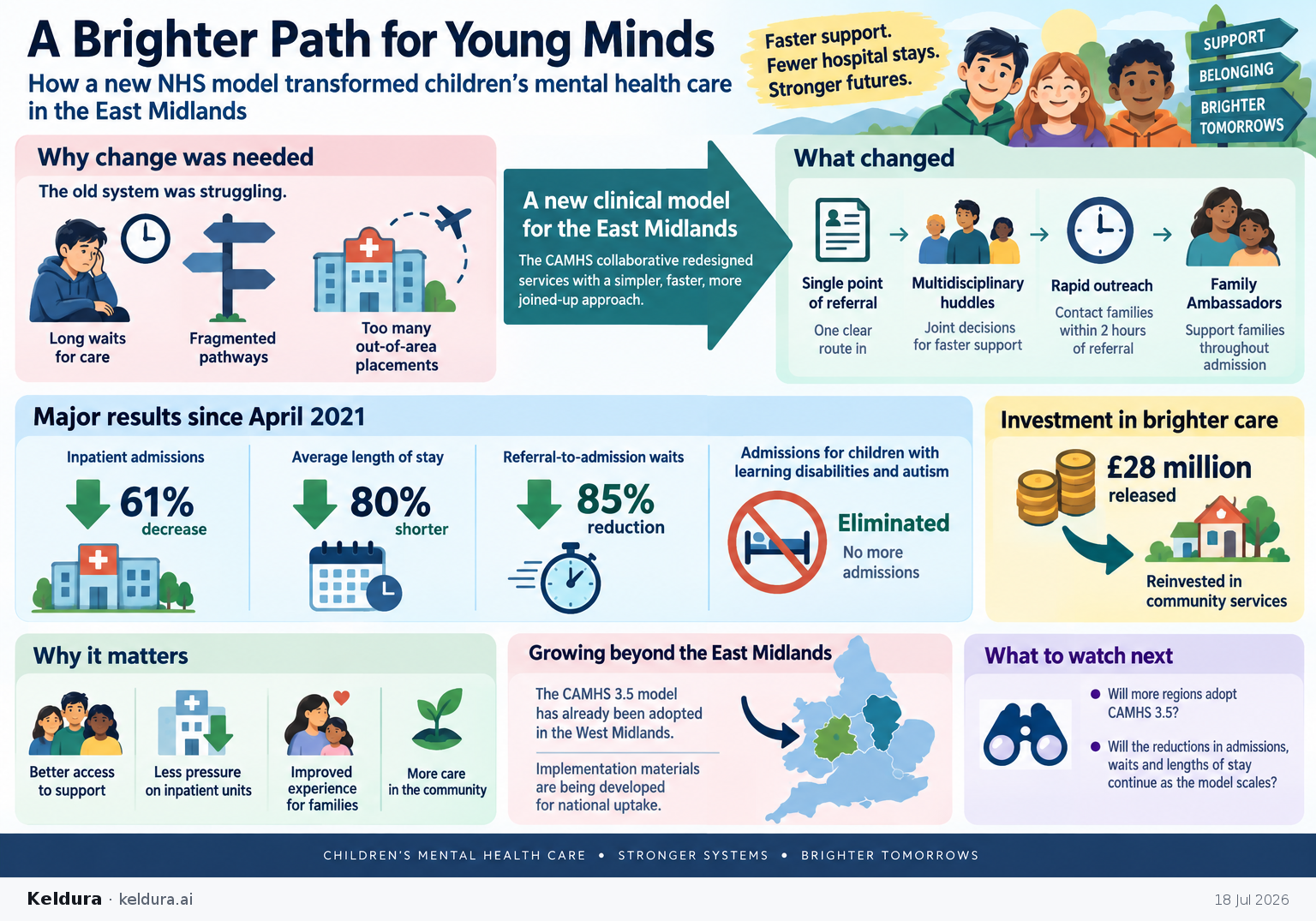
A new clinical model in the East Midlands has transformed children and young people’s mental health services after long waits and too many out-of-area placements prompted a redesign.
Why it matters: This is a concrete example of service redesign improving access, reducing hospitalization, and redirecting money back into community care. The scale of the changes suggests that better coordination a…
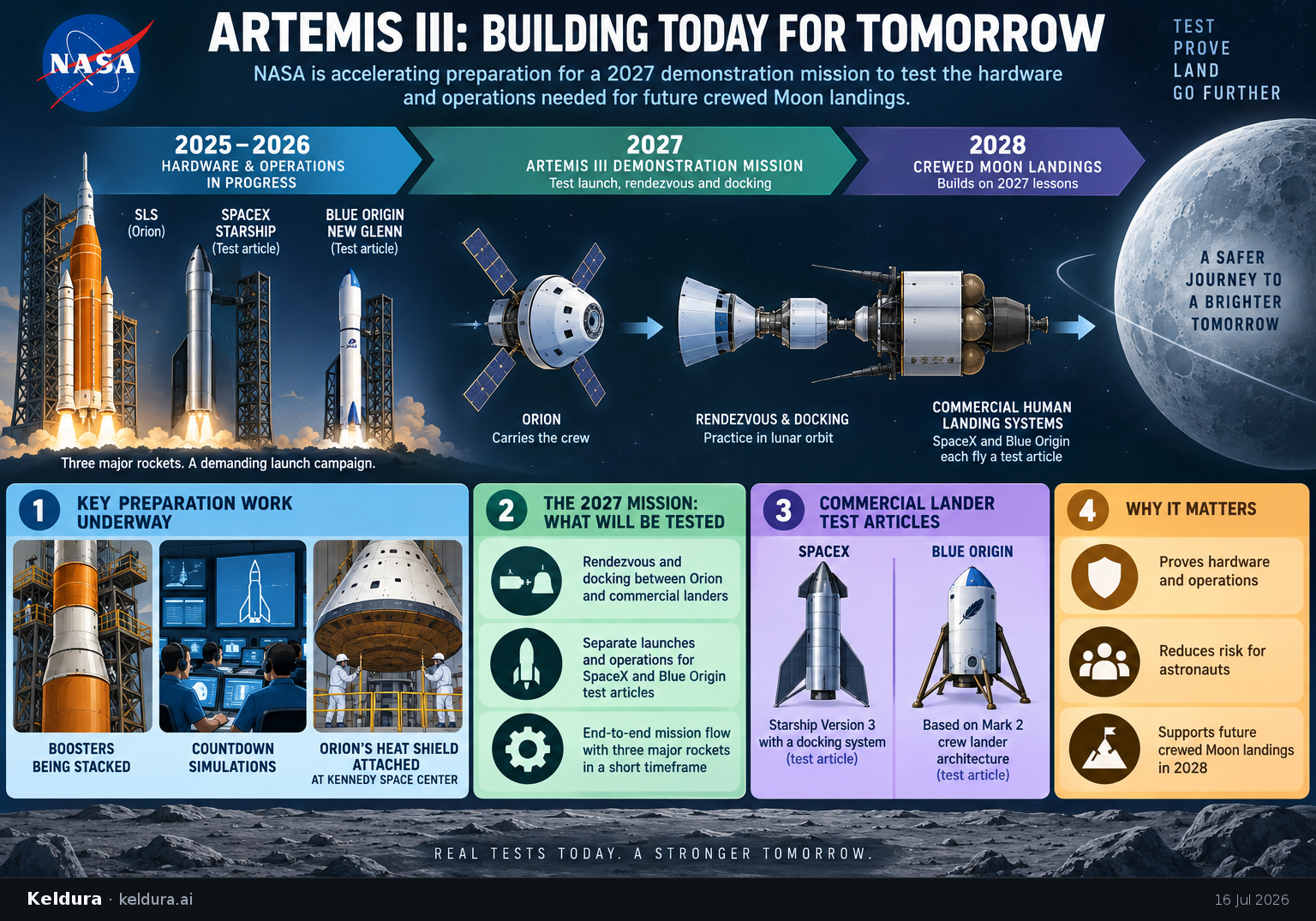
NASA says Artemis III is moving into a more active preparation phase, with boosters being stacked, countdown simulations underway, and Orion’s heat shield attached at Kennedy Space Center.
Why it matters: This is a key milestone in NASA’s plan to prove the hardware and operations needed for future crewed lunar landings, while reducing risk through testing in 2027 before astronauts land on the Moon in…
NASA says Artemis III hardware and operations are advancing, including booster stacking, countdown simulations, and Orion heat-shield installation; the agency also detailed the 2027 demonstration mission plan [1][5].
Why now
NASA is preparing for a 2027 demo that must validate rendezvous, docking, and launch operations before crewed Moon landings in 2028 [5].
Watch next
Observable milestones include continued Artemis III vehicle integration at Kennedy and further NASA updates on lander test-article readiness and launch sequencing [1][5].
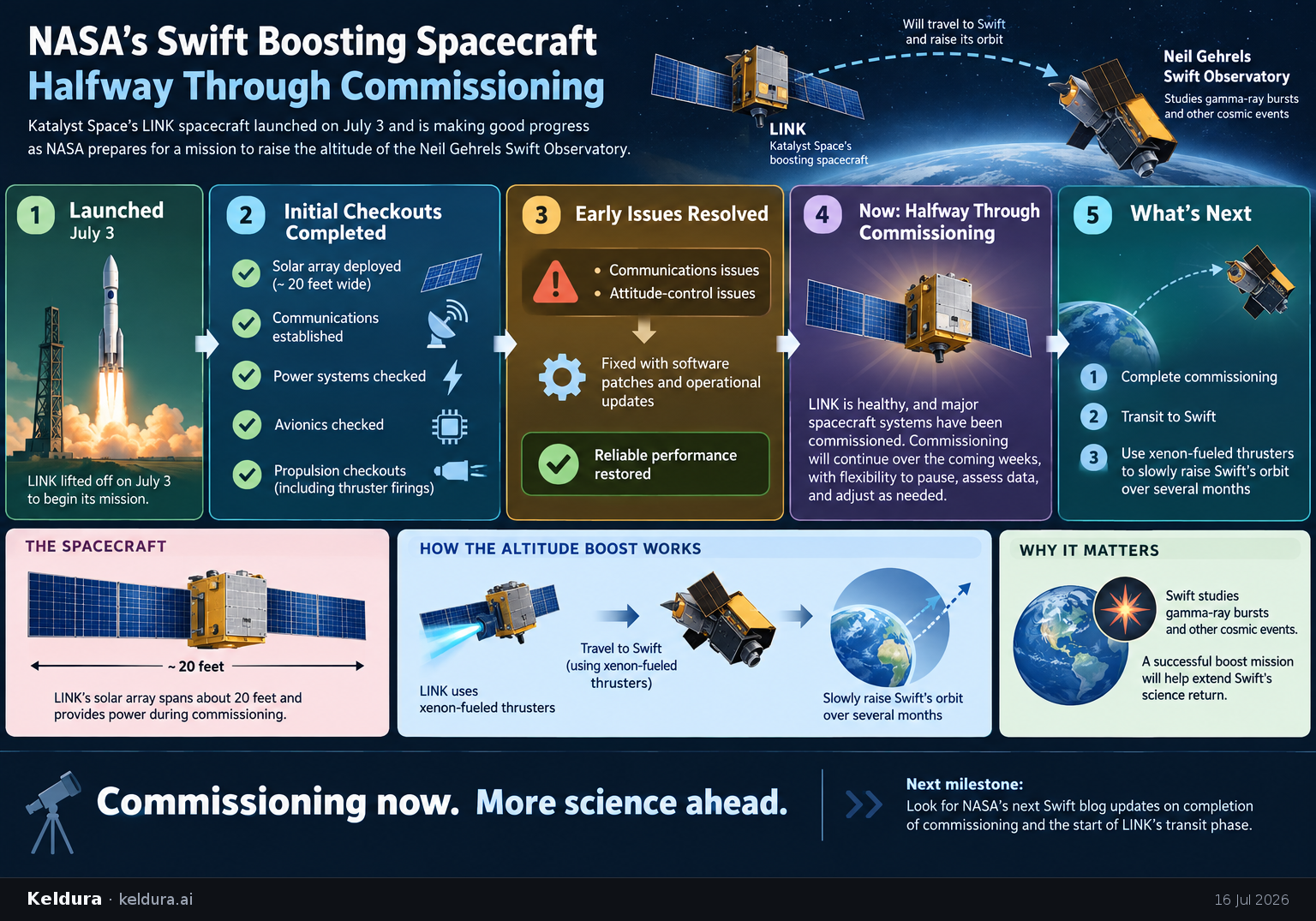
Katalyst Space’s LINK spacecraft launched on July 3 and is now about halfway through commissioning as NASA prepares a mission to raise the altitude of the Neil Gehrels Swift Observatory.
Why it matters: Swift is a NASA satellite that studies gamma-ray bursts and other cosmic events, so a successful boost mission would help extend the observatory’s science return. The commissioning progress is import…
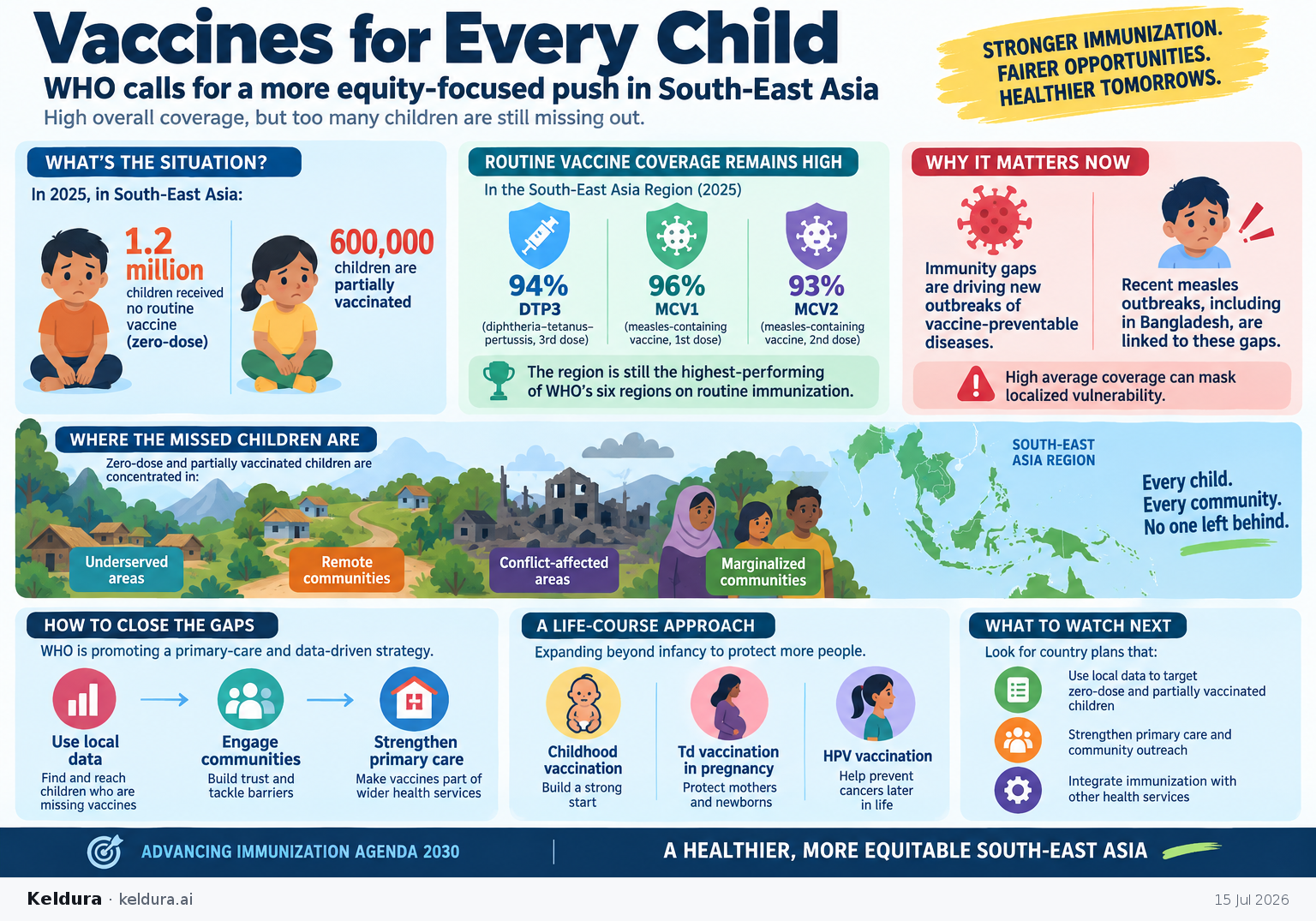
WHO said nearly 1.2 million children in the South-East Asia Region did not receive their first routine vaccine in 2025, while 600,000 remained partially vaccinated, even as routine coverage stayed high.
Why it matters: WHO says the remaining immunity gaps are driving new outbreaks of vaccine-preventable diseases, and it specifically linked recent measles outbreaks, including in Bangladesh, to those gaps. The messag…
WHO renewed its call to reach every child after 2025 estimates showed 1.2 million zero-dose children and 600,000 partially vaccinated children in South-East Asia.[2]
Why now
Measles outbreaks and persistent immunity gaps show that strong regional averages are not enough to prevent resurgence.[2]
Watch next
Look for country plans that use local data, primary care, and community outreach to reduce zero-dose and partially vaccinated counts.[2]
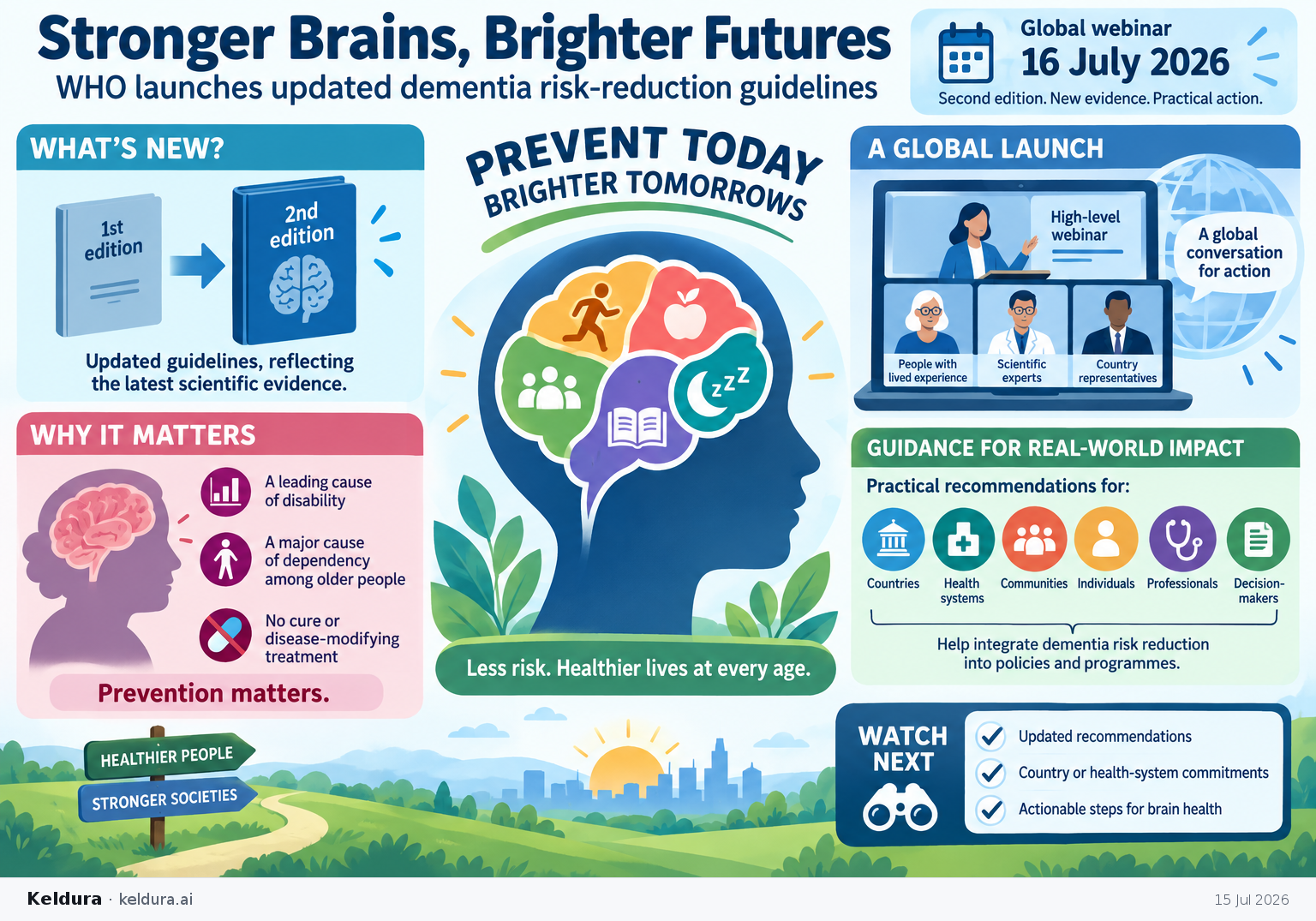
WHO announced a global webinar on 16 July 2026 to launch the second edition of its guidelines on risk reduction of cognitive decline and dementia.
Why it matters: WHO describes dementia as a leading cause of disability and dependency among older people, and says prevention matters because there are no disease-modifying treatments or a cure. Updated prevention…
WHO is releasing the second edition of its dementia risk-reduction guidelines in a global webinar on 16 July 2026.[1]
Why now
WHO says dementia is a major cause of disability and dependency, and prevention is especially important because there is no cure or disease-modifying treatment.[1]
Watch next
Look for the updated recommendations and any country or health-system commitments announced during or after the webinar.[1]
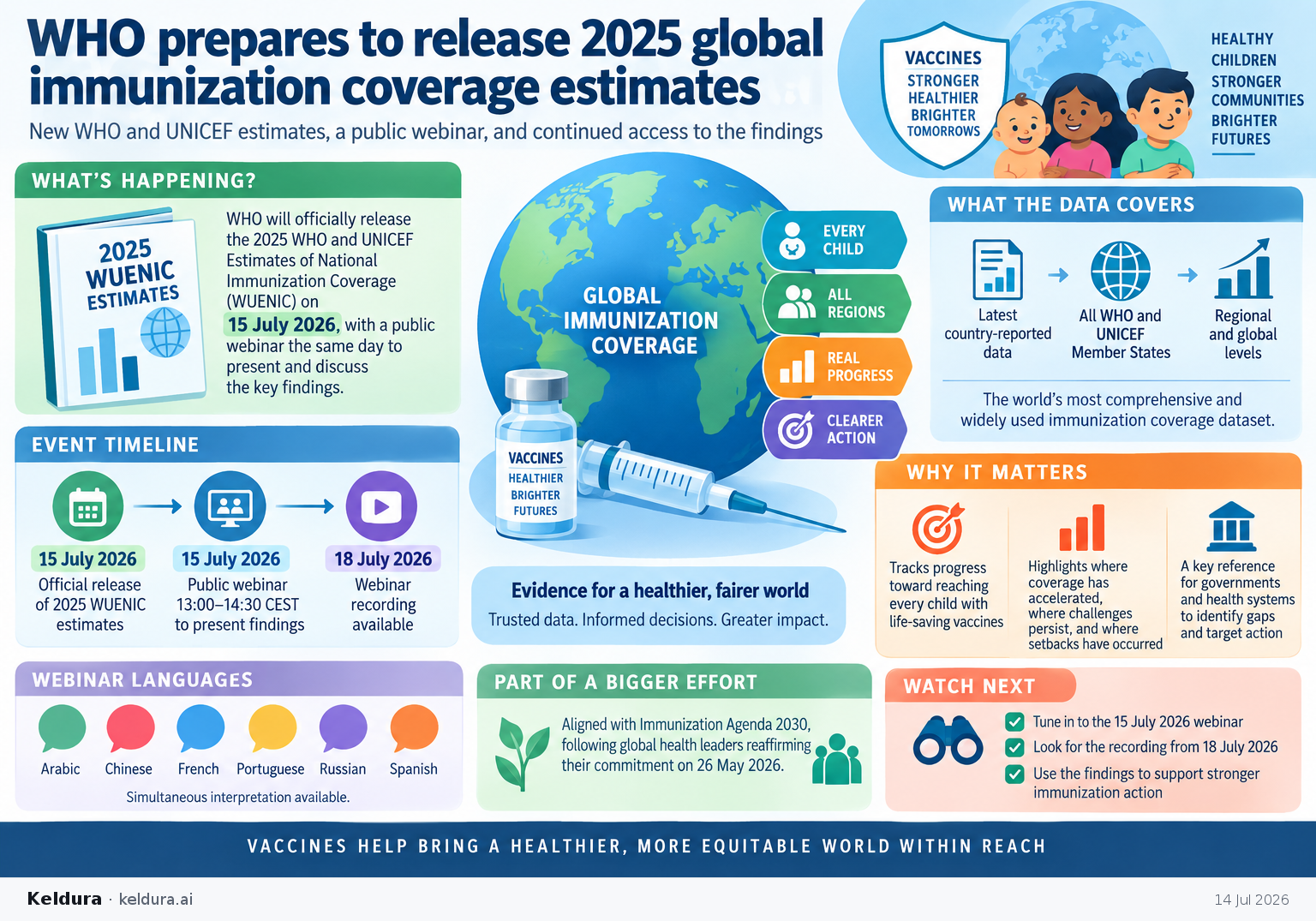
WHO says the 2025 WHO and UNICEF Estimates of National Immunization Coverage (WUENIC) will be officially released on 15 July 2026, with a public webinar the same day to present and discuss the key findings.
Why it matters: WHO says WUENIC helps assess global progress toward reaching every child with life-saving vaccines and highlights where coverage has accelerated, where challenges persist, and where setbacks have occ…
Why it matters: WHO says migration, displacement and climate change are increasingly shaping health outcomes in the Western Pacific Region, while evidence gaps still limit effective and equitable responses. The road…