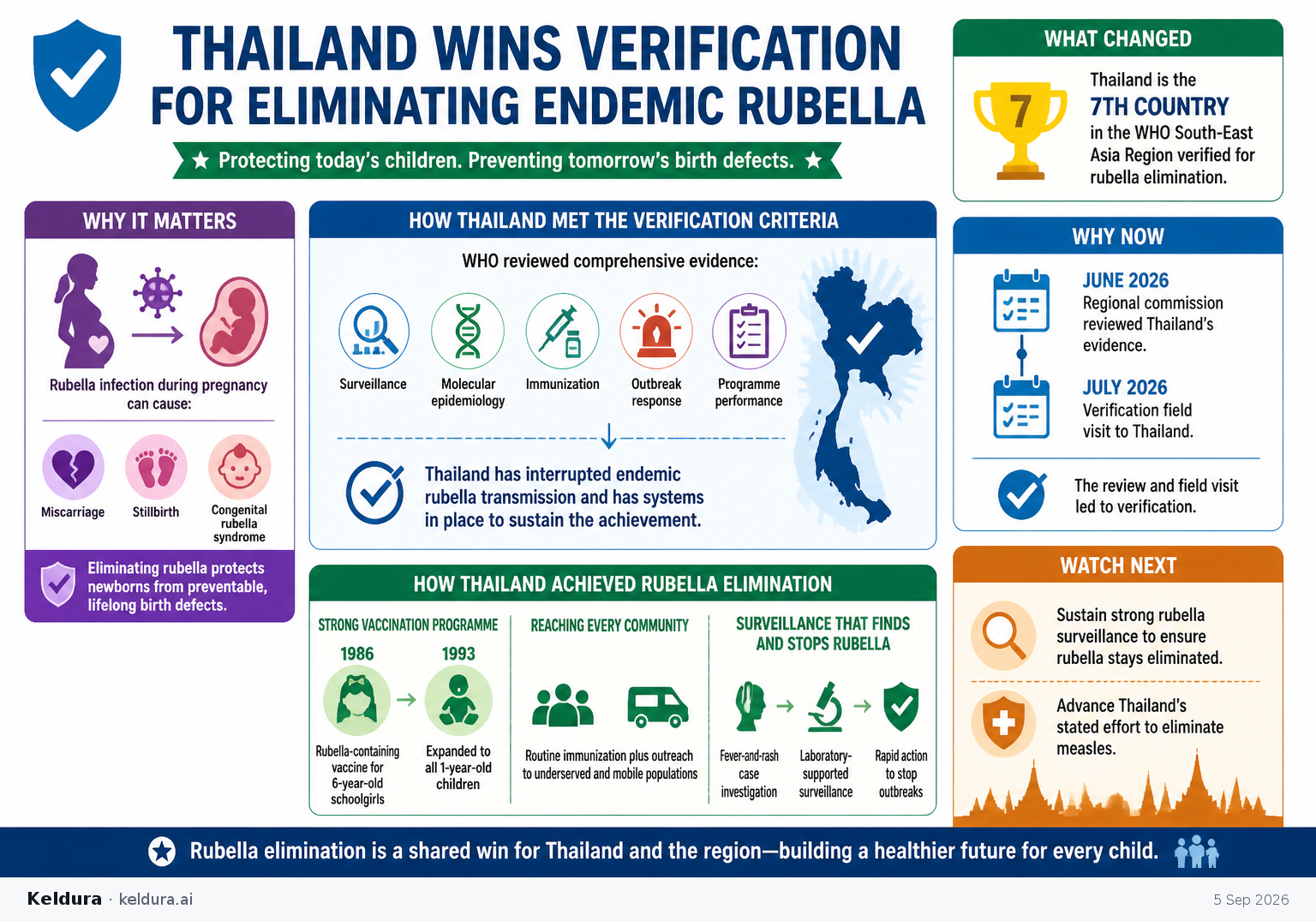
WHO has verified Thailand as having eliminated rubella as a public health problem, making it the seventh country in the WHO South-East Asia Region to achieve rubella elimination.
Why it matters: Rubella infection during pregnancy can cause miscarriage, stillbirth or congenital rubella syndrome, so interrupting endemic transmission protects newborns from preventable lifelong birth defects.
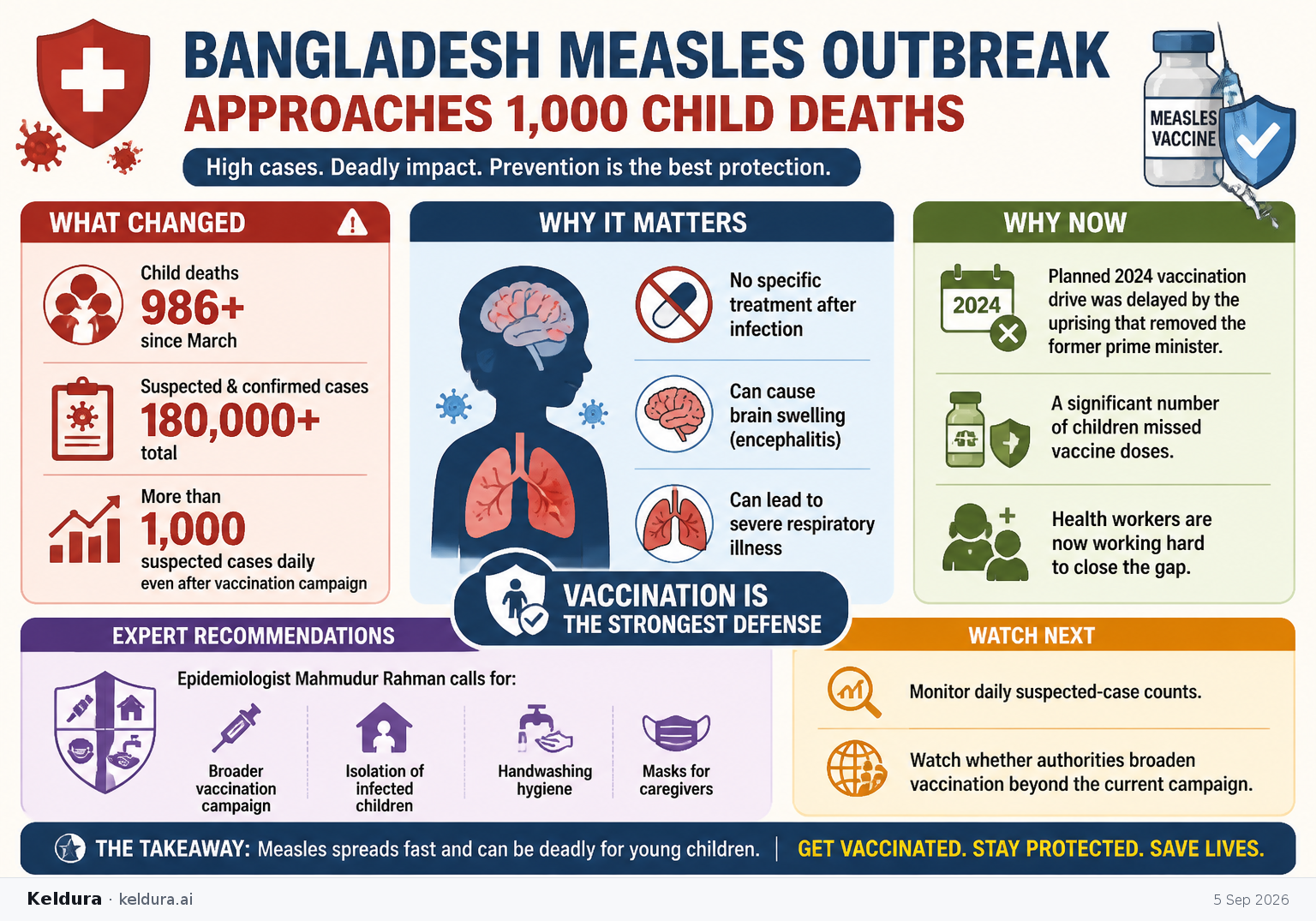
At least 986 children have died in Bangladesh’s measles outbreak since March, while suspected and confirmed cases have exceeded 180,000.
Why it matters: Measles has no specific treatment after infection and can cause complications including brain swelling and severe respiratory illness, making prevention through vaccination especially important for y…
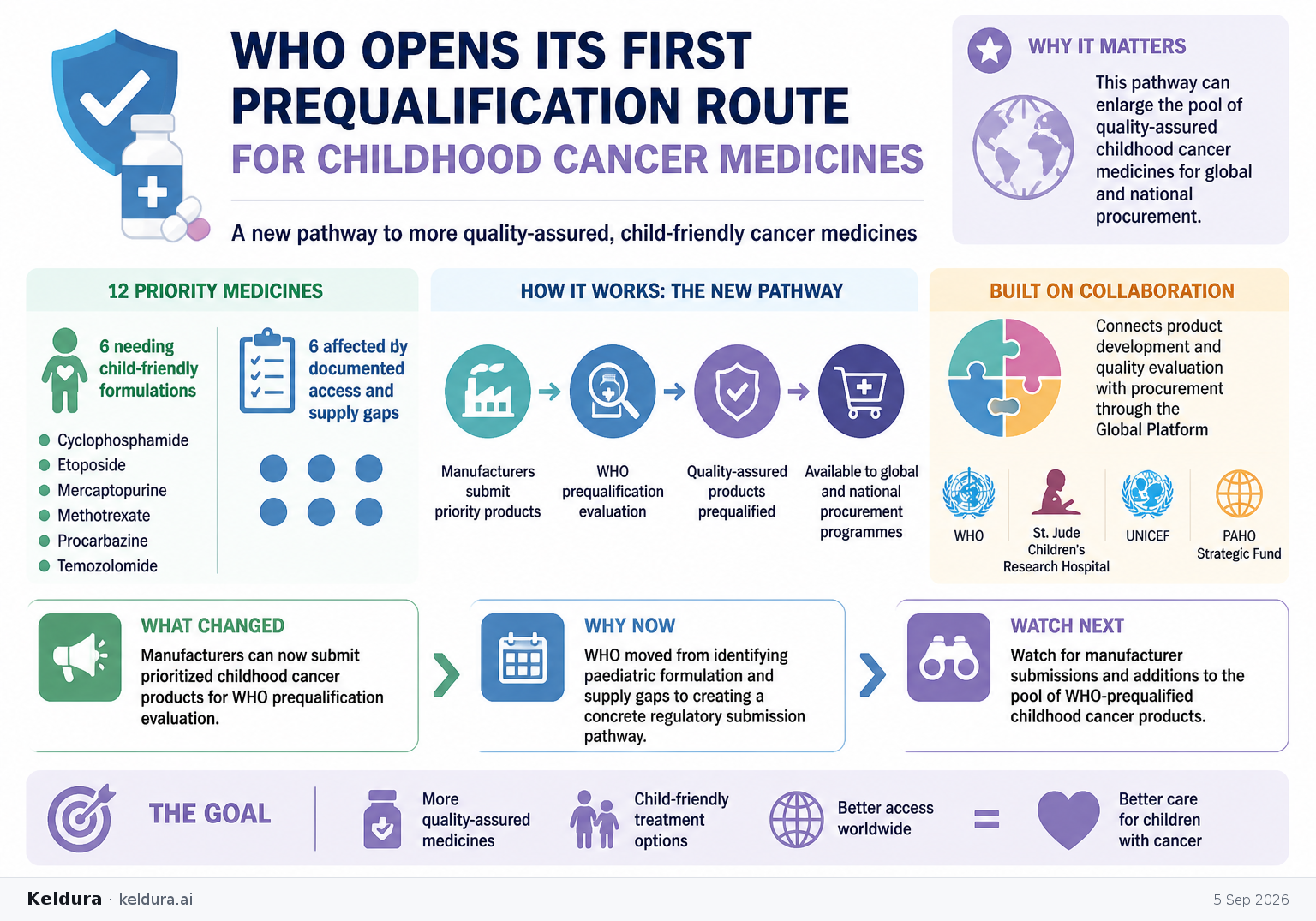
WHO issued its first invitation for manufacturers of childhood cancer medicines to submit products to the WHO Prequalification Programme.
Why it matters: The new pathway could enlarge the pool of quality-assured childhood cancer medicines available to international and national procurement programmes.
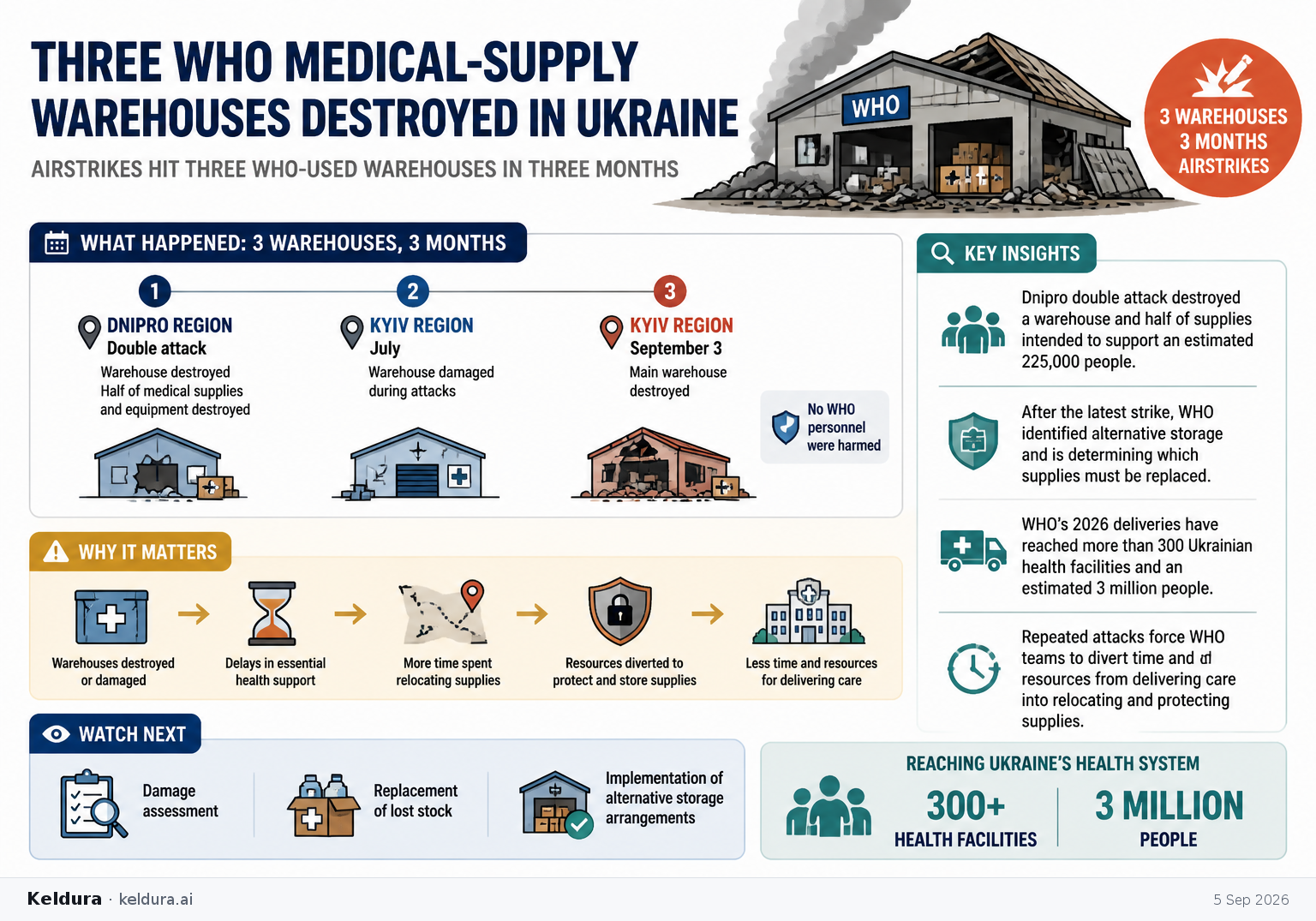
Airstrikes destroyed three warehouses used by WHO in different Ukrainian regions over three months, damaging or ruining medical supplies intended for frontline and hard-to-reach areas.
Why it matters: The attacks can delay essential health support and force WHO teams to divert time and resources from delivering care into repeatedly relocating and protecting supplies.
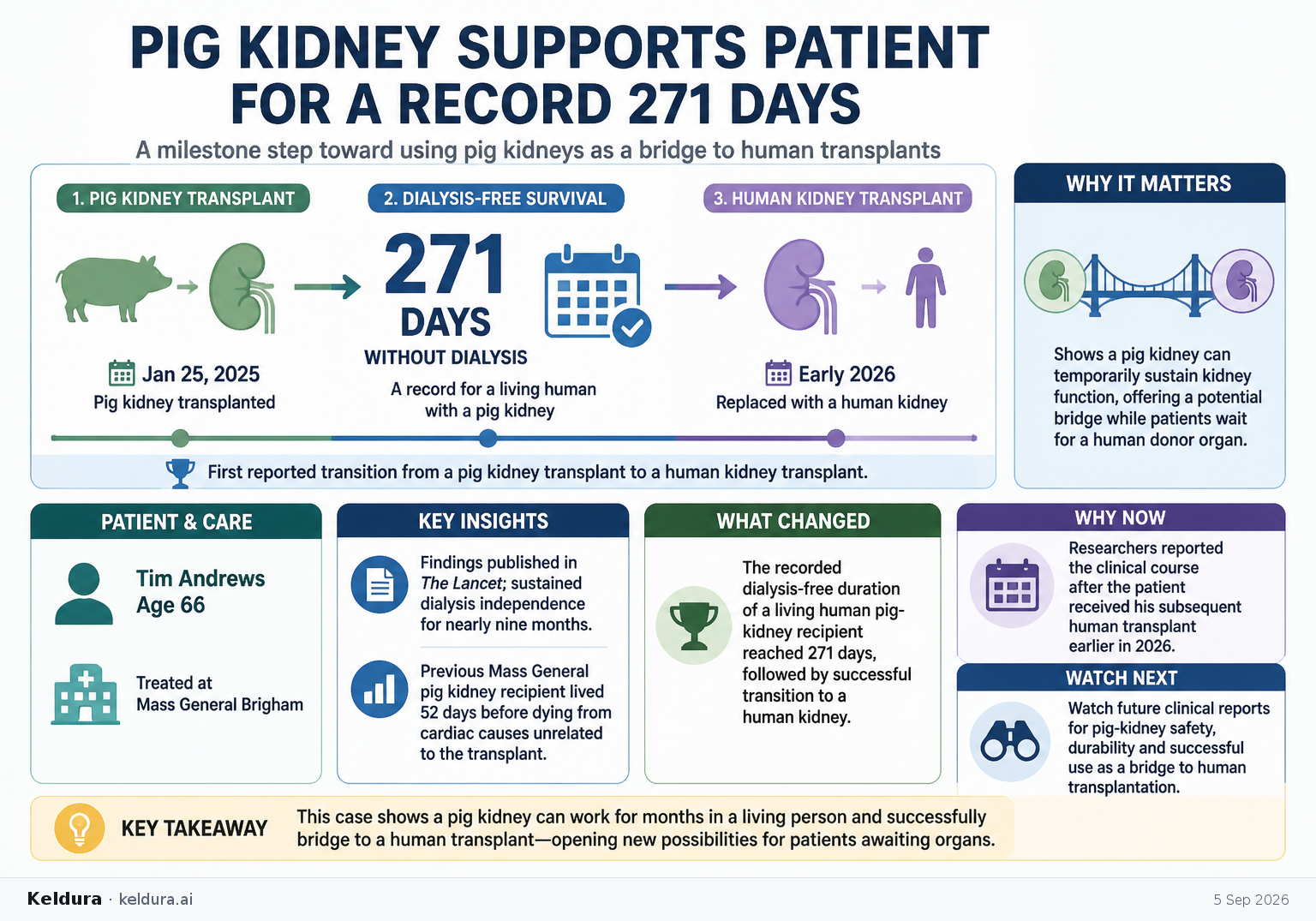
An American patient lived without dialysis for 271 days after receiving a pig kidney, the longest reported dialysis-free survival following pig-to-human kidney transplantation in a living person.
Why it matters: The case indicates that a pig kidney can temporarily sustain renal function and potentially serve as a bridge while a patient waits for a human donor organ.
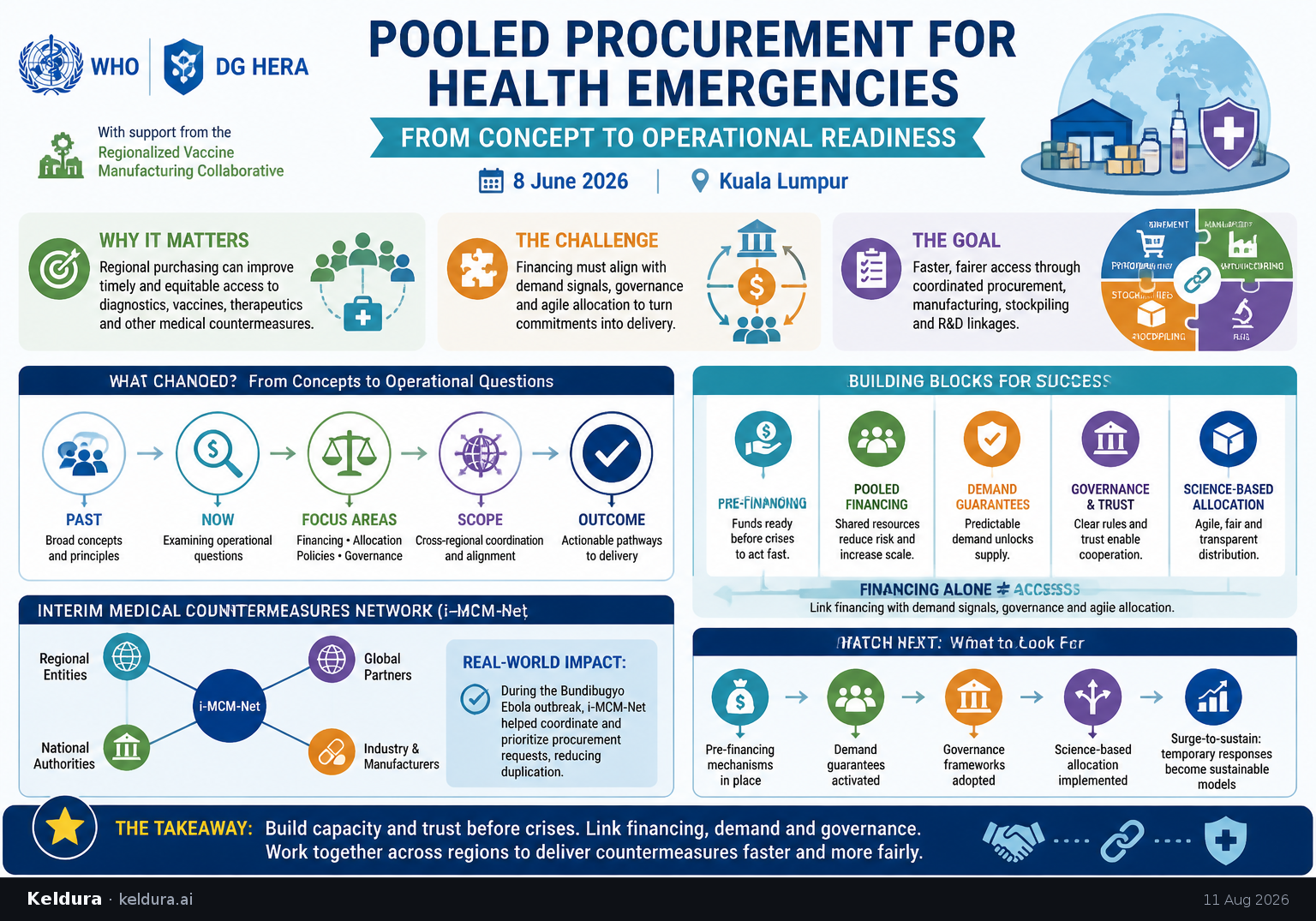
Why it matters: Regional purchasing systems could improve timely and equitable access to diagnostics, vaccines, therapeutics and other medical countermeasures, but the workshop found that financing must be connected…
WHO, DG HERA and partners advanced discussions from conceptual pooled procurement toward operational questions involving financing, allocation and cross-regional coordination.[1]
Why now
Health emergencies require faster and more equitable access to medical countermeasures, while current procurement requests can create duplication without structured global–regional coordination.[1]
Watch next
Watch for regional procurement mechanisms to adopt linked pre-financing, demand guarantees, governance frameworks and science-based allocation processes.[1]
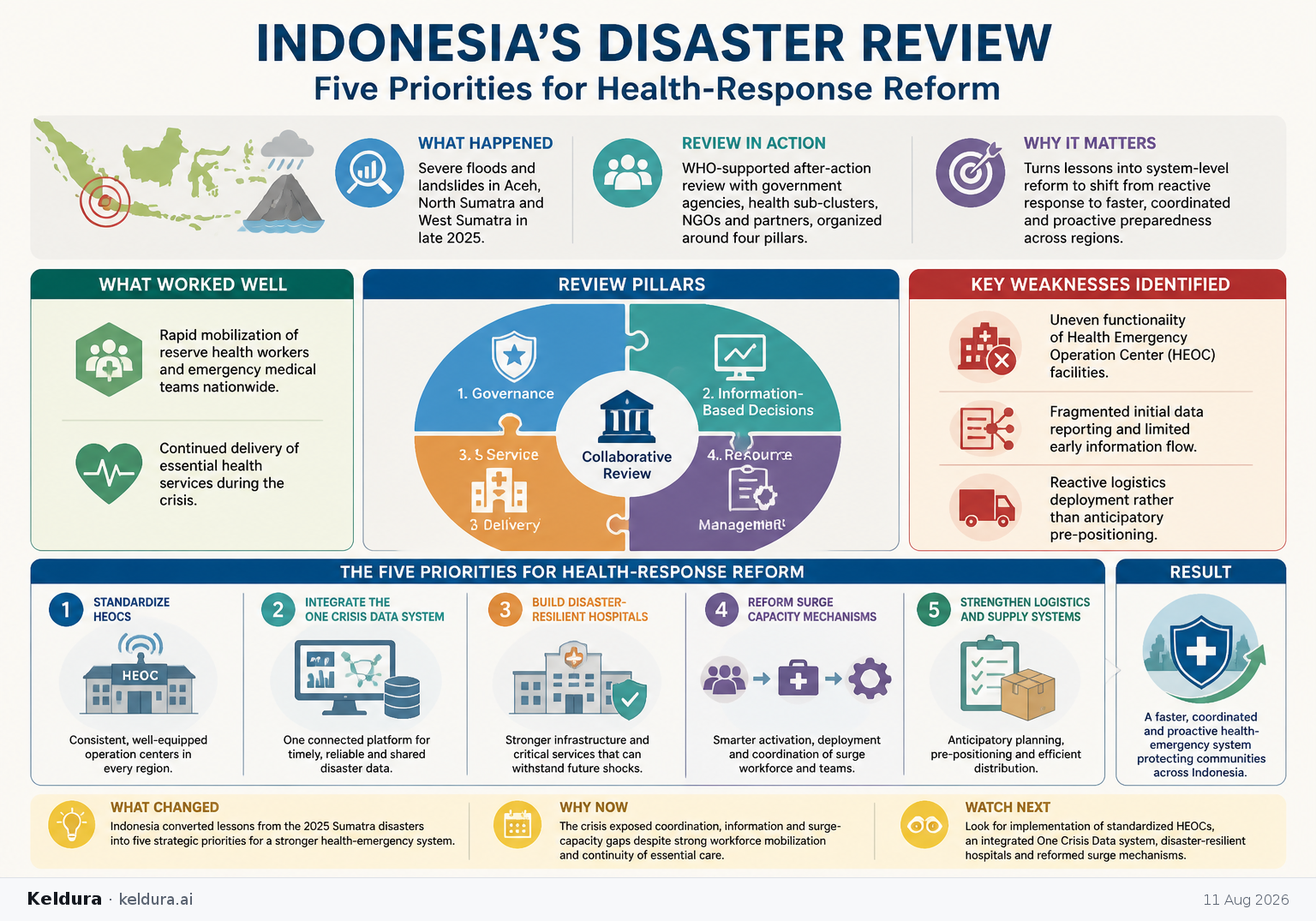
An after-action review of Indonesia’s response to severe floods and landslides in Aceh, North Sumatra and West Sumatra found that the late-2025 crisis strained coordination, data systems and surge capacity.
Why it matters: The findings give Indonesia a system-level reform agenda aimed at shifting health-emergency management from reactive deployment toward faster, coordinated and proactive preparedness across regions.
Indonesia converted lessons from the 2025 Sumatra disasters into five strategic priorities for strengthening its health-emergency system.[2]
Why now
The floods and landslides exposed coordination, information and surge-capacity gaps despite strong workforce mobilization and continuity of essential care.[2]
Watch next
Watch for implementation of standardized HEOCs, an integrated One Crisis Data system, disaster-resilient hospitals and reformed surge mechanisms.[2]
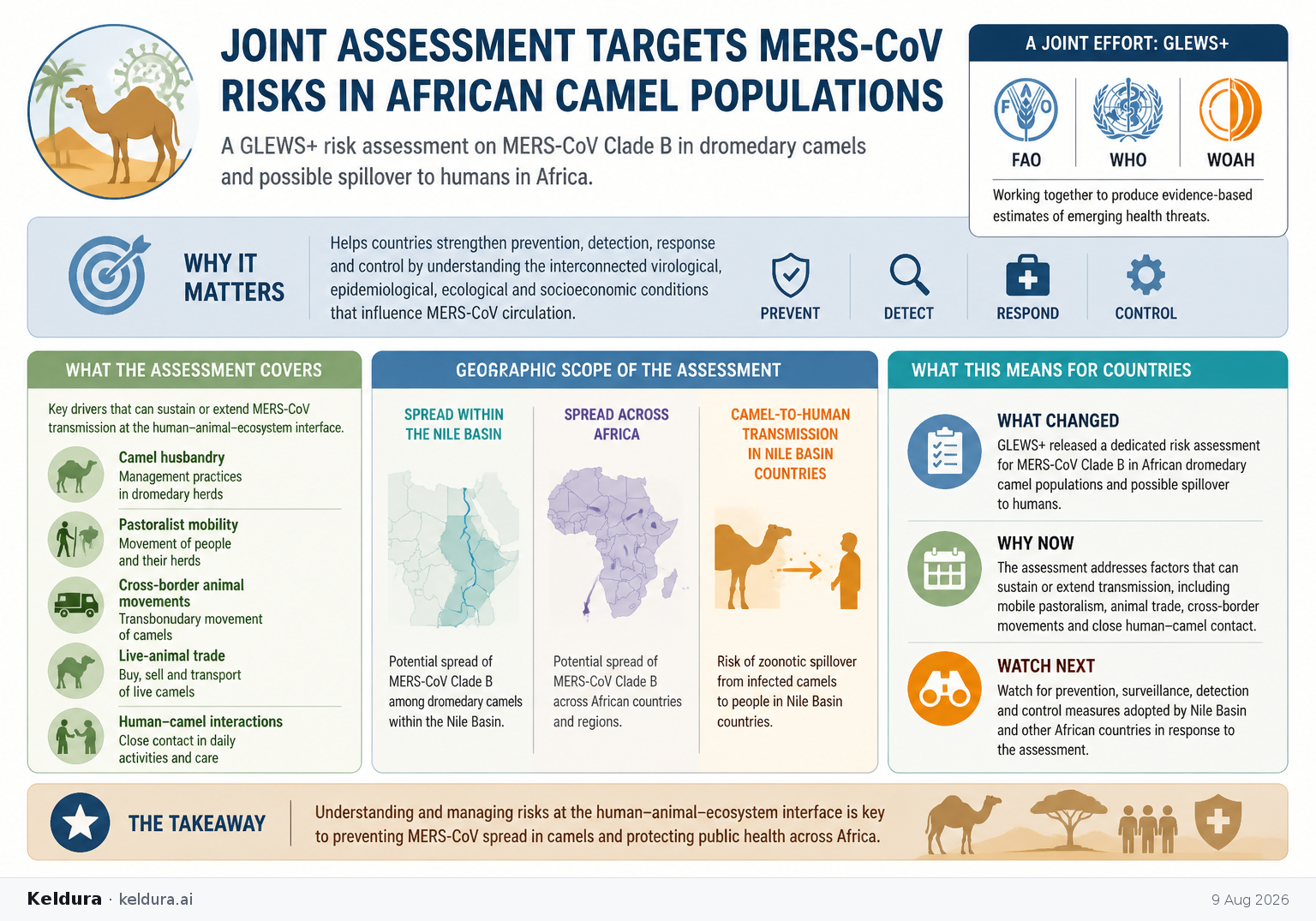
GLEWS+, a joint initiative of FAO, WHO and WOAH, has published an assessment of MERS-CoV clade B transmission risks at the human–animal–ecosystem interface.
Why it matters: The assessment is intended to help countries strengthen prevention, detection, response and control by considering the interconnected virological, epidemiological, ecological and socioeconomic condit…
GLEWS+ released a dedicated risk assessment for MERS-CoV clade B in African dromedary camel populations and possible spillover to humans.[1]
Why now
The assessment addresses factors that can sustain or extend transmission, including mobile pastoralism, animal trade, cross-border movements and close human–camel contact.[1]
Watch next
Watch for prevention, surveillance, detection and control measures adopted by Nile Basin and other African countries in response to the assessment.[1]
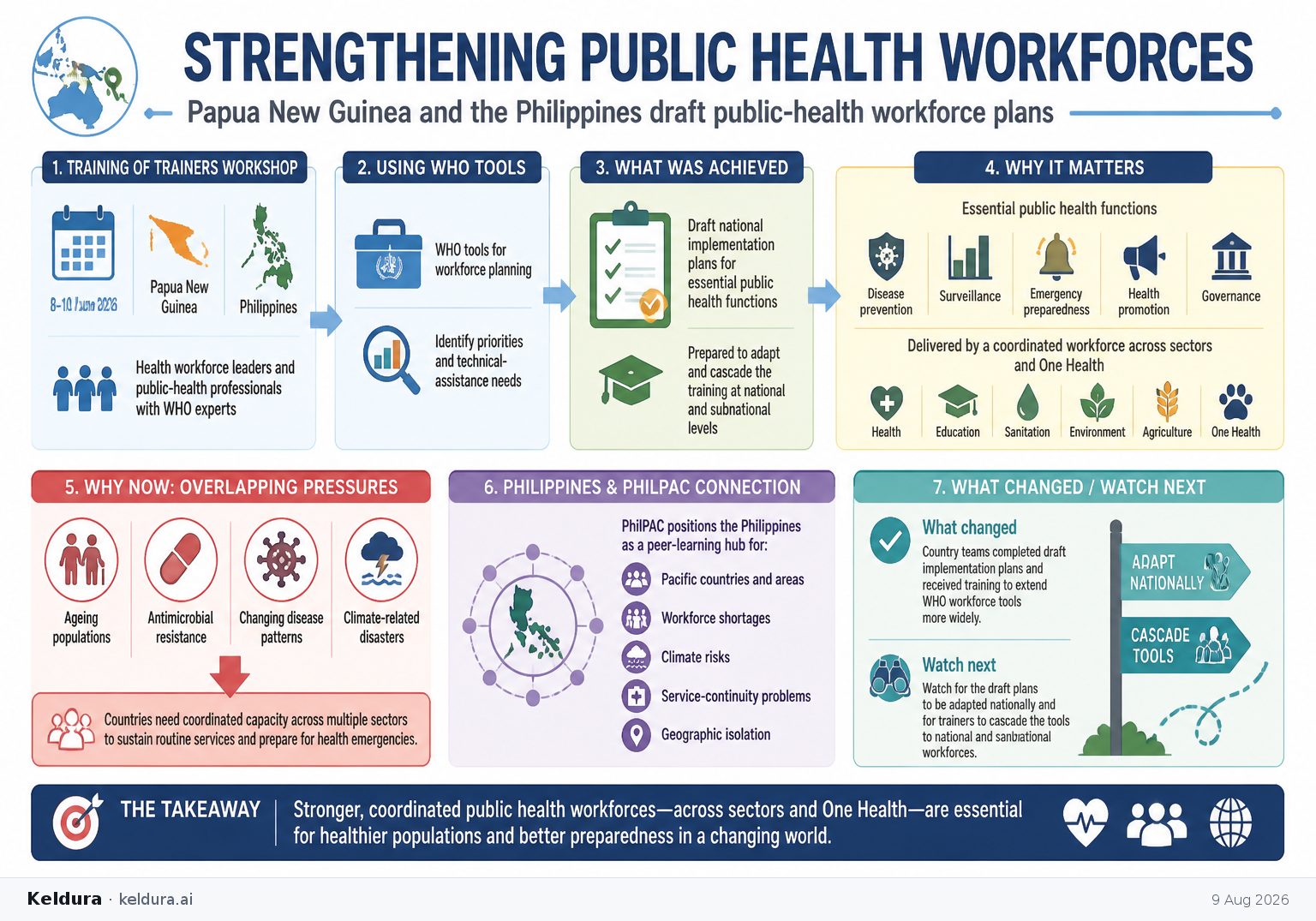
Health workforce leaders and public-health professionals from Papua New Guinea and the Philippines joined WHO experts for a Training of Trainers Workshop on 8–10 June 2026.
Why it matters: WHO says these functions underpin disease prevention, surveillance, emergency preparedness, health promotion and governance, while delivery depends on coordinated workers across health, education, sa…
Country teams from Papua New Guinea and the Philippines completed draft implementation plans and received training to extend WHO workforce tools more widely.[2]
Why now
Countries need coordinated capacity across multiple sectors to sustain routine services and prepare for health emergencies amid demographic, disease and climate pressures.[2]
Watch next
Watch for the draft plans to be adapted nationally and for trainers to cascade the tools to national and subnational workforces.[2]
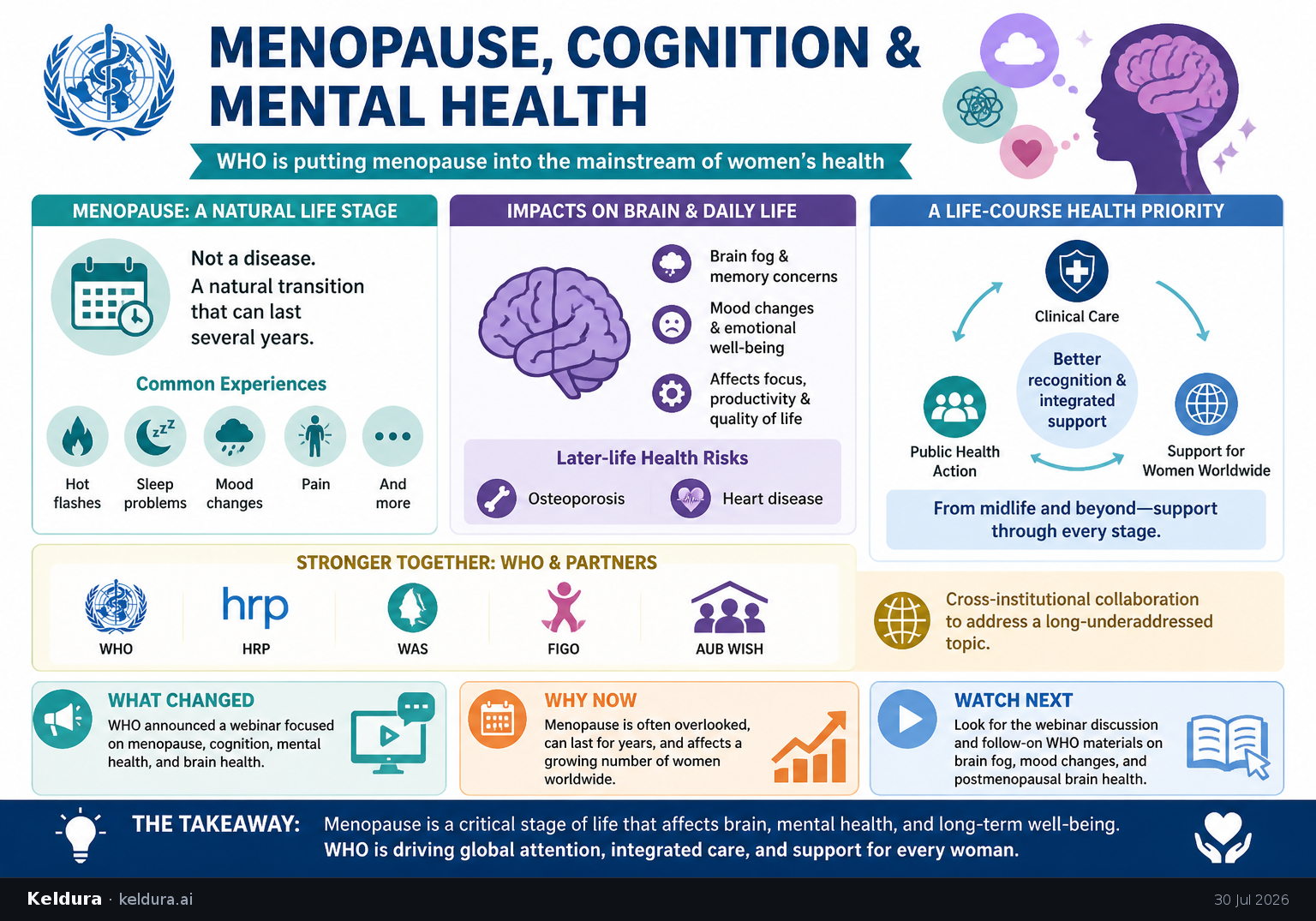
WHO says the second webinar in its series on menopause will address the effects of menopause on cognition and mental health, including brain fog, mood changes, and brain health in the postmenopausal years.
Why it matters: This matters because WHO is explicitly treating menopause as a life-course health issue rather than a narrow reproductive milestone, which can shape clinical priorities, public health messaging, and…
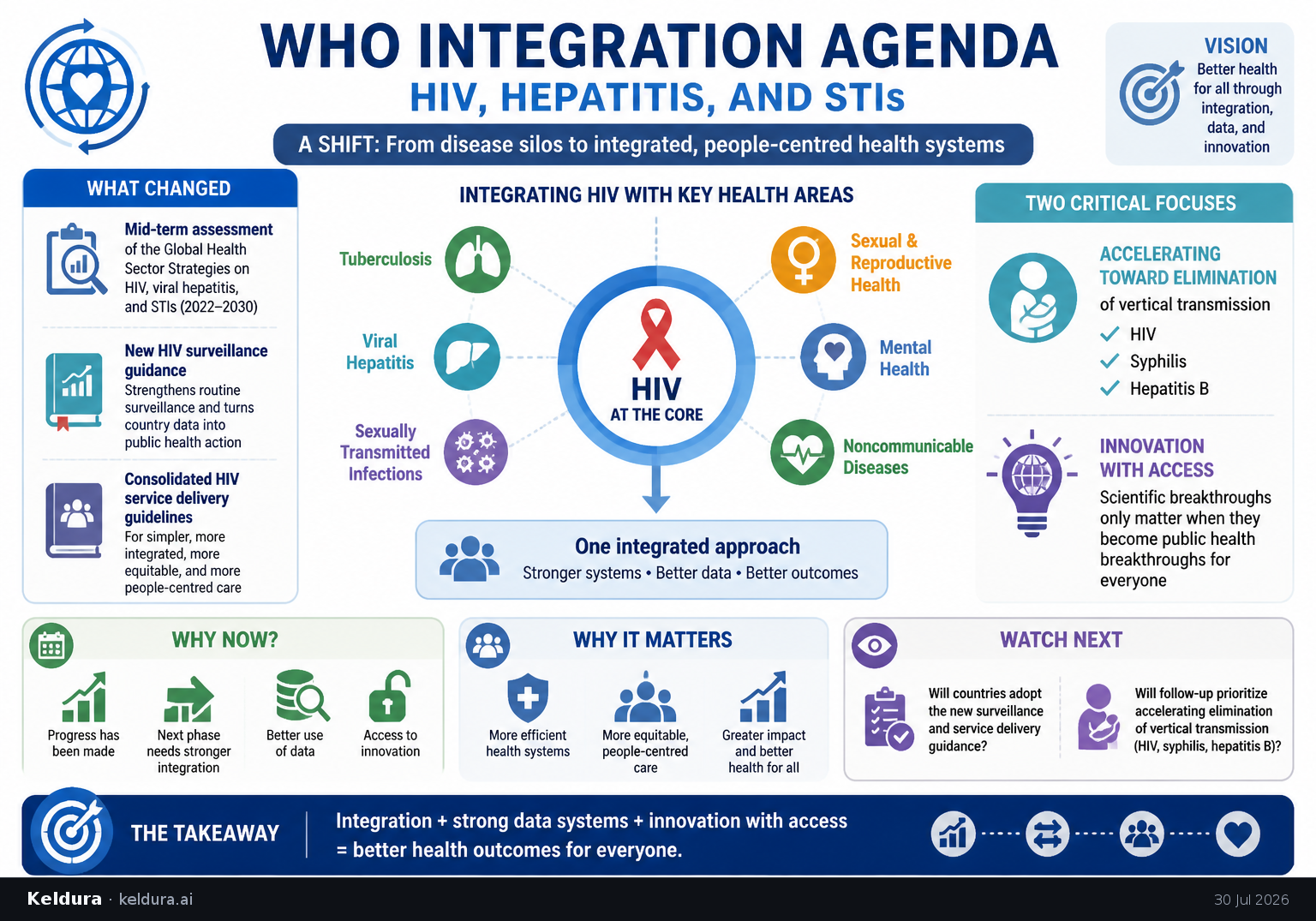
Why it matters: This matters because it shows WHO moving from disease-specific responses toward more integrated service delivery, data systems, and health-system strengthening.
WHO launched a mid-term assessment and released new HIV surveillance and service delivery guidance [3].
Why now
WHO says progress has been made, but the next phase needs stronger integration, data use, and access to innovation [3].
Watch next
Monitor whether countries adopt the new surveillance and service delivery guidance and whether WHO follow-up centers on vertical transmission elimination [3].
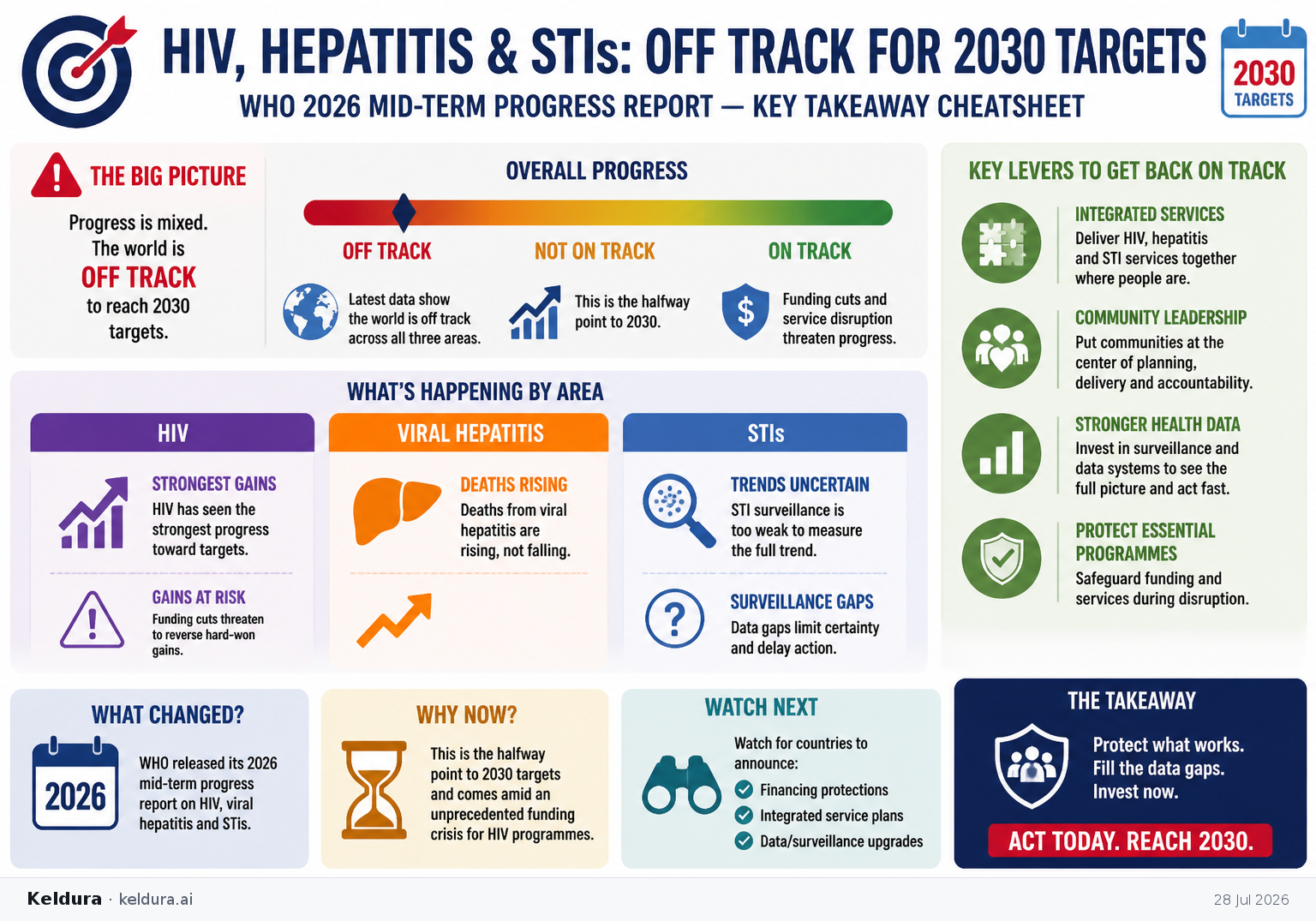
WHO’s 2026 mid-term progress report says progress is mixed and the world is off track to reach the 2030 targets for HIV, viral hepatitis and STIs.
Why it matters: This is a broad warning that the global response is no longer just about scale-up; it is about protecting hard-won gains from financing shocks and service disruption. The report points to integration…