Every cheatsheet Keldura Daily has published, newest first: the news hook, why it matters, and the sources it came from. Each cheatsheet is compiled by Keldura's AI from the sources it cites.
Huawei released the Mate XT 2 in China with a 10.2-inch flexible screen whose two sides fold inward, replacing the exposed accordion-style design used by its earlier trifolds.
Why it matters: The redesign shows Huawei adopting two ideas associated with recent Samsung devices: the Galaxy Z TriFold’s inward-folding structure and the Galaxy S26 Ultra’s privacy-display approach. Folding the s…
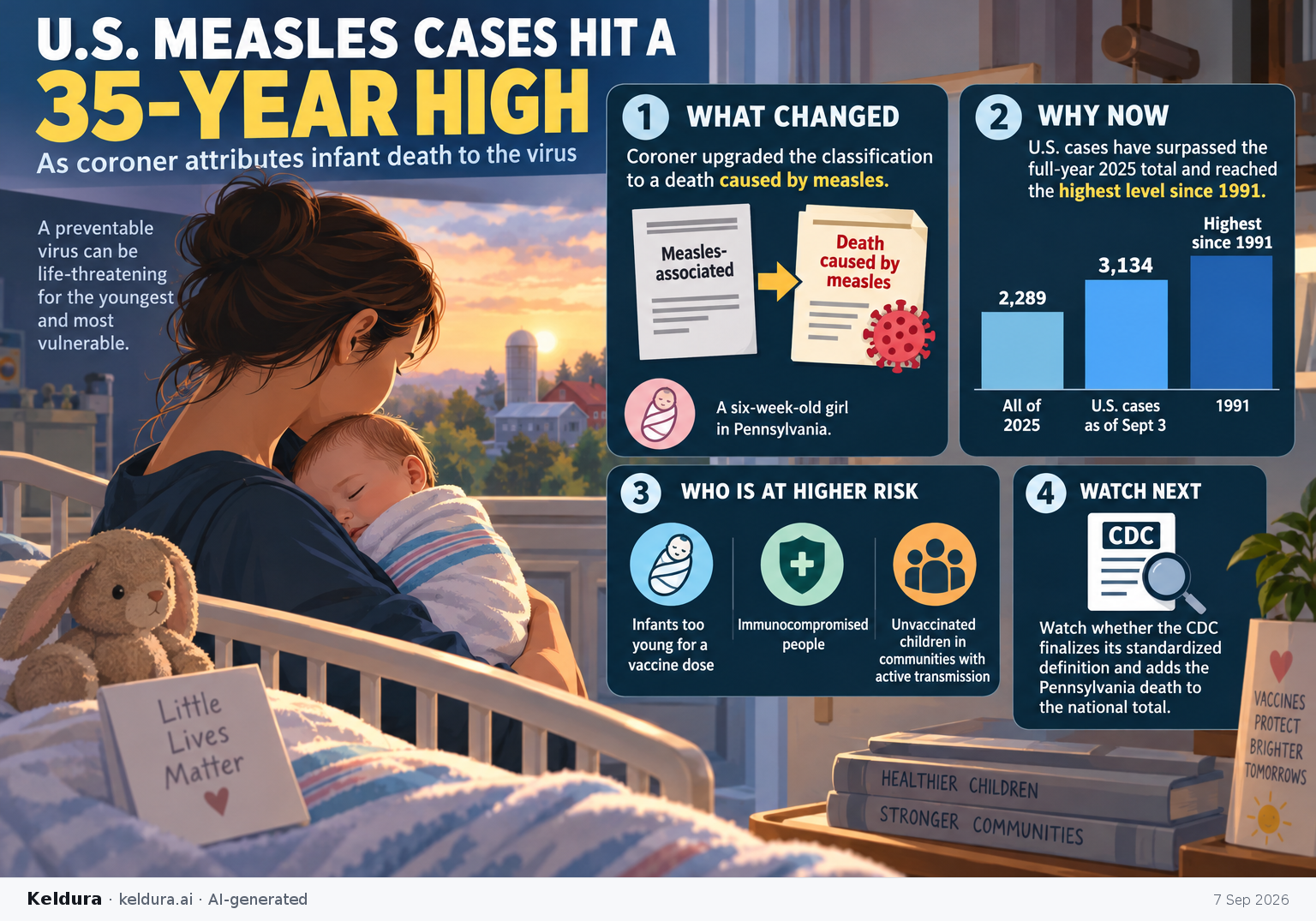
Lancaster County Coroner Stephen Diamantoni determined that measles caused the death of a medically fragile six-week-old girl, revising the case from measles-associated to a death caused by the infection.
Why it matters: The outbreak poses particular concern for infants too young for a first vaccine dose, immunocompromised people and unvaccinated children in communities with active transmission. The case also exposes…
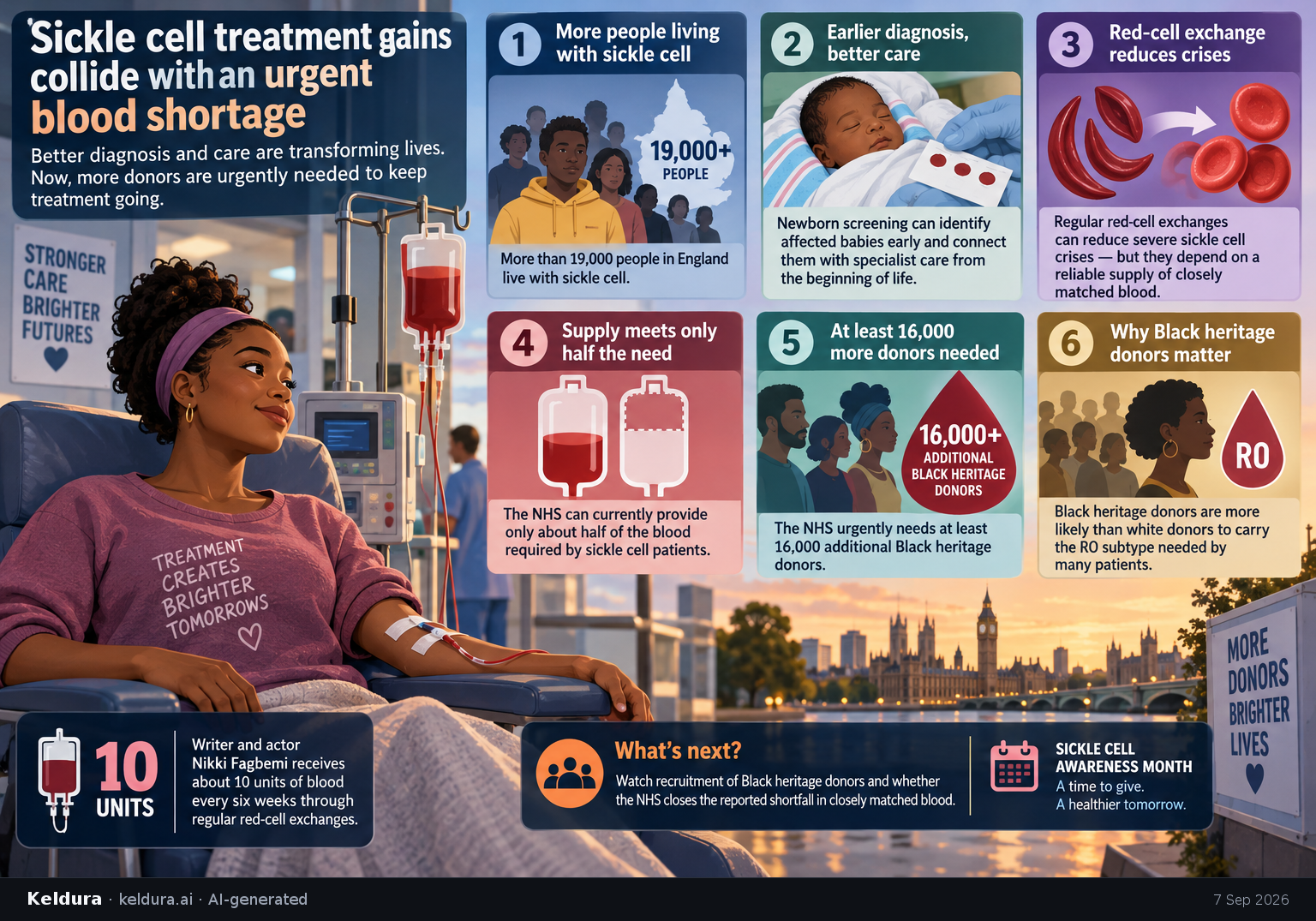
More than 19,000 people in England live with sickle cell, while newborn screening, specialist care and red-cell exchange have improved diagnosis and treatment.
Why it matters: Regular red-cell exchanges can reduce severe sickle cell crises, but their availability depends on a reliable supply of closely matched blood. Black heritage donors are especially important because t…
Improved screening and red-cell exchange are transforming care, but the NHS reports that blood supply meets only about half of current sickle cell demand.[1]
Why now
The NHS is using Sickle Cell Awareness Month to seek at least 16,000 more Black heritage donors.[1]
Watch next
Watch recruitment of Black heritage donors and whether the NHS closes the reported shortfall in closely matched blood.[1]
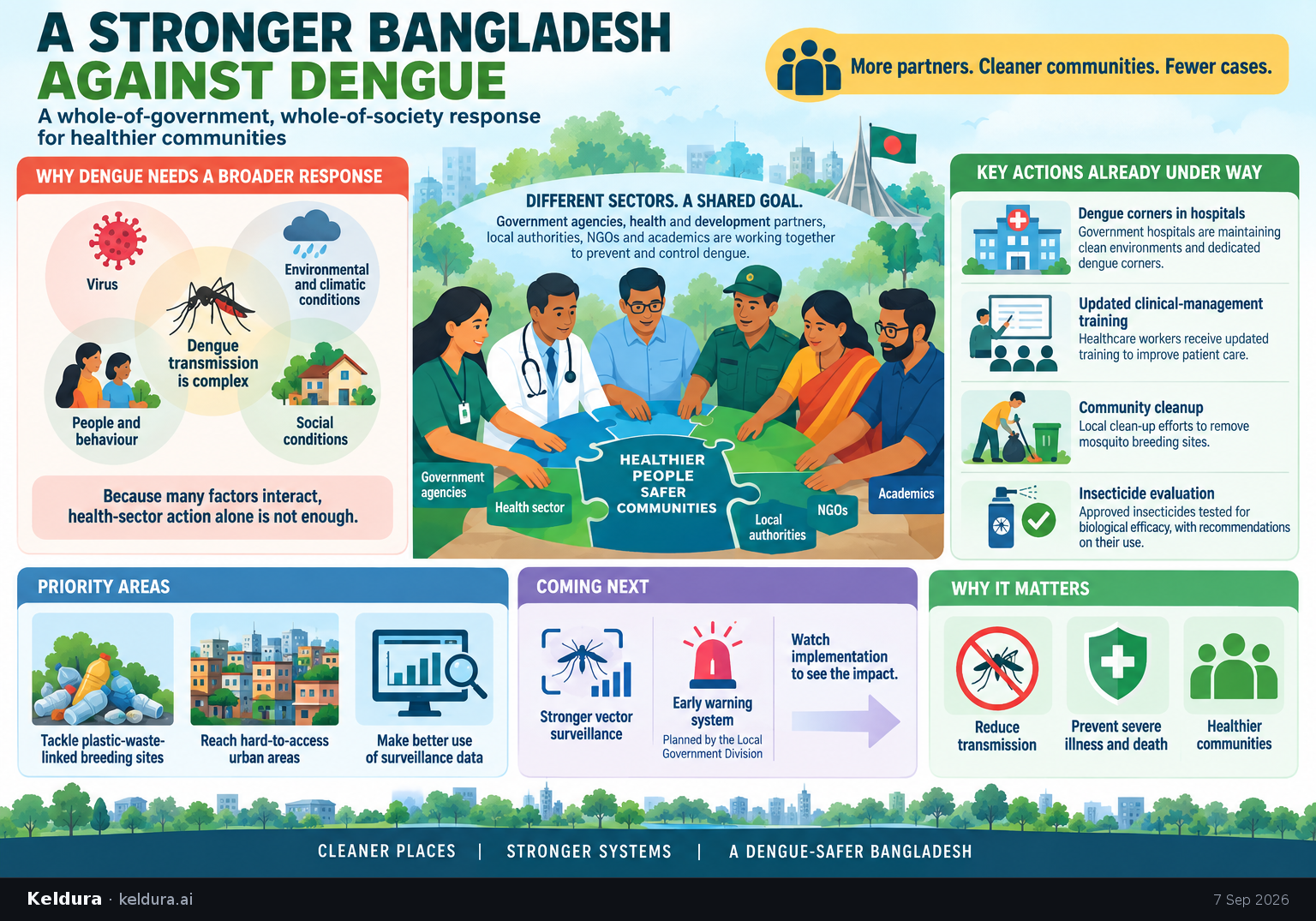
WHO convened Bangladesh government agencies, health and development partners, local authorities, NGOs and academics on August 24 to coordinate dengue prevention and control.
Why it matters: Dengue transmission reflects interactions among the virus, Aedes mosquitoes, people and environmental, climatic and social conditions, making health-sector action alone insufficient. Coordinated surv…
Bangladesh’s dengue response is being organized as a whole-of-government and whole-of-society effort rather than solely a clinical campaign.[5]
Why now
Officials describe dengue as a major public-health concern shaped by environmental, climatic and social factors as well as mosquito and human behavior.[5]
Watch next
Watch implementation of the Local Government Division’s planned vector-surveillance and early warning system.[5]
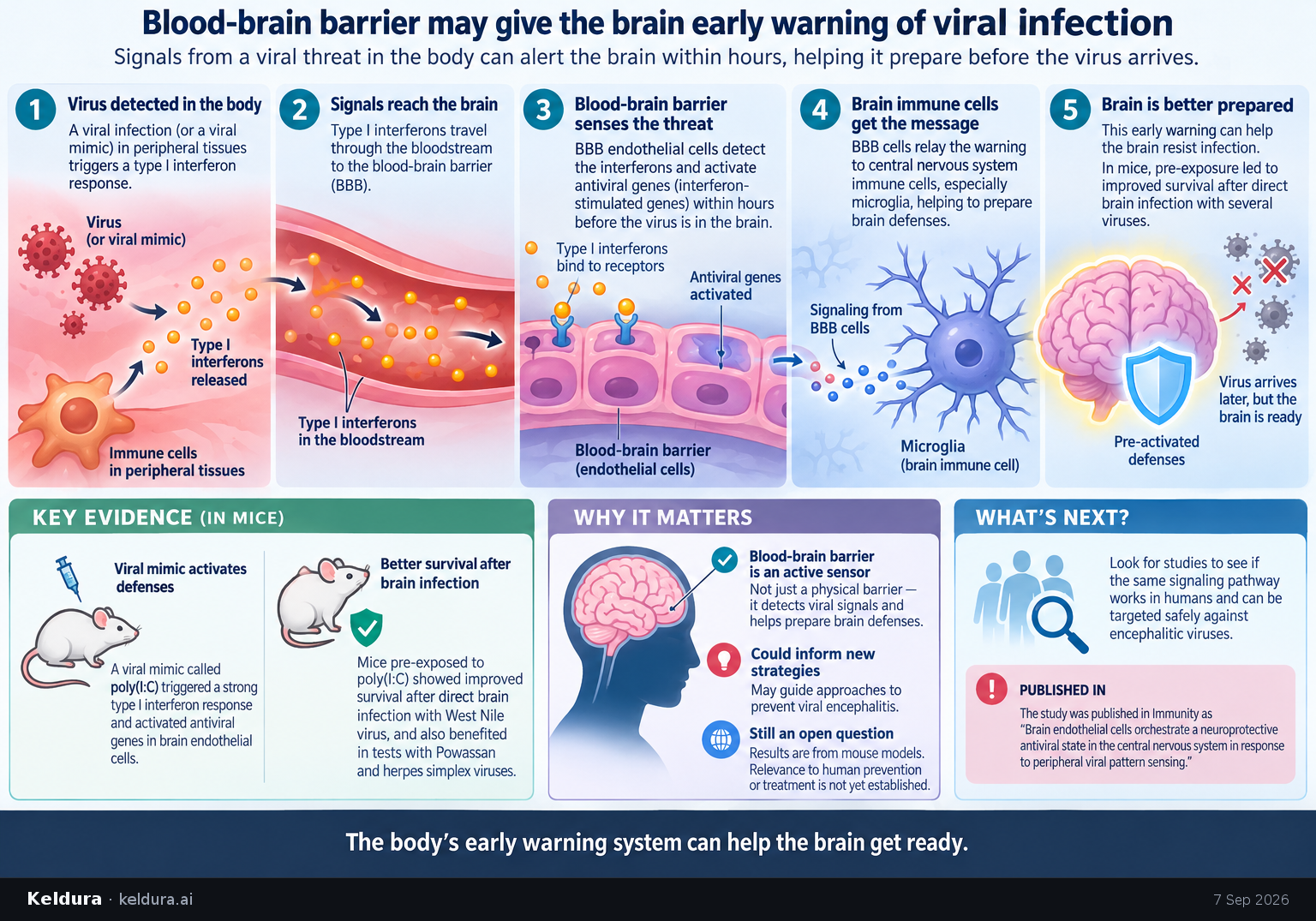
Rockefeller University researchers found in mice that peripheral signs of viral infection activated antiviral genes in the brain within hours, before the virus itself was detected there.
Why it matters: The findings identify the blood-brain barrier as an active infection sensor rather than merely a physical barrier and may inform approaches to preventing viral encephalitis. Because the evidence come…
Researchers mapped a signaling network through which peripheral viral patterns can prime mouse brain defenses within hours.[2]
Why now
The work was published in Immunity under the title “Brain endothelial cells orchestrate a neuroprotective antiviral state in the central nervous system in response to peripheral viral pattern sensing.”[2]
Watch next
Watch for studies testing whether the same signaling pathway operates in humans and can be targeted safely against encephalitic viruses.[2]
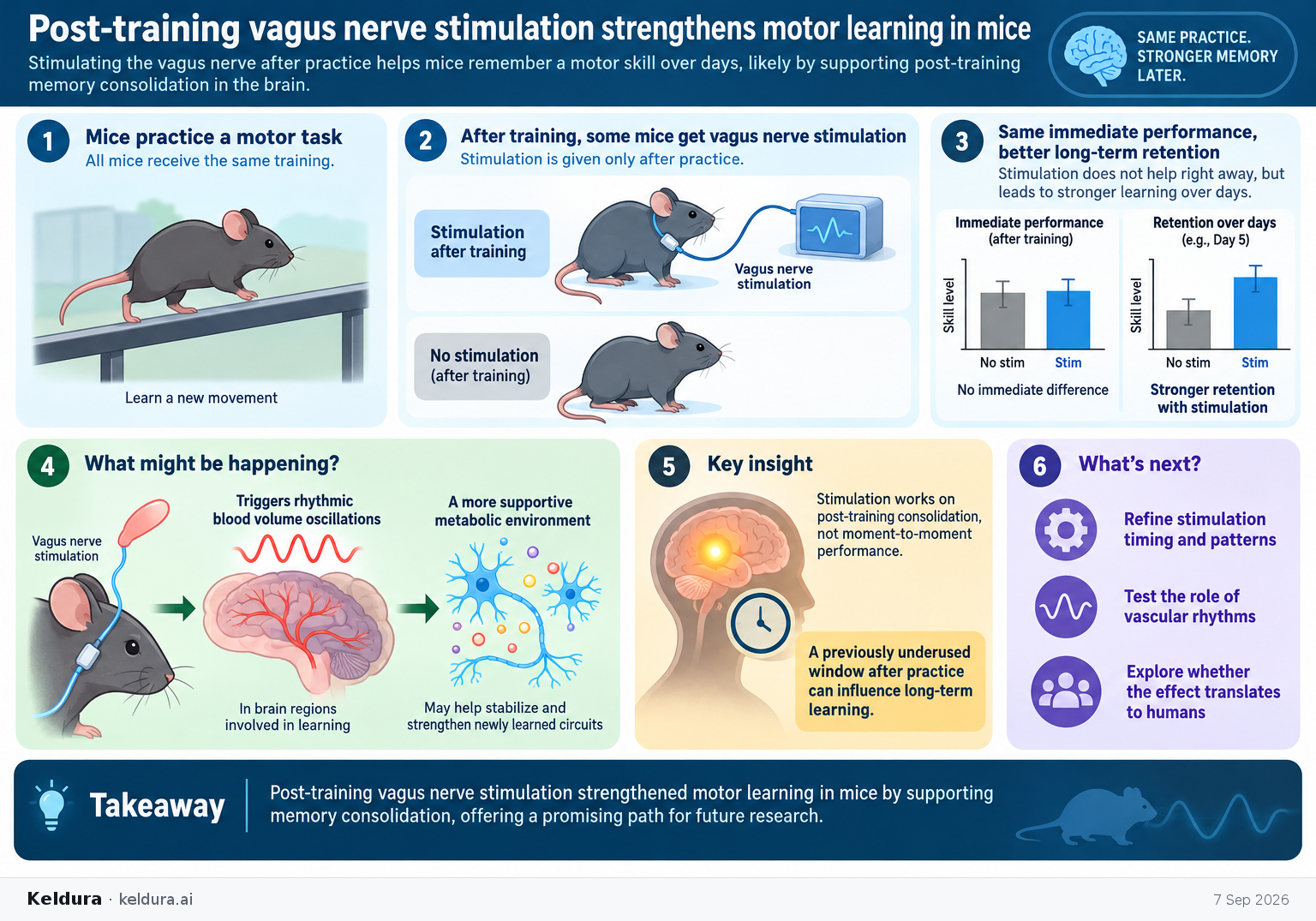
Tohoku University researchers found that vagus nerve stimulation delivered after training produced stronger motor-learning retention in mice over subsequent days.
Why it matters: The study shifts attention to the biological window after practice, when the brain continues preserving a newly acquired skill. It does not yet demonstrate improved human learning, but it offers a te…
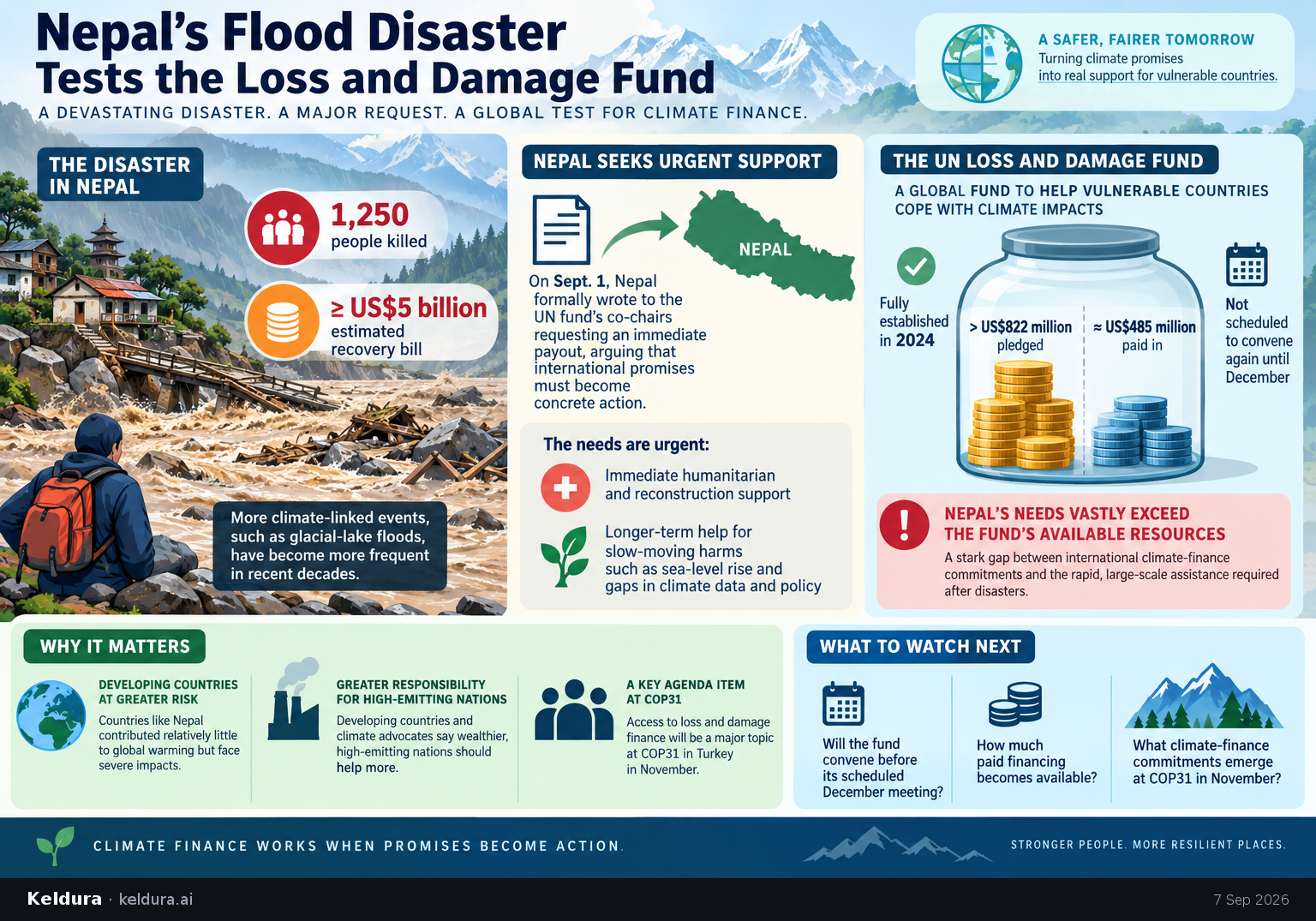
Nepal has requested immediate support from the UN climate loss and damage fund after floods killed 1,250 people and left an estimated recovery bill of at least US$5 billion.
Why it matters: Nepal’s needs vastly exceed the fund’s available resources, exposing the gap between international climate-finance commitments and the rapid, large-scale assistance vulnerable countries require after…
Nepal sought an urgent payout from the UN loss and damage fund following catastrophic floods and an estimated US$5 billion recovery bill.[1]
Why now
The disaster killed 1,250 people, while climate-linked events such as glacial-lake floods have become more frequent in recent decades.[1]
Watch next
Watch whether the fund convenes before its scheduled December meeting, how much paid financing becomes available, and what climate-finance commitments emerge at COP31 in November.[1]
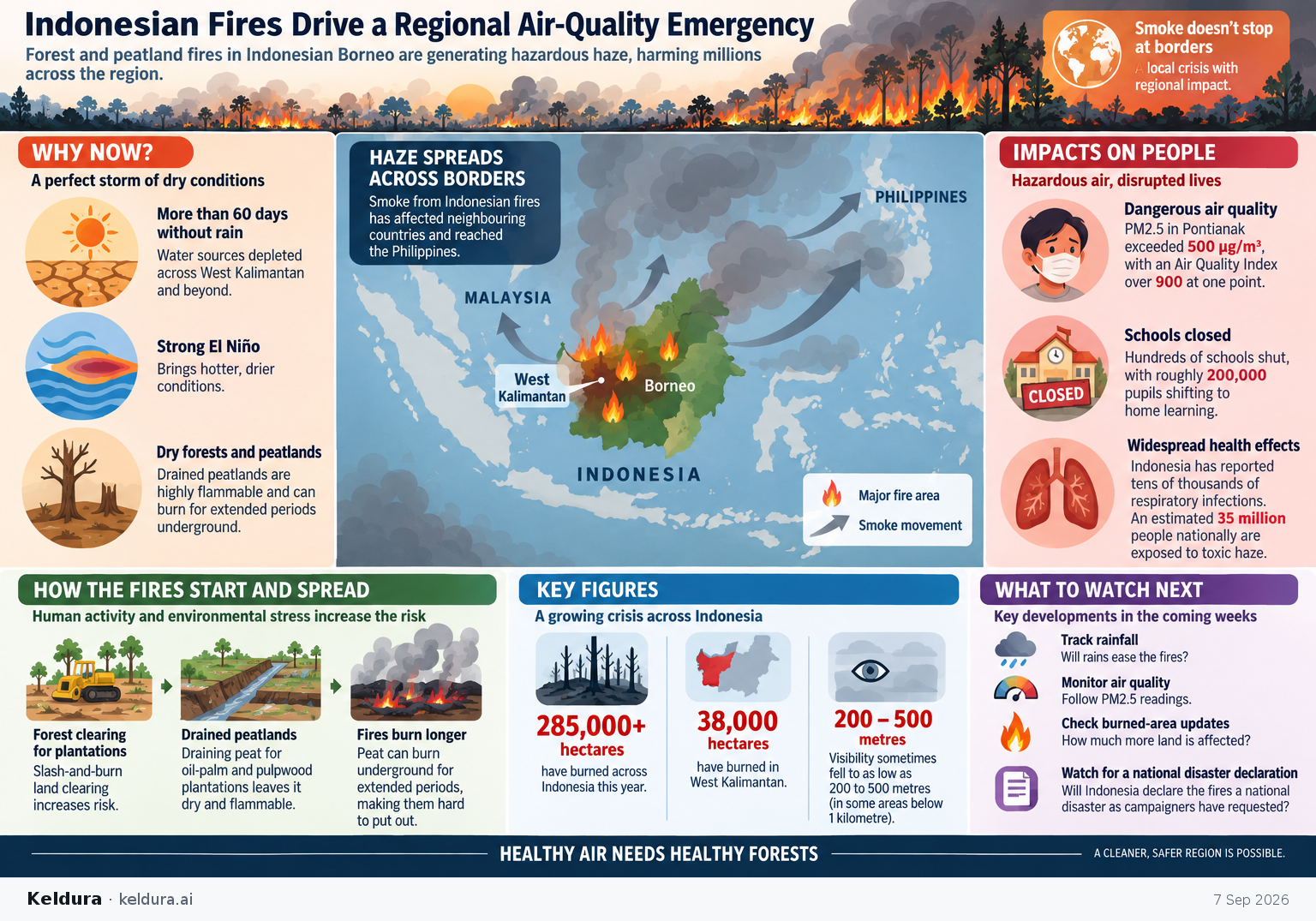
Forest and peatland fires across Indonesian Borneo have overwhelmed firefighters and generated hazardous haze, with West Kalimantan enduring more than two months without rain amid a powerful El Niño.
Why it matters: The fires have become a cross-border public-health crisis: Indonesia has reported tens of thousands of associated respiratory infections, while Greenpeace estimates that 35 million people nationally…
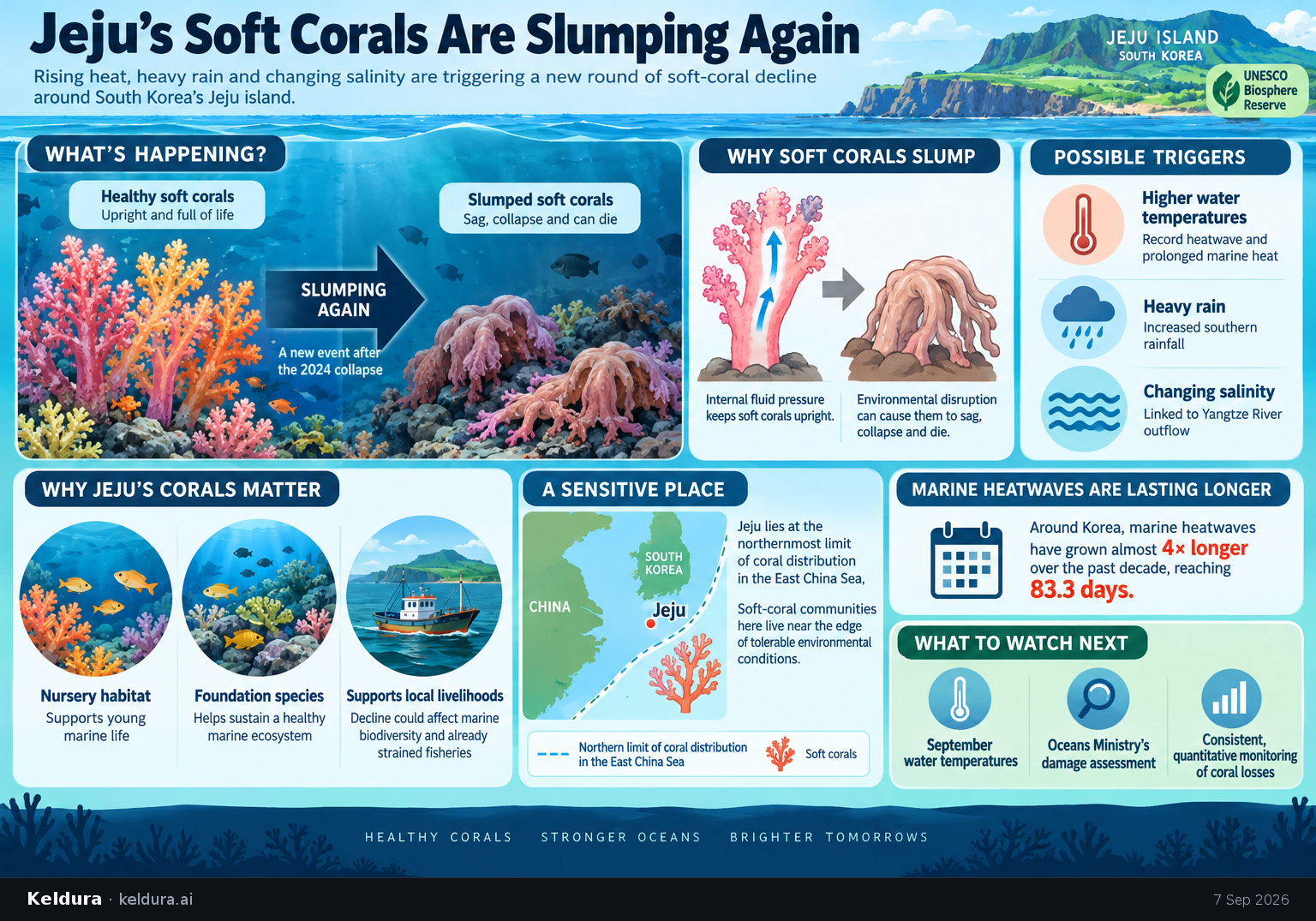
Divers and scientists say the slumping of soft corals has returned around South Korea’s Jeju island after the phenomenon was first scientifically documented there in 2024.
Why it matters: Jeju’s soft corals serve as nursery habitat and form a foundational part of the marine ecosystem within the UNESCO-listed Jeju Island Biosphere Reserve. Their decline could therefore affect wider mar…
Jeju’s monitored soft-coral communities are exhibiting another slumping event similar to the collapse documented in 2024.[3][6]
Why now
South Korea has experienced a record heatwave and heavy southern rainfall, while prolonged marine heat and changing salinity are being examined as possible triggers.[3][6]
Watch next
Watch September water temperatures, the Oceans Ministry’s damage assessment and quantitative monitoring of coral losses.[3][6]
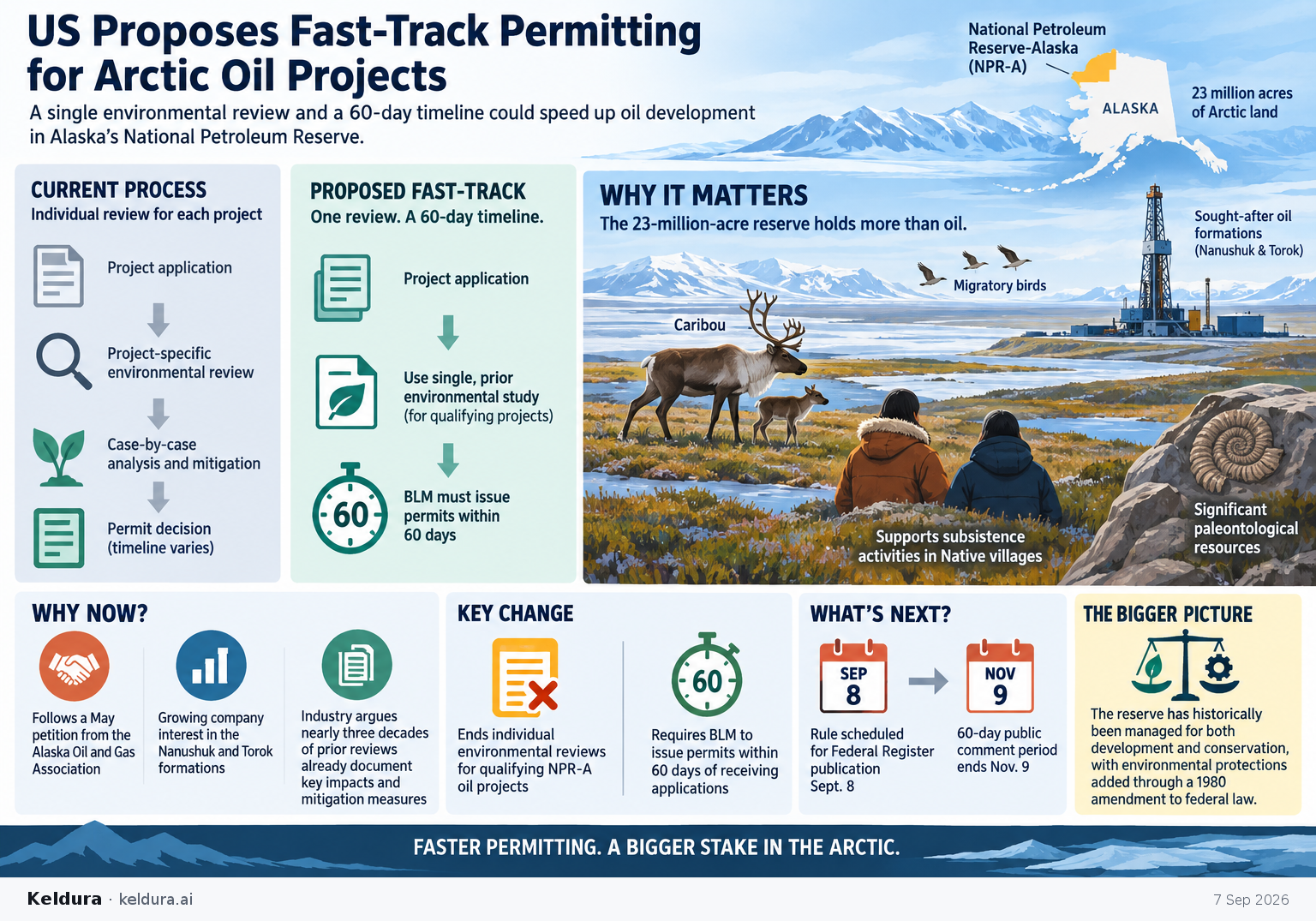
Why it matters: The proposal could accelerate development across a 23-million-acre Arctic reserve that contains sought-after oil formations but also supports caribou, migratory birds, subsistence activities in Nativ…
Kimi Antonelli won the Italian Grand Prix after starting 19th, reaching the front in fewer than 17 laps before passing Mercedes teammate and title rival George Russell for the final time with three laps remaining.
Why it matters: Antonelli’s seventh victory of the season extended his championship lead over Russell to 66 points and moved him closer to becoming Formula 1’s youngest champion.
Carlos Alcaraz defeated Tommy Paul 6-4, 6-3, 6-4 in his first tournament since an April wrist injury, setting up a quarter-final against Ben Shelton.
Why it matters: Alcaraz has dropped only one set through four matches despite a four-month absence, while Sabalenka’s 18-match US Open winning streak keeps her three-peat attempt and world No 1 ranking campaign aliv…