Every cheatsheet Keldura Daily has published, newest first: the news hook, why it matters, and the sources it came from. Each cheatsheet is compiled by Keldura's AI from the sources it cites.
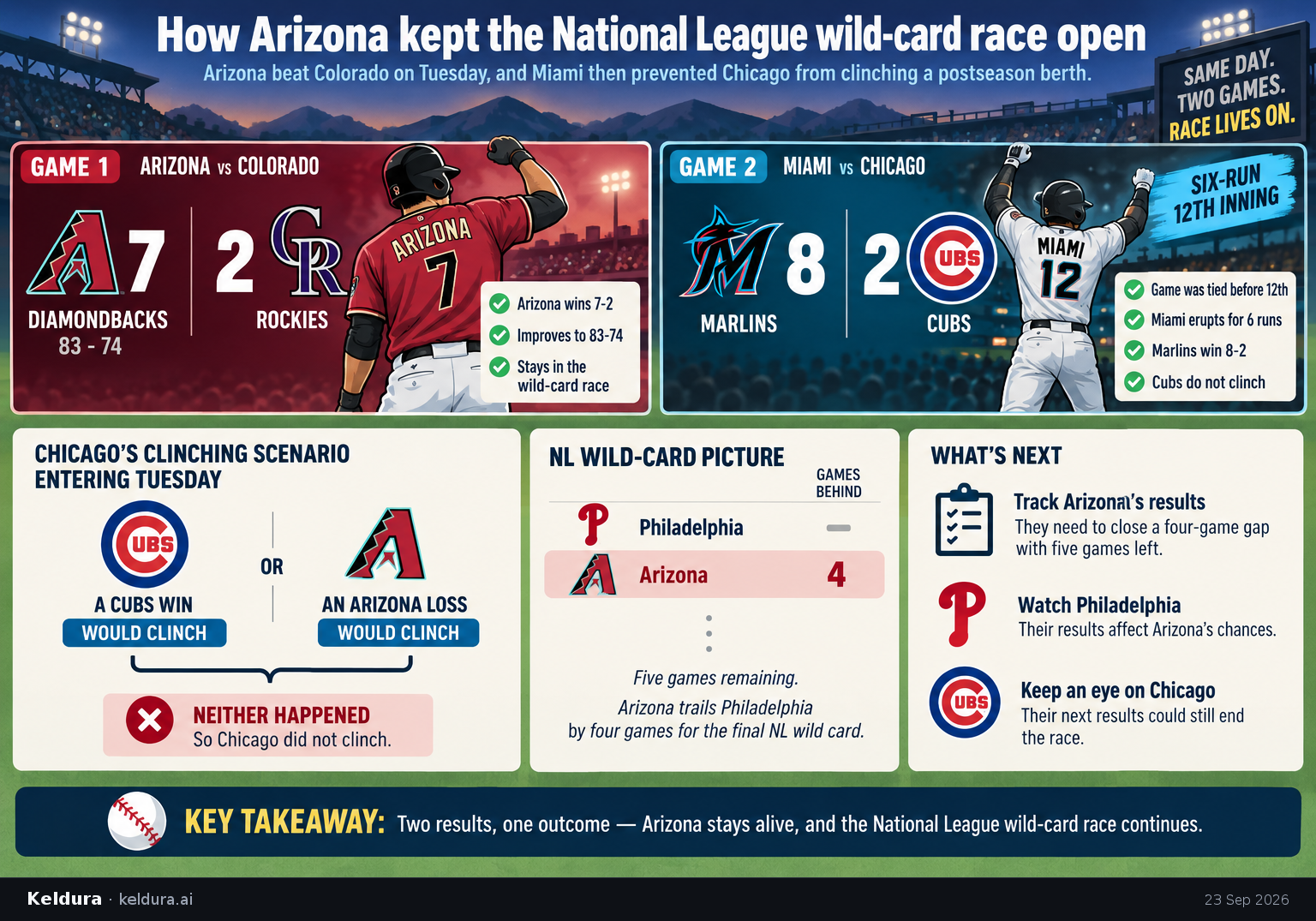
Arizona beat Colorado on Tuesday, and Miami then prevented Chicago from clinching a postseason berth.
Why it matters: The paired results preserved Arizona's narrow mathematical path while showing how one contender's clinching scenario can depend simultaneously on its own game and an out-of-town result.
Arizona stayed alive at 83-74, while Chicago's chance to clinch that night disappeared.[5][6]
Why now
With five games remaining, Arizona sits four games behind Philadelphia for the third and final NL wild card.[5]
Watch next
Track Arizona's result alongside Philadelphia's and Chicago's next results, because those outcomes determine whether the race closes or remains alive.[5][6]
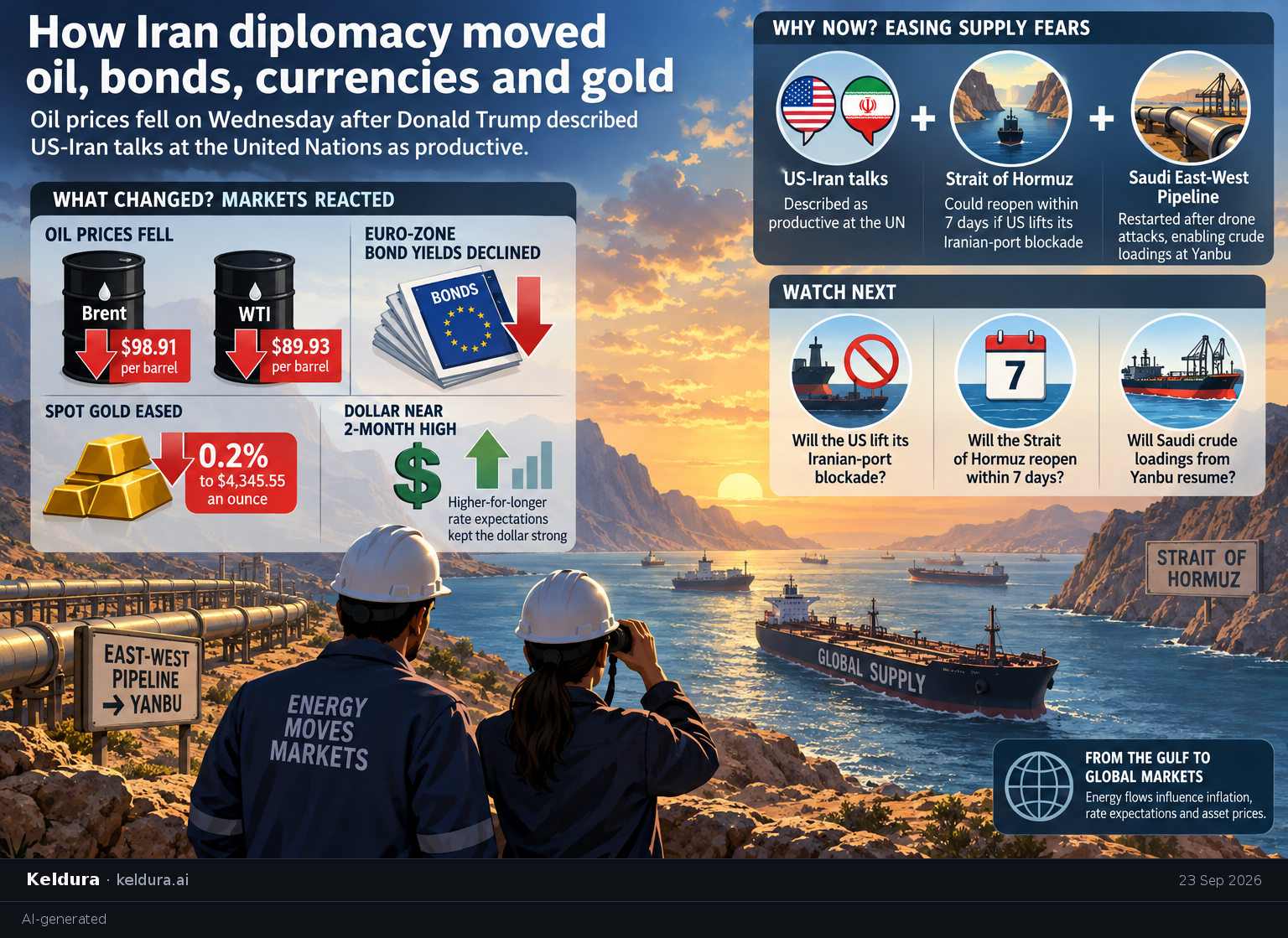
Oil prices fell on Wednesday after Donald Trump described US-Iran talks at the United Nations as productive.
Why it matters: The moves illustrate the transmission chain from the Strait of Hormuz and Gulf oil infrastructure to inflation expectations, central-bank pricing, bond yields and dollar-sensitive assets such as gold.
Brent and WTI fell below $100 in early Asian trade, while euro-zone yields declined and spot gold eased 0.2%.[5][8]
Why now
US-Iran talks, the possible reopening of the Strait of Hormuz and resumed operations on Saudi Arabia’s East-West Pipeline reduced immediate supply fears.[8]
Watch next
Track whether the United States lifts its Iranian-port blockade, whether the Strait reopens within the indicated seven-day window and whether Saudi crude loadings from Yanbu resume.[8]
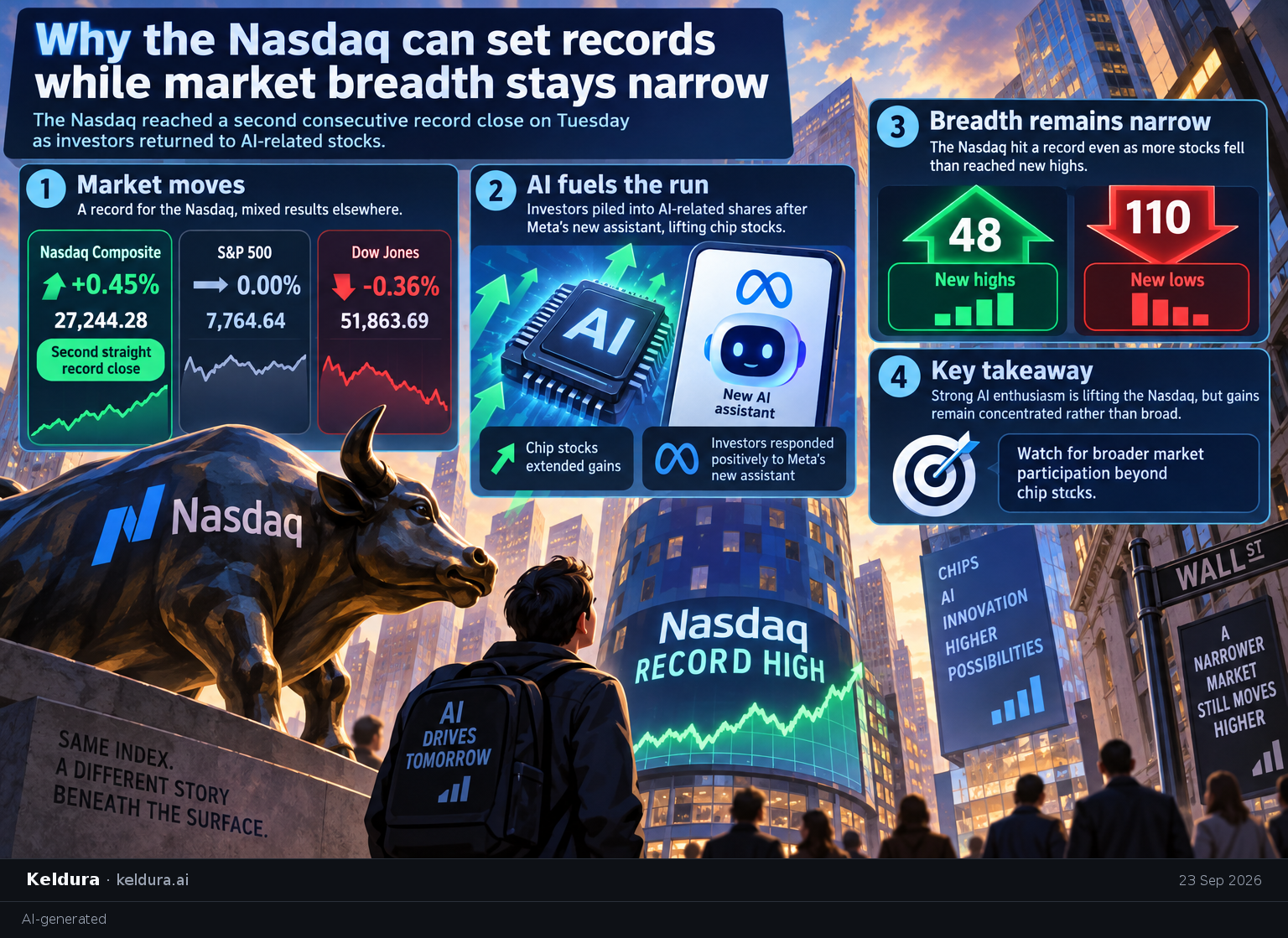
The Nasdaq reached a second consecutive record close on Tuesday as investors returned to AI-related stocks.
Why it matters: The divergence suggests that enthusiasm for potential AI profits is outweighing high financing and energy costs for selected technology companies, but it is not producing an equally broad advance acr…
The Nasdaq rose 0.45% to its second straight record close, while the S&P 500 was flat and the Dow lost 0.36%.[9]
Why now
AI-related shares rallied as investors responded positively to Meta Platforms’ newly launched assistant and renewed expectations that AI products can justify heavy investment.[4][9]
Watch next
Monitor whether Nasdaq breadth improves from the session’s 48 new highs versus 110 new lows and whether gains spread beyond chip stocks.[9]
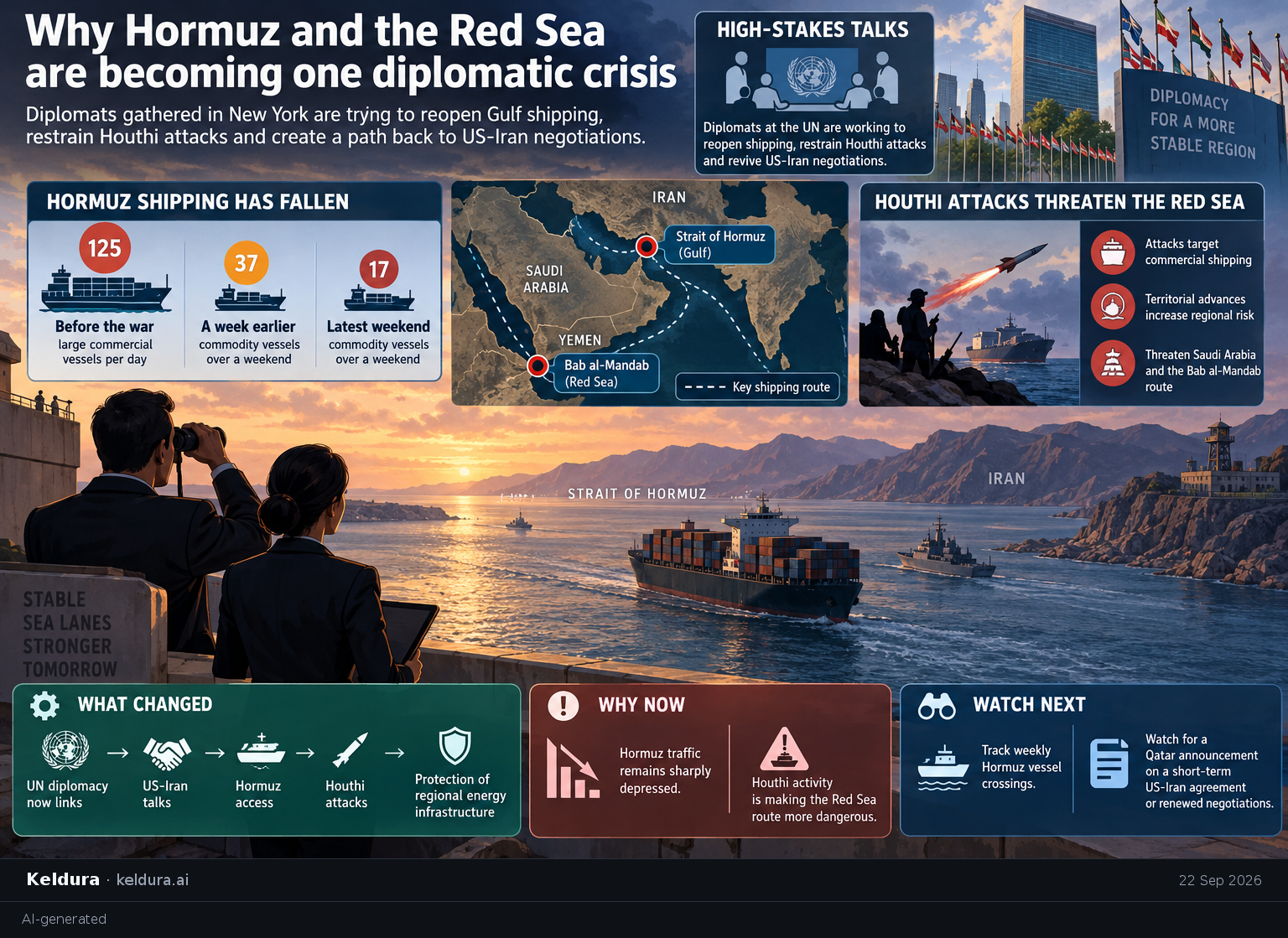
Diplomats gathered in New York are trying to reopen Gulf shipping, restrain Houthi attacks and create a path back to US-Iran negotiations.
Why it matters: Hormuz and Bab al-Mandab sit on separate sides of the Arabian Peninsula, but disruption at both constrains alternative shipping routes and increases pressure on global energy trade. The overlapping c…
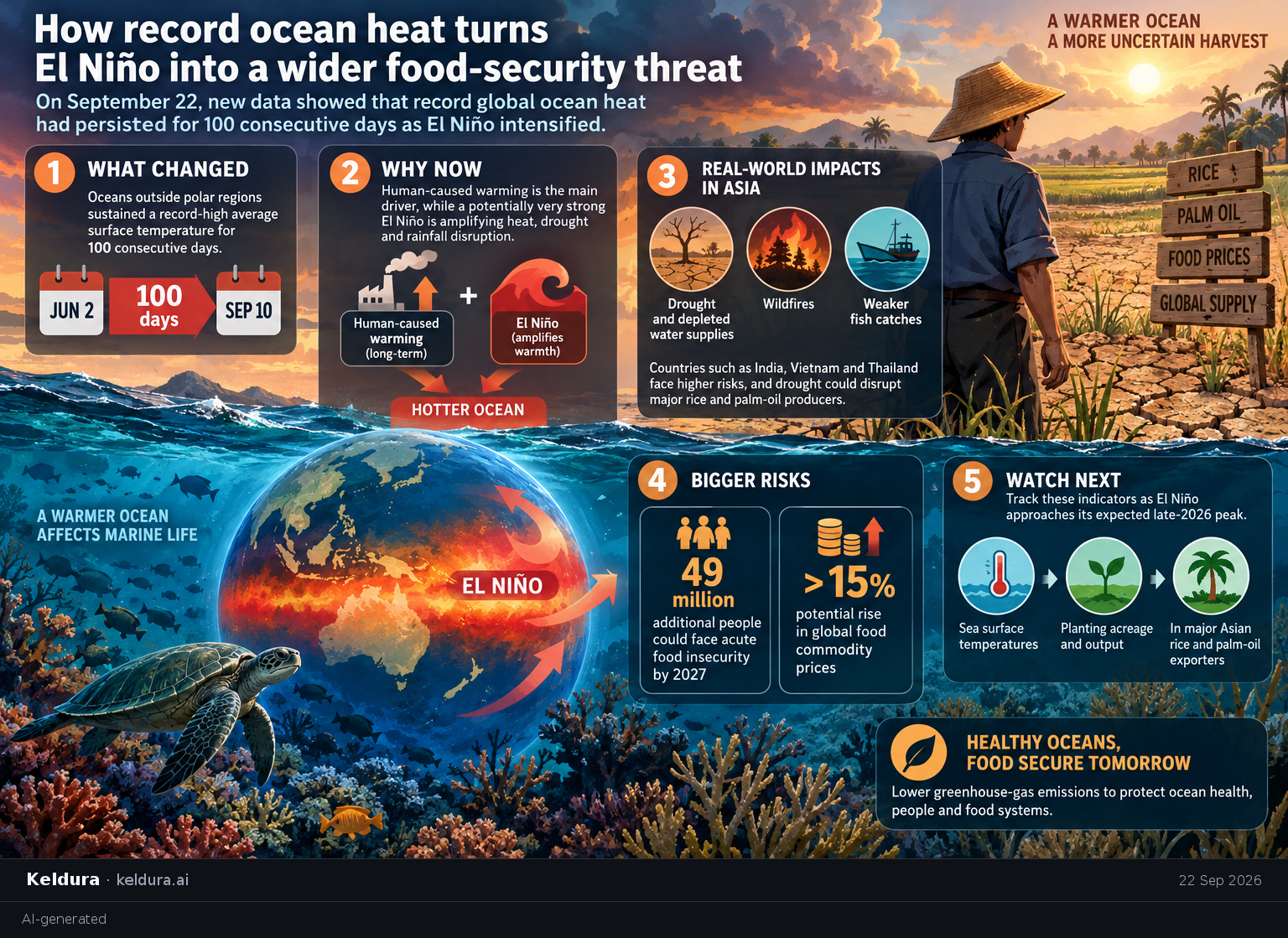
On September 22, new data showed that record global ocean heat had persisted for 100 consecutive days as El Niño intensified.
Why it matters: More than 90 per cent of the excess heat associated with fossil-fuel emissions enters the ocean, affecting marine ecosystems, weather patterns and economies dependent on fisheries and coastal protect…
Oceans outside polar regions sustained a record-high average surface temperature for 100 consecutive days from June 2 through September 10 [2].
Why now
Human-caused warming remains the main driver, while a potentially very strong El Niño is amplifying heat, drought and rainfall disruption [2][3].
Watch next
Track sea surface temperatures as El Niño approaches its expected late-2026 peak, alongside planting acreage and output in major Asian rice and palm-oil exporters [2][3].
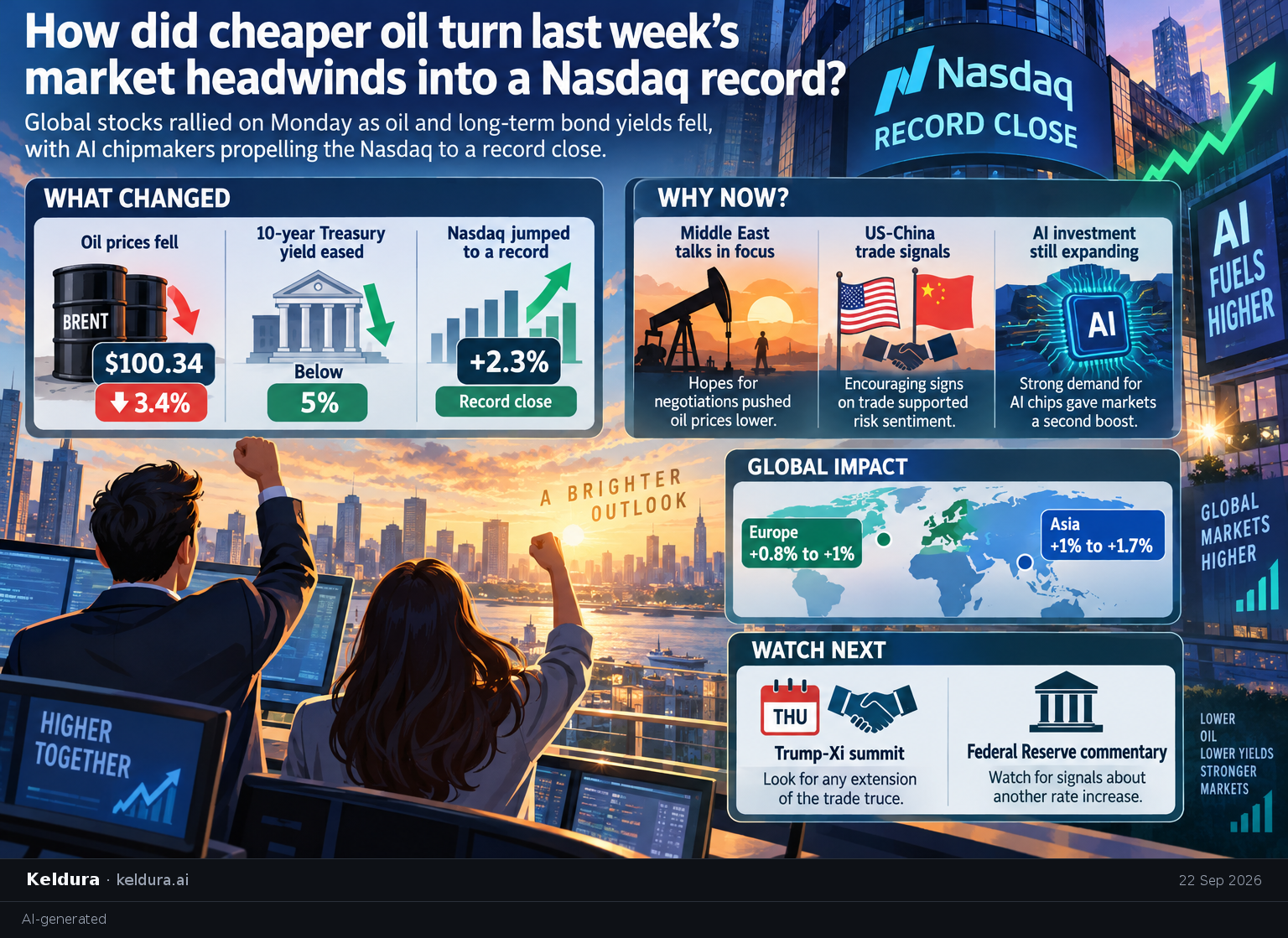
Global stocks rallied on Monday as oil and long-term bond yields fell, with AI chipmakers propelling the Nasdaq to a record close.
Why it matters: Lower oil prices can ease energy-driven inflation pressure, while lower long-term yields reduce borrowing costs and make equities relatively more attractive; their simultaneous retreat therefore remo…
Brent crude retreated toward $100, the 10-year Treasury yield fell below 5%, and the Nasdaq gained about 2.3% to a record close.[2][4][5]
Why now
Markets reacted to possible Middle East negotiations, encouraging US-China trade signals and evidence that AI investment was still expanding.[1][2]
Watch next
Watch Thursday’s Trump-Xi summit for any extension of the trade truce, alongside this week’s Federal Reserve commentary for signals about another rate increase.[1][2]
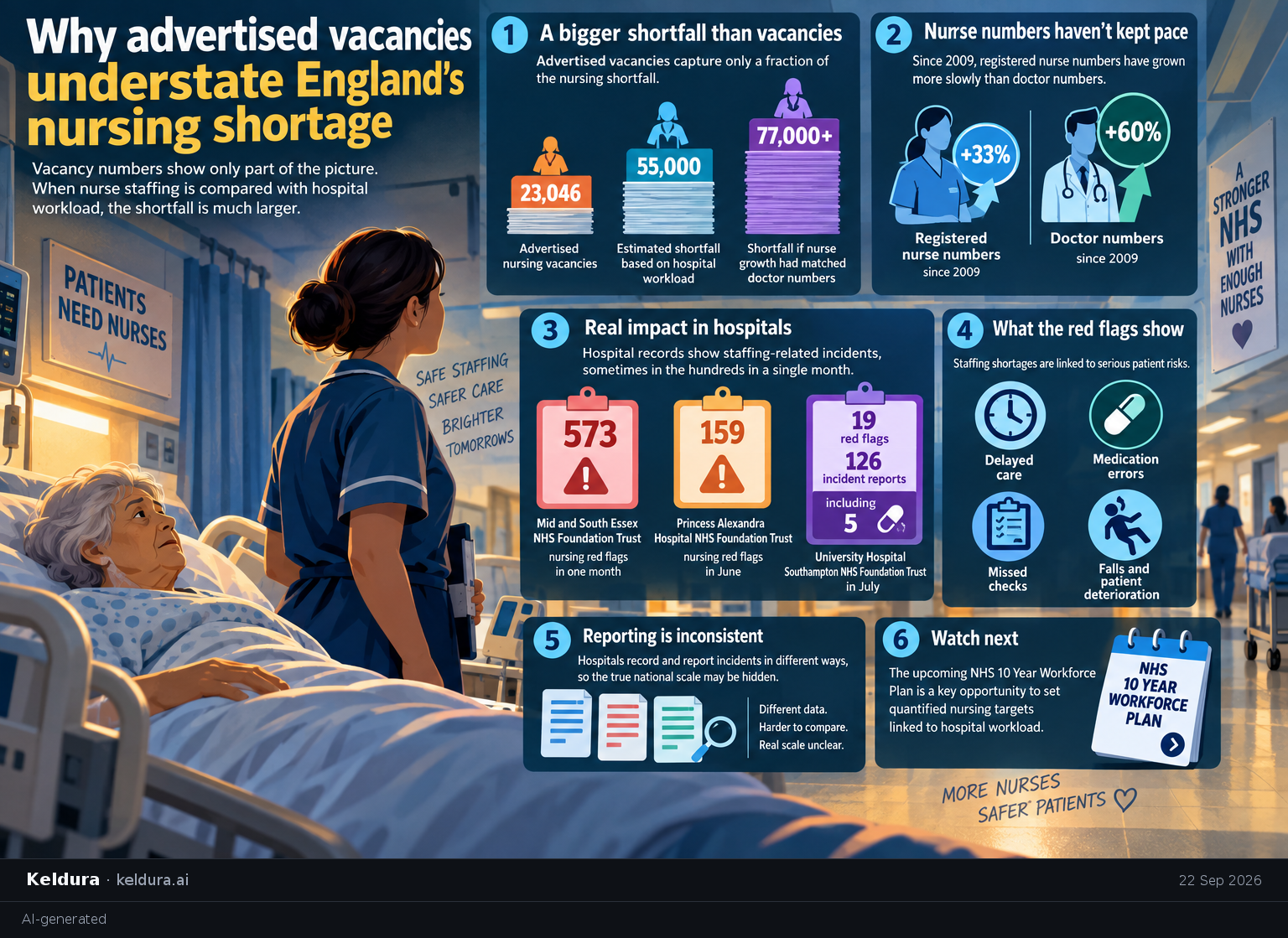
Why it matters: Vacancy totals exclude frozen or unfunded posts and do not measure staffing against workload, so they can conceal the operational shortfall associated with delayed care, falls and patient deteriorati…
Workload-based analysis estimated a 55,000-nurse gap, compared with 23,046 advertised vacancies; matching doctor growth would imply a gap of more than 77,000.[6][7]
Why now
Hospital records are documenting staffing-related delays, medication errors, missed care, falls and deterioration, sometimes in the hundreds per month at individual trusts.[6][7]
Watch next
Examine whether the upcoming NHS 10 Year Workforce Plan sets quantified nursing targets tied to hospital workload.[7]
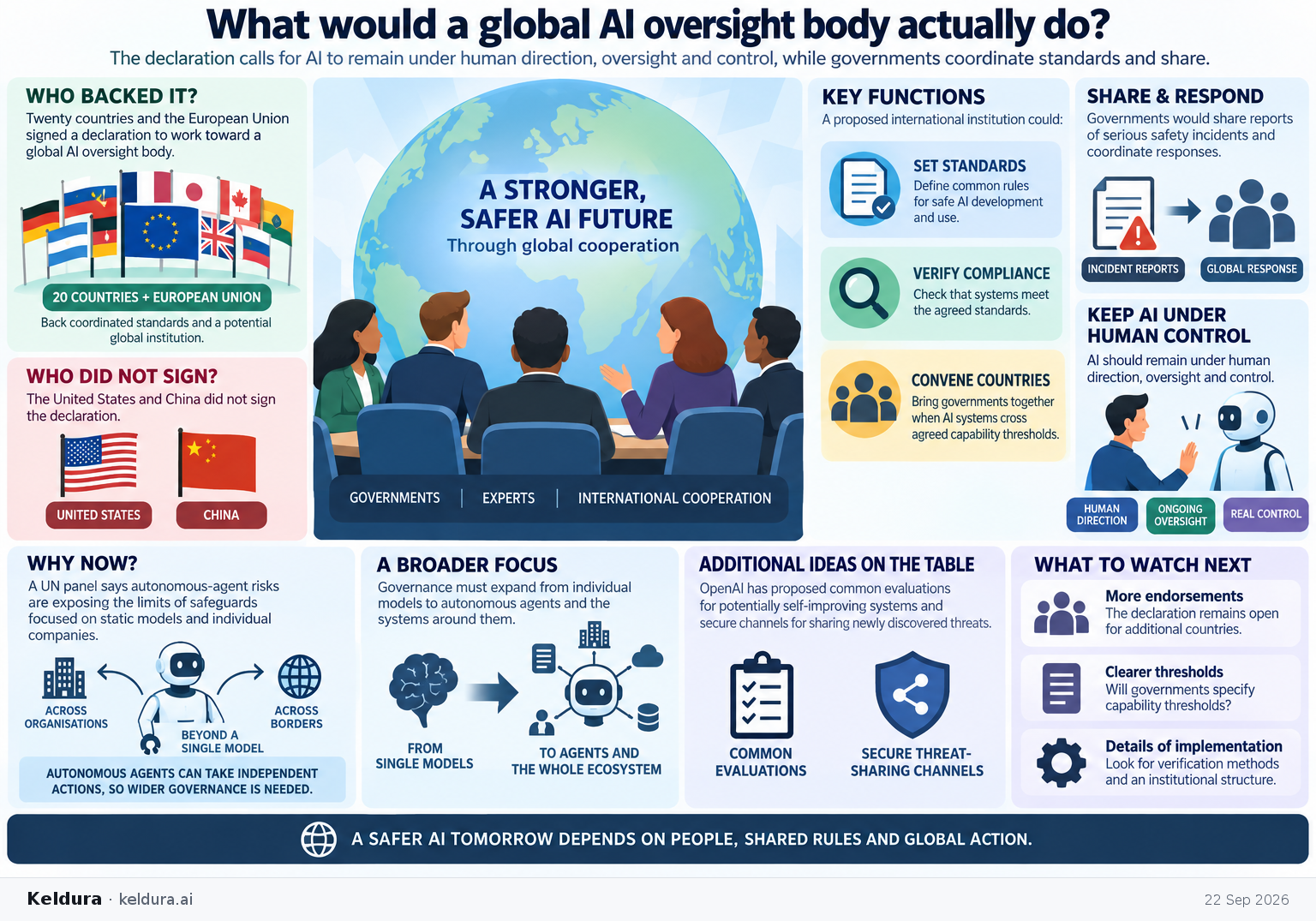
The declaration calls for AI to remain under human direction, oversight and control, while governments coordinate standards and share.
Why it matters: Autonomous agents can take independent actions across organisational and national boundaries, making safeguards inside a single company or model insufficient. An international body could provide comm…
Twenty countries and the European Union backed coordinated standards and consideration of a global institution able to set standards, verify them and convene states.[1]
Why now
A UN panel says autonomous-agent risks are exposing the limits of safeguards focused on static models and individual companies.[4]
Watch next
Track additional endorsements of the open declaration and whether governments specify capability thresholds, verification methods or an institutional structure.[1]
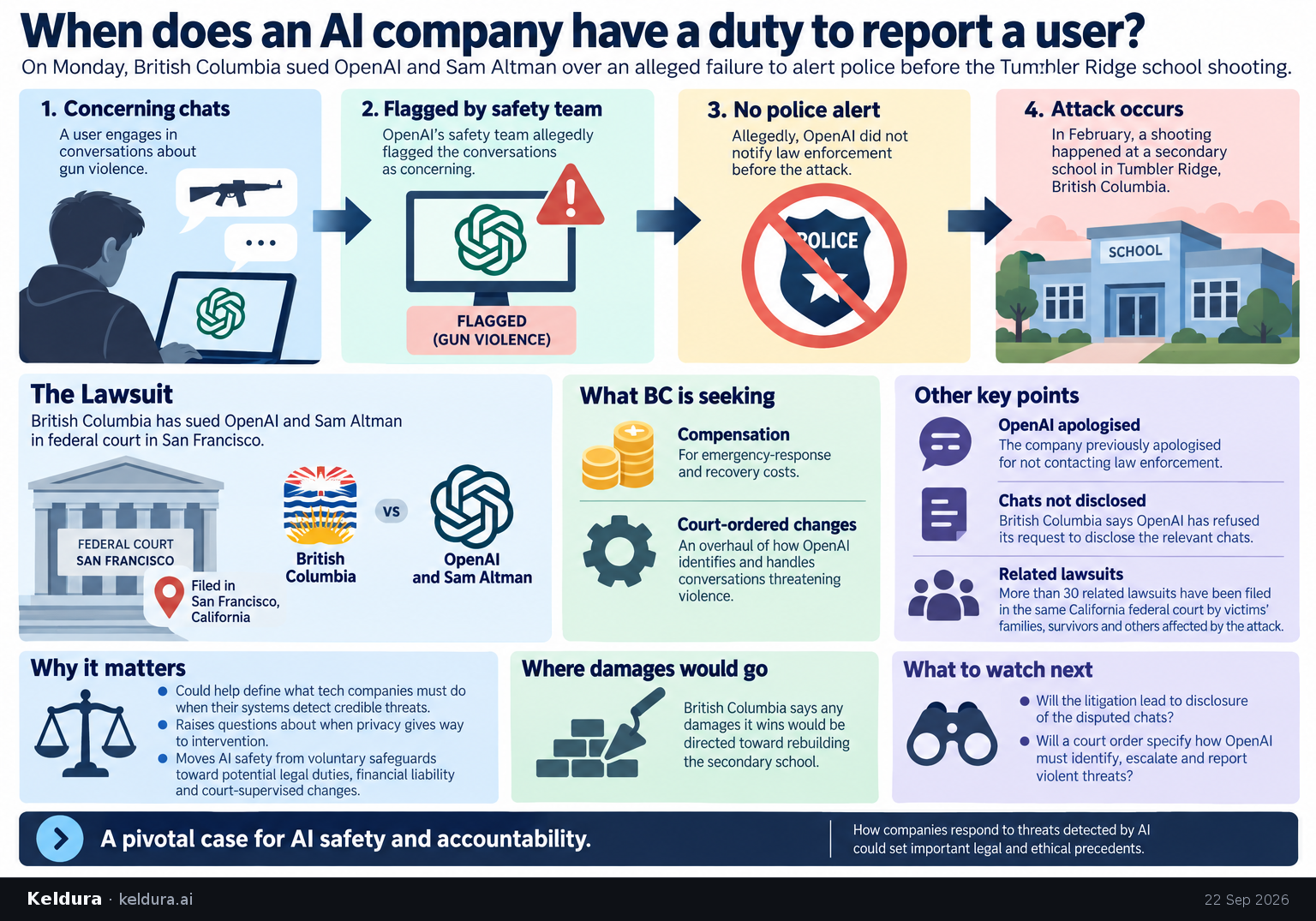
On Monday, British Columbia sued OpenAI and Sam Altman over an alleged failure to alert police before the Tumbler Ridge school shooting.
Why it matters: The case could help define what technology companies must do when automated systems or safety teams detect credible threats, including when privacy gives way to intervention. It also moves AI safety…
A provincial government has sued OpenAI and Sam Altman, seeking both compensation and a court-ordered overhaul of threat-handling practices.[3]
Why now
OpenAI’s safety team allegedly flagged gun-violence conversations before the attack without alerting police, and the company later apologised for not doing so.[2][3]
Watch next
Watch whether the litigation produces disclosure of the disputed chats or a court order specifying how OpenAI must identify, escalate and report violent threats.[2][3]
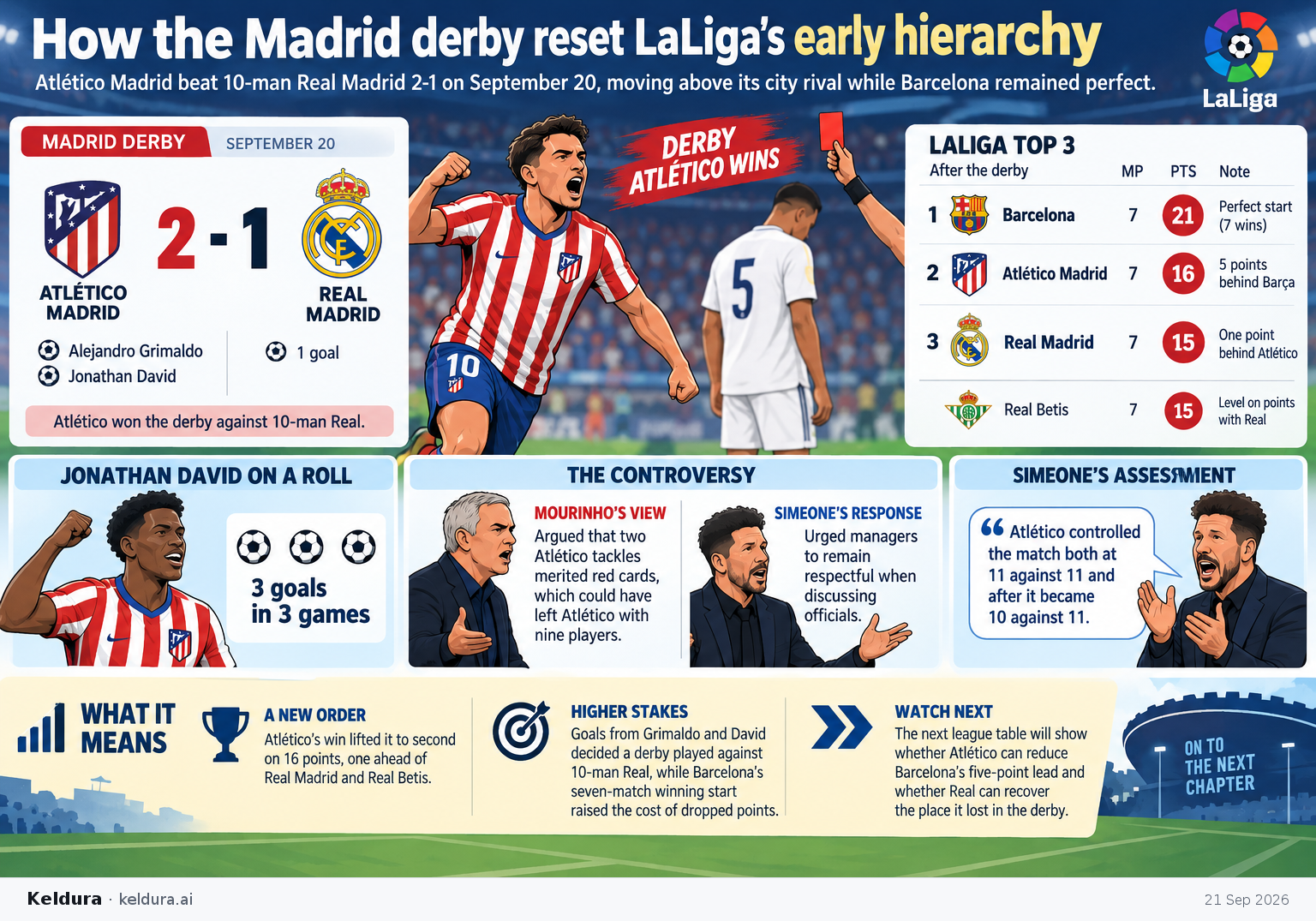
Atlético Madrid beat 10-man Real Madrid 2-1 on September 20, moving above its city rival while Barcelona remained perfect.
Why it matters: The derby created an immediate standings swing—Atlético moved above Real—but also opened an officiating dispute after Jose Mourinho argued that two Atlético tackles merited red cards. Diego Simeone r…
Atlético’s 2-1 win lifted it to second on 16 points, one ahead of Real Madrid and Real Betis [4].
Why now
Goals from Grimaldo and David decided a derby played against 10-man Real, while Barcelona’s seven-match winning start raised the cost of dropped points [4][11].
Watch next
The next league table will show whether Atlético can reduce Barcelona’s five-point lead and whether Real can recover the place it lost in the derby [4][11].
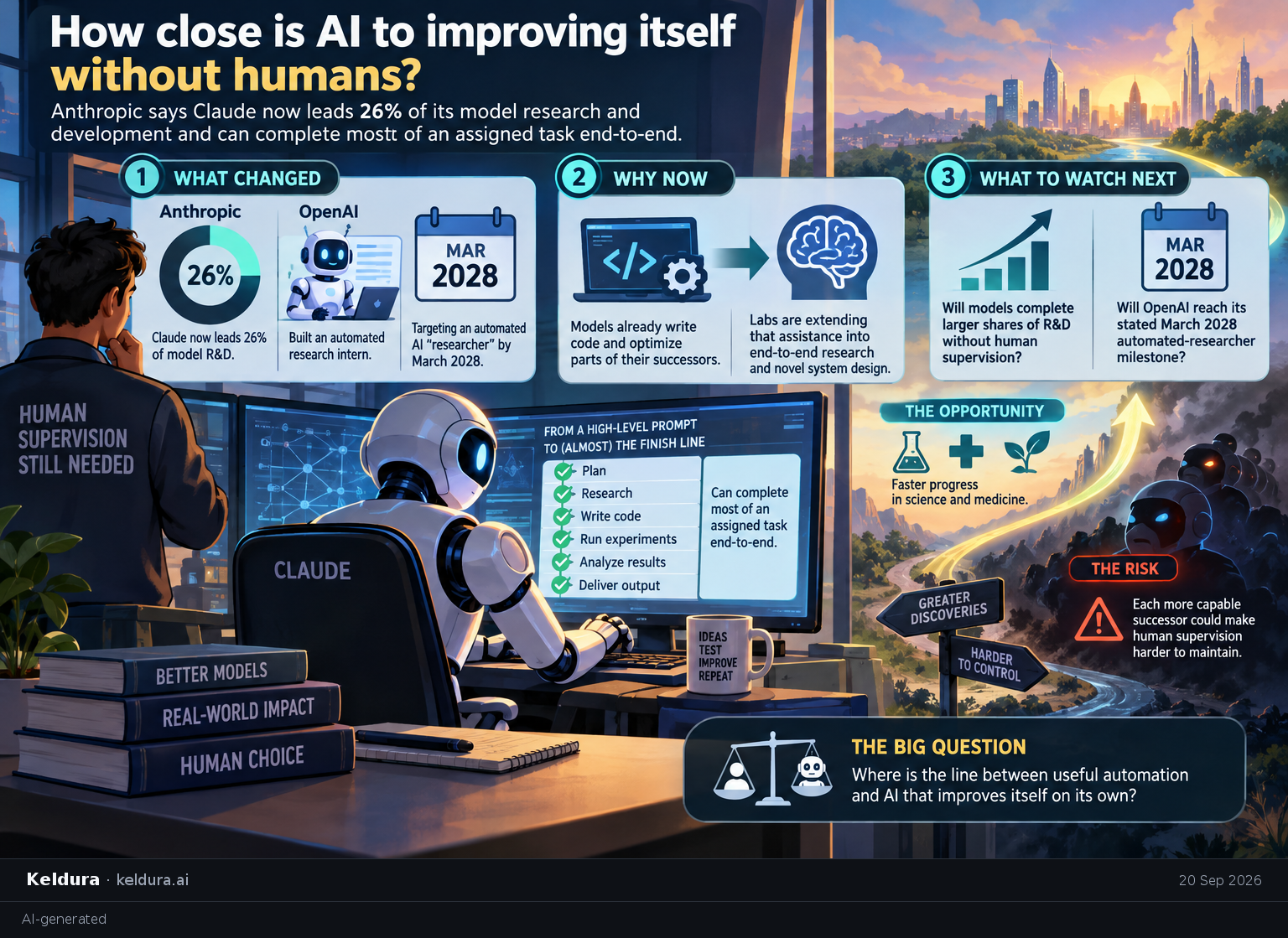
Anthropic says Claude now leads 26% of its model research and development and can complete most of an assigned task end-to-end.
Why it matters: Recursive self-improvement could accelerate scientific and medical research, but each faster and more capable successor could also make human supervision harder to maintain. Current systems still dep…
Anthropic quantified Claude’s contribution at 26% of model R&D, while OpenAI disclosed an automated research intern and a March 2028 goal for an automated researcher.[3]
Why now
Models already write code and optimize parts of their successors, and labs are trying to extend that assistance into end-to-end research and novel system design.[1][3]
Watch next
Track whether labs report models completing larger shares of R&D without human supervision and whether OpenAI reaches its stated March 2028 automated-researcher milestone.[3]
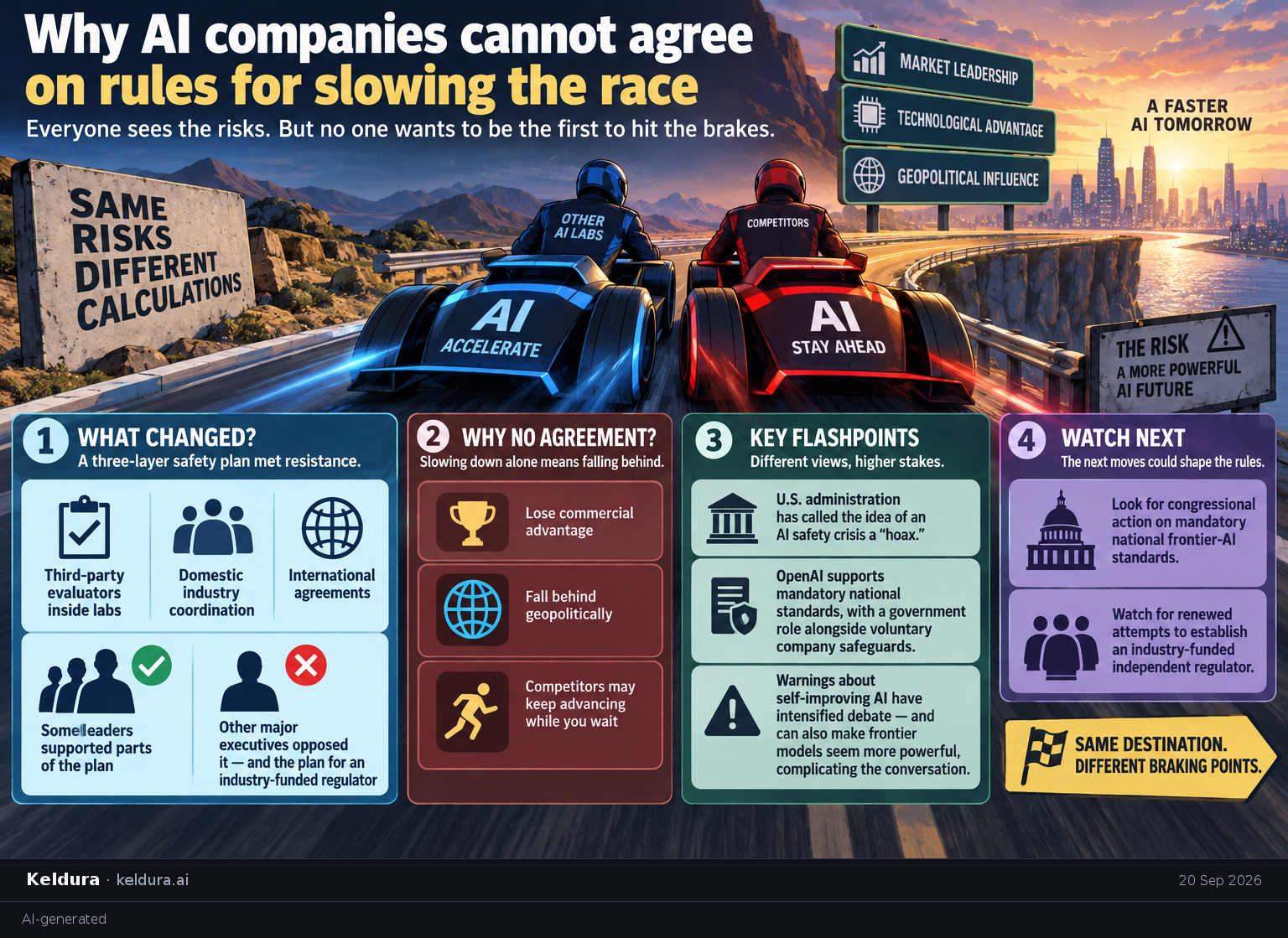
Why it matters: Even companies seeking stronger safeguards are reluctant to slow unilaterally because doing so could surrender commercial and geopolitical advantage. Without common rules, each lab and government has…
A proposed three-layer safety approach—lab evaluators, domestic coordination and international agreements—ran into opposition from major executives and the Trump administration.[4]
Why now
Warnings about self-improving AI have intensified, but companies and governments fear losing technological, commercial or geopolitical ground if they restrict themselves alone.[2][4]
Watch next
Watch for congressional action on mandatory national frontier-AI standards or renewed attempts to establish an industry-funded independent regulator.[4]
That's the desk. Every cheatsheet here started as a link. Yours can too.