NASA is backing tools for the Moon and Mars, but which ideas are ready for a demonstration?
On November 20, NASA announced it had selected 302 small-business research projects for up to $171 million in early-stage funding.
Why it matters: A battery selected for early-stage funding can operate at minus 76 degrees Fahrenheit without active heating, according to NASA. If it proves suitable for missions, using fewer heaters and less insul…
NASA selected 302 small-business projects for up to $171 million in seed funding. [5]
Why
The research addresses problems such as powering equipment through a 14-day lunar night and keeping repeated landings from kicking debris toward spacecraft and nearby equipment. [5]
Who pays
NASA’s first-stage contracts are capped at $225,000 per project; each of the 98 second-stage contracts can be worth up to $1.3 million. [5]
The catch
First-stage contracts are for proving that an idea can work; second-stage contracts are for developing and demonstrating technologies started under earlier awards. [5]
A Falcon 9 launched for the U.S. Space Force, but how much did the public webcast actually show?
On November 20, 2026, SpaceX launched the classified USSF-317 mission from Vandenberg Space Force Base on the 121st Falcon 9 flight of the year.
Why it matters: The booster’s landing was its 11th, giving readers a concrete measure of how often the same hardware can fly. The classified mission also shows where public launch coverage stops: viewers could see t…
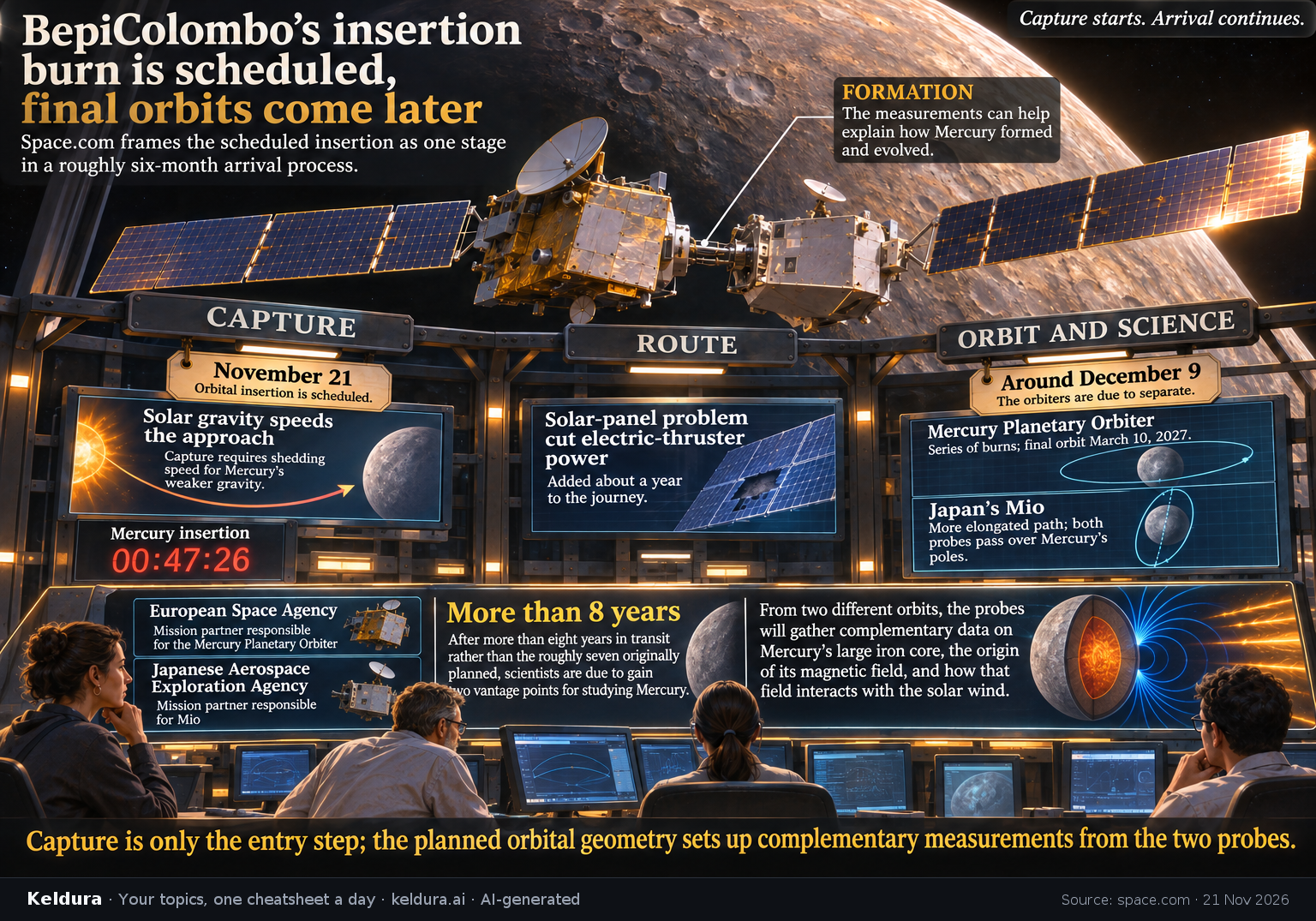
BepiColombo is due to reach Mercury, but why will its two orbiters wait months to start science?
On November 21, 2026, the European-Japanese BepiColombo mission is scheduled to begin a 37-minute engine burn to enter Mercury orbit.
Why it matters: From two different orbits, the probes will gather complementary data on Mercury's large iron core, the origin of its magnetic field, and how that field interacts with the solar wind. Those measuremen…
BepiColombo's two still-connected orbiters are scheduled to begin a 37-minute burn for Mercury orbit on November 21. [3]
Why
Mercury can capture the spacecraft only after it sheds speed gained while traveling deeper into the Sun's gravity. [3]
The catch
Entering Mercury orbit does not put both probes in their final paths: the European orbiter is due to make a series of burns before reaching its final orbit on March 10, 2027. [3]
What's next
Watch for the two orbiters to separate around December 9, ahead of the planned April 6, 2027 start of science operations. [3]
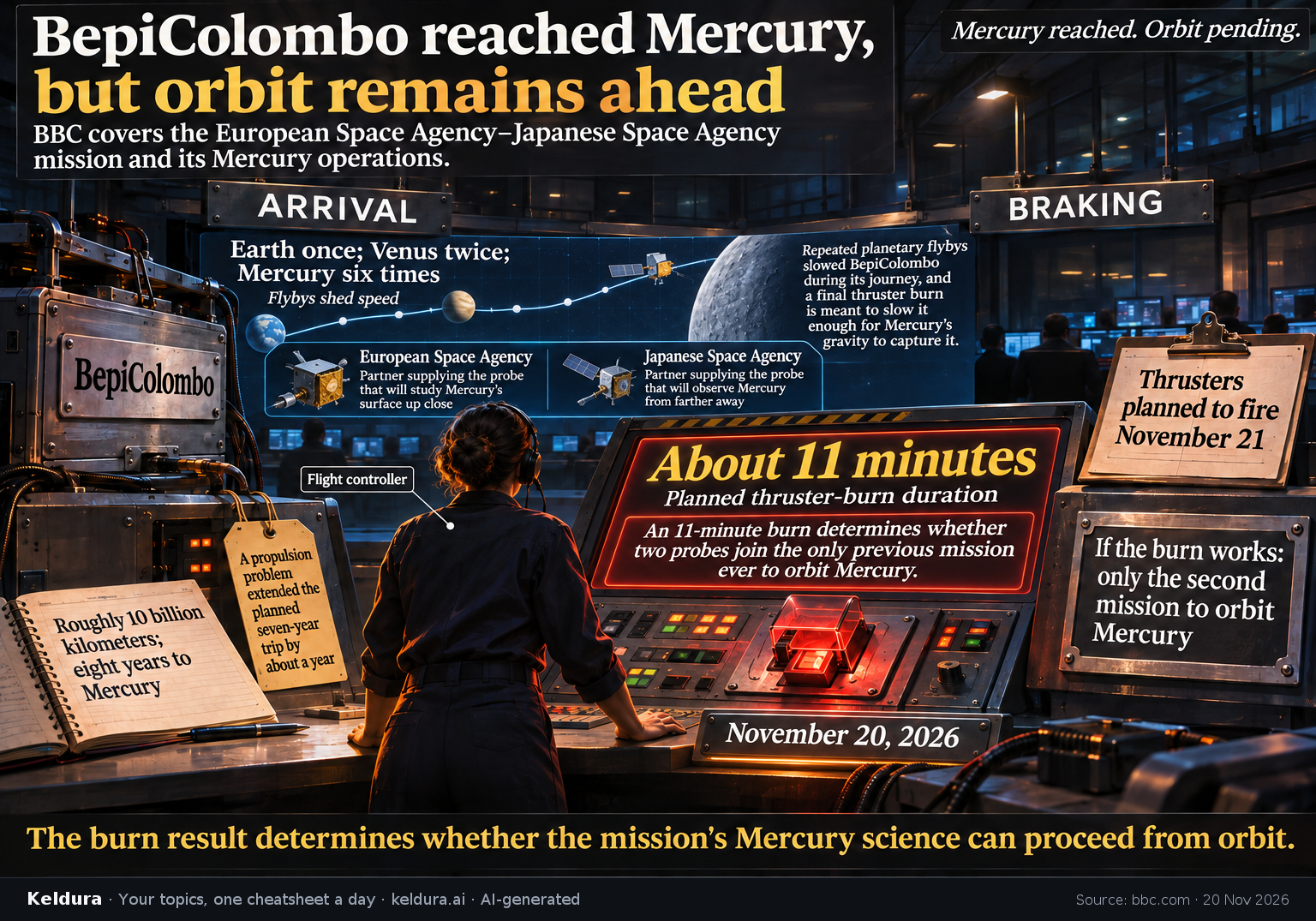
BepiColombo has reached Mercury, but can it slow down enough to stay?
By November 20, 2026, the European-Japanese BepiColombo mission had reached Mercury after about eight years and roughly 10 billion kilometers.
Why it matters: A successful arrival in orbit would give researchers two vantage points on a planet only one previous mission has orbited, letting them examine ice in permanently shadowed craters and look for clues…
Xavier became a record November cyclone, but what made it intensify so quickly so far east?
On November 17, 2026, Tropical Cyclone Xavier reached peak winds of 220 kilometers per hour after forming near the northern Cook Islands.
Why it matters: Xavier damaged homes and disrupted power in the northern Cook Islands, according to news reports cited by NASA. The Fiji Meteorological Service projects 11 to 15 named cyclones this season, with the…
In two days, Xavier went from a disturbance in Fiji Meteorological Service updates to a cyclone with peak winds of 220 kilometers per hour. [1]
Why
Xavier strengthened over 29-degree Celsius water with little wind shear and formed farther east in keeping with the shift observed during El Niño. [1]
The catch
Homes were damaged and power was disrupted in the northern Cook Islands, but dry air and less favorable wind conditions weakened the storm as it moved toward Samoa and American Samoa. [1]
What's next
February is normally the basin’s peak month; the seasonal outlook projects 11 to 15 named storms, with the greatest risk east of the date line. [1]
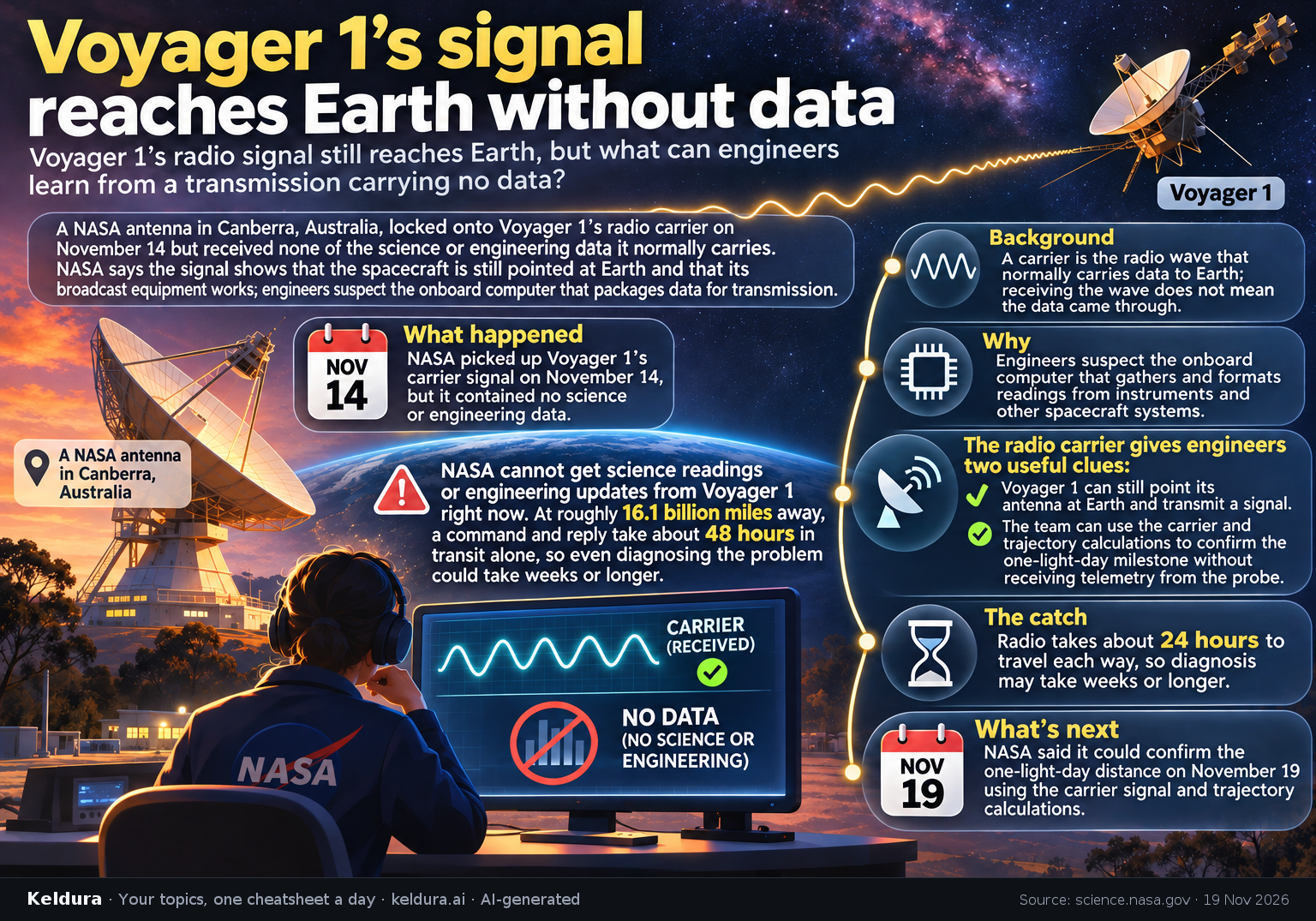
Voyager 1’s radio signal still reaches Earth, but what can engineers learn from a transmission carrying no data?
On November 14, 2026, NASA detected Voyager 1’s radio signal from nearly a light-day away but received no science or engineering data.
Why it matters: NASA cannot get science readings or engineering updates from Voyager 1 right now. At roughly a light-day away, a command and reply take about 48 hours in transit alone, so even diagnosing the problem…
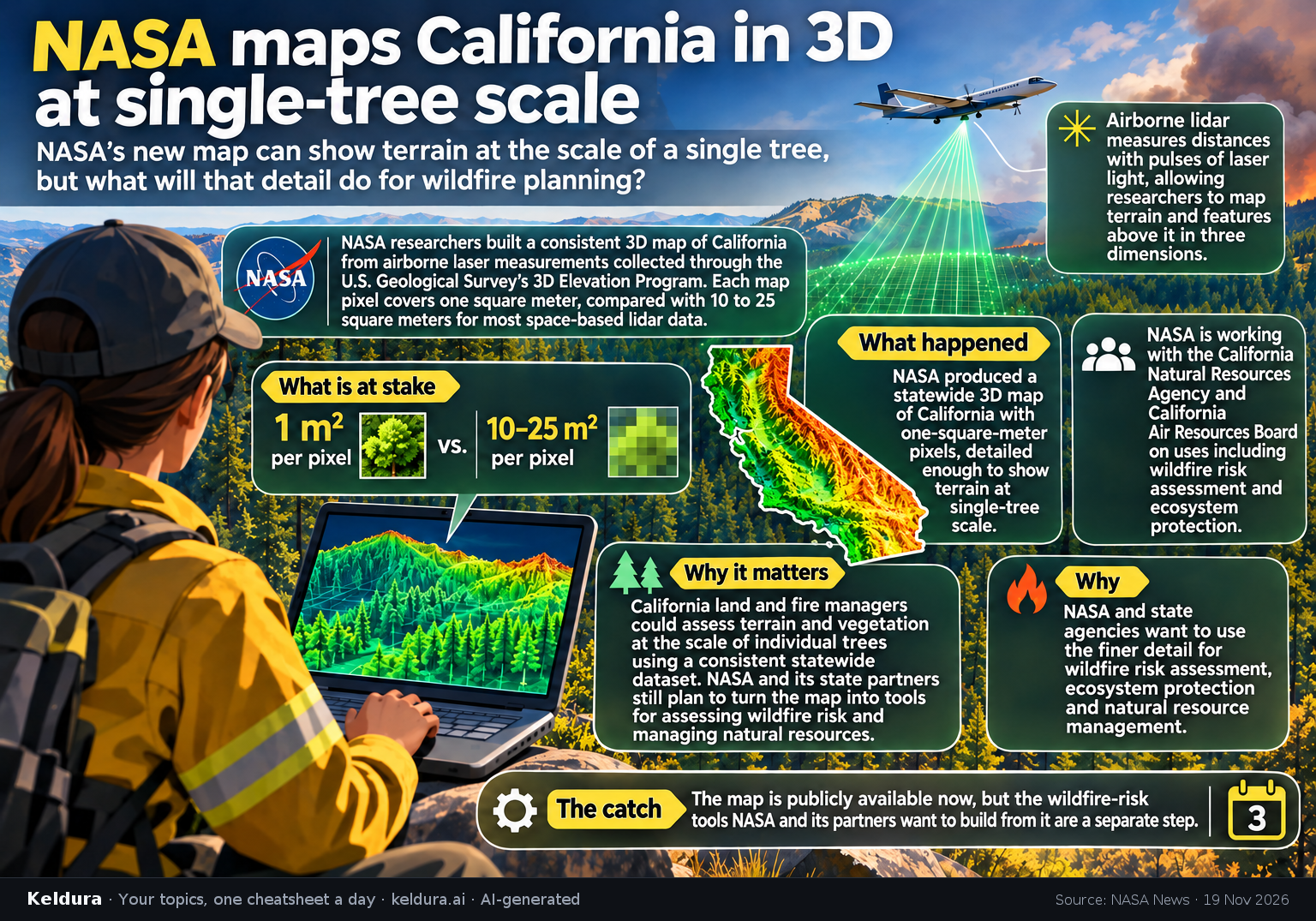
NASA’s new map can show terrain at the scale of a single tree, but what will that detail do for wildfire planning?
Why it matters: California land and fire managers could assess terrain and vegetation at the scale of individual trees using a consistent statewide dataset. NASA and its state partners still plan to turn the map int…
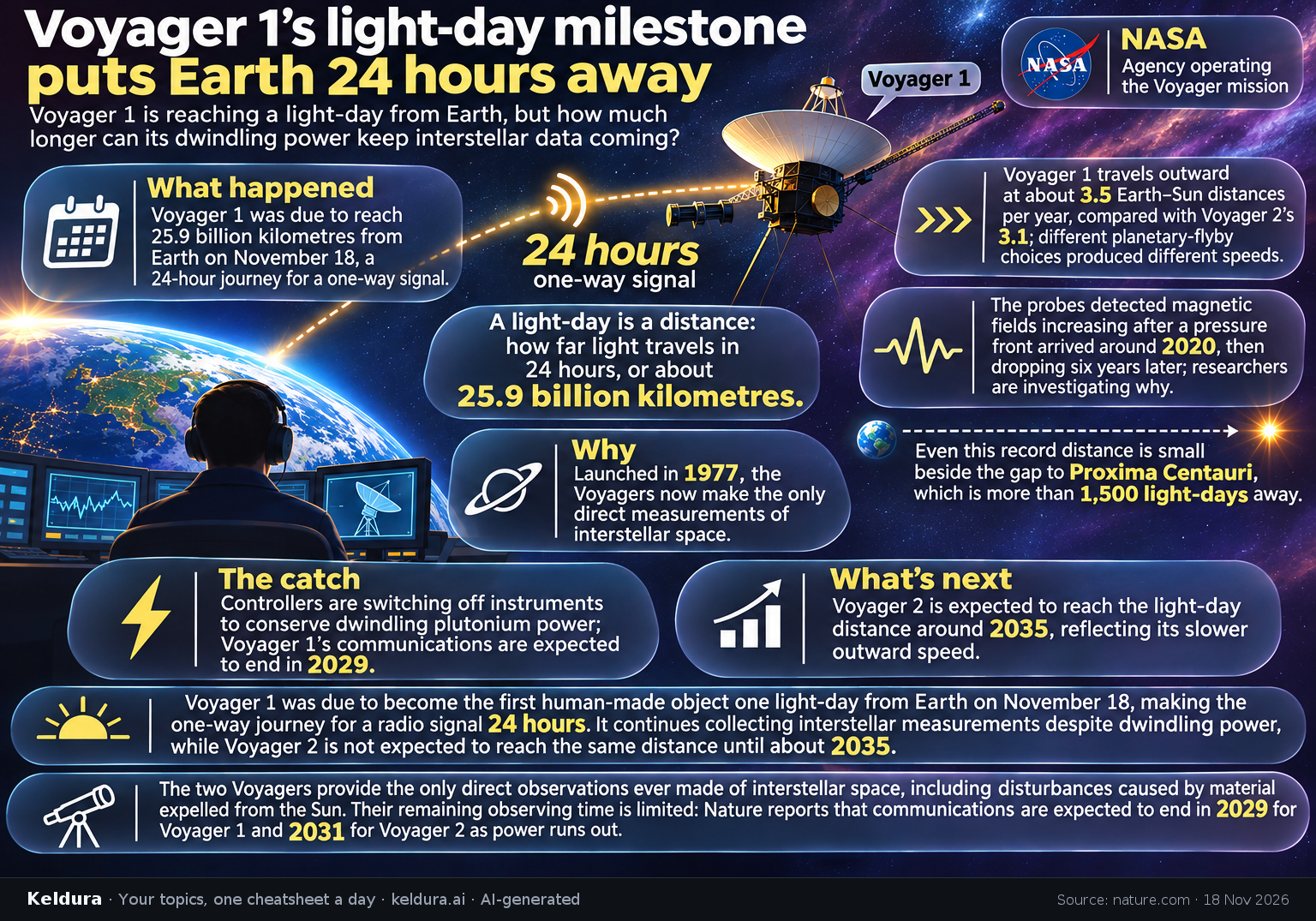
Voyager 1 is reaching a light-day from Earth, but how much longer can its dwindling power keep interstellar data coming?
NASA’s Voyager 1 was due to reach one light-day from Earth—25.9 billion kilometres—at 5:16 a.m. EST on November 18, after more than 49 years of flight.
Why it matters: The two Voyagers provide the only direct observations ever made of interstellar space, including disturbances caused by material expelled from the Sun. Their remaining observing time is limited: Natu…
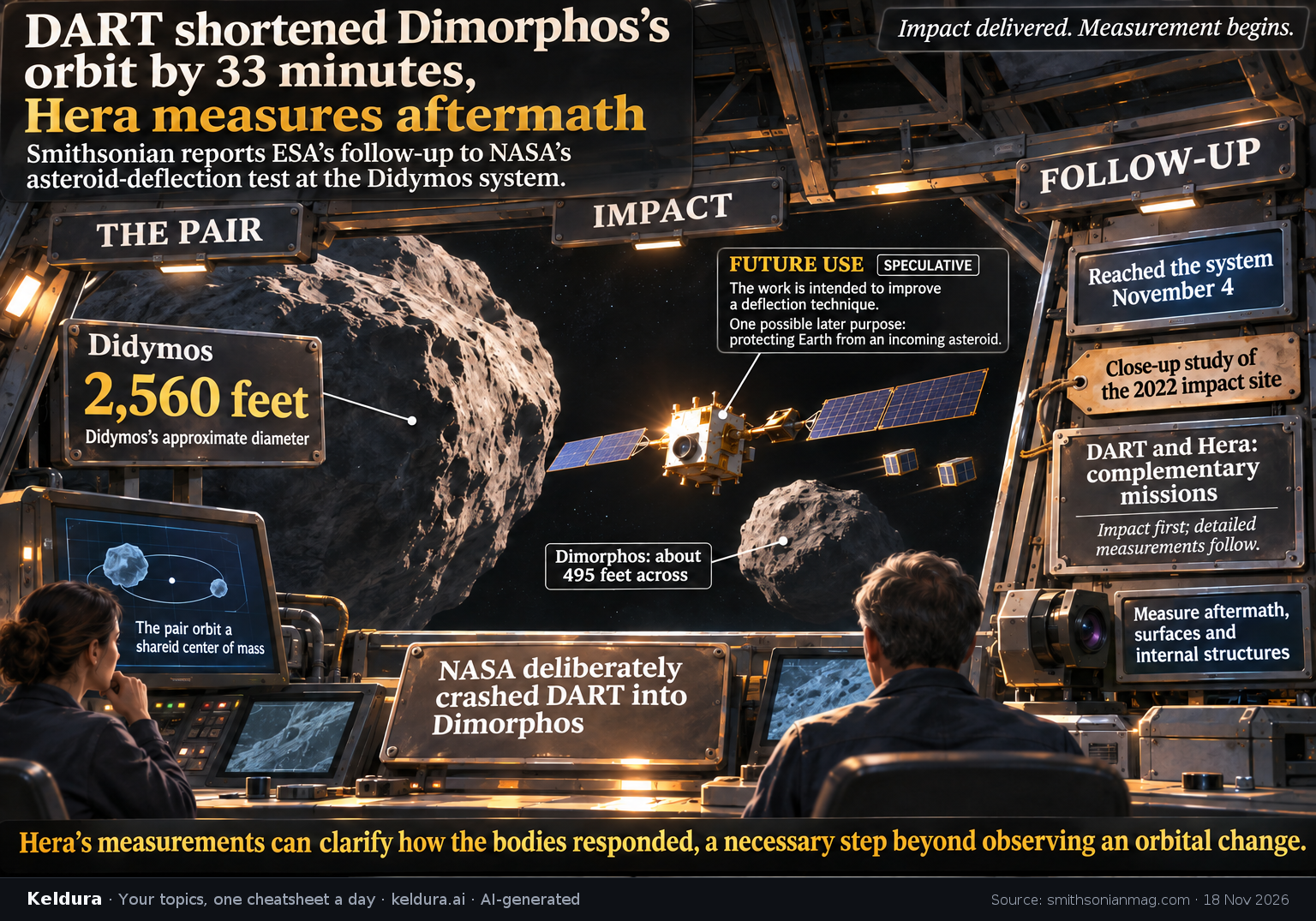
DART changed an asteroid moonlet’s orbit, but what can Hera reveal about making that technique dependable?
ESA’s Hera spacecraft reached the Didymos asteroid system on November 4 and began a close-up investigation of NASA’s 2022 impact, which shortened Dimorphos’s orbit by 33 minutes.
Why it matters: DART demonstrated that a spacecraft impact could change an asteroid’s motion; Hera is collecting the detailed follow-up measurements needed to better understand that result. The work is intended to i…
Hera reached the Didymos system on November 4 and began its close-up investigation of the 2022 impact site. [8]
Background
NASA deliberately crashed DART into Dimorphos, the smaller member of an asteroid pair, shortening its orbit around Didymos by 33 minutes. [8]
Why
Hera will measure the impact’s aftermath to help scientists understand asteroid deflection and the bodies’ physical properties. [8]
The catch
Changing Dimorphos’s orbit demonstrated deflection, but the paired missions were designed to add precise follow-up measurements before drawing a fuller picture of the outcome. [8]
What's next
Hera is due to move closer in December and deploy two CubeSats early in 2027; Juventas will attempt a landing on Dimorphos. [8]
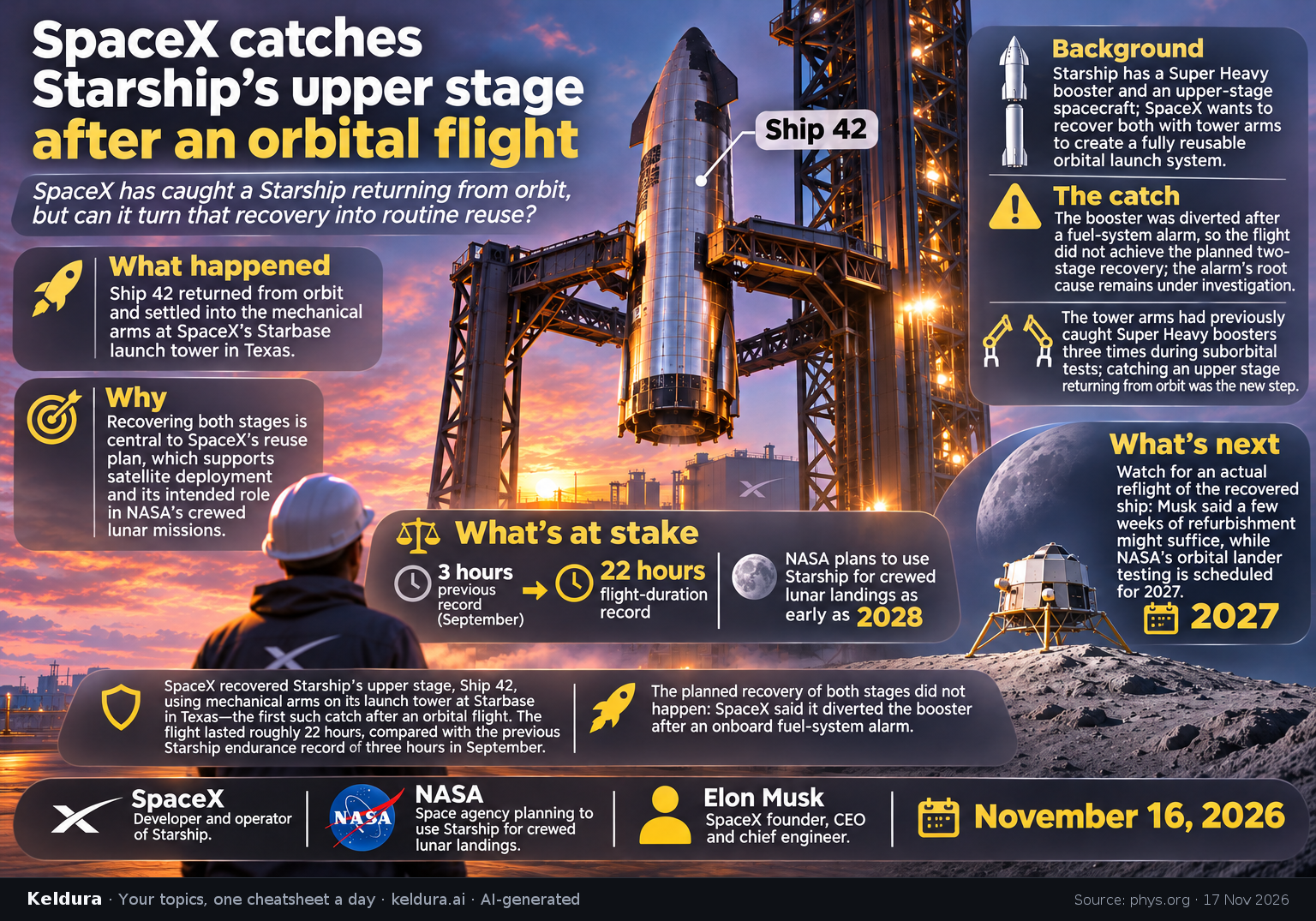
SpaceX has caught a Starship returning from orbit, but can it turn that recovery into routine reuse?
By November 16, 2026, SpaceX had caught Ship 42 at its Texas launch tower after a roughly 22-hour orbital flight, its first recovery of an upper stage returning from orbit.
Why it matters: NASA plans to use Starship as a lunar landing system for crewed missions starting as early as 2028, so its progress matters beyond SpaceX’s satellite business. Recovering the upper stage advances the…
Ship 42 returned from orbit and settled into the mechanical arms at SpaceX’s Starbase launch tower in Texas. [2][8]
Background
Starship has a Super Heavy booster and an upper-stage spacecraft; SpaceX wants to recover both with tower arms to create a fully reusable orbital launch system. [2]
Why
Recovering both stages is central to SpaceX’s reuse plan, which supports satellite deployment and its intended role in NASA’s crewed lunar missions. [2][8]
The catch
The booster was diverted after a fuel-system alarm, so the flight did not achieve the planned two-stage recovery; the alarm’s root cause remains under investigation. [2][8]
What's next
Watch for an actual reflight of the recovered ship: Musk said a few weeks of refurbishment might suffice, while NASA’s orbital lander testing is scheduled for 2027. [2][4]
Perseverance found hydrated silica in bright Martian rocks, but which ancient water system produced it?
On November 16, 2026, NASA’s Perseverance team reported that SuperCam data confirmed hydrated silica in bright rocks at Idubi, outside Mars’s Jezero crater.
Why it matters: The larger rocks give scientists access to close-up chemical and mineral measurements they could not obtain from the earlier, smaller deposits. Hydrated silica can preserve microfossils and form in w…
Perseverance’s SuperCam confirmed hydrated silica in bright rocks at Idubi, an area of ancient crust outside Jezero crater. [5]
Why
Hydrated silica can record ancient water environments and preserve microfossils, making the rocks relevant to investigations of past habitability. [5]
The catch
The mineral can form through several different water-related processes; its presence does not by itself identify the environment or establish ancient life. [5]
What's next
A detailed close-up science campaign is underway to obtain chemical and mineralogical measurements that earlier, smaller deposits could not support. [5]
SpaceX caught its returning spacecraft with tower arms, but what remains before the whole rocket can be reused?
On November 14, SpaceX caught Starship’s upper stage with mechanical tower arms in Texas after 14 orbits and about 22.5 hours in space.
Why it matters: Recovering the spacecraft as well as its booster is a necessary step toward reusing the complete Starship system, which SpaceX intends for Moon and Mars travel. This flight demonstrated upper-stage c…